

Welcome. This friendly guide explains how a full 78‑card deck maps big life themes and everyday choices into clear, usable meaning you can apply now.
The 78 cards split into 22 Major Arcana and 56 Minor Arcana. The Major Arcana trace the Fool’s Journey, a mythic path from innocence to completion in The World. These cards reveal broad lessons and archetypes.
The Minor Arcana cover daily trials and practical matters. They include 16 Court Cards and 40 numbered cards across Wands, Cups, Swords, and Pentacles. Together, they act as a mirror to the soul and a key to inner wisdom.
This article is a practical, step‑by‑step guide for reading the deck with confidence. Expect simple language, grounded examples, and tips to turn imagery into guidance. You’ll learn when to look for deeper meaning versus concrete next steps.
Key Takeaways
- This piece is a practical guide to the full 78‑card system and its uses.
- Major Arcana reveal big turning points via the Fool’s Journey.
- Minor Arcana translate themes into real-life situations you can influence.
- Simple, grounded examples help you spot patterns and read with confidence.
- You’ll learn upright and reversed hints and how to act on what appears.
Quick intro: how tarot card interpretations work today
Today’s approach blends traditional meanings with intuition to produce practical guidance. Modern readers treat a spread as a map, not a script. This keeps the process flexible and useful.
Major energy often signals fate, turning points, and lessons outside daily control. Minor energy points to routines, habits, and choices you can change.
A quick reading pairs classic notes with your context. Upright positions show clear opportunities. Reversals often flag inner blocks, delays, or a shift in perspective.
| Aspect | Major Arcana | Minor Arcana |
|---|---|---|
| Scope | Fateful lessons | Daily influences |
| Control | Often outside immediate control | Actions you can take now |
| Use | Understand life chapters | Guide practical steps |
Think of the deck as a mirror to your mind. Ask, “What does this mean, and what can I do about it?” Then pick one small step and test it.
Tarot at a glance: the deck, structure, and story
Think of the set as a map that separates big life themes from daily choices. This brief overview shows how the 78 pieces split into two layers so you can find where a message sits—major turning points or practical, next-step guidance.
78 cards, 22 Major Arcana, 56 Minor Arcana
A standard deck contains 78 items total. Twenty-two Major Arcana represent major spiritual lessons and milestones in a person’s life.
The remaining 56 Minor Arcana focus on everyday scenes. They include 16 Court Cards that often reflect roles or personalities, and 40 numbered cards that track how situations evolve.
The Fool’s Journey and life’s stages
The Fool’s Journey is a useful narrative map. It moves from openness and risk through learning, agency, and structure, and ends in integration and wholeness.
Use this storyline to spot whether a spread points to a destiny-level shift or a series of practical steps. When readings skew Major, expect deeper lessons; when they skew Minor, look for tangible guidance you can act on today.
- A standard deck has 78 pieces so you can quickly locate a message on the spectrum from everyday choices to big turning points.
- Major Arcana mark milestones like identity, love, challenge, insight, and integration; Minor Arcana zoom in on details and decisions.
- The Fool’s Journey offers a simple story arc—from innocence to completion—to help translate symbolism into practical meaning.
Major Arcana essentials: big life lessons and archetypes
Big-picture symbols in a spread tend to highlight fate, growth, and deep shifts. These powerful images point to life chapters rather than daily choices.
When Major Arcana dominate a reading
When they appear often, expect pivotal themes: identity shifts, value realignments, and endings that lead to new beginnings. These pulls usually feel larger than immediate action.
Upright vs. reversed: growth, fate, and course corrections
Upright cards tend to show momentum and clear progression. Think The Sun as joy and The Star as hope. Reversals can flag delays, fear, or the need for inner alignment—The Tower reversed might mean a disaster avoided or postponed.
- Clusters matter: Justice, Judgement, and The World can signal accountability and closure.
- The Tower + The Star = breakdown followed by renewal.
- Use these cards for the “why” behind events and for practical guidance.
Tip: In readings with many Majors, ground insight with small, steady steps so large lessons translate into useful action.
Spotlight on key Major Arcana meanings
These images act like signposts. They point to changes, tests, or fresh starts. Read them as invitations to act or pause.
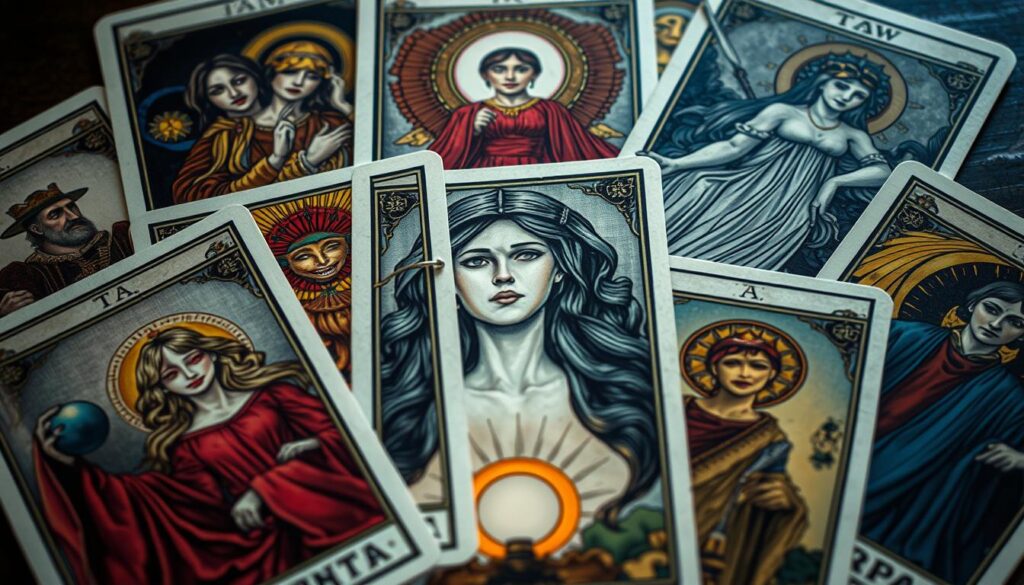
The Fool: new beginnings vs. carelessness
The Fool invites a leap of faith, curiosity, and a fresh start.
Upright, it signals innocence and a free spirit ready to try something new.
Reversed, watch for naivety, poor planning, or being taken advantage of.
For more on this energy, see The Fool.
The Magician: willpower and creation vs. illusion
The Magician is about focus, skill, and turning desire into results.
Upright, it shows clear intent and resourceful action.
Reversed, it warns of trickery, misdirection, or promises without follow-through.
Strength: inner bravery vs. self-doubt
Strength highlights gentle courage and steady confidence.
Upright, compassion fuels bold moves.
Reversed, it flags insecurity and a need for self-care and repetition to rebuild trust in yourself.
Death: endings, change, metamorphosis
Death rarely means literal loss. It marks endings that clear space for growth.
Upright, it signals transformation and new beginnings.
Reversed, it shows resistance to change or clinging to what no longer fits.
The Tower and The Star: upheaval to renewal
The Tower can bring sudden upheaval that breaks weak foundations.
The Star follows with hope, faith, and renewal.
Together they map a tough shake‑up toward healing and renewed purpose.
| Card | Upright | Reversed | Practical tip |
|---|---|---|---|
| The Fool | Innocence, new beginnings | Recklessness, vulnerability | Start small; keep eyes open |
| The Magician | Willpower, creation | Illusion, misdirection | Align plan with resources |
| Death | Ending, metamorphosis | Fear of change | Let go to make room |
| The Tower & The Star | Upheaval → hope | Delayed disaster → doubt | Ground through routine; trust recovery |
Combine position and context for true clarity. For example, The Fool as advice suggests “start small, start now,” while Death as an outcome often points to a needed chapter close that frees you for a better fit.
Minor Arcana overview: day-to-day situations you can influence
Daily life shows up in the Minor suits as situations you can influence with effort. These cards spotlight practical threads you can follow and change through small steps.

Numbered cards and everyday scenarios
The forty numbered cards form a clear storyline from Aces (fresh starts) to Tens (completion). Each rank shows where your energy matters most in a given situation.
Use ranks to spot timing: Aces = begin, Fives = challenge, Tens = wrap-up. This helps you pick a realistic next step.
Reading reversals in practical contexts
Reversals often point to delays, excess or lack of a suit’s energy, or inward dynamics that need attention.
- Lots of wands urge movement; act when momentum is present.
- Many Cups call for feeling and connection.
- Swords highlight thought, talk, and clarity; Pentacles ask for planning and stability.
When a spread leans Minor, your choices will shape the outcome. Anchor cards by position—past, present, future or situation/advice/outcome—to turn insight into simple, testable action.
Wands: action, work, creativity, and ambition
Wands channel the spark that turns an idea into forward motion. This suit corresponds to the element of Fire and highlights drive, initiative, and the push to make things happen.
Element of fire and themes of drive
Wands bring heat: they mark initiative, courage, and creative ambition. In readings they often flag career moves, creative projects, and moments when bold choices matter.
From spark to execution: Ace through Ten
From Ace to Ten the sequence shows how excitement becomes momentum—or strain.
- Ace and Two: aim and commit; plant the seed and choose a path.
- Five and Seven: tests of strategy and resilience; expect competition.
- Nine and Ten: high output and risk of burnout; slow down and re-balance.
“Use Wands as a green light for action when support appears, and as a cue to refine your plan when obstacles show up.”
A Wands court card can point to a person with bold, entrepreneurial energy or ask you to step into leadership. Reversed forms often mean misdirected effort—reset priorities, simplify tasks, or rest before you push again.
For a profile of decisive energy in action, see this note on bold, entrepreneurial energy.
Cups: love, relationships, feelings, and intuition
Cups bring emotional currents into focus, showing how feelings shape choices and bonds. This suit leans into the inner world and the subtle language of the heart.

Element of Water ties Cups to empathy, creativity, and intuition. They point to emotional availability, healing, and the small acts that build trust.
Upright forms often signal warmth and connection. Reversed forms can show overwhelm, mixed signals, or a need to self-soothe before engaging.
- Cups speak the language of the heart—connection across friendships, family, and romance.
- Expect themes like forgiveness, emotional openness, and creative imagination that help you relate authentically.
- In relationship questions, many Cups emphasize intimacy and care as central to the answer.
“Trust your first impressions with this suit; intuitive nudges and subtle signals often carry the most meaning.”
Note: When Cups pair with Majors such as The Lovers or The Star they can confirm deep alignment and the courage to be vulnerable. Use this suit to listen inward and act with compassion.
Swords: thoughts, communication, conflict, and clarity
Swords focus on how thought and speech shape outcomes, often cutting clean through ambiguity. This suit links logic, truth-seeking, and the risks of blunt honesty. Expect guidance about decisions, timelines, and agreements.

Element of Air and the double-edged mind
Air fuels intellect, debate, and strategy. Swords highlight how the mind can solve problems or create conflict.
They reveal mental patterns like rumination, bias, or sudden clarity that shape real outcomes.
Truth-telling without harshness
Upright Swords reward honesty and precision; reversed forms often show miscommunication or mental fog.
- Words matter: choose clarity over cruelty when speaking hard truths.
- Swords often point to boundaries, contracts, and timelines where explicit agreement prevents friction.
- When Swords meet cups, balance head and heart to keep truth kind and useful.
“In conflict-heavy spreads, ask: What truth needs saying, and how can I express it with respect and clarity?”
Pentacles: money, body, material life, and stability
Look to Pentacles when questions center on finances, physical health, or long-term security.
Grounded by Earth, this suit maps the practical systems that support a good life: budgets, skills, routines, and steady work.
Upright forms often show measurable progress and tangible results. They reward patience, craft, and incremental gains.
Reversed forms can signal imbalance, overattachment to outcomes, or habits that no longer serve. The shadow side includes greed or miserliness, so watch for those pulls.

Use Pentacles to judge what to preserve versus what to change. In health questions, favor evidence-based routines and small, repeatable steps. For career forecasts, prioritize systems, savings, and strategy over quick wins.
“Slow work and steady investment often beat sudden gains when long-term security matters.”
- Focus on sustainable growth: budgets, training, and health habits.
- Expect steady results with consistent effort.
- When unstable, reset priorities and rebalance resources.
| Area | Upright | Reversed |
|---|---|---|
| Finances | Stable earnings, good budgeting | Overspending, poor planning |
| Health | Consistent routines, resilience | Neglect, avoidance of care |
| Career | Systems, skill growth, promotion | Short-term focus, misaligned goals |
For practical notes on specific Pentacles energy, see the Page of Pentacles for a clear example of beginner focus and steady learning.
Court cards: people, roles, and parts of yourself
Court cards act like mirrors: they reflect personalities, roles, or inner parts that matter in a reading. These sixteen figures — Pages, Knights, Queens, and Kings — often point to a person, a role dynamic, or a quality you can choose to embody.
Short guide: Pages lean toward beginnings and learning. Knights bring action and mission. Queens nurture and stabilize. Kings lead with structure and strategy.
How to read rank + suit
Combine rank with suit for specific meaning. For example, a Queen of Cups shows empathy and healing, while a King of Swords signals clear judgment and firm decisions.
Courts can name actual people or suggest a role to adopt during a life transition. Often they advise: act with the quality you need instead of waiting for someone else to arrive.
“Court figures invite you to try on a trait — lead a little, listen more, or take a practical step — so the outcome shifts through action.”
| Rank | Core energy | When it appears |
|---|---|---|
| Page | Curiosity, learning | New interest; start small |
| Knight | Movement, mission | Push forward; pursue a goal |
| Queen | Nurture, sustain | Care, steady support |
| King | Direction, structure | Lead, organize, decide |
Watch reversals: they often signal blocked traits (under-confidence) or overuse (control). Rebalancing a strength into a healthy habit solves many stalls.
For nuance on a Knight’s emotional energy, see the focused profile of the Knight of Cups.
Aces across the suits: four fresh starts, four kinds of energy
Aces compress a suit’s core energy into a simple, actionable moment of potential. Each one points to a clean beginning tied to an element. Read them as a prompt to start, not as a finished plan.

Ace of Wands, Cups, Swords, Pentacles at a glance
Quick guide: an ace delivers concentrated possibility. Match the element to the choice you make: Fire acts, Water feels, Air thinks, Earth builds.
- Ace of Wands ignites a project. Pair the spark with a simple first step to turn inspiration into motion.
- Ace of Cups opens the heart. Expect new bonds, healing, or creative flow when you accept invitations to connect.
- Ace of Swords brings clarity. A decisive insight or honest talk can slice through confusion and change the game.
- Ace of Pentacles plants a seed for stability. Think budgeting, skill growth, or a health routine that compounds over time.
“Aces hand you an opening; follow through with one clear action and the potential grows into progress.”
| Suit | Element | Core focus | Advice |
|---|---|---|---|
| Wands | Fire | Inspiration, action | Start with a clear first step |
| Cups | Water | Emotion, connection | Respond to invitations with openness |
| Swords | Air | Idea, truth | Speak clearly; seek one insight |
| Pentacles | Earth | Resources, health | Plan for steady, small gains |
Use position to refine meaning: in advice an ace says “initiate;” as an outcome it promises a viable start if you follow through. When an ace shows up, pick one next step and test it.
Applying tarot card interpretations to love and relationships
Love readings often mix everyday feelings with larger life lessons to show where a relationship is headed.
Reading Cups and Major Arcana dynamics in love

Cups point to emotional availability, communication, and how people share affection. They reveal small habits and the current tone of a bond.
Major Arcana show big growth edges that shape a couple’s path. These cards flag themes such as commitment, healing, or repeated lessons that keep returning.
- In love readings, Cups show emotional flow; Majors reveal the larger lesson at play.
- The Lovers upright signals partnership and aligned values; reversed, check reciprocity and shared priorities.
- The Star after a split hints at healing and renewed hope; The Devil can point to stuck patterns or over‑identification.
- Court of Cups suggests compassion and emotional leadership. When Swords pair with Cups, honest dialogue that keeps tenderness matters most.
- For singles, look for Aces and Pages as fresh openings; for steady bonds, Pentacles stress consistency and care in action.
Ask: “How can we reconnect?” Use that question to find practical empathy and shared rituals, not just grand gestures.
Reading for work, career, and life goals
Work-focused readings help you map ambition into practical, testable actions. Use a spread to see where initiative meets available support and where plans need tightening.

Wands and Pentacles in action-oriented spreads
Wands point to momentum, creativity, and the push to launch projects. In career questions they flag timing to pitch, lead, or take calculated risks.
Pentacles ground plans in resources, budgets, and long-term skill building. Look to them for clues about sustainability and steady growth.
- Action cards like an Ace or Three of Wands encourage market scans, outreach, and timed risks.
- Eight and Ten of Pentacles emphasize mastery, systems, and compounding results.
- Swords sharpen strategy: define scope, timelines, and key decisions.
- Cups remind you to manage team dynamics and lead with empathy.
“Use the outcome slot to test feasibility; use advice slots to list three concrete next steps.”
| Role | Signals | Practical step |
|---|---|---|
| Wands | Momentum, new projects | Pitch, prototype, measure |
| Pentacles | Resources, stability | Budget, train, systemize |
| Swords & Cups | Strategy and team | Clarify scope; communicate kindly |
From symbolism to guidance: turning meanings into advice

Let each image act as a prompt—translate its scene into one small, testable step.
Start literal: name what you see on the card, then ask how that picture answers your question. This simple move turns symbolism into usable guidance.
- Link symbols to behavior: turn an archetype into an action. For example, Strength → respond with calm courage; Justice → set a fair process.
- Insight + action: for each pull, record one clear insight and one doable step. Clarity plus a small move builds momentum.
- Use reversals as prompts: ask which belief or habit blocks you and plan a short experiment to try a new response.
Summarize the spread in a single guiding sentence you can remember and act on this week. That sentence becomes your working meaning and checklist.
“Pick one insight and one step; that pair turns images into practical growth.”
Building intuition: reading the picture, not just the keywords
Start by letting the image speak before you reach for a list of definitions. The deck’s artwork and elemental layout open a simple, practical way into inner knowing. This method helps your intuition form useful meaning you can act on.
Imagery, elements, and storytelling
Notice small details first: colors, posture, and landscape. These visual cues reveal tone and motive faster than memorized words.
Track elemental energy — Fire, Water, Air, Earth — to see how momentum moves across a spread. This shows where balance or effort is needed.
Follow the scene like a short story. Who acts? Who reacts? What shifts from panel to panel? Let that narrative guide your next step.
- Write your first impressions in a journal; raw hits are often the clearest angle of meaning.
- Compare different decks over time to grow your visual vocabulary and spot fresh layers.
“Treat each image as a mirror; it reflects a small truth you can test in one clear step.”
Tarot card interpretations: quick spreads, reversals, and timing
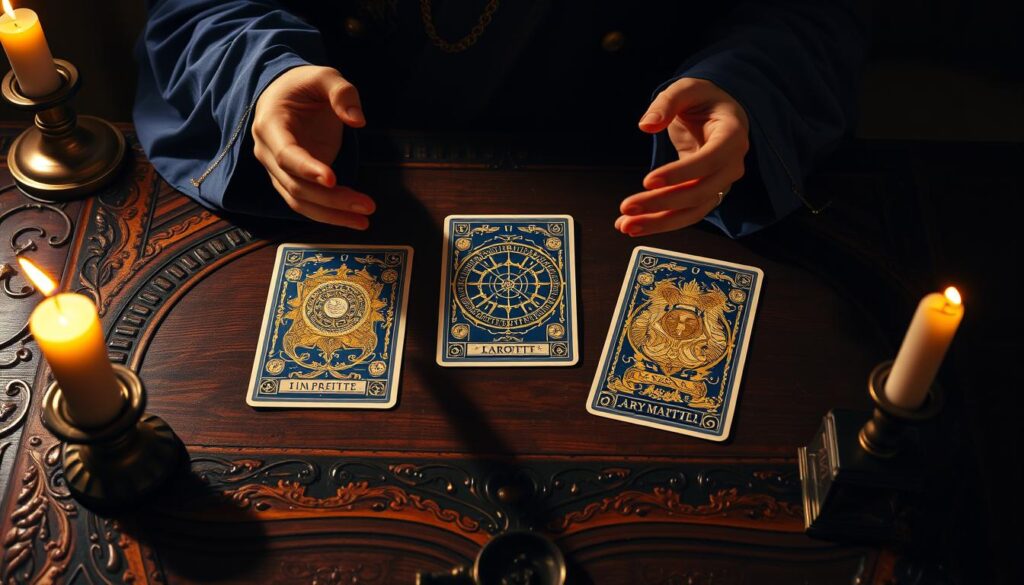
A three-card pull gives a snapshot that guides choice without overcomplicating things. Use a simple layout to turn insight into one clear action you can test this week.
Three-card basics for love, work, and clarity
Decide the positions first—past/present/future or situation/advice/outcome—so the message stays focused.
- Love: pair Cups with a Major to read emotional tone plus the larger lesson.
- Work: look for Wands and Pentacles to see energy versus resources.
- Clarity: use the spread to name one obstacle, one action, and one likely short-term result.
Reversals as internal blocks or external delays
Treat reversals as data, not doom. Ask whether the reversed energy is blocked inside you or delayed by outside timing.
Example: The Tower reversed can mean a disaster avoided or postponed, not just catastrophe. That idea reframes fear into a chance to prepare.
“Use a small test” — pick one step within your control this week. If timing is unclear, anchor actions to tasks you can complete in seven days and record what changes.
“One neat practice: a one-card daily draw builds fluency. Track results to refine your personal meanings.”
Getting started: decks, free tarot readings, and trusted guides
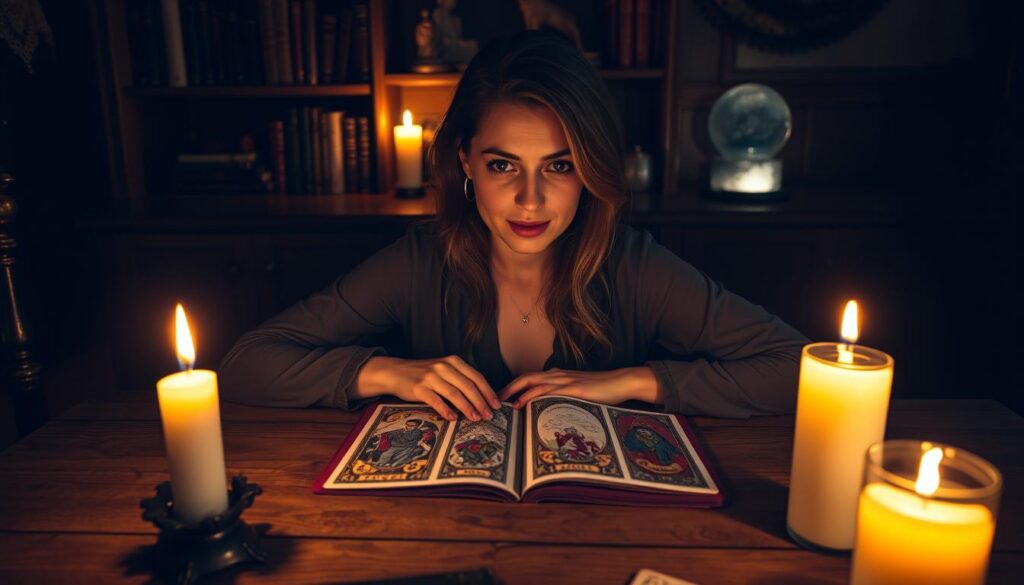
A deck that speaks to you visually shortens the path from image to meaning. Choose art that feels clear and relatable. That makes learning feel less like memorizing and more like listening.
How to choose a deck and get free practice
Pick a deck whose imagery resonates emotionally and is easy to read. Clear symbolism speeds learning and helps you form personal associations.
Start a pocket notebook. Log a one-card pull each day, record your first impression, and note what happens next.
- Pull one card for a focused question, then write a single-sentence takeaway.
- Look up tarot card meanings after you journal to compare your instinct with established notes.
- Use community forums and local meetups to get free spreads and feedback while you learn.
Seek a guide or short course that balances structure and intuition. A teacher who shows spreads and practice drills prevents getting stuck on rote lists.
“Practice regularly, track results, and let experience refine your meaning.”
Conclusion
Think of your practice as a conversation: imagery sparks intuition, and steady practice turns insight into habit. Use this friendly guide to readings when you need a refresh or a clear next step.
You now have a full view: the major arcana map big life shifts, while the Minor suits—wands, cups, swords, and pentacles—show everyday situations you can shape. Watch for Aces to open cycles and for material cues that call for steady work.
Let the picture lead before lists; then translate feeling into one small piece of practical advice. Track what works in your readings and refine your personal meaning over time.
Return to the deck as a companion for perspective, compassion, and fresh next steps in love, work, and life.