
Welcome. This friendly guide explains what the 78-card system is and how rich imagery turns abstract ideas into practical insight you can use today.
The deck splits into the 22 Major Arcana, which map big life milestones, and the 56 Minor Arcana, which handle daily choices. Each element acts as a mirror to your inner wisdom, helping surface lessons and offering fresh perspectives.
You’ll learn how the Major Arcana highlights karmic themes and how the suits clarify everyday situations. We preview structure, explore major themes, and show simple ways to do confident readings.
Practical value: expect clear vocabulary, useful examples, and step-by-step tips to translate imagery into real-life insights. If you want a concise deeper dive into a sample Major card, see The Chariot overview.
Approach this material with curiosity and respect. By the end, you’ll know how to navigate the deck and apply interpretations with confidence in your own readings.
Key Takeaways
- Understand the 78-card structure and its two main sections.
- See how Major themes mark big life lessons and Minor suits address daily choices.
- Learn a clear vocabulary to turn imagery into meaning you can use today.
- Find practical, step-by-step tips for simple, confident readings.
- Approach readings with curiosity, ethics, and a focus on empowerment.
Welcome to the Ultimate Guide to Tarot Card Interpretations
Think of the deck as a visual storybook that points to lessons you need right now.
What tarot is and how interpretations unlock insight today
Plain definition: a symbolic system of 78 illustrated tarot cards that helps you access your subconscious and draw out insights relevant to your life today.
How it works: you link images and agreed meanings with your intuition to form clear, timely guidance. Simple words and concrete ideas make it easier to move from symbol to action.
Understanding intent: guidance, clarity, and self-reflection
- Use readings for self-reflection and decision support, not absolute forecasts.
- Pause briefly before a session to align your question with the moment in time.
- Remember context matters: the same image can shift focus between love, work, health, or growth.
Final note: treat every session as a conversation. The deck prompts ideas; your lived experience makes the meanings useful. Bring curiosity, and the images will meet you where you are.
How Tarot Works: Structure, Symbolism, and the Story of the Deck
Understanding structure helps you read imagery with purpose. A complete deck blends sweeping life themes with everyday moments to form a clear symbolic language. This section summarizes how those layers work together and why that split matters for practical readings.
Major Arcana vs. Minor Arcana at a glance
Full structure: the system has 78 cards: 22 major arcana that point to big, karmic lessons and 56 Minor arcana that reflect daily circumstances and choices.
Majors often mark milestones or shifts on your life path. Minors show the practical steps and dynamics you can act on now.
The 78-card deck as a mirror to your inner wisdom
Court and numbered cards: 16 Court cards show personality modes; 40 numbered cards map common scenes in four suits.
| Suit | Focus | Everyday angle |
|---|---|---|
| Cups | Emotion & relationships | Feelings, connection, intuition |
| Pentacles | Material world | Work, money, health, stability |
| Swords & Wands | Mind; action | Ideas, conflict; drive, creativity |
Symbols—colors, figures, and elements—create a visual vocabulary you translate into meanings tailored to your question. Drawing cards can act as a mirror: they surface what your mind already senses but has not named yet.
- Combine card types, positions, and suit energy to read the story and plan next steps.
- Use common meanings as a guide, but trust your own associations for resonance.
Major Arcana Meanings: The Fool’s Journey Through Life’s Big Lessons
The Major Arcana traces a soul’s voyage, from a fresh leap into life to peaceful completion. These 22 images map stages of growth, challenge, and integration that shape your path.
The stages from The Fool to The World
The Fool begins the story with openness and new beginnings. The sequence moves through trials, learning, and finally completion at The World. Pulling Majors often signals a deep lesson rather than a minor detail.
Archetypes and key themes
Why these feel weighty: Majors point to turning points—big energies that name the lesson and shape timing. They act like archetypes on your life path.
Spotlight cards and reading upright vs reversed
- The Fool: upright—innocence and new beginnings; reversed—reckless or naive risk.
- The High Priestess: upright—inner knowing; reversed—lost inner voice or repression.
- Death: upright—end of a cycle and metamorphosis; reversed—fear of change.
- The Sun: upright—joy and clarity; reversed—clouded joy or low energy.
Quick scan tip
In spreads heavy with Majors, look for arcs of beginning, awakening, and end. Then place Minor cards for details. Try single-major pulls for a fast overview or use a short journal prompt: “Where am I in the Fool’s Journey?”
For a deeper Major Arcana overview, see the Major Arcana overview.
Minor Arcana Meanings: Daily Situations in Wands, Cups, Swords, Pentacles
Minor suits bring the deck down to earth, showing the everyday scenes you can act on. They frame small choices, short cycles, and practical steps that move a situation forward.
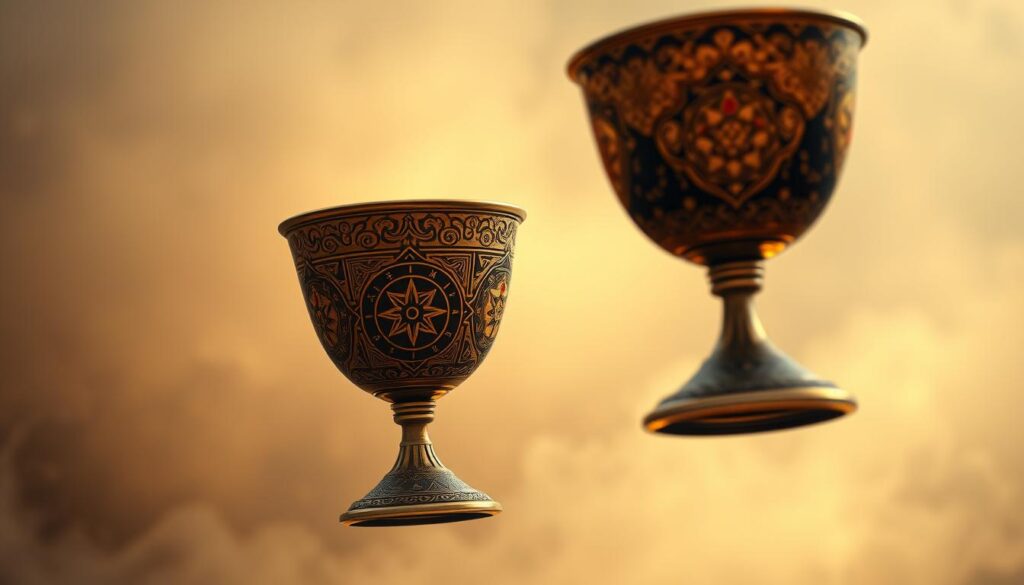
Wands — fire and will
Wands point to drive, creativity, and initiative. Watch for bursts of passion that fuel projects and new starts.
At risk: haste or scattered focus when energy runs ahead of planning.
Cups — emotions and relationships
Cups reveal feelings, empathy, and how connections shape choices. They ask you to tune into intuition and care for emotional balance.
At risk: moodiness or losing touch with your inner voice.
Swords — ideas and communication
Swords highlight logic, truth, and the quality of discussion. Use them to check clarity and where honest talk heals or harms.
At risk: bluntness or lack of empathy when minds outrun kindness.
Pentacles — the material world
Pentacles focus on work, health, money, and steady progress. They remind you to balance ambition with grounded self-care.
- Minors act as play-by-play: name one concrete action after a pull.
- Read numbers as arcs: aces open potential; tens close cycles.
- Mix suits to spot real-life blends (for example, cups + pentacles).
- For suit-specific detail, see the Knight of Cups overview for an example of cups energy in motion.
Tarot Court Cards: Pages, Knights, Queens, Kings in Your Readings
Court cards act like character roles in a play, showing how personalities and approaches show up in real situations. Within the Minor suits, these sixteen figures can point to people, strategies, or aspects of yourself that matter right now.
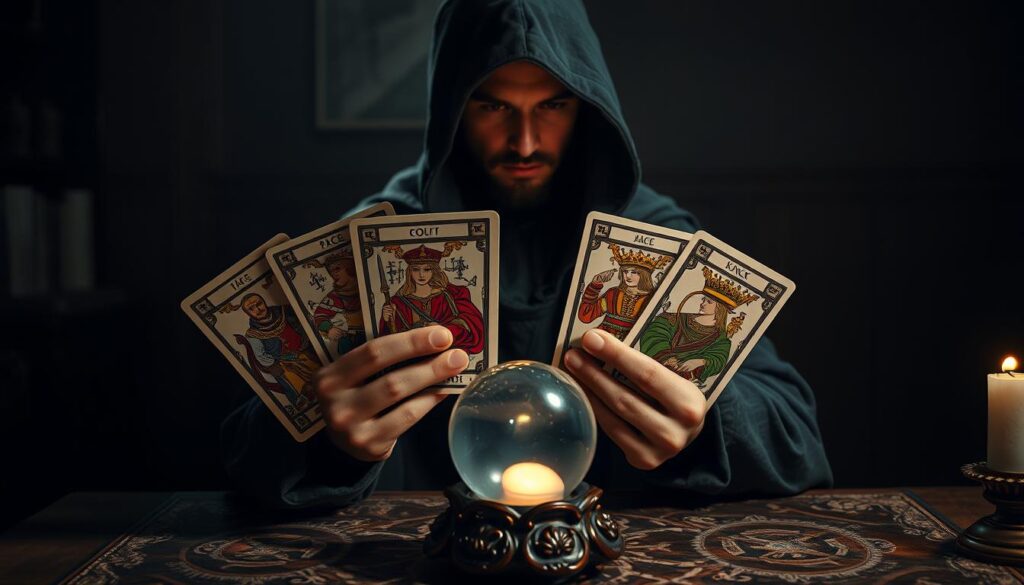
Personality archetypes and roles
Pages bring beginnings and curiosity. They signal learning, messages, or a fresh approach.
K nights drive movement and momentum. They show how energy pushes a situation forward.
Queens cultivate and nurture. They model care, craft, and practical support.
Kings lead with mastery and structure. They offer authority and clear direction.
- Match rank with suit to refine meanings: a page of cups reads differently than a page of swords.
- Decide if a court is a person by checking context and nearby cards.
- Reversals often show blocked traits or qualities needing balance.
- Practical tip: journal short profiles for each court to speed up readings.
Use intuition to notice subtle cues—posture, gaze, and elemental hints—to decide which role fits the life situation. Courts are neutral tools: they invite you to try a stance, not judge it.
Quick check-in: “Which role helps me navigate this situation most effectively right now?” For extra guidance, consider a professional session at psychic readings.
Tarot Card Interpretations in Practice: Step-by-Step Reading Basics
Begin with stillness; a short pause and a stated goal turns a reading into useful guidance. Take a slow breath, clarify your question, and set an intention that respects your agency and wellbeing.

Preparation, intention, and connecting with intuition
Simple prep works best. Ground yourself, name one clear question, and invite honest insight. This frames the session as a supportive conversation rather than a verdict.
Connect with intuition by noting first impressions: colors, feelings, or a single active word that comes up before you consult reference meanings. That keeps the reading personal and immediate.
From single-card pulls to multi-card spreads
Use a single pull for daily focus or when you feel stuck. One image can highlight the next right step.
Move to three-card layouts for structure—past, present, future or situation, advice, outcome. These give clarity without overload.
| Pull | Best use | Quick action |
|---|---|---|
| Single | Daily focus or immediate guidance | Name one task to try today |
| Three-card | Short-term story and advice | Summarize in plain words; pick one action |
| Major-only | High-level themes and turning points | Journal the lesson and watch timing |
Context matters: career, relationships, and timing
Readings change with context. For career questions, look for suits that speak to work and execution. For relationships, attend to emotional and communication signals.
Consider time lightly: some suits imply faster movement, others slower. Track repeated themes across pulls to sense rhythm rather than fixed dates.
- Blend story and action: summarize the spread in clear words, then name one practical step and one reflective step.
- Close with integration: jot what resonated and revisit the spread later to see how guidance unfolded.
- For more structured layouts, explore common tarot spreads.
Learn to Read Tarot: Methods, Mindset, and Building Your Own Guide
Start small: daily habits and focused notes build reliable reading skills over time. Choose simple anchors and grow them slowly so learning feels steady, not overwhelming.
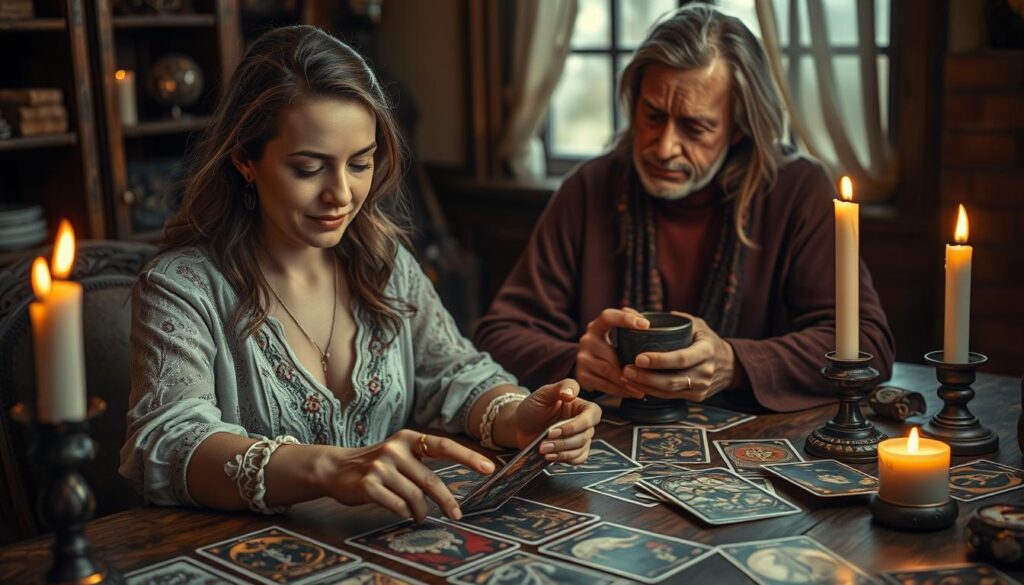
Key words, journaling, and meditation with the cards
Pick one or two words for each major symbol as anchors you can recall under pressure. Keep these simple and practical.
Journal every reading. Record images, first impressions, and any hits — this creates a living reference tuned to your experience.
Try a daily draw and meditation for five minutes. Sitting with one image deepens recognition and builds trust in your own voice.
Books and resources without overwhelm
Use books as primers: skim agreed meanings, then close the book and note what resonates. Pick one trusted guide and one class instead of many sources.
Layering meanings over time for confident readings
Accept simple starting points and add nuance across months and years. Use spaced repetition (flashcards or apps) to refresh keywords.
| Method | Practice | Benefit | Start |
|---|---|---|---|
| Keywords | One–two words per image | Quick recall in readings | Daily |
| Journal | Short notes, hits, outcomes | Personalized reference | Weekly |
| Meditation | Five-minute daily draw | Stronger intuition and memory | Daily |
For more examples and deeper study, explore a focused write-up like three of swords overview to see one way to build meanings over time.
Conclusion
,Wrapping up, treat the images as a toolkit that turns inner signals into practical choices. Use the system’s structure to spot timing and the major arcana to name big shifts. Then let the smaller suits map everyday steps in work, relationships, and self-care.
Practice with single draws or short spreads. Keep a journal and pick one suit to follow for a week. Notice how meanings shift with context and time.
Ask, “What wants to end, and what wants to begin?” Move slowly and celebrate small gains. You have a friendly guide and a steady deck to return to—trust your voice and let these images support your path forward.