
Explore a living gallery where history meets imagination. This short guide introduces decks that honor race, gender, nature, and myth. Each small image holds symbols, stories, and a creative journey into meaning.
The gallery acts as a friendly glossary and starting point for choosing a deck. It pairs vintage names like Golden Tarot and Tarot of Delphi with nature-forward works such as The Wild Unknown. You’ll notice how creators mix tradition and fresh ideas.
Expect practical ideas to spot visual cues—color, composition, and iconography—that shape your experience. We also preview inclusive decks that reflect race and gender, and cosmic decks that push the limits of visual inspiration.
Follow the overview as a meaning-first guide that prepares you to study individual decks and their creation. For a detailed look at archetypes in motion, see a related discussion of The Chariot here.
Key Takeaways
- Decks are mini worlds: each image blends history and new ideas.
- Use this guide as a friendly starting point for learning symbolism.
- Look for color, iconography, and composition to read meaning.
- Explore categories: vintage, nature-forward, inclusive, and cosmic.
- Creation reflects an artist’s vision while honoring shared stories.
Why Tarot Card Art Captivates: A Friendly Guide for Today’s Curious Reader
Step into a casual tour that shows how visual choices turn old symbols into everyday meaning.
The gallery invites browsing. You’ll notice how systems, themes, and illustration style steer your eye and shape what each symbol feels like.
Minimal lines can make an archetype feel crisp and clear. Lush painterly scenes can make the same figure feel warm and emotional.
Characters and themes—nature, history, modern identity, or cosmic scenes—help you relate. Artists translate complex ideas into images you can trust on a reading table.
When you shop or browse casually, you learn which approaches spark imagination and joy. That habit helps you pick a deck that fits your journey and keeps you coming back.
- Look for focus: movement, light, and focal points reveal direction.
- Match themes: pick decks that reflect your story for a more personal practice.
- Train your eye: casual browsing builds visual fluency before deeper study.
| Visual Element | Effect on Meaning | What to Notice |
|---|---|---|
| Line & Minimalism | Clarifies archetypes; feels direct | Silhouettes, negative space, simple gestures |
| Painterly Detail | Adds emotional depth; invites story | Brushwork, layered color, textured backgrounds |
| Themes & Representation | Creates personal resonance | Figure diversity, cultural motifs, setting |
| Composition & Movement | Directs reading flow across a spread | Lines of sight, implied action, light sources |
For practical shopping tips and deeper examples, see this helpful guide on exploring decks.
Tarot Card Art Styles & Themes to Explore
Different visual approaches change what symbols highlight and how meaning settles in.
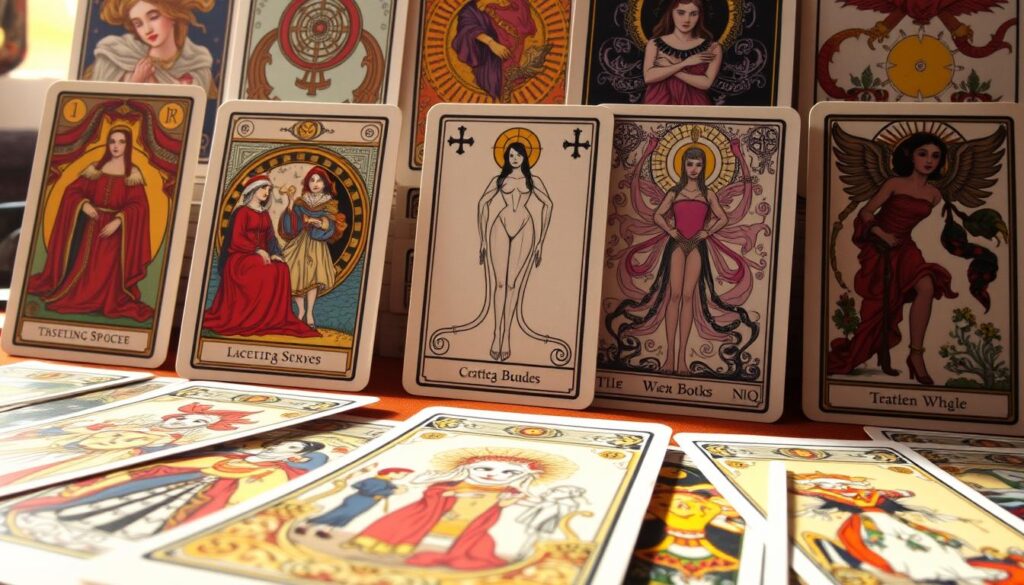
Vintage and historically inspired decks lean on classical composition and gilded palettes. Look to Golden Tarot, Pagan Otherworlds, Tarot of Delphi, Ancestral Path, and The Lost Tarot for museum-like scenes that honor tradition and history.
Earth and nature-driven sets bring wildlife and seasonal motifs front and center. The Wild Unknown, Crow Tarot, Forest of Enchantment, White Sage, and Wooden Tarot make images feel grounded and calm.
Race and representation focused decks update imagery for modern life. This Might Hurt, The Hoodoo Tarot, Modern Witch, and Delta Enduring center diverse faces so readings feel inclusive and practical.
Gender and LGBTQ+ visions celebrate varied identities through bold portraiture. She Wolfe, Star Spinner, Our Tarot, and The Muse use mythic motifs to expand who is seen and how empowerment reads.
Empyrean and cosmic aesthetics favor minimal geometry and luminous palettes. The Fountain Tarot, Starchild, Moonchild, and Serpentfire invite quiet meditation with crystalline forms.
| Style | Representative Decks | Key Visual Traits | Reading Effect |
|---|---|---|---|
| Vintage / Historical | Golden Tarot; Tarot of Delphi; Pagan Otherworlds | Gilding, classical figures, layered collage | Timeless tone; deepened meaning |
| Earth / Nature | The Wild Unknown; Crow Tarot; Forest of Enchantment | Animals, flora, organic lines | Grounded, cyclical energy |
| Representation & Equality | This Might Hurt; The Hoodoo Tarot; Modern Witch | Diverse figures, contemporary scenes | Inclusive relevance; modern clarity |
| Cosmic / Empyrean | The Fountain Tarot; Starchild; Serpentfire | Celestial color, geometry, light | Metaphysical stillness; inward focus |
Tip: Let your preferred style guide which cards you study first. Movement, framing, and contrast change what you notice first, and that shifts the reading’s meaning.
For simple practice spreads and ways to test a new deck before committing, try these spread examples: spread examples.
Major Arcana Symbolism in Art: The Fool’s Journey Through Images
The Major Arcana sketches a single life story across twenty-two images, each scene a step in the Fool’s long walk toward wholeness.
These plates hold archetypes that track growth and individuation. Readings can use only the major arcana to focus on big-picture meaning. Each piece functions like a chapter that reveals lessons in sequence, from new beginnings to completion.
Artists cue meaning with clear visual tools. Direction appears as roads, chariots, or a gaze that points the reader. Movement—spirals, ascending figures, or lightning—signals turning points. Metamorphosis shows endings and rebirth through thresholds, dusk-to-dawn shifts, or shedding forms. Harmony and tradition show up as balanced architecture for Justice or a lanterned figure for The Hermit.
Themes at a glance
| Archetype | Visual Cue | Typical Meaning | How artists show it |
|---|---|---|---|
| Strength | Gentle hold / animal | Inner power | Soft lines with steady posture |
| The Hermit | Lantern / solitude | Inner guidance | Isolated figure, warm inner light |
| Justice | Scales / symmetry | Cause and effect | Balanced composition, sharp lines |
| The Star / The Sun | Light / open space | Hope and joy | Luminous palettes, open horizons |
Tip: When a major card appears, let its imagery set the tone for the whole spread. For a close look at the first step, see The Fool.
Minor Arcana Motifs & Elemental Aesthetics
Each suit acts like a lens that turns everyday scenes into clear symbolic meaning. The Minor Arcana maps work, home life, and personal growth through elemental cues. Artists use color, texture, and setting so images signal tone before you name a card.
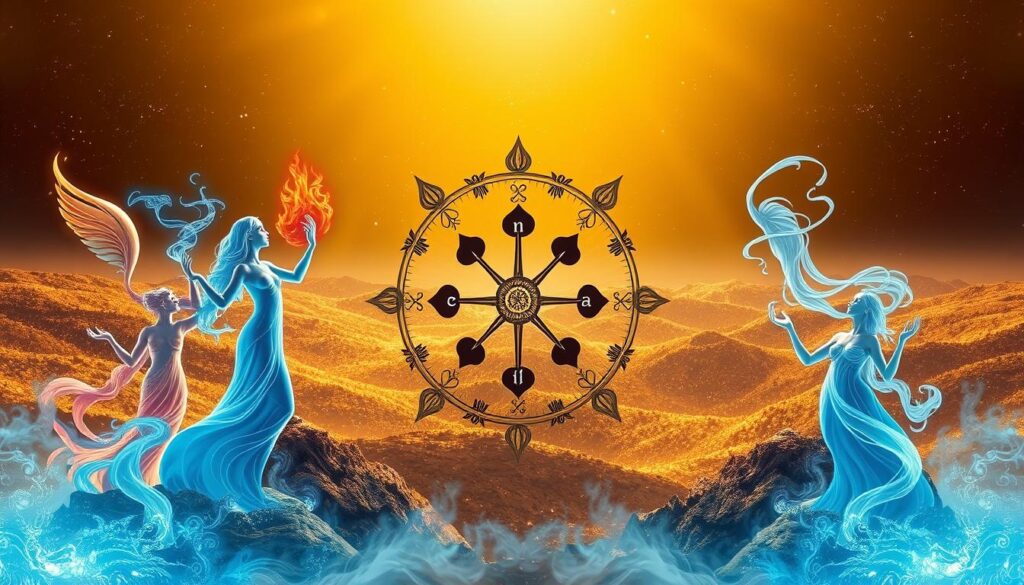
Wands — fire, will, and forward motion
Wands evoke passion, inspiration, and planning. Flames, sprouting branches, and angled lines suggest creation and direction in projects and work. At the low end, imagery can warn of recklessness or loss of focus.
Cups — water, feeling, and inner life
Cups lean on water, soft palettes, and lunar hints to invite intuition and imagination. These scenes point to relationships and home concerns. Unbalanced images may signal uncontrolled emotion or a lost inner voice.
Swords — air, clarity, and ideas
Swords use crisp contrast and sky motifs to highlight ideas, truth, and communication. They can prompt strategy checks: sharpen focus or soften delivery when conflict shows up.
Pentacles — earth, stability, and daily needs
Pentacles favor gardens, hands, and earth tones to stress nature, health, and long-term security. Their meaning often centers on practical balance between work, home, and prosperity.
- Quick tip: Let elemental textures guide your reading—woodgrain, ripples, air currents, or soil tell a lot.
Artist Spotlights & Notable Decks Shaping Today’s Tarot
Some modern visionaries turn decks into cohesive worlds that guide both gaze and intuition.
Kim Krans — The Wild Unknown: Krans favors stark lines, animal totems, and open composition. The imagery leans on nature to make meaning emerge quietly. The official keepsake box elevates the deck to an object you return to for reflection.
Jason Gruhl & Johnathan Saiz — The Fountain Tarot: Gruhl’s concept and Saiz’s paintings pair crystalline geometry with cool luminosity. The result feels like modern metaphysics, where structure gives space for stillness between cards.
Danielle Noel — Starchild & Moonchild: Noel’s decks bathe scenes in pastel starlight. Lunar motifs and dreamy palettes invite receptive listening and inner work. These decks connect dreams and intuition with soft, cosmic visuals.
| Artist | Representative Deck | Key Style Traits | Reading Effect |
|---|---|---|---|
| Kim Krans | The Wild Unknown | Minimal ink, animal totems, spacious layouts | Grounded, nature-centered meaning |
| Jason Gruhl / Johnathan Saiz | The Fountain Tarot | Crystalline geometry, cool light, painterly depth | Meditative, metaphysical pause |
| Danielle Noel | Starchild & Moonchild | Celestial palettes, lunar motifs, soft gradients | Dreamy, intuitive listening |
| Jennifer Galasso | Crystal Visions | Ethereal, visionary imagery | Reflective, visionary focus |
Strong artist vision and thoughtful packaging turn many decks into lasting companions. Whether you prefer nature, geometry, or pastel skies, style shapes first impressions and the meaning you take home.
From Studio to Reading Table: How Symbolism Guides Practice
When imagery moves from canvas to spread, it becomes a language you can use for clear, practical readings. Start with an intent and let the strongest visual element lead your first impression.
Using Major Arcana-only spreads for clarity on life direction
Major-only readings focus the story of the Fool’s Journey. They strip away daily detail so you can see broad life themes and the next direction.
Try a three-card pull: past influence, present energy, and next direction. Let the boldest symbol on each card guide your interpretation before you add textbook meanings.
Letting suit imagery set tone in work, home, and relationship readings
Bring suits in for practical focus. Wands point to work momentum and action. Cups highlight feelings and relationship dynamics. Swords clarify thinking and tough conversations. Pentacles show home, money, and material stability.
- Watch composition: gaze, paths, and light show how images relate across cards.
- If Wheel of Fortune appears, emphasize cycle and timing when discussing pivots.
- Anchor mixed spreads with one strong major to set theme; use minors to refine details.
| Spread Type | When to Use | What to Watch For |
|---|---|---|
| Major-Only, 3 cards | Big life questions | Dominant symbols, directional cues |
| Elemental Focus | Specific areas: work, home, relationships | Suit imagery and color palette |
| Mixed Anchor | Complex situations | One major sets theme; minors add detail |
Practice tip: Keep a reading log of which symbols recur for you. Over time, personal symbolism deepens meaning and makes each session more useful.
Inspiration & Deck-Choosing Ideas for Your Own Tarot Journey
Choose a deck by letting your life story and daily needs guide the images you return to most.
Match themes to your story: If tradition grounds you, a vintage-inspired tarot deck fits. If nature anchors your practice, look for animal and forest imagery. If representation matters, choose decks with inclusive characters. If you seek cosmic exploration, try palettes that feel starlit and spare.
Consider illustration style, expressive focus, and box/guidebook details
Compare style first: minimalist line, painted realism, or collage will change how meaning appears at a glance. Skim a handful of cards across suits to see whether faces, hands, landscapes, or geometry support how you read.
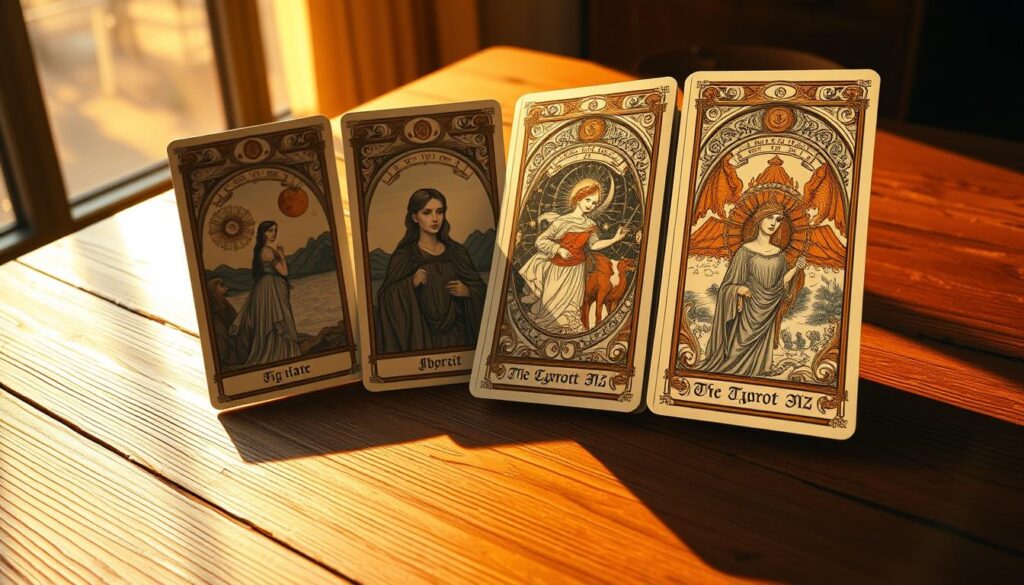
- Check the box and guide: a sturdy box protects daily use, and a clear guide deepens meaning without overwhelming.
- Look at the artist’s portfolio to confirm the visual approach aligns with your reading habits and creation routines.
- Test suits relevant to your questions—Wands and Pentacles for work and home, Cups for relationships, Swords for mindset and clarity.
“Prioritize decks whose meanings land quickly for you; keep a guide nearby for nuance.”
Make a short wishlist across themes and revisit it after a few days. The deck you keep thinking about is usually the right choice. For a focused example on emotional nuance, see the Knight page for further reading: Knight of Cups meaning.
Conclusion
Think of these images as doors—each one invites a small, surprising shift in how you read your life.
, The curated gallery shows a range from vintage scenes to moon-lit palettes, from The Wild Unknown and Modern Witch to The Fountain Tarot and Starchild. The Major Arcana sketch a universal journey, while suits tie symbols to daily needs and growth.
Let the visuals that bring you joy guide your practice. Test a deck, compare small spreads, and trust what keeps calling you back for more inspiration.
For a practical suit example of forward motion, see the Ace of Wands. May your readings bring moments of happiness, clearer meaning, and steady fortune—one felt image at a time.