

Welcome. This friendly guide shows how a spell grows from clear intention to simple action. You’ll learn practical steps that fit busy life and small spaces.
Think of a ritual like a recipe: purpose, tools, and timing. A basic layout brings together colors, herbs, crystals, sounds, and written symbols to support your aim. Clarity and focused attention matter more than perfect gear.
This article blends foundational information with hands-on techniques. You’ll find chapters on ethics, altar setup, element correspondences, circle work, invoking archetypes, timing, energy methods, and step-by-step casting. Each section builds on the last so beginners can follow in order, and experienced readers can jump to specific ideas.
Whether you prefer minimalist practice or elaborate ceremonial work, the same core framework scales to meet your needs. Safety and ethics are woven through the content to protect your well-being and ensure honest results.
Key Takeaways
- Learn a clear, usable framework for building a spell from intent to action.
- Focus and clarity outweigh ornate tools; simple practice works.
- Topics include ethics, altar setup, timing, and energy techniques.
- Sections stack logically for beginners; skip ahead if you prefer.
- This modern guide balances tradition with adaptable methods for today’s life.
- For related insight on inner power and psychic skills, see psychic superpowers.
What Spellcrafting Is Today: Intention, Action, and Energy
A modern spell links a clear intention with a sequence of deliberate steps. Each chosen move—word, gesture, or object—acts as a focused action that channels personal energy toward a specific outcome.
Think of the structure as a short chain: define purpose, select method, raise energy, direct it, and release. This keeps the working tight and reduces wasted effort.

Spells as a series of actions that manifest intention
Modern practice treats every element as meaningful. Colors, herbs, symbols, and crystals add layers that reinforce the same message through multiple senses. These correspondences help your intent register more clearly and improve the overall effect.
Why focus and clarity amplify your magic
Clarity works like a lens. When attention is narrow, your personal energy does not scatter and the same ritual action produces a stronger result.
- Set a clear goal before you start to avoid unnecessary work.
- Adapt the method to your current energy level; simpler rites help on low days.
- Practice regularly to improve your focus and refine your toolkit.
| Step | What It Does | Practical Tip |
|---|---|---|
| Define purpose | Clarifies intent and prevents vague outcomes | Write a one-line outcome statement |
| Choose method | Select actions and correspondences | Match colors or herbs to your aim |
| Raise & direct energy | Concentrates personal power into the working | Use breath, movement, or sound to build focus |
| Release | Send the focused energy toward the goal | Close with a clear statement or gesture |
For related skill work that sharpens focus and control, consider practical training like a concise telekinesis method — exercises that build steady attention and useful baseline strength for any ritual.
Setting Purpose: Define the goal before you cast
Start with a single, testable aim so your working has clear direction. Before lighting a candle, pause and turn a broad wish into one concise sentence you can measure. This step saves effort and sharpens the later choices in a creating spell routine.
From vague wishes to a clear outcome statement
Translate a wish like “more money” into a precise outcome: for example, “secure a $500/month increase via promotion, freelance work, or savings within 60 days.”
Write that sentence as a short text you can speak, inscribe, or place on the altar. A clear statement becomes the anchor for the energy and guides what correspondences you choose.

Assessing the situation to avoid ineffective efforts
Do a quick assessment: identify root causes, your sphere of control, and practical steps to pair with the ritual. Mapping constraints and resources makes the intended effect realistic and ethical.
Keep a page in your grimoire as a worksheet. Note ideas, possible actions, and what you won’t do. This habit speeds future workings and creates a small, usable book of reliable information.
- Define the purpose in one sentence.
- List controllable steps that support the goal.
- Stay open to unexpected solutions that still meet the aim.
Ethics and Safety: Working with power responsibly
Working with magical force begins with clear limits and honest intent. Center your practice on consent, sovereignty, and responsibility. Keep your work focused on your own sphere so you do not attempt to control another person’s will.
Cast a circle to affirm boundaries and protect your energy from outside interference. Protective practices lower the chance of spiritual blowback and keep results clear rather than muddled.
Check your motives before a working. Be honest about your emotional state and current level of resilience. If you feel volatile, postpone the spell and ground first.

- Protection before the ritual; grounding and respectful closure after.
- Treat a deity as an archetype whose traits you invite, not as a title to command.
- Document details of each working so you can learn and refine methods safely.
- Build abilities gradually: start small, confirm results, then scale.
Remember that imperfection is normal. Consistency and clear methods matter more than theatrics. A responsible witch protects personal boundaries, household privacy, and community well-being as part of ethical practice.
Your Working Altar and Core Tools
Your altar is a compact workshop where intention meets tools. Keep it focused: every item should serve purpose and support your aim. A tidy, meaningful layout helps you act with clarity during a spell.
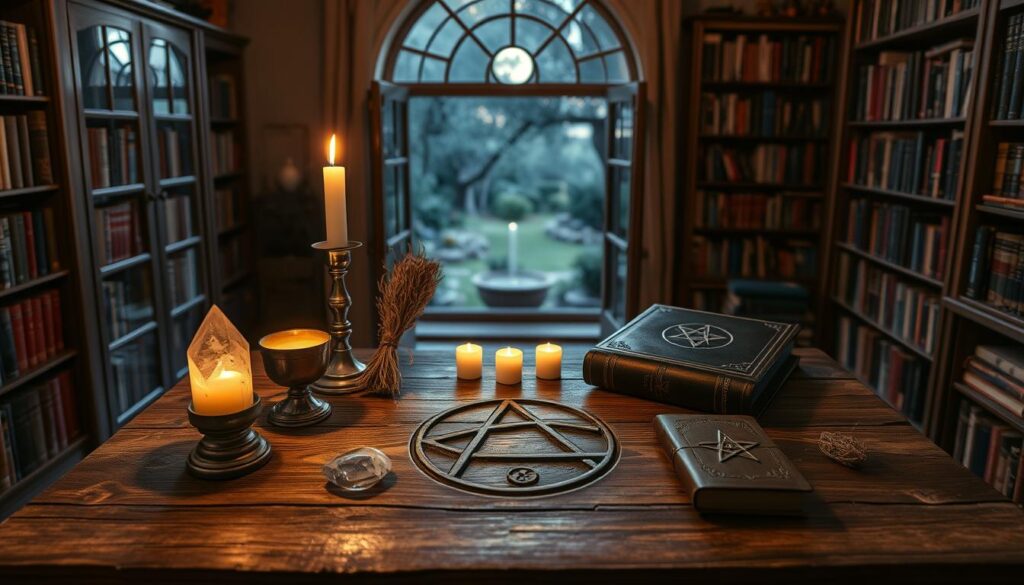
Tools and what they do
- Athame — directs will and frames ritual gestures.
- Wand — channels energy outward for specific action.
- Chalice — holds receptive forces and symbolizes flow.
- Pentacle — grounds intent and anchors manifestation.
Charging, blessing, and maintenance
Cleanse tools, dedicate them with a short blessing, and recharge on a regular cycle. This bonds their energy to yours and keeps the working level consistent.
Grimoire and practical layouts
Use a small book with an index and color tabs to store scripts, correspondences, and timing details. Record date, moon phase, tools used, and outcome to refine future craft and measure effect.
Curate rather than collect: choose items that genuinely help your practice. For further archetypal guidance, see The Magician.
Elements on the Altar: Earth, Air, Fire, Water, Spirit
Each element brings a distinct voice to a working; arrange them with purpose. Elements—earth, air, fire, water, and spirit—offer clear qualities you can place at the circle’s points to orient attention and strengthen the ritual sphere.
Properties and circle points
Earth anchors stability and resources. Place it at the north point to ground growth and practical action.
Air lives in the east point. Use it for ideas, communication, and quick shifts of perspective.
Fire sits to the south. It fuels drive, transformation, and courageous steps.
Water belongs at the west point to support emotions, healing, and flow.

Choosing compact representations
For a small area altar, try a bowl of salt for earth, a stick of incense for air, a candle or LED for fire, and a cup for water. Add a small symbol or stone for spirit at the center point to integrate the rest.
- Switch to LED candles for safety or stones for water when liquids are impractical.
- Honor seasonal and stars associations by adjusting items to the time of year.
- When a working feels flat, tweak the balance—add more earth for stability or more fire for energy.
Keep a short log of which mixes felt potent. Spirit ties the pattern together and helps keep the intention at the center point of your spells and practice.
Casting the Circle: Creating a protective sphere
Begin by feeling the space around you as a soft, protective sphere centered at your solar plexus. Breathe slowly into that area and imagine the sphere growing a handbreadth beyond your body. This sphere holds your focus and keeps the working clear.

Centering at the solar plexus and affirming boundaries
Gather breath into the solar plexus for three slow cycles. Picture a warm light at that point and let it expand evenly to form a boundary you can feel.
Walk the edges by moving clockwise and touching the four cardinal points, or mime the gesture if indoors. Seal each section with a short phrase or gesture to confirm the line.
Inviting energies while keeping interference out
Set permissions: name what is welcome and what is excluded. Keep phrasing brief and confident so the area knows its limits.
- Practice tool-free casting using posture, breath, and clear visualization.
- Keep the circle tight for private workings. Widen it for group rites or larger movements.
- Reinforce weak spots mid-spell if you notice cold spots, intrusive thoughts, or sudden distraction.
| Action | Why it helps | Quick script |
|---|---|---|
| Centering breath | Roots the sphere at your core and raises focus | “I center here, I hold this space.” |
| Walk-the-edges | Affirms boundary at cardinal points | “By this step, this line stands.” |
| Set permissions | Keeps the working focused and controlled | “Welcome only that which aids this aim.” |
| Ground afterward | Returns you to normal level and clears residue | “I ground and thank; the working is done.” |
Always uncast and offer thanks when you finish. Ground briefly to settle energy and prevent lingering residue. For a practical attention exercise that helps steady this process, try a short telekinesis-style focus drill from focused mind training to build steady awareness usable anywhere.
Deities as Archetypes: Invoking traits, not titles
Select a symbolic ally whose story carries the energy you wish to amplify.

A deity is an archetype—a pattern of traits like wisdom, protection, or victory. Invoking that figure names a mood and focus for your work.
Choosing a fitting ally
Pick a god or goddess whose myths and symbols match your aim. Look for resonance: a protector for safety, a teacher for study, a patron for new life.
Simple, respectful invocation
Use a brief script: name presence, state the need, ask for aligned effect, then thank. Keep promises and avoid bargaining beyond your means.
- Frame deities as patterns, not bosses.
- Research overlapping figures to find comfortable matches.
- Journal dreams, omens, and small responses after an invocation.
Your own clarity and power remain central. You can cast a spell or perform spells without a named ally. Think of deity work as reinforcement, not a shortcut.
Correspondences that Add Strength: Color, herbs, crystals, symbols
Small, chosen symbols make a spell’s aim easier to hold. Correspondences act as quick cues for the mind and senses.
They tell your intention and the subtle field what you mean. Use them like a short recipe: pick two to three items that speak the same message.

Layering representational energy to focus content and intent
Colors, herbs, and crystals work as visual and sensory shorthand. They keep your attention fixed and help the working register across senses.
- Choose 2–3 matching correspondences (color + herb + stone) rather than many.
- Label and store materials so fresh supplies are easy to find when planning a working.
- Keep a section in your book with notes on what actually produced strong results.
Sympathetic magic and written symbols in action
Use simple sympathetic moves: knot a cord for binding, carve a rune into a candle, or float a petition on water to mirror the intended change.
Sigils, runes, or a personal script act as compact carriers of intent you can charge, place on the altar, and revisit later.
| Correspondence | Example | Sympathetic action | Best use |
|---|---|---|---|
| Color | Green | Wrap a ribbon around a charm | Money, growth |
| Herb | Rosemary | Add to a sachet or burn as incense | Memory, clarity |
| Crystal | Citrine | Place on the altar or in a grid | Confidence, luck |
| Symbol | Personal sigil | Draw on paper and burn or keep | Long-term focus |
Less but better: pick only what truly adds strength to the working. Periodically review your information and swap items that don’t show real effect.
Energy Work and the Body: Aura, breath, and grounding
Your breath is the easiest tool to train when you want steady, usable power. It links the mind and the body so your intent moves with fewer distractions.

Simple ways to raise, direct, and release energy
Breath ladder: Inhale with intent for three counts, hold two, and exhale while visualizing the aim. Repeat, raising the imagined light a notch each round to lift your energy level gradually.
Sense your aura by scanning with relaxed hands about six inches from the skin. Smooth away tight spots by brushing outward. This clears static so energy flows without snagging on stress.
- Ground quickly by imagining roots through feet or the seat; feel heavy and steady.
- Point energy with palms, a wand, or gaze toward your aim to keep the stream focused on target points.
- Build to a peak and release on a clear cue—speak a one-line send and then discharge gently.
Finish with a short post-ritual discharge: shake limbs, breathe deep, or touch earth. Use a quick body scan to relax tense areas that leak focus. Track which methods feel natural so your baseline power improves and every spell gains cleaner effect.
| Technique | What it does | Quick cue |
|---|---|---|
| Breath ladder | Raises energy level steadily | “Lift — hold — send” |
| Aura smoothing | Removes static and tension | Outward brush with palms |
| Grounding roots | Stabilizes body and focus | “Roots hold me steady” |
| Directional point | Channels power to the aim | Hands to target, steady gaze |
Timing the Work: Aligning with time, earth, and stars
Timing is a practical tool: aligning a working with natural cycles can increase its subtle momentum. Use days, moon phases, seasons, and even precise minutes to refine how your spell feels and flows.

Days, moon phases, and minutes that matter
Pick a day that matches the aim—communication on Wednesday, money on Thursday, and protection on Tuesday are simple guides. Pair the day with a moon phase: new moon for starts, waxing for growth, full for culmination, and waning for release.
When precision helps, choose minutes within an hour that fit your rhythm. A well-timed minute can sharpen focus, but clear intention still works if you must act now.
Seasonal and elemental timing for extra power
Use seasons and earth cycles as natural momentum: plant spells in spring, release in autumn, protect in winter, and fuel change in summer. Align points of your circle with elements that match the aim—north/earth for stability, east/air for ideas, south/fire for drive, west/water for healing.
- Hierarchy: pick a good-enough day/phase first, then refine by minutes if needed.
- Use stars and planetary links when helpful, but don’t delay urgent action waiting for rare alignments.
- Keep a short timing log to spot what windows produce the best effect for you.
Practicality wins: if you need to act now, act. Thoughtful timing adds a quiet boost, but the sphere you cast and your clear intent do the heavy lifting.
Step-by-Step: Creating a Spell that serves your purpose
Start by sketching a clear outcome so every gesture has meaning.
Plan the effect on one line. Choose correspondences that back the aim. Decide the simplest method that fits your space and time.
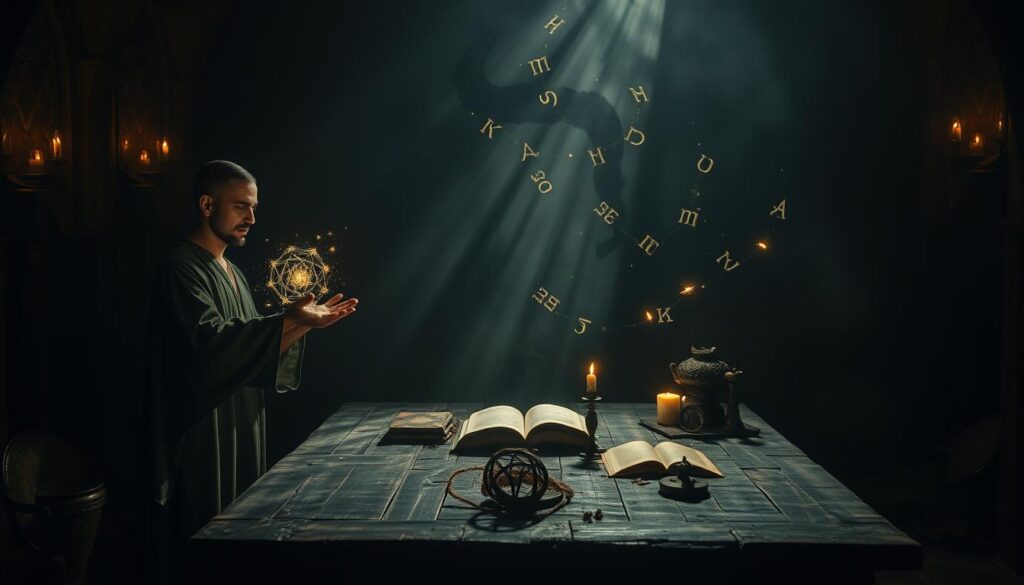
Plan the effect, assemble components, script the text
Stage the altar so each item has a job and element points are clear. Write a short text you can speak from memory. Keep lines simple to avoid losing focus during casting.
Rehearse, cast, raise power, send, and close
- Run the sequence once to smooth transitions.
- Cast the circle, invite allies if used, then build energy steadily.
- Send the intent at a defined peak, hold still to confirm release, then close with thanks.
Document results to refine your craft over time
Log the date, moon phase, tools, and what you felt on a single page. Note observed effect over days so you can tweak timing, correspondences, or casting style next round.
“A simple, repeatable routine reveals which details add real power.”
Casting Methods: Words, gesture, and sympathetic action
Words and small gestures shape how an intention moves from thought into tangible result. This section outlines practical casting forms you can use in tight spaces or backyard altars.

Chant, sigil, and knot practices
Chants are steady, breath-linked text that keep intent active while you build momentum. Use short lines and repeat with each breath to raise focus.
Sigils compress a sentence into a single mark. Charge a sigil by breath, gaze, or a brief ritual, then deploy or release it to carry the aim forward.
Knot magic ties intention into cord. Each knot holds an aim; untying at set times releases or loosens that bond.
Candle and water rites
Candle work suits ignition and transformation. Carve a symbol, dress the wick with an aligned oil or herb, and let the flame translate the form into effect.
Water workings carry emotion and cleansing. Float or dissolve a petition, or speak words while letting moving water carry them away.
- Match method to setting: quiet forms for public spaces, active rites at home.
- Use only a few actions so the form sharpens rather than muddles the message.
- Test different methods for the same intention to learn which channels your power best.
- Record the method and result on a page in your grimoire for future reference.
Troubleshooting and Iteration: When spells don’t land
Not every working shows obvious results right away. When a spell feels stalled, a calm, methodical review helps you find what to change. Treat the process like careful troubleshooting rather than blame.

Diagnose: clarity, correspondences, casting, or context
Verify intention clarity: make the aim measurable and brief. Vague goals scatter energy and reduce effect.
Check correspondence fit: confirm color, herb, or stone truly matches the aim. Poor matches dilute results.
Review casting steps: rehearse the sequence and watch for missed gestures, dropped lines, or weak peaks in energy.
Scan life context: look for hidden blockers—timing conflicts, emotional strain, or practical obstacles that interfere with outcome.
Adjust the form, energy level, or timing for better results
Sometimes less force works better. Lower the energy level you raise and use a gentler send. Other times a stronger, shorter burst lands cleanly.
Change time windows: shift day, moon phase, or minute when outcomes stall despite otherwise solid work. Small timing shifts can change momentum.
Swap a clunky method for one that matches your natural cadence. Tighten the point of focus by removing extras that create noise.
| Issue | Quick check | Fix |
|---|---|---|
| Unclear aim | Can you state it in one sentence? | Rewrite as a testable outcome and place it on the altar |
| Mismatch of correspondences | Do items all signal the same goal? | Use 2–3 aligned correspondences only |
| Weak casting | Was the peak energy evident? | Rehearse, then build a clearer peak with breath or movement |
| External blockers | Life factors preventing effect? | Address practical issues, or delay until conditions change |
Record details in your book: date, time, level raised, steps used, and what you observed. Over several attempts, patterns will emerge and your success rate will rise.
“Iteration is not failure; it’s the steady tuning that increases effect over time.”
Modern Witch Life: Keeping practice simple and sustainable
A steady witch life favors tiny rituals that pile up into real change. Practice can be as elaborate or as minimal as you need, and the goal is steady connection rather than perfection.

Balancing perfection and practicality in daily magic
Value small sessions: use short, focused work that fits your day. A clear five-minute spell now often beats a perfect ritual you never have time for.
Pick one core method you love and repeat it until it becomes second nature. That builds dependable strength and saves decision time.
Keep a slim reference page of go-to correspondences and short scripts. Store a digital copy for quick search and backup so your notes travel with you.
- Promote a realistic cadence: weekly grounding, monthly review.
- Create space-savvy setups for apartments or shared housing.
- Simplify when motivation dips—small acts keep the thread alive.
“Small wins add up; celebrate progress to grow confidence.”
Find the way that fits your rhythms. Over time, this practical approach brings steady value to your witch life and makes magic a sustainable part of your day.
Conclusion
Finish by turning what you learned into a small, steady routine you can repeat. Define a clear purpose, plan the form, set the space, raise and direct energy, release cleanly, and record outcomes in your book.
Keep focus as the central point of each working. The circle you cast creates a reliable sphere where intent is protected and amplified. Use correspondences, element timing, and brief minutes of attention to add momentum without blocking action.
Build a personal book of short scripts and results. Choose compact actions or fuller rites that match your life; practice one method until it feels natural. Align with earth and the stars when useful, but don’t wait to start.
Explore related guidance as you refine your techniques. Quick checklist: clarity, boundaries, timing, correspondences, casting peak, ground, and note the effect. Keep caring for your body and aura. Small additions each week add lasting strength—keep casting and keep learning.