

Welcome to a friendly, beginner-focused series that shows what spellcraft is and how it connects to personal intention. This guide frames magic as a practical, focus-driven discipline that channels energy into real outcomes.
You don’t need elaborate setups to begin. Clear words, mindful action, and steady practice hold real power as you gain experience in this world and universe of practice.
Across this long-form series we’ll explain core concepts, foundational practices, easy beginner techniques, and how these ideas appear in culture and games. Each section builds in a logical sequence so you can move from principles to practical steps at your own pace.
Expect simple tools and clear definitions that support accessibility for newcomers. We’ll also encourage active learning — journaling intentions and reflections helps turn study into personal growth.
Key Takeaways
- Spellcraft here is practical and intention-focused, not ornate ritual.
- Start small: simple words and mindful acts matter more than tools.
- The series moves step-by-step from basics to practice and culture.
- Journal your intentions and track results to learn confidently.
- Explore related practices and layouts like tarot spreads to broaden your skillset.
What Is Spellcraft and How It Works Today
At its core, a spell is a short, repeatable set of actions meant to move intention into the world.
Intention, energy, and matching your will with the universe
A ritual channels personal energy into a clear aim. Intent shapes every step, while timing and materials help align that aim with larger currents.
Practitioners add color, herbs, crystals, and symbols to make intentions easier to hold. Over the years, traditions passed like recipes, but personal adaptation is normal and encouraged.
The role of words, sound, and body in magic
Words act as containers for meaning. Short, specific phrasing keeps a practice testable over times you repeat it.
Sound—chants, tone, or rhythm—anchors attention and steadies breath. Body posture, gesture, and controlled breathing focus the mind and mark ritual boundaries.
Try small, repeatable actions, record outcomes, and refine your approach. Be ethical: aim for constructive results and keep clear notes so you can learn from each action.

- Practical: Simple sequences you can repeat.
- Embodied: Words, sound, and body unite intention and action.
- Adaptive: Traditions evolve; your practice can fit your life.
For related practices that explore focused intent in physical ways, see telekinesis exercises.
Spellcraft
A well-defined working place helps your focus and keeps outside energy at bay. This section shows how to make a simple, safe setup that supports clear intention and reliable practice.
Casting a circle: creating a safe place and setting clear boundaries
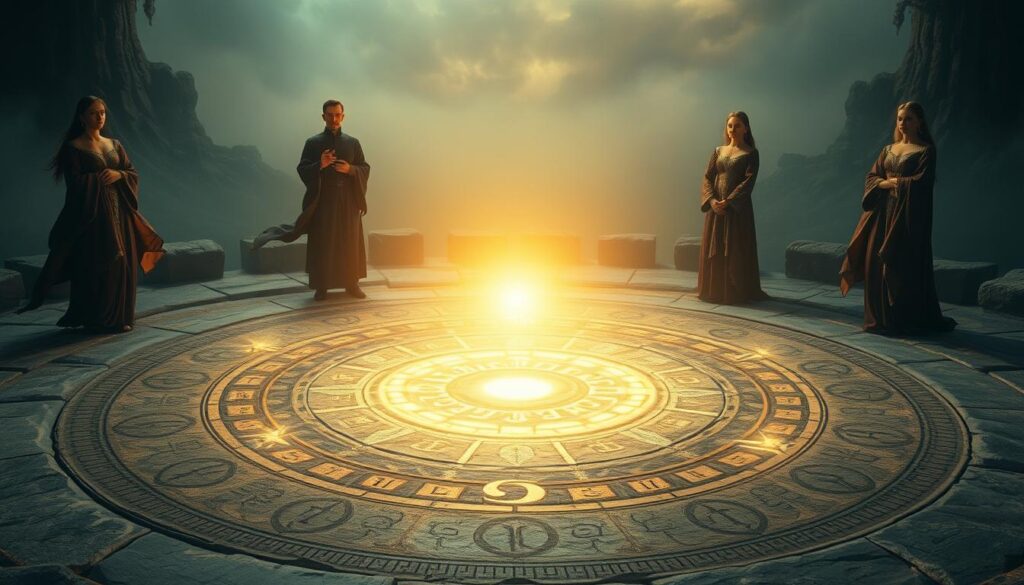
Cast the circle as a three-dimensional sphere with your solar plexus at the center. This affirms a boundary that protects your energy and marks a clear beginning and end to the working place.
- Clean the area and remove distractions.
- Ground and center at your solar plexus, breathing until steady.
- Trace the boundary (walk or visual trace) while stating your purpose.
- Close the circle openly when you finish.
Working with deities and archetypes to focus power
Invoking deities or archetypes names a quality you want—courage, clarity, or protection. Do so with respect and consent in your wording, and invite only what aligns with your intent.
For a deeper look at archetypal focus see invoking The Magician.
Your altar, tools, and items: building a simple working space
Keep a minimalist altar: a flat surface, candle, bowl of water, pinch of salt or soil, incense or a feather for air, and one dedicated item that symbolizes your goal.
The five elements and aligning them
Place tactile representations for earth, air, fire, water, and spirit at cardinal points. One item per element keeps the space calm and purposeful, even for small spells.
Ingredients and correspondences: quick reference
- Colors: green for prosperity, blue for calm.
- Herbs: rosemary for clarity, lavender for peace.
- Crystals: clear quartz for amplification.
- Symbols: runes or sigils that match intent.
Choose only items that resonate with you; attention matters more than quantity.
Journal circle openings and closings with time, moon phase, and key focus points. Repeatable steps build your skill and increase the power of each spell over time.
Beginner techniques: from first spell to confident practice
Start small with clear steps that you can repeat until they feel natural. Consistency matters more than complexity. Use a short ritual layout you can run several times to compare results.

A basic ritual layout: steps, timing, and representational action
- Prepare the space and remove distractions.
- Ground and center with one steady breath.
- Cast a protective circle and state intention.
- Perform a representational action (light a candle or plant a seed).
- Raise and direct energy, then seal the working and close the circle.
The power of words: crafting clear spell statements
Make your statement concise. Name the goal, set a clear scope, and add one measurable point of success. Anchor it with a short, memorable phrase you can say at ritual times.
Protective practices and scaling complexity
Protection is the circle’s main point: a firm boundary, a quick banishing phrase, and a grounding breath work well when distractions arise.
| Focus | Simple Start | When to Repeat | Scale Options |
|---|---|---|---|
| Clarity | One candle, one line | Morning | Add herb or crystal |
| Release | Write and burn intent | Evening | Longer chant |
| Growth | Plant a seed | Weekly | Layer symbols |
Keep a checklist of materials, words, timing, and closure. After each session, run a short debrief: what worked, what felt off, and one point to change next time.
For related concentration exercises, see telekinesis exercises.
Spellcraft in games and pop culture: skill checks, wizards, and worlds
Across RPGs and classic PC titles, magic becomes a set of readable, repeatable systems. Players learn to watch, react, and plan when a foe or ally begins casting. That clarity turns ritual into a tactical tool.

RPG mechanics: identifying spells, counterspell, classes, and saving throw bonuses
Spell-identification often uses a simple formula: DC 15 + spell level to recognize a casting. A successful check can let a character attempt a counterspell or warn allies.
Every 5 ranks in the skill gives +1 to saving throws against hostile magic. Specialist wizards gain +2 with their chosen school and suffer -5 for prohibited schools. A check is required to try a counterspell.
Classic “SpellCraft” the game: realms and epic action
The 1992 PC entry in the series plunges a player through realms like Air, Water, Mind, Earth, Fire, Ether, and Death. Combat is fast and spell-heavy, with legendary items such as the Orb of Eternal Enlightenment and the Ring of the Full Circle.
Reviews praised deep spell systems but warned of a steep difficulty spike and tough dragon-level encounters. A canceled SNES port simplified fights to one-on-one duels and fewer spells.
Good in-game identification rewards awareness and gives you time to counter, reposition, or use resources smartly.
For related concentration and power lists see the list of super powers.
Conclusion
In closing, focus on a few clear points that make spells easier and more reliable.
Recap: you learned how spellcraft channels intention into a repeatable set of steps. Simple structure and steady practice beat complexity when building confidence.
For everyday success, set a brief circle, use one focused statement, and pick ingredients that truly resonate. Keep the place uncluttered so your work feels purposeful.
Refine one technique at a time—wording, timing, or breath—and track results. Like a character or wizard in a game, your logs help you read situations and respond with better timing.
Try two or three small spells over a month. Change one variable each time and compare notes. Use sound, breath, and body as anchors.
Pick one intention today, gather one or two items, cast a short circle, and take the first step. Small, steady efforts over years build real power and a grounded practice in this world and universe.