

Welcome. This short guide gives a friendly, practical tour of ritual craft for writers and curious readers. It aims to explain what a spell is in folklore and fiction, and how an incantation and ritual action work together to focus intent.
We outline common categories found in grimoires: healing, protection, cloaking, divination, elemental work, curses, and more. You will find a clear list and examples so scenes read true to tradition without promoting real-world harm.
Expect a listicle structure that helps people scan and return to sections on beginner techniques and advanced practices. Timing, tools, and classic wording—plus notes on translation—are included to enrich storytelling and keep ethical choices front and center.
For related context on intuition and readings, see psychic readings as an example of complementary resources.
Key Takeaways
- Learn how words, ritual action, and tools combine to form a focused spell.
- Grimoires organize work by type, helping writers pick the right approach.
- Timing and simple items like herbs and candles add believable detail.
- Ethics matter: emphasize consent and defensive practice in scenes.
- Structured lists let readers scan from basic cleansing to advanced projection.
Understanding magic spells today: what they are and how they work
A spell in contemporary terms is a focused sequence of words and actions that channels intent inside a symbolic framework. The incantation acts as a verbal key that shapes tone and rhythm, while gestures and tools mark the rite’s boundaries.
Incantations can be formulaic or improvised in fiction. Translation choices alter cadence and credibility, so pick words that match your scene’s voice and the character’s background.
The person casting matters. Focus, preparation, and ethical stance often matter as much as the script. A clear motive makes the effect feel earned and believable.
Modern witchcraft in stories blends folk practice, ceremony, and personal craft. Grimoires or notebooks give structure and continuity for repeated use or learning.
- Functions: protection, healing, divination, boundary setting, elemental influence.
- Writer tips: signal an incantation’s purpose, show sensory detail, and avoid lengthy technical explanation.
- Balance: set consistent rules for time, cost, and limits so stakes stay clear.

For a related look at focused mental influence, see telekinesis techniques as an example of controlled effect in fiction.
Core elements of a spell: words, will, and ritual power
Words and posture give a ritual its skeleton and its pulse. An incantation often acts as a mnemonic and focal cue. Phrasing and cadence help a reader feel intent and rhythm.
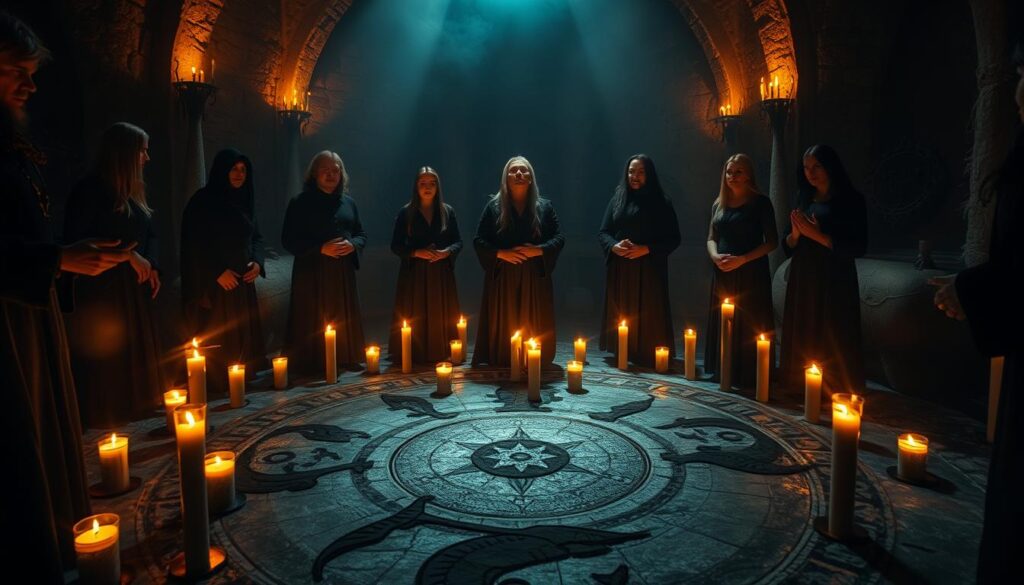
Incantation and true name: why words matter
Short, repeated lines anchor complex intent. A true name tightens the target lock and raises ethical stakes around consent and identity.
Translation choices — Latin, vernacular, or a constructed tongue — set age, lineage, and tone. Use them to hint at history without heavy exposition.
Focus, intent, and the role of the caster’s mind
The caster’s mind shapes outcome. Concentration, visualization, and calm emotion sustain barriers or illusions. A lapse can cause a fizzle, backlash, or only a partial effect.
- Non-verbal casting suggests advanced training; spoken lines make the action readable for audiences.
- Body posture, breath, and gesture reinforce intent and protect the person casting.
- Decide which effects need spoken words versus silent will and stay consistent.
For a related take on focused mental influence in fiction, see telekinesis techniques.
Tools of the craft: books, objects, and ingredients that amplify magic
Story-ready tools—books, herbs, and small talismans—give rituals texture and credibility. A grimoire functions like a field manual: it lists an incantation, a short translation, materials, timing, and caution notes so a scene feels lived-in.

Grimoires and personal notebooks
Traditional grimoires organize spells by purpose, with marginalia and cross-references. Suggest a character keep a small book of shadows with consistent headings: title, incantation, translation, ingredients, and risks.
Common objects and correspondences
- Circles and amulets for containment and protection.
- Candles, herbs, oils, stones, and enchanted tools for focus.
- Poppets, jars, and charm bags to hold layered intent.
Liquid and powdered ingredients
Salt, water, ash, and sometimes blood appear as binding or purifying agents in many entries; they add stake and sensory detail without technical instruction. Potions and powders act as delivery systems, while jar spells bundle correspondences to guard thresholds.
“The Tree of Knowledge codex shows how varied entries—curses, healing potions, love charms—sit side by side in a single volume.”
- Example inventory page: incantation, translation, purpose.
- Materials and step-by-step method.
- Notes on timing (moon phase), repetitions, and safety.
Safety, ethics, and consent in witchcraft and spellcasting
Responsible practice centers consent, safety, and proportional cost. Make it clear when a spell or incantation crosses a line into coercion. Love workings that remove agency should read as unethical or the mark of a villain.
Differentiate defensive work from offensive harm. A simple protection rite belongs with boundary lore; an active curse that causes pain or lasting damage belongs in darker territory. Show consequences when a hex takes root over time and alters a person’s mind or body.
Use tangible costs to keep tension real: exhaustion, lost resources, social fallout, or ritual time. These limits prevent power without responsibility and enrich story stakes.
Depict community ethics—covens, schools, or study groups—with rules: transparency, witness oaths, abstention clauses, and clear consent forms. Visible safeguards like salt circles or safe words dramatize care.

| Practice | Ethical stance | Typical safeguards |
|---|---|---|
| Defensive protection | Permissible with consent | Salt circle, witness oath, minimal materials |
| Offensive curse | Controversial or forbidden | Ban lists, accountability, strict rules |
| Ambiguous hexes | Require debate and warning | Grimoire notes, consent clause, long-term monitoring |
“Centering consent and clear consequences makes ritual work feel credible and responsible.”
Biological and healing spells: body, blood, and recovery
When rituals affect a living body, authors must balance procedure, cost, and consequence.

Biological work in fiction ranges from easing acute pain to stabilizing a failing heart.
Pain reduction, healing, and paralysis techniques
Show a clear method: a spoken incantation, a touch, and a reagent like clean water or a poultice of herbs.
Example: Pain Reduction — et quiescam nec dolor (translation: “pain will subside”).
Contrast relief with immobilization: paralysis (nervi resoluti) can save or harm another person depending on consent and context.
Memory, strength, and heartbeat control
Short-term boosts such as Viribus raise strength but carry rebound fatigue. Memory focus can be guided by ritual prompts and sensory anchors.
Heartbeat control incantations — Tardus pulsatio or Corum spiritus — should read as risky, since altering pulse affects the whole body.
Practical notes: blood may bind intent, so use it sparingly and with consent. Antidotes often need water and specific reagents; aftercare includes rest, nourishment, and grounding to make recovery scenes believable.
“Living targets require different rules and higher cost than inanimate charms.”
- Include clear limits and side effects for credibility.
- Show staffed care or ritual aftercare to ground the scene.
- Use brief incantation lines with a translation for tone and authenticity.
Boundary, sealing, and protection spells
A well-placed barrier gives a scene instant stakes: who may enter, who must wait.
Boundaries stop movement; seals set rules. A boundary often breaks when force or focus rises. A seal commonly ties to a signature or blood mark and opens only by the same line or token.

Doorway sealing, room isolation, and bubble boundaries
Doorway Sealing—short incantations like “Vis porta” or “sigillum”—can be spoken over a threshold and signed with a token or a pinch of blood. Room Isolation uses lines such as “Apné sà mene” to cut sound and sight for bystander safety.
Bubble Boundary or “Bulla” wraps a small area. Cues: palm upward, slow breath, and a steady hand arc. Tie duration to time or attention so losing focus raises tension in a scene.
Shields, containment, and unlocking counter-magic
A Shield like “Scutum” deflects fire, light, or kinetic strikes. Gesture cues matter: an outward palm deflects; a cupped hand gathers force. Containment—“Imperium monstrum”—holds a person or entity inside a circle, not merely deflecting attacks.
- Containment binds; protection redirects.
- Unlocking counter-magic (“Dissero”) can bypass mechanical locks when rightful access or consent is proven.
- Water, salt lines, or a spoken seal over key objects add a grounded, visual reinforcement.
“Seals become potent when the caster’s blood sets the terms; breaking them often demands the same bloodline or a formal counter-ritual.”
For practical defensive phrasing and techniques, see a short guide on ritual protection.
Cloaking and illusion spells: mind, light, and sight
Illusory work plays the senses, letting a caster write a scene into a bystander’s mind. Cloaking renders a person, place, or object undetectable. Illusion alters perception so witnesses accept a curated view.

Glamour, shapeshifting, and disillusionment
Glamour overlays features: hair, scent, and posture shift in the observer’s mind. An incantation like “Quidquid requiritur fiat” reads as a short, repeatable line; add a brief translation to set tone and stakes.
Shapeshifting may change appearance but not inner biology. Use clear limits: duration, fatigue, and risk to the body so scenes remain believable. Disillusionment—“Phasmatos Oculacs”—acts as a narrative countermeasure to reveal what a glamour hides.
Silencing, translucence, and essence reveal
Non-verbal silencing uses a candle-salt method that mutes sound within a small radius. Note limits: range, duration, and visibility.
Translucence like “Preitori Speculo” lets a wall become a thin pane of refracted light for reconnaissance. Essence Reveal—“essentia revelare”—detects charm-bearing objects and helps identify which objects hold an active incantation.
“What the spell creates is a curated sensory overlay anchored in the target’s mind.”
Destruction and offensive spells: fire, force, and finality
Offensive ritual work forces writers to balance spectacle with consequence. Destructive casting unravels enchantments or destroys objects, and sometimes it threatens a living target.

Varieties and signatures. Molecular disintegration reads like dust on the wind. Incineration by focused light scorches and leaves ash. Crushing or concussive explosions break stone and scatter debris.
Sample incantations anchor scenes: “Decrusto, Una scar” (disintegration), “Mors Lumine” (incineration), “Contundito” (crushing). Note a short translation so readers grasp stakes quickly.
- Some rites target enchantments without harming base objects; use a sigil or word to separate the layers.
- Certain effects require blood or a marked sigil to bind intent; that requirement slows escalation and raises cost.
- Smiting can be contact or ranged; choreography and counterplay differ between the two.
“Show aftermath—scorch marks, shattered stone, lingering heat—to ground the spectacle.”
| Effect | Visual Signature | Narrative Cost |
|---|---|---|
| Disintegration | Fine dust, no residue | Risk of collateral loss; ritual fatigue |
| Incineration | Blackened edges, ash | Fire spread; legal or moral fallout |
| Crushing / Explosion | Broken masonry, concussive shock | Collateral harm to nearby objects and people |
| Smiting | Blinding flash or impact wound | Backlash risk; possible death of a person |
Curses and hexes: when words cause harm
Curses turn intent into a slow-acting force that can rewrite a person’s life. These are harm-forward workings that usually need a direct link—blood, hair, or a personal item—to reach another person at a distance.

Classic forms include death curses and insanity rituals. Examples in fiction show lines like “Phasmatos incendere ad pulvox” (Death Induction) or “Deja fou” (Insanity Hex). Short incantation and a brief translation make cadence clear while keeping scenes focused.
Types and ethics
Distinguish death curses, pain-inducing rites, and control hexes that remove agency. Coercive love spells belong with villainy; present them as unethical and costly.
Escalation and countermeasures
Some formulas escalate, altering brain chemistry until reversal is impossible. Counters include cleansing, a limited reversal window, lineage keys, or ritual antidotes. Once fully set, a curse may resist undoing.
“Blood and contact amplify risk — and assign moral accountability to the caster.”
| Type | Link Required | Typical Counter |
|---|---|---|
| Death Curse | Blood or relic | Lineage key / strong reversal |
| Pain Hex | Personal item | Cleansing / time-limited break |
| Control Hex | Physical contact | Consent restoration rites |
Divination spells: visions, memory, and time
Divination scenes hinge on a clear question and the tools that answer it. Begin with one concrete aim: past, present, or future. That focus shapes pacing and the ritual frame.

Setups often use a salt circle, candles, a focal object, and a short incantation with a clear translation to frame intent. Example: Vision Spell — Invidium cala mactus (translation: “See what the object remembers”). Keep the lines short so the moment reads immediate.
Prophecy tools: bones, blood, and spiritual aid
Different methods change visuals and mood. Water scrying gives shifting, liquid images. Bones offer stark, clacking symbols and a slow, tactile read. Contact with spirits feels fragmented and conversational, often with a guide voice that demands trade or clarity.
Memory work lets a witch replay moments by touch. Example: Ascendo mihi visidio (translation: “Let me climb your sight”). Use this carefully—replaying a living person’s last moment raises consent and privacy concerns.
“Blood or a bodily link strengthens signal but raises ethical cost.”
Constrain visions with foggy edges, partial clues, or symbolic imagery. Limits keep mystery alive and avoid all-knowing narration.
| Method | Visual Style | Narrative Effect |
|---|---|---|
| Water scrying | Fluid, shifting reflections | Slow reveal; emotional resonance |
| Bone reading | Staccato, symbolic placement | Concrete clues; steady pacing |
| Spirit contact | Fragmented speech, flashes | High tension; bargaining scenes |
| Touch-memory replay | Vivid, intimate recall | Raises consent issues; personal stakes |
Writer tips: show the question, the ritual tools, and a brief incantation with a clear translation. Let visions be partial and costly. That keeps scenes vivid and ethically grounded.
Elemental spells: fire, water, nature, and the living world
Working with the elements asks writers to balance spectacle and consequence when a ritual touches the world. Elemental practice ties words and action to visible changes: a flare of light, rising steam, or soil scent after rain. Set clear rules so a spell reads believable and earned.

Igniting and extinguishing fire safely
Pair every ignition with a shutoff. Example pairings: “Incendia” or “Ignarious” to kindle and “Suctus Incendia” or “Adiuuatur” to quell. Show the caster’s intent and a visible counter—dousing breath, chilled palm, or damp cloth—to make the reversal clear.
Plant revival, vine growth, and decomposition
Treat plant work as collaboration. Short incantations like “huius flos vivifica” revive a wilted bloom; “Crescere arbor” urges vines to climb for cover. For composting, use a decay line such as “Liquefacio” to speed breakdown and return nutrients, not to harm a living body.
Keep elemental effects strongest on inanimate objects and vegetation. Aim at a living target only with explicit cost and consequence—fatigue, lost seasons, or a recovery period for the land.
“What a spell creates must have a counterbalance in scene—an off switch, a cost, a cleaning.”
- Visual cues: ember glow, steam, soil smell, and leaf tremor make moments immediate.
- Environmental costs: drained riverbeds, burned ground, or weakened growth after heavy use.
- Recovery periods: rest seasons, rain cycles, or ritual replenishment to prevent effortless control.
Magic timing and natural cycles: moon, seasons, and sacred hours
Ritual timing acts like a lens: it sharpens intent and shapes outcome. Lunar phases, solstices, eclipses, and midnight hours act as multipliers for a spell’s potency.
Map a simple calendar so a witch plans rather than improvises. Mark full moons for growth work, new moons for beginnings, equinoxes for balance, and solstices for major renewals.

Repetition matters. Threes and sevens signal increasing commitment: three chants for a minor incantation, seven nights for a lasting bind. These counts tell readers a ritual will escalate risk and cost.
Celestial triggers can renew or wane effects. A charm may strengthen at each full moon or fade after a single eclipse. Use such deadlines to drive plot beats and tension.
- Plan sacred hours to avoid deus ex machina solutions.
- Use small environmental tells—wind shifts, animal stillness, or sudden light change—to signal auspicious time without long exposition.
“Timing gives consequence: a well-timed incantation reads earned, not convenient.”
| Window | Typical Use | Narrative Effect |
|---|---|---|
| Full Moon | Growth, divination | Heightened power; emotional scenes |
| New Moon | Beginnings, concealment | Low light, secrecy |
| Equinox / Solstice | Renewal, long rites | Major plot turning points |
| Eclipse | Breaks or renewals | Unstable, high-stakes deadlines |
From grimoires to the present: a brief history of spellbooks and traditions
Early codices served as practical indexes, letting a reader fetch a cure, a court charm, or a travel adjuration at need. These books mixed theology, experiment, and short ritual lines so a practitioner could act quickly.

The Tree of Knowledge: amulets, love charms, and spirit names
The 16th-century Ets ha-Da’at by Elisha ben Gad of Ancona compiles about 125 entries. He grouped material into divine names, other-side names, remedies from nature, and a miscellany of amulets.
Vivid examples include an abracadabra-style fever amulet, a Judeo-Italian incantation for burns, a shortening-the-road adjuration, and a court-opponent charm that uses a hoopoe’s tongue. The manuscript shows how a single book can hold healing, coercion, and a love charm side by side.
Kabbalistic, Celtic, and Enochian influences
Lineages surface in the structure and vocabulary. Kabbalistic name-lists shape many entries; Celtic sigils and later Enochian-like angelic terms appear in Western esotericism and modern fiction.
“Treat source material with respect: use accurate translation and avoid appropriation when adapting real traditions.”
- Takeaway: historic spellbooks catalogued practical entries, ethical notes, and quick-access tables of contents for working people.
How to write and translate an incantation
Write an incantation so the reader hears purpose, sees limits, and feels rhythm. Keep lines short and a clear translation nearby to set stakes fast.

Language choice, rhythm, and intention
Language sets tone: Latin gives weight, vernacular gives immediacy, and a constructed tongue supports worldbuilding. Match rhythm to memory so a caster can repeat lines under stress.
Using names, symbols, and safe experimentation
Include a true name or sigil to narrow target and raise drama. Note consent and privacy costs when a name links to another person.
- Template for an entry: purpose, exact wording, translation, materials, gestures, and limits.
- Script short hand gestures beside spoken lines to show flow and staging.
- Test on inert targets, add reversible clauses, and mark clear success/failure tells.
| Item | Why | Typical note |
|---|---|---|
| Exact wording | Cadence and memory | Keep brief; add translation |
| Gesture | Focus and repeatability | Describe hand motion and rhythm |
| Limit | Ethics and plot stakes | Reversible clause or cost |
“A clear template and small glosses in the grimoire help a witch act under pressure.”
For related techniques in focused mental influence, see focused mental influence.
Beginner-friendly magic spells to try responsibly
Small, symbolic practices help a scene feel grounded and believable. Below are three low-stakes workings that fit many modern scenes. Each uses a short incantation with a clear translation and reversible steps for safety and story tension.

Simple threshold ward
Materials: salt, written intention, tealight. Trace a thin salt line at the doorframe while speaking a one-line incantation and add a short translation.
Gesture: use a finger to draw a small circle over the frame. Reverse by sweeping the salt aside and saying the counter-line.
Space-cleansing routine
Materials: water, a bowl, a sprig of herb or a scent. Sprinkle a little water while whispering a brief incantation and its translation.
Gesture: fan outward with an open hand. Undo by pouring the water outside or into soil.
Focus charm for the mind
Materials: a written intention folded small and a scented water vial (non-ingestible). Hold the vial at the heart, rest a palm on it, and repeat a short line with translation.
Note etiquette: if working with another person, always ask consent, state the purpose, and keep effects temporary and reversible.
Writer tip: For scene detail and context, link to a short profile of practice like the magician to show how intent, tool, and wording combine.
Advanced list spells for seasoned practitioners
Seasoned practitioners catalog projection, augmentation, and crossing rites as high-risk items with formal safeguards. These entries show increased prep time, rare reagents, and often require coven-level coordination.
Projection sends perception or consciousness beyond the body. Anchors—personal tokens, protective wards, or a watching guardian—keep the home person safe. Describe an anchor failure to raise stakes.
Power augmentation temporarily boosts a caster’s powers. Note clear cooldowns, fatigue, and imbalance risks. Use an incantation plus a short translation to show cost and limit the effect.
Interdimensional work needs gates, sigils, and strict rules. Crossing scenes must show locking rituals, an emergency counter-line, and institutional oversight to prevent accidental death or loss.

- Contact with spirits demands formal offerings, binding words, and ethical clearance; blood markers appear rarely and carry narrative cost.
- Mentorship, coven roles, and licensed oversight ground advanced practice and preserve stakes.
“High-complexity rites read best when paired with clear rules, visible costs, and a watchful community.”
For further context on training and safe practice, see develop psychic abilities.
Conclusion
Good ritual writing balances tools, wording, and the human costs that give scenes weight.
Recap: a spell needs words, will, and a clear ritual structure. Short incantation lines and a brief translation anchor intent. Timing and natural cycles—moon, season, or time of day—shape outcome and risk.
Write with responsibility: show protections, reversals, and costs. Historic sources like the Tree of Knowledge remind us that varied languages and translations connect past practice to present scenes.
Use beginner lists for safe, scene-ready acts and advanced lists when you want higher stakes. Then build your own organized spellbook entries with purpose, materials, and notes for future use.
Parting note: keep consent, limits, and ecosystem care—water, nature, and living people—at the center. That makes every working feel earned and human.