

Explore what’s happening in your life today with a friendly, practical session that highlights patterns and possibilities. A clear reading offers perspective, not a fixed fate, and helps you spot options you might miss.
Experienced readers translate the imagery and symbols into an empowering story you can act on. They often work with decks like Rider-Waite or themed sets such as DruidCraft to match tone and focus.
The session energy is collaborative: your questions meet the reader’s skill and the cards’ messages. Each card adds a piece to the whole, revealing patterns, signals, and choices that relate to love, career, and personal growth.
You don’t need special gifts to benefit. Bring curiosity, clear questions, and a willingness to reflect. For guided options and bookings, see a trusted service for psychic help at professional readings.
Key Takeaways
- Readings give perspective and highlight choices, not fixed outcomes.
- Skilled readers link symbols to practical next steps.
- Sessions are collaborative and reflect your context and energy.
- Deck choice shapes tone—Rider-Waite and DruidCraft are common.
- You only need curiosity and good questions to gain insight.
Start Here: What Makes a Tarot Reading Insightful
A meaningful reading helps you tune into your intuition and turn quiet signals into practical next steps. This process asks you to notice the first sense or image that arises, then let the story of the cards shape your understanding.
Insight over prediction: a session shines light on patterns in your life rather than fixing a single outcome. Open readings work well at transitions; focused questions help when you need a clear decision. Both approaches reveal messages; they simply show different angles.
Ask honest, open questions to invite your mind and feelings to join the process. Start by grounding—take three steady breaths, set an intention, and soften any anxiety so you meet the spread with clarity.
Over time, regular one-card checks or journal notes build trust in your inner voice. Mixed emotions are normal; notice where they sit in the story and use that awareness to choose what comes next.

For more on a focused energy and movement theme, explore The Chariot overview.
Tarot Foundations: Decks, Arcana, and Symbols That Shape Your Reading
A deck that speaks to you turns symbols into a clear, usable story. Choosing between a classic Rider‑Waite set or a themed deck like DruidCraft matters because the images affect how quickly you read meanings.

Major and Minor Arcana
The 78 cards split into 22 Major Arcana and 56 Minor Arcana. The major arcana map big life passages and archetypes—The Fool for beginnings, Death for transformation.
The minor arcana show everyday dynamics you can influence. These arcana cards give context, timing, and practical steps.
Suits, elements, and common symbols
Four suits guide themes: Cups for emotions, Pentacles for work and resources, Swords for thought and challenge, and Wands for creativity and momentum.
Notice recurring symbols—water, mountains, or animals. Patterns in images reveal where energy is gathering or shifting.
Practical tips
- Use a deck whose artwork clicks for you; it makes card meanings easier to access.
- Court cards can show people, roles, or parts of your personality depending on the story.
- Keep a running journal of personal associations to link classic meanings with your life.
- For more on choosing decks and classic references, see a guide to tarot decks.
How to Do Insightful Tarot Card Readings Step by Step
Begin each session by deciding whether you want broad guidance or a focused question—this frames the whole reading. Write that intention down so your mind stays steady.
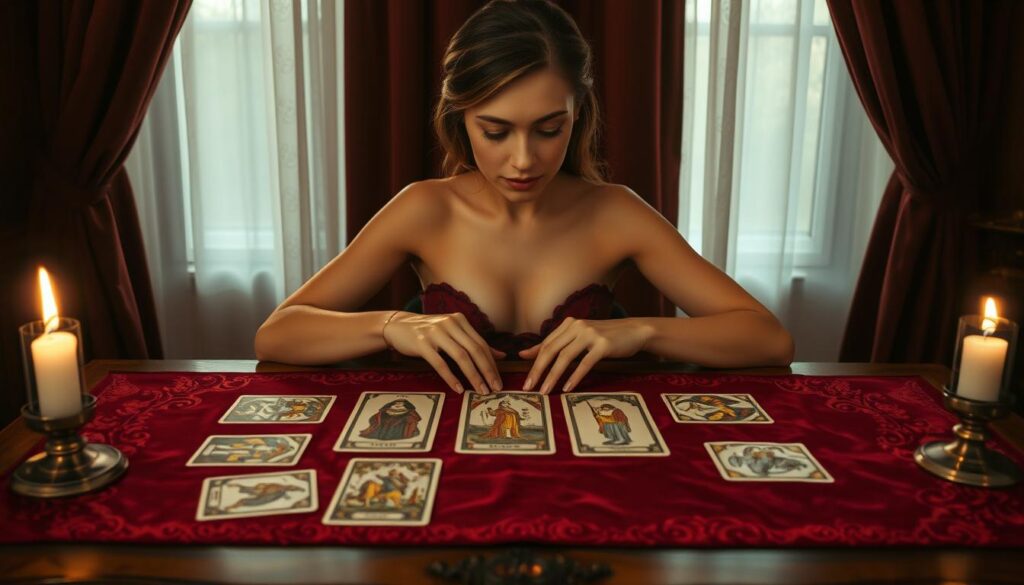
Set intention and question
Open vs. specific: an open prompt invites themes; a focused query targets a choice. Choose what fits your need and note it before you shuffle.
Shuffle, ground, and draw
Prepare the space with a few calm breaths and a small ritual to sense the energy around the cards. Shuffle while holding your aim, then pull the number of cards your spread requires.
Scan the spread first, then meanings
Take a wide-angle view and let the overall story emerge from suit repeats and positions. Notice first impressions, then read traditional meanings to shape clear messages.
Document insights
Keep a journal to capture the spread, context, first hits, and actions. Over time, patterns appear and your practice deepens. For spread ideas, try these tarot spreads.
| Step | Benefit | Time |
|---|---|---|
| Set intention | Clear focus; steadies mind | 1–2 minutes |
| Shuffle & draw | Aligns energy; selects cards | 2–5 minutes |
| Scan & read | Story first; grounded meanings | 5–15 minutes |
Build a short daily practice and occasional longer sessions. Treat the session as a conversation—the reading offers insight, and your choices move the next chapter.
Go-To Tarot Spreads: From Three-Card to Celtic Cross and Beyond
Choose a spread that fits the question: simple layouts give a quick read while complex ones map deeper dynamics.

Three-card spread
Use the three-card spread when you need clarity fast. Lay out three cards as past / present / near future or swap to mind / body / spirit for wellness checks.
Celtic Cross spread
The celtic cross spread uses ten positions to map a full situation: Present, Challenge, Past, Near Future, Above (goal), Below (subconscious), Advice, External Influences, Hopes/Fears, Outcome.
This layout is best when the matter feels layered or you want both inner motives and external pressures in view.
Horseshoe, Relationship, and One-card draw
The Horseshoe (seven cards) traces a developing story from what led you here to what may unfold next.
A Relationship spread compares each person’s thoughts, emotions, and the shared dynamic to highlight where support or change helps the most.
The One‑Card Daily Draw offers a single message each morning to set focus and energy for your day.
- Match spread to goal: fewer positions for sharp focus; more for nuance.
- Journal tightly: note each position’s key message and a one-line synthesis.
- Revisit layouts: using the same spread over time reveals how the story shifts.
For a quick reference on meanings and a relevant example, see this discussion of the Three of Swords: Three of Swords overview.
Build Intuition in Your Reading Practice
You can train your intuition the same way you build any skill: small steps, consistent practice, and brief reflection. Start each session with a moment of calm so your inner voice can speak without the day’s clutter.

Inner Voice, Higher Self Alignment, and Intuitive Growth
Try the Inner Voice spread: Card 1 names what intuition says, Card 2 shows what the mind says, Card 3 gives a practical step to hear it better. Use this spread to separate gut wisdom from mental noise.
The unseen: sensing subtle messages before flipping cards
Practice The Unseen by laying three cards face down and sensing the pull before you reveal them. This trains your sense of subtle energy and helps you notice how feelings show up physically.
From memorizing to meaning: translating images into felt insight
Blend classic meanings with first impressions—words, temperature, or a strong image. Journal reactions after each spread and track patterns over weeks.
- Dream World spread helps translate lingering dreams into a clear message and real-life use.
- Higher Self Alignment checks for blocks and how to strengthen connection.
- Intuitive Growth maps strengths, challenges, and unused skills over time.
Tip: Meditate for a few minutes before you read to sharpen focus. For a related example, see the Five of Wands overview.
Conclusion
Simple daily pulls and deeper cross spreads together build a reliable habit that sharpens your inner sense.
Treat the practice as a practical conversation between your intuition and the images on your deck. Alternate a three-card spread for quick checks with a celtic cross spread when a situation is layered.
Rotate tarot decks so symbols stay fresh, and note how your mind responds. Remember: Major Arcana point to life passages; Minor Arcana suggest specific actions you can take now.
Keep a journal to track card meanings and patterns, and run a relationship layout when love is central. For a helpful example, see the Knight of Cups example.
If you want a neutral mirror, book a tarot reading with an experienced reader, or keep practicing daily pulls and get free tools by joining our newsletter to build confidence and clarity.