
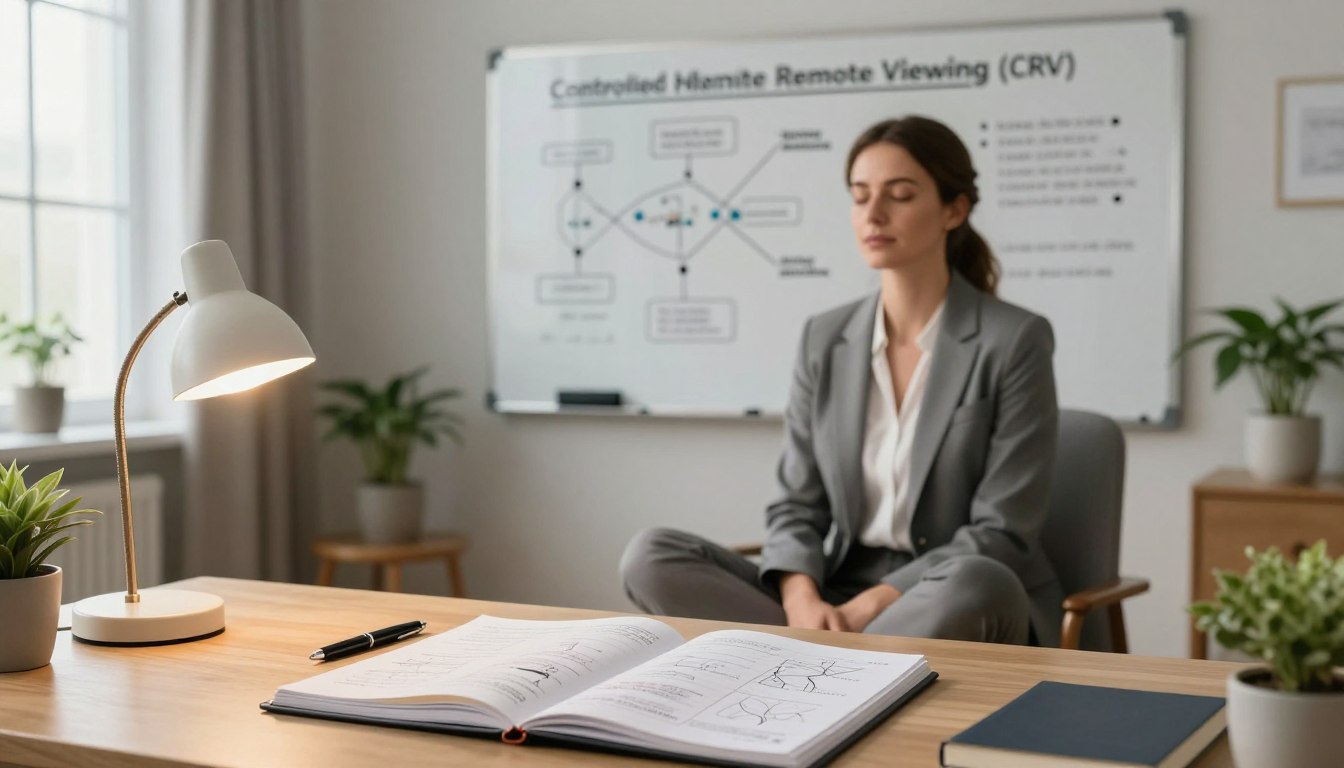
Recording clear, reliable notes is vital for anyone exploring extrasensory perception. This introduction outlines why a tidy CRV report matters and what it can do for your work.
Remote viewing became structured in the 1970s when researchers like Russell Targ began shaping a repeatable method. That protocol helped turn raw impressions into testable data.
Good summaries help a viewer separate sensory impressions from analysis. That split keeps results honest and useful for feedback and training.
Whether you are new or experienced, learning this method improves perception and confidence. This article will guide your note taking, protect the integrity of your work, and offer examples that sharpen your skill with targets over time.
Key Takeaways
- Clear documentation is the cornerstone of repeatable remote viewing work.
- Structured protocol traces back to 1970s research by Russell Targ.
- Separate raw impressions from analysis to preserve data quality.
- Consistent notes and feedback build training and confidence.
- Understanding clairvoyance versus remote viewing refines your approach.
Understanding the Purpose of a Session Summary
A concise record anchors fleeting impressions, creating a stable basis for follow-up analysis.
The main aim of a session report is to distill raw data from a remote viewing period into clear, verifiable entries. Good notes list the target, date, and primary impressions so later checks against ground truth are possible.
Researchers at the Stanford Research Institute, including Russell Targ, showed that disciplined viewing differs from spontaneous clairvoyance. Protocols were built so intelligence gathering could be evaluated fairly.

Well-organized documentation helps military intelligence analysts and civilian researchers judge accuracy. It also guides practice, letting a viewer refine their ability by comparing results with facts.
- Record basics: target name, date, and core impressions.
- Keep raw data separate: impressions first, analysis later.
- Use reports: compare entries against verified information for growth.
| Aspect | Remote Viewing | Clairvoyance | Documentation Need |
|---|---|---|---|
| Origin | Protocol-driven | Spontaneous | High |
| Use | Intelligence gathering | General insight | Essential |
| Verification | Repeatable checks | Harder to verify | Required |
| Notable research | Stanford Research Institute | Various traditions | Records aid clarity |
For further context on clairvoyant skills and distinctions, see clairvoyant abilities. Clear summaries preserve perception from noise and make practice productive.
Essential Principles for Effective Documentation
Capturing impressions as they arise prevents later reconstruction and loss of detail. Good documentation starts with clear habits that protect raw information and make later checks reliable.

The Importance of Real Time Recording
Real-time recording was a core protocol introduced by Ingo Swann at the Stanford Research Institute. It ensures data is logged before the mind can interpret or alter information.
During the Stargate Project, military intelligence teams learned that writing impressions immediately preserves sensory and conceptual input. This method reduces memory bias and keeps the process repeatable for training and feedback.
Maintaining a Neutral Perspective
Neutrality lowers analytical overlay. Viewers describe textures, shapes, and feelings without naming the target. That restraint protects the integrity of the perception and prevents premature labeling.
- Record impressions first, analysis later.
- Use time-stamped entries and simple descriptors.
- Rely on protocols proven by stanford research institute work and later intelligence gathering efforts.
“The discipline of the method makes a skill out of perception.”
How to Write a Controlled Remote Viewing Session Summary
Start with the raw notes and images, looking for repeated textures, shapes, or spatial cues.
Collect sketches, timestamps, and sensory lines from the viewing. Review each page for recurring marks and descriptors. Note which impressions return across stages.
Use the Paul H. Smith demo as an example. He used coordinate 080901923 and described the Beijing Bird’s Nest during the 2008 opening ceremonies. That case shows how protocol and focused perception yield usable information.

When drafting your summary, synthesize the key data from every stage. Highlight shape, texture, and spatial relationships rather than naming the target early. This reduces analytical overlay and protects accuracy.
- Begin with raw impressions and sketches.
- Synthesize stage-by-stage data into a short paragraph.
- Include the environment: landforms, structures, and relative layout.
| Item | Example | Why it matters |
|---|---|---|
| Coordinate | 080901923 | Links notes to the target for verification |
| Primary impressions | Curved steel ribs, large open bowl | Concrete descriptors beat symbolic imagery |
| Environment | Urban stadium, ceremonial crowd | Context aids later comparison and feedback |
Finish with a brief comparison against the actual target when possible. Feedback refines ability and improves future viewing sessions. For related practice on focused intention, see send healing energy.
Managing Mental Noise and Analytical Overlay
Noise in the mind and environment often disguises genuine impressions from the target. Managing that noise is vital when practicing remote viewing. Keeping notes about distractions helps preserve clean data and strengthens training.
Identifying Distractions and Personal Inclemency
Analytical overlay (AOL) happens when the mind names or explains instead of perceiving. That shift often stems from prior clairvoyance habits or eagerness for results.

External annoyances—fans, phones, or interruptions—also break focus. Record these problems in your log so feedback can correct for lost impressions.
“Note the moment your thoughts name the scene; that mark is useful feedback.”
- Recognize thoughts that are yours, not the target.
- Use simple protocols that steer awareness back to neutral.
- Train senses to wait for raw information before labeling.
| Issue | Effect on Data | Action |
|---|---|---|
| Analytical overlay | Premature naming | Flag and separate from impressions |
| Personal inclemency | Distraction, lost cues | Record and remove when possible |
| Mental chatter | Blurs perception | Use breathing and brief pause protocol |
Every session offers a chance to refine awareness. Note overlays, run feedback, and build the skill that separates trained viewers from casual practitioners.
The Role of Sketching in Your Session Records
A quick line or curve can capture a target’s layout more reliably than a paragraph.
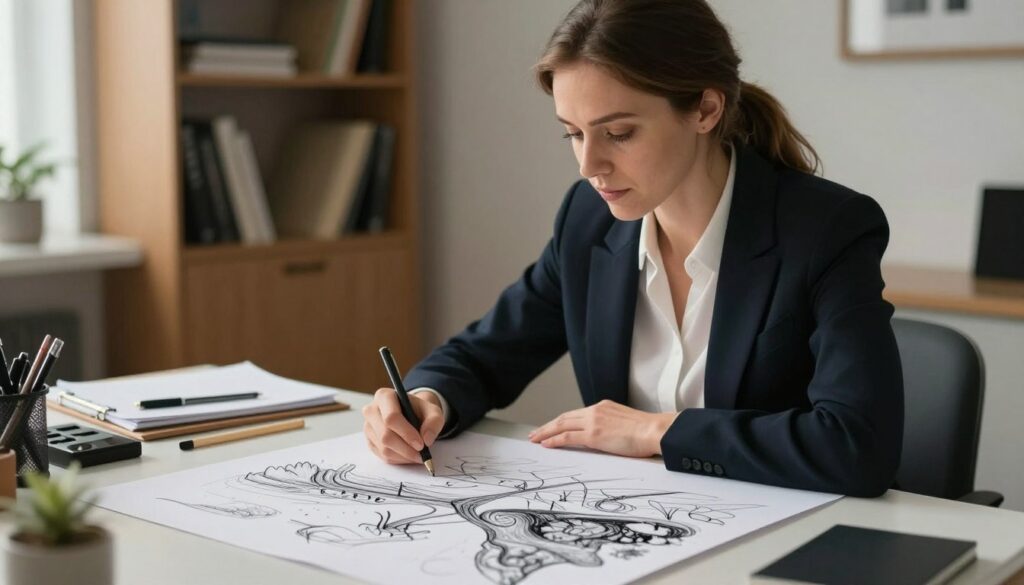
Sketching gives the viewer a practical way to record spatial links that words often miss. During a viewing, experiment with lines, textures, and angles until they match the impression.
Unlike clairvoyance, sketching objectifies fleeting images. It anchors perception into visible marks that act as data for later checks.
- Use light signal lines for structure, then add texture and scale.
- Treat each sketch as a distinct piece of information, not art.
- Compare drawings with feedback and refine your ability over time.
Sketches boost accuracy. They reveal details missed in written notes and help the viewer stay grounded throughout the process. For guided clairvoyant readings, see clairvoyant readings.
| Feature | Purpose | Viewer Action |
|---|---|---|
| Signal line | Shows primary shape | Draw first, then refine |
| Texture marks | Convey material cues | Use dots, hatches, or shading |
| Spatial notes | Record distances and relations | Add arrows and labels |
Structuring Your Data for Clarity
Organizing notes into clear categories turns scattered impressions into usable data. A simple layout helps anyone reviewing the work find steady cues quickly.

Organizing Sensory Impressions
Start by grouping sights, textures, sounds, and spatial notes under clear headings. This makes the viewer‘s information easier to parse during feedback.
List repeated marks first, then fresh cues. That order highlights what held across time and what faded.
Capturing Aesthetic Impacts
Record emotional tone and atmosphere as short lines. These aesthetic notes often point to function, scale, or use at the target.
Keep these reactions brief. They add context without inviting premature labeling or mixing with clairvoyance-style speculation.
Refining Your Final Summary
Synthesize by pulling the most consistent impressions forward. Mark the top three descriptors and link them to sketches or timestamps.
Follow a consistent protocol for every report so others can verify your information. Regular practice builds the skill that separates trained viewers from casual practitioners.
| Category | What to Record | Why It Matters | Action |
|---|---|---|---|
| Shape & Layout | Signal lines, proportions | Helps match physical geometry of the target | Sketch then label |
| Texture & Material | Surface feels, patterns | Clarifies likely materials or climate | Use short texture tags |
| Sound & Motion | Rhythms, ambient noise | Signals activity level or environment | Timestamp audio impressions |
| Aesthetic Tone | Mood, emotional color | Guides interpretation without naming | Note briefly, separate from facts |
For background on related clairvoyant abilities and distinctions, see clairvoyant powers and abilities. Clear structure makes verification and training faster for every person involved.
Incorporating Feedback into Your Review Process
Tracking hits and misses turns sporadic impressions into workable data for training.
Begin by comparing your notes with verified facts. Mark clear matches and note misses without judgment. This honest audit is the core of any effective feedback process.
Feedback helps a viewer see patterns in perception and refine ability over time. Unlike clairvoyance, the method depends on verifiable information so viewers can measure progress.

- List hits, then list misses with brief context.
- Record the time, stage, and probable cause for each miss.
- Flag repeated errors and set a focused practice plan.
“Feedback changes guesses into skills when it is honest and regular.”
Document every review and link it to prior training. For guided readings and broader practice resources, see psychic intuitive readings and guidance. Regular feedback makes sessions repeatable, reliable, and useful for people honing their senses.
Common Pitfalls to Avoid During Documentation
A frequent error is naming impressions before evidence supports that choice. Labeling early invites analysis into perception and skews the data. Keep descriptions concrete: textures, shapes, spatial notes, and tones.
Describe, don’t name. That simple rule preserves raw perception and makes later checks meaningful. The Stanford Research Institute work showed that neutral reporting keeps results measurable.
Many viewers slip into naming because of eagerness. Training and consistent protocols help. Note the time and stage when a label appears and flag it as overlay.

“Keep your notes descriptive; a noun that guesses the target will often be wrong.”
Practical steps:
- Record impressions first, then analysis in a separate section.
- Use short tags for textures and signal lines instead of names.
- Review feedback and mark repeated overlays for focused training.
| Pitfall | Effect | Action |
|---|---|---|
| Premature labeling | Introduces bias into data | Flag and separate from impressions |
| Unrecorded overlays | Lost training signals | Timestamp and note stage |
| No feedback loop | Skill plateaus | Compare notes with verified results |
Every session offers practice. By avoiding these pitfalls and following proven protocols, your work becomes clearer and more reliable. For related resources on development and psychic superpowers, consider guided training and regular feedback.
Conclusion
A clean, repeatable report turns fleeting impressions into useful training data for any viewer.
Mastery comes from steady practice, honest feedback, and strict protocols. Keep notes focused on shapes, textures, and links rather than names. That habit protects your data and reduces analytical overlay.
When you gather entries, treat each record as part of a larger training set for remote viewing. Good discipline helps viewers spot patterns, refine perception, and verify hits against the actual target. Use regular reviews and trusted exercises, and consider a psychic development course at psychic development online for guided practice.
Apply these methods, stay honest in review, and your CRV results will grow more reliable and clear.