

Coordinate Remote Viewing (CRV) is a structured protocol developed to gather information beyond normal senses. Trained personnel used it for decades, including in classified U.S. military projects that aimed to access distant targets. This method treats perception as a disciplined procedure, not a spontaneous psychic gift.
CRV clears the brain of analytical noise so a remote viewer can describe locations or objects without physical contact. Sessions are recorded carefully so that data stays objective. The human mind, guided by strict protocols, can produce details that challenge conventional ideas about consciousness and the body.
This introduction previews the steps, the military history, and the documented phenomena that support CRV. For readers curious about related psychic skills, see a clear primer on clairvoyant abilities.
Key Takeaways
- CRV is a protocol, developed and refined for consistent results.
- The U.S. military used it for over 20 years to collect intelligence.
- Trained viewers follow strict steps to reduce bias and record data.
- Sessions suggest consciousness can access nonlocal information.
- The article will explain the process, history, and documented details.
Defining the Core Concepts of Remote Viewing
Begin with the basics: this practice frames disciplined perception as a repeatable method rather than a spontaneous occurrence. Physicists Russell Targ and Harold Puthoff helped formalize the approach at the Stanford Research Institute. Ingo Swann coined the term “remote viewing” in 1971 to mark a controlled, scientific path separate from other paranormal arts.

The Nature of Non-Local Perception
Non-local perception refers to describing a distant place or object without using ordinary senses. Researchers showed that trained people can report accurate details about a distant target while remaining in a lab. This suggests consciousness can access information across space and time.
Distinguishing This from Clairvoyance
Unlike clairvoyance, which many call a spontaneous gift, this discipline is a trainable skill. A viewer learns to hold awareness of both their body and the target, a form of bilocation.
- Repeatable protocol: structured steps reduce bias and increase consistency.
- Lab-tested: trials at Stanford set this practice apart from mediumship and astral projection.
- Trainable ability: people use specific techniques and using mind-focused methods to perceive distant targets.
For readers curious about related clairvoyant topics, see a primer on clairvoyant abilities.
Historical Origins and the Stargate Project
The Stargate Project represents a unique chapter in U.S. intelligence history. From 1975 to 1995 the government invested about $20 million to test whether trained personnel could gather usable information from distant targets.
Researchers at the Stanford Research Institute worked with military partners to refine protocols and train teams. For many years, personnel practiced sketching Soviet facility layouts and locating lost aircraft in Africa.
By the early 1990s, the program faced close scrutiny. The Military Intelligence Board appointed Army Colonel William Johnson to manage the unit during a tense transition that moved oversight from the DIA to the CIA for final review.
The project ended in 1995 after evaluators determined most results were not actionable for intelligence use. Still, the effort involved many people who believed the phenomena merited study and revealed how the military tried to pair classic tradecraft with unconventional methods.

- Twenty years of training and testing informed protocol development.
- Government teams sought practical intelligence, but evaluators found limits to operational value.
- For further background on related psychic research, see this primer on psychic powers.
How Does Coordinate Remote Viewing Work in Practice
A practical session centers on clearing mental clutter so subtle impressions can reach the conscious mind. Clearing Analytical Overlay (AOL) is the first step: the brain’s habit of guessing must be set aside to avoid false leads.
Clearing Mental Noise and Analytical Overlay
Analytical Overlay appears as quick labels or stories that the brain invents. A viewer learns to notice those guesses and then rest, returning to raw sensations. Training reduces AOL so genuine signals become easier to catch.
The Role of Ideograms and Sensory Data
An ideogram is a spontaneous mark that marks first contact with a target’s signal line. The pressure, angle, and speed of the pen carry useful data. Viewers then note textures, temperatures, and shapes instead of naming the object or location.

The Importance of Feedback Loops
Feedback closes the training loop. After a session, seeing the actual target lets the viewer compare notes with reality. Repeated feedback teaches the brain to recognize true signal over noise.
- Record details in real time to objectify data and avoid memory bias.
- Look around the target in space and time to gather complete impressions.
- Consistent practice and feedback build the viewer’s ability to separate signal from AOL.
For more context on developing psychic skill and related techniques, see psychic superpowers.
Scientific Perspectives and Skeptical Analysis
When tests are examined closely, many apparent successes trace back to subtle procedural flaws.
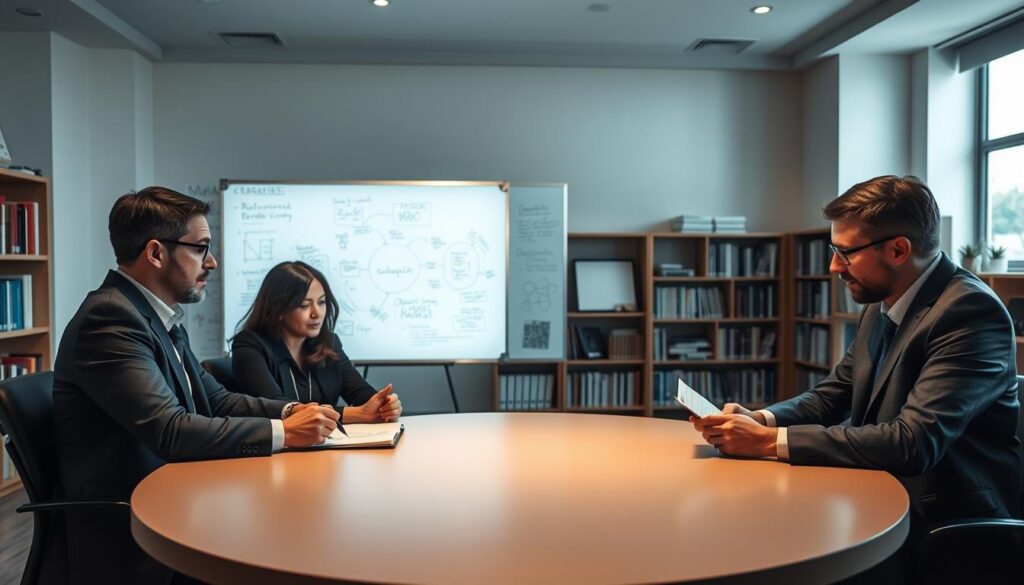
Critics pointed to transcription cues and weak controls as major problems. David Marks and Richard Kammann found that hidden sensory hints in session records drove early high hit rates. Once those cues were removed, performance often fell to chance.
Addressing Sensory Cues and Experimental Flaws
Independent review matters. In 1995 the CIA hired the American Institutes for Research. Their retrospective report concluded that the program produced no usable intelligence.
- Researchers like Ray Hyman noted the lack of a positive theory, which made controls fragile.
- Project managers sometimes adjusted reports to fit known background, weakening trust in results.
- Many people remain skeptical because produced information was often vague or wrong.
| Critique | Evidence | Effect on Results |
|---|---|---|
| Sensory cues | Marks & Kammann analysis of transcripts | Hit rates dropped after cues removed |
| Poor controls | Methodological notes from AIR and Hyman | Hard to replicate findings |
| Report adjustments | Internal case reviews | Inflated success claims |
| Lack of replication | Decades of mixed trials | Mainstream science remains unconvinced |
For readers seeking more context on related psychic claims, see an analysis of clairvoyant abilities.
Conclusion
The practice of remote viewing sits where military history, science, and the study of consciousness meet. It tested protocols, training, and feedback to see if the human mind could gain verifiable information about a distant target.
Results were mixed, yet the process taught valuable lessons about perception and the brain. Clearing analytical noise remains a useful skill for many mental practices. By examining session data and feedback, people can better judge the truth of reported details.
Whether you see this as an ability or a curiosity, the inquiry pushes us to rethink time, space, and sensation. For related techniques in focused intent, see a guide to send healing energy.
Truth matters: rigorous methods and steady practice are the best way to test any claim about consciousness and perception.