
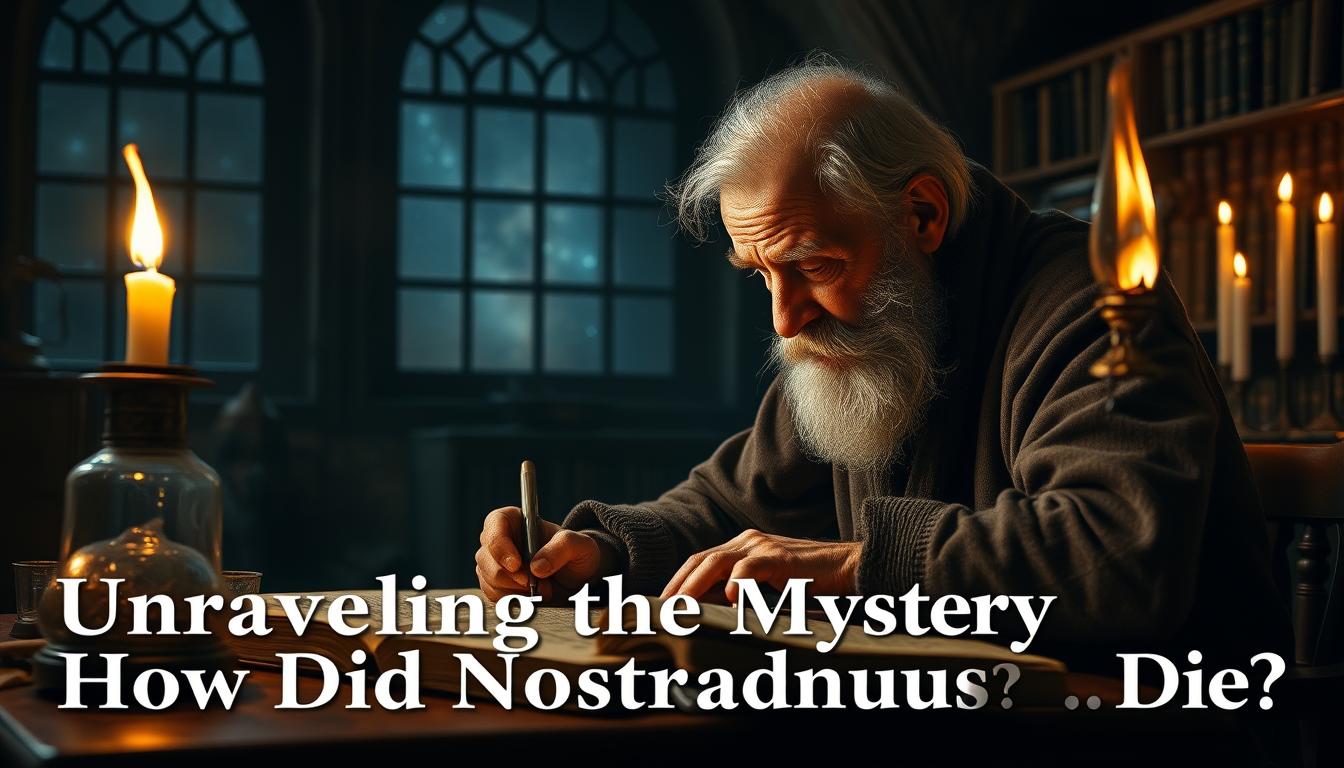
Michel de Nostradame rose from a Provence family that had converted to Catholicism to become a famed physician and seer. Born in 1503, he learned Latin, Greek, Hebrew and math from his grandfather, then trained in medicine at Avignon and Montpellier.
Nostradamus treated plague victims with hygiene measures and his so-called “rose pill,” then gained public attention through almanacs and the book Les Prophéties. His works and name reached the French court and shaped his long-term fame across centuries.
This article asks the central question of his final moment and sorts reliable records from legend. We preview the facts about his last days in Salon-de-Provence in July 1566 and note what scholars accept about his reported last words.
Along the way, we look at his family, children, and the rise that linked medical practice to prophetic reputation. For related context on claims of supernatural skill, see supernatural abilities.
Key Takeaways
- Quick intro to his life: physician turned seer whose works influenced the world for centuries.
- Central focus: the documented facts about his final days in Salon-de-Provence, July 1566.
- Context: family origin, education with his grandfather, and medical work during plague years.
- Legacy: court fame and published works like Les Prophéties shaped later interpretation of events.
- Article approach: evidence-based review separating myth from recorded history.
Quick Answer: How Did Nostradamus Die?
In his final year chronic arthritis and gout progressed into marked dropsy (edema) and growing weakness. Contemporary accounts suggest this cascade of conditions probably led to heart failure, a simple medical fact consistent with his age and long decline.
Medical summary
Late-life joint disease left him housebound in Salon-de-Provence. By early July 1566 the swelling and breathlessness had worsened. Observers then recorded that he was found dead the next morning, a likely result of cardiovascular collapse after prolonged edema.
Place and date
Death occurred in Salon-de-Provence in early July 1566. That year marks the end of a long career as a physician and public figure.
Notable detail
“Tomorrow at sunrise I shall no longer be here.”
This reported line, said to have been spoken the evening before, is a memorable anecdote often repeated today. It appears in several historical sources that describe his chronic conditions and housebound status.
- This brief account follows the medically grounded view based on contemporary descriptions.
- The rest of the article will unpack context, eyewitness notes, and how peers viewed his final hours.
- For related readings on reputation and readings, see psychic readings.
How Did Nostradamus Die? Details of His Final Days
A brief exchange with his secretary on the eve of his death became central to later retellings.
“Tomorrow at sunrise I shall no longer be here”
“Tomorrow at sunrise I shall no longer be here.”
This line—reported to Jean de Chavigny—became the most quoted moment from his last night. The remark is short, memorable, and easy to repeat. Over time it turned into a touchstone for the legend of his final hours.

Found near his bed and bench: placement and circumstance
Contemporary accounts say he was found on or beside a small bench placed next to his bed. He used the bench to help himself climb into bed because arthritis and gout limited his mobility.
The physical detail—bench by the bed—made the reported line seem like a fulfilled prophecy for many readers. In reality, it also shows how frail his life had become at those times.
What contemporaries and later scholars say
Eyewitness notes from the period record the quote and the bench. Later writers amplified the drama.
Scholars weigh these accounts cautiously. They treat the quote as a valuable anecdote but compare it with other sources and medical facts.
- Contemporaries preserved the quote and bedside setting.
- Later chroniclers added emphasis and narrative flourish.
- Modern scholars separate colorful detail from verifiable evidence.
| Source | Detail Reported | Reliability (scholarly view) |
|---|---|---|
| Jean de Chavigny | Quoted line and bedside placement | High for quote, moderate for interpretation |
| Local eyewitness notes | Bench beside bed; limited movement | Moderate; firsthand but brief |
| Later biographies | Dramatized prophecy fulfillment | Low for precise facts, useful for legend |
The medical toll of arthritis, gout, and dropsy confined him largely to his room. These plain bedside details help historians see daily realities behind a public figure best known as a seer.
While compelling, the anecdote blends narrative charm with recorded facts. The next section examines the small but important difference in surviving references to the exact date—July 1 versus July 2—so readers can judge the sources themselves.
Sorting the Dates: July 1 or July 2, 1566?
Surviving references split between July 1 and July 2, 1566, creating a small but notable dating puzzle. Both dates circulate in period notes and later biographies.
Why sources differ
Record-keeping in the 16th century varied by locality. Clerks used different calendars, copied notes by hand, and sometimes recorded events by night or by the following morning. These factors explain minor day differences.
What most scholars accept
Most researchers agree on the broad fact: the event occurred in early July 1566 in Salon-de-Provence. The exact day usually depends on which surviving reference one follows.
“Contemporary notes point to early July; the day varies with the source.”
- Two main dates appear: July 1 and July 2, 1566.
- Dating practices and transmission produce minor discrepancies.
- Scholars treat the month and year as firm; the day is source-dependent.
| Reference Type | Date Noted | Scholarly Weight |
|---|---|---|
| Contemporary eyewitness notes | July 1 or July 2, 1566 | Moderate to high |
| Later biographies | Often July 2, 1566 | Moderate (narrative emphasis) |
| Local records | Early July 1566 (day varies) | High for month/year |
In short, the small variance does not alter the larger story of his final night or the reported last words. Readers can trust the timeline used here as reflecting the consensus of historical references. For related context on period claims, see ancient accounts.
From Physician to Seer: The Life That Shaped His End
A mix of formal study and hands-on plague work helped him become both a respected physician and an emerging public figure. Early tuition from his grandfather and study at Avignon and Montpellier gave a firm basis in languages and medical practice.
Plague years, rose pills, and hygiene ahead of his time
During plague outbreaks he favored cleanliness, fresh air, and avoidance of routine bloodletting. These choices set him apart from many people of the age.
The so-called rose pill combined rose-hip and preservative ingredients. It likely helped by improving general care and reducing infection in some patients.

Loss, travel, and the return to Salon: family and work
After years of travel across France and Italy, his practical work and reputation grew. Personal tragedy struck earlier when his first wife and two children probably died in a plague, prompting long journeys and renewed focus.
He later settled in Salon-de-Provence, married Anne Pons Gemelle, and raised a larger household while continuing medical practice and writing. The Latinized name marked a scholarly turn in his public identity.
“Practical medicine and private study together shaped his later writings.”
- Formation: study + grandfather’s teaching.
- Methods: hygiene, fresh air, rose pill, less bloodletting.
- Life arc: loss, travel, regional fame, settled family practice.
Prophecies, Almanacs, and Quatrains: Works Near the End of His Life
In the years before his death he published a mix of medical recipes, yearly almanacs, and the famous Centuries in print.

Les Prophéties and the quatrain form
Les Prophéties appeared first in 1555 and grew by 1558 into multiple centuries of hexametric quatrains. The quatrains are short, obscure verses that invite many readings.
The lack of strict chronological order in the editions matters. It lets readers map later events to verses across time rather than follow a clear timeline.
Almanacs, recipes, and yearly guidance
He began issuing almanacs in 1550. These popular pamphlets gave horoscopes, weather notes, and forecasts for the coming year.
Alongside these, his recipe collections (1552; combined 1555) mixed medical and cosmetic advice. Together the works offered practical care and public predictions.
“Practical manuals and cryptic quatrains shaped expectations about future events.”
- Quatrains: compact verses that fuel broad interpretation.
- Almanacs: annual forecasts and household guidance.
- Recipe books: medical and cosmetic preparations for daily life.
These printed pieces tied astrology, medicine, and natural philosophy in one public work. For modern reading on related predictions, see psychic predictions.
Myth vs. Fact: Did Nostradamus Predict His Own Death?
A single bedside image—a small bench beside a narrow bed—became central to stories that mix fact and theatrical flourish.
The bench by the bed: staged fulfillment or genuine foresight?
The bench story is easy to picture. Accounts say a seat was placed to help him rise and that his body was found nearby the next morning.
That sequence can be read three ways: coincidence, a staged scene, or literal foresight. Contemporary notes confirm the bench and placement. Those are solid references that historians accept as local detail.

Astrology, bibliomancy, and recycled material in predictions
Scholars such as Peter Lemesurier argue he sometimes used bibliomancy and recycled texts when composing verses. Critics in his day—like the astrologer Laurens Videl—also questioned his methods.
People often match his quatrains to later disasters, stretching verses to fit events. That retrospective fitting helps explain how the bench tale became a larger legend.
In short, keep the memorable line and the surviving facts both in view. For related modern reading on dreams and claimed foresight, see psychic dream predictions.
How Scholars Read His Predictions Today
Close study shows the Centuries often read like a patchwork of phrases and borrowed material rather than clear, dated forecasts.
Vagueness in the quatrains invites multiple readings across centuries. Short, obscure verses can be matched to many later events. That ambiguity is a major reason scholars warn against literal readings.
Mistranslation and selective quotation make some lines seem to match the future only after the fact. Editors and translators choose words and context, and small shifts change interpretation.
Many references in his work were topical in his own years. Without historical background, modern readers miss local names, political terms, and cultural clues that anchored verses to time.
Astrology, sources, and scholarly practice
In the 16th century astrology was a respected framework. Debates among astrologers then and now affect how scholars judge the text.
Some researchers argue he compiled earlier materials and reframed them, making him more compiler-poet than literal prophet.
“Compare translations, check original references, and place verses in historical context.”
- Verify primary references and dates.
- Compare translations before trusting a claim about future events.
- Read with an eye to topical language and cultural terms.
For related reading on starseed topics and alternative interpretations see Sirian starseed.

Legacy After Death: Centuries of Predictions and Public Imagination
After his passing, curious readers stitched recent events to his short verses, widening his influence across centuries. The mix of printed quatrains and popular almanacs made it easy for people to read later events into earlier lines.
From the French court to wartime leaflets
His rise in fame began with royal attention. Catherine de’ Medici valued his horoscopes and invited him to Paris in 1556, which bolstered his public image and lent courtly weight to his book of prophecies.
Centuries later, propaganda reused that fame. Joseph Goebbels’s ministry circulated Nostradamus-themed leaflets during World War II to sway opinion. The Allies answered with counter- leaflets, showing how predictions can become political tools.

Popular retrofit of major events
Readers have often linked his verses to global disasters and leaders — Napoleon, Hitler, the atomic bomb, and 9/11 are common examples. Such matches usually appear after events, when vague lines are stretched to fit the facts.
“Les Prophéties and yearly almanacs kept selling for years, feeding public imagination more than scholarly proof.”
The legacy is twofold. On one side, his works sustained a long-running public fascination with future events and horoscopes. On the other, scholars remain cautious about literal foresight and stress context, translation, and editorial shaping over time.
- Rise and fame: court favor and printed works spread his name.
- Public use: leaflets and popular books turned verses into propaganda and myth.
- Practical side: he was also a physician, recipe-writer, and local project supporter, which humanizes his story beyond prophecy.
- Interpretations evolve: new translations and research keep prompting fresh readings of his verses.
For readers who want privacy details about the site’s use of historical material and links, see the privacy policy.
Conclusion
His final illness—marked by swelling and breathlessness—closed a long life that mixed medicine, writing, and public fame.
The medical record points to gout and arthritis leading to dropsy and cardiovascular collapse in early July 1566. That confirmed the factual core of his death.
Across years and centuries his almanacs, the book of quatrains, and other works spread his name and fed public interest in prophecies and predictions about the future.
Balance matters: colorful stories grew from brief references, while historians rely on medical notes and eyewitness sources. Family, children, age, and the burdens of illness remind us that a famed figure remained human.
Today his legacy sits at the crossroads of medicine, astrology, and culture—an enduring influence that invites careful reading of sources and events over time.