
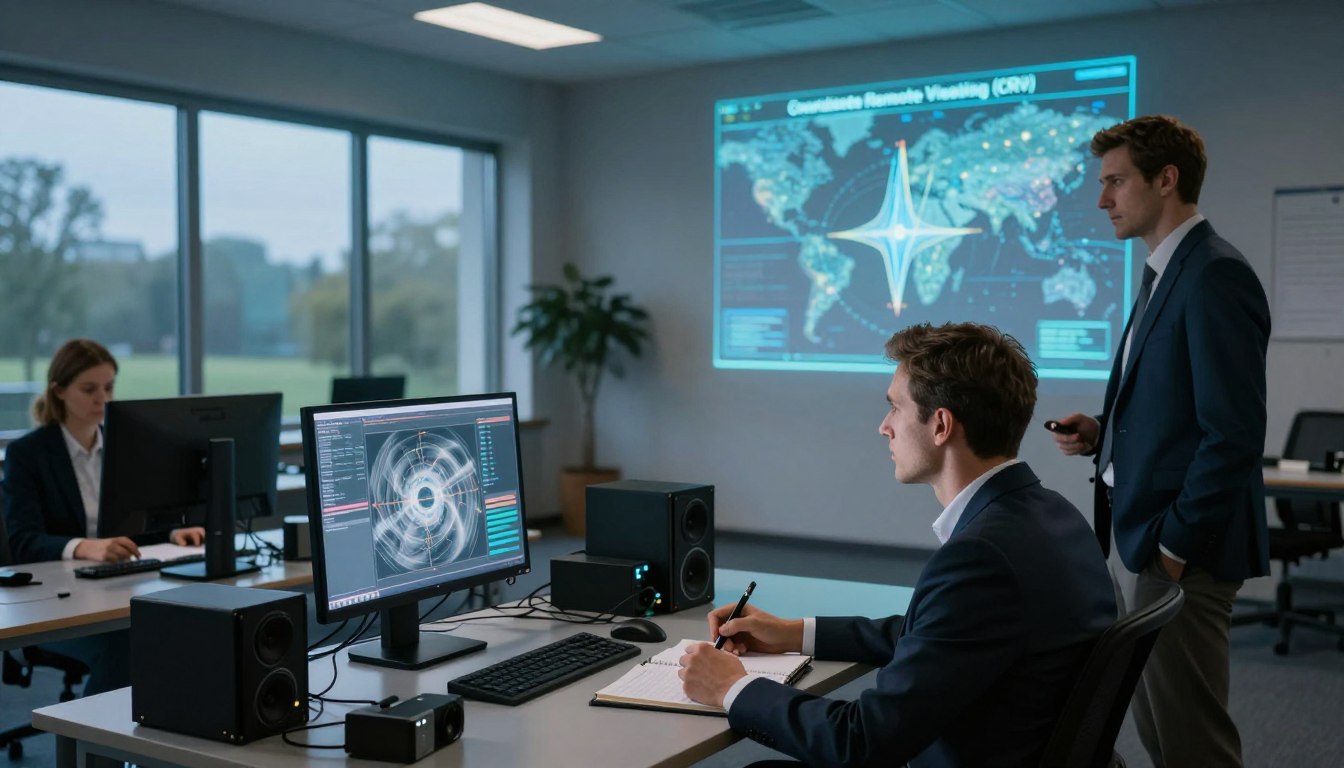
Curious about how CRV and ERV are taught and practiced? This introduction breaks down the key ideas simply and clearly for students and curious readers in the United States.
The two main approaches share a focus on a disciplined viewer who gathers impressions of a distant site during a controlled session. One system emphasizes a formal stepwise protocol while the other favors longer, immersive exercises led by experienced instructors.
Dr. David Morehouse leads a six-day Extended Remote Viewing training program that guides each participant through structured exercises. The program builds skills in observing signal input, sorting data, and using clear feedback to sharpen results.
Historic work like the Stargate Project, declassified in 1995, shows decades of study into how people interact with a non-local target site. Students often take classes to improve natural perception, refine process skills, and gain practical session experience.
Key Takeaways
- Both methods train a viewer to collect information about a remote site.
- CRV uses a step-by-step protocol; ERV emphasizes immersive practice and longer sessions.
- Dr. David Morehouse offers a structured six-day program to build reliable skills.
- High-quality feedback is vital to improving accuracy and learning.
- Historic research like Stargate shaped modern classes and training series.
- Interested readers can explore structured psychic development options at psychic development online.
Understanding the Foundations of Remote Viewing
Early research in the 1970s set the stage for how people study perceptions that reach beyond normal senses.

Historical Context
In the 1970s the CIA funded the Stanford Research Institute to test psychic functioning. This program ran for many years during Cold War times.
Ingo Swann was a key figure. He showed that a skilled viewer could affect a buried detector, which pushed scientists to take the topic seriously.
Defining the Phenomenon
Remote viewing is the ability to gather information about a distant site, person, or event without using ordinary senses. Researchers record impressions, sketch scenes, and log any raw signal that appears during a session.
“The research asked how a viewer can access meaningful data from afar.”
| Aspect | What was tested | Why it mattered |
|---|---|---|
| Funding | CIA support to SRI | Allowed formal experiments and long-term study |
| Key event | Ingo Swann’s detector test | Provided striking evidence that prompted more training programs |
| Outcome | Ongoing research | Improved understanding of skill and how people refine abilities |
Over the years, labs in both the U.S. and the Soviet Union invested time and resources. Many people show natural talent, and structured training can turn that talent into consistent skill.
Defining Coordinate Remote Viewing
CRV is a highly structured six-stage method that Ingo Swann developed to help a viewer separate real signal from mental noise. The goal is to standardize how people collect impressions about a distant site during a session.
In practice, a viewer writes raw impressions on a piece of paper while keeping a metronomic cadence. This steady pace helps maintain focus and limits analytical overlay that can corrupt early data.

The process opens the aperture of perception slowly. First the viewer captures the gestalt of a site, then describes form and part details as time and clarity permit.
U.S. Army programs used this protocol to train groups of viewers for consistent results. By following clear rules, a viewer improves the ability to record usable information and reduce subjective guessing.
- Six-stage structure to guide each session
- Paper-based recording to preserve raw data
- Slow aperture opening to name gestalt before analysis
Exploring the Origins of Extended Remote Viewing
Capt. F. Holmes “Skip” Atwater officially named the Extended Remote Viewing training program while at Ft. Meade in the early 1980s. This label marked a formal pivot in the later Stargate years toward longer sessions and deeper practice.

Why it mattered: the method let a viewer spend more time at a single site. That extra time helped pull richer signal and clearer information during a session.
Over the years the approach evolved. Trainers added specific techniques to access deeper states of consciousness and to handle complex data from a site.
- Named by Capt. Atwater at Ft. Meade in the 1980s
- Designed to let a viewer remain longer on target
- Course content covers history, technique, and military use
- Students learn non-linear mind mapping and data processing
Students who read the manuals and attend the intense six-day program build knowledge and practical skills. This program remains an important strand of modern training for anyone serious about developing viewing abilities.
The Core Difference Between Coordinate Remote Viewing and Extended Remote Viewing
Practices diverge most clearly in how a viewer prepares mentally and how the session unfolds at the target site.
One method enforces a rigid six-stage process that uses a steady, metronomic cadence and the Alpha brain state. This structure standardizes how people collect early impressions and lock in raw data.
By contrast, the other approach is largely unstructured. A viewer must learn to descend into Theta or Delta brainwave states to access deeper signal and richer information about a distant site.
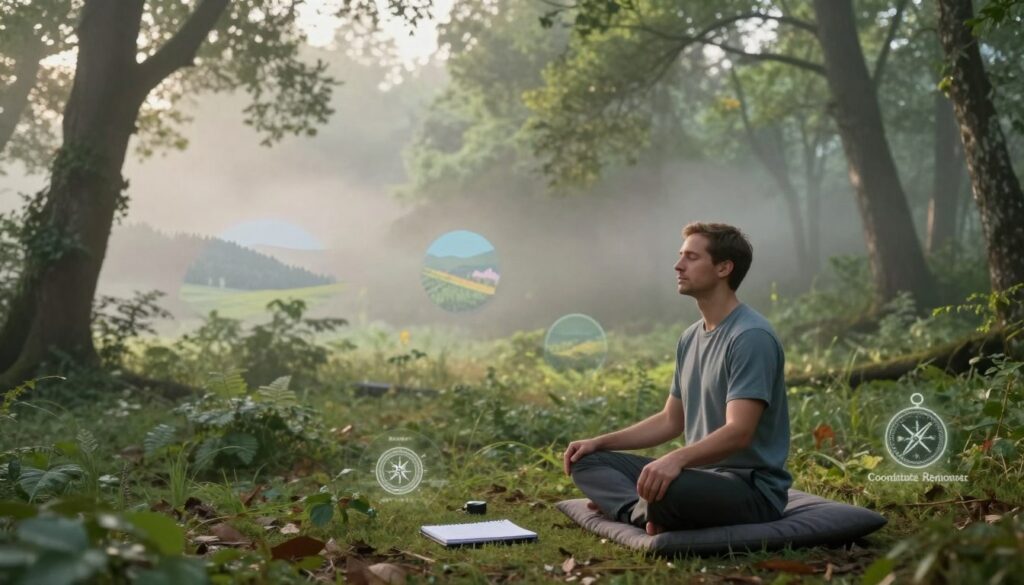
That fluid process favors longer time on target and uses seed questions to steer each session. Many people find that knowing how these modes differ is vital for growth as a professional viewer.
- Protocol vs. flow: One trains process, the other trains immersion.
- Brain states: Alpha-driven steps versus Theta/Delta descent.
- Practical skill: Switching modes helps handle varied target data.
Structural Protocols in CRV
A reliable system turns fleeting signals into consistent, testable data during each session.
Coordinate remote practice uses a strict six-stage framework to guide the viewer through a controlled opening of perception. Each stage helps the student shift from broad impressions to concrete form and detail.
The Six Stage System
The stages set rules for handling aesthetic notes, emotional cues, and intangibles. Viewers record raw impressions on paper to keep the signal separate from analysis.
Training includes short exercises that teach how to name the gestalt of a site before moving to parts and textures. This stepwise process reduces guesswork and builds reliable habit.
Standardizing Target Data
Standardization ensures multiple viewers share the same expectations and methods. At the end of a session, structured feedback verifies results and refines the viewer’s abilities.
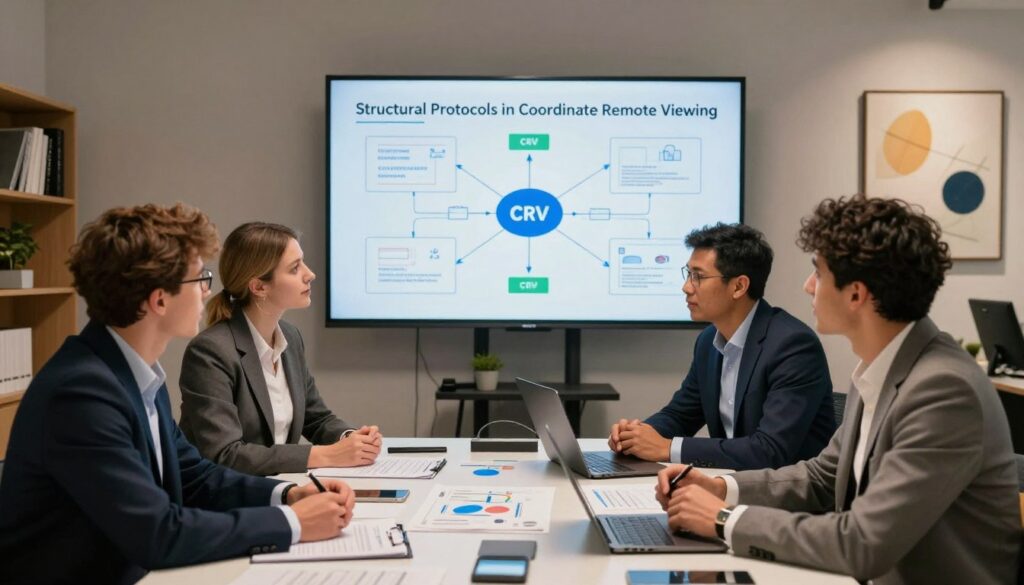
- The six-stage system standardizes collection of data from a site.
- Paper records preserve raw impressions and protect the integrity of the process.
- Exercises focus on gestalt first, then form and finer types of information.
The Role of the Monitor in ERV Sessions
Careful prompting from a monitor helps a viewer move from broad impressions to usable site details during a session.
The monitor asks focused questions to guide the remote viewing process. This keeps the viewer on the target site and limits mental noise. The monitor records all answers, sketches, and notes on paper for later review.
Collaboration matters: the monitor and viewer form a team. The monitor probes the gestalt of the site and then follows up to pull more specific data and parts of the scene. That steady attention often yields clearer signal and better results.
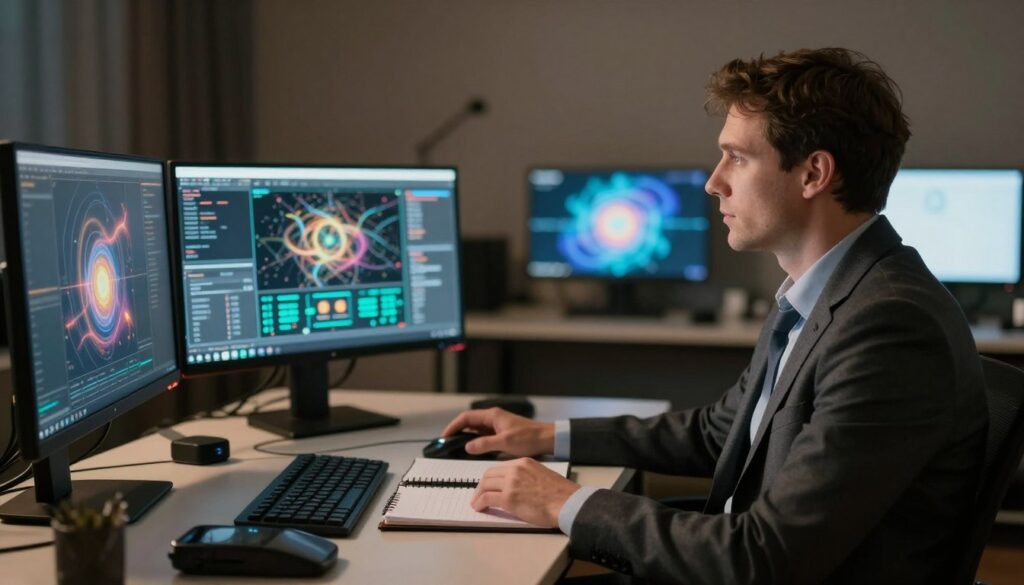
At the end of a session, the recorded material becomes the basis for feedback. A structured feedback loop strengthens skills over time and improves future sessions.
| Role | Primary Task | Outcome |
|---|---|---|
| Monitor | Ask clarifying questions, record output | Focused sessions and preserved data |
| Viewer | Report impressions, sketch, describe parts | Raw signal captured on paper |
| Feedback | Review session records, compare with target | Improved training and more accurate results |
Many people find that having a monitor during training helps performance compared to working alone. For those exploring methods and training options, a useful training resource can add practical tips for session work and feedback.
Brainwave States and Mental Preparation
A purposeful cooldown helps the student trade everyday thought for receptive mental states. This step readies the mind for clear perception during a session.

Transitioning from Alpha to Theta
Achieving the correct state is a core part of training for any serious remote viewer. Trainers teach methods to lower brain activity from an alert Alpha rhythm into Theta or Delta.
ERV programs include Dr. David Morehouse’s “Cool Down” meditation series. These guided practices show students how to relax thought and hold gentle attention on a distant site.
- Why it matters: the calmer mind bypasses conscious filters and picks up subtler signal.
- Session routine: each session starts with a cooldown to set the optimal state for collecting data.
- Skill gain: repeated practice improves a viewer’s ability to notice faint impressions and useful information.
Understanding brainwave shifts and practicing simple techniques makes training more effective. Over time, this preparation enhances both perception and overall viewing abilities.
Data Collection and Signal Processing
Effective data capture starts with a simple rule: record what you perceive, not what you think it means.
During a session a viewer must keep the aperture of perception open. This helps capture the gestalt of the site before labeling details.
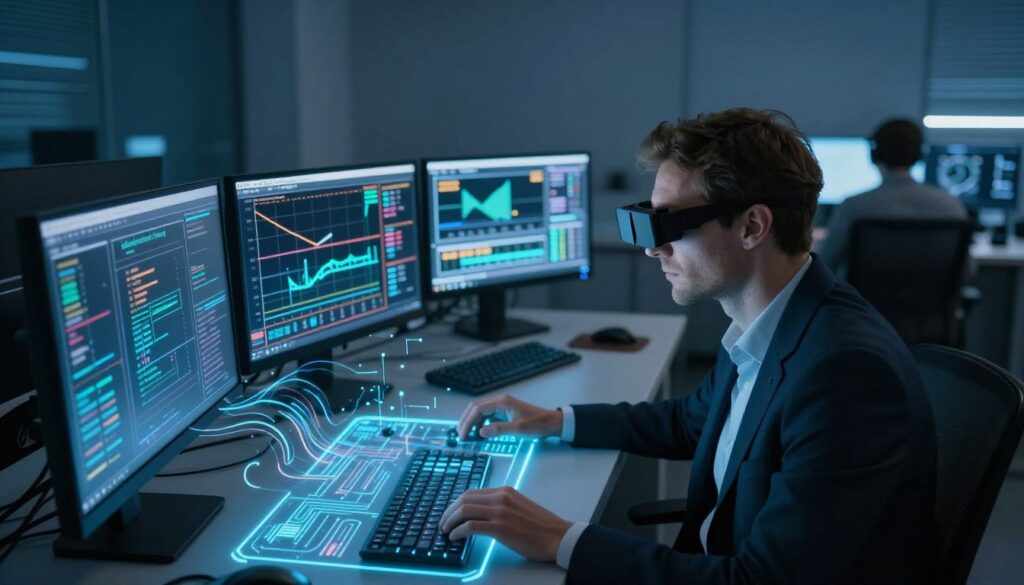
ERV emphasizes non-linear mind mapping (NLMM). That method lets a viewer lay out complex impressions on paper as they arise. NLMM helps organize imagery, smells, textures, and shapes without forcing an early conclusion.
“Collect raw impressions first; identity comes later.”
- Focus on raw data: avoid the urge to name the site during the session.
- Map non-linearly: use sketches and clusters on paper to hold multiple threads of information.
- Process the signal: practice separating true target input from mental noise.
| Task | Why it matters | Outcome |
|---|---|---|
| Collect raw impressions | Preserves early, unfiltered data | Clearer review after feedback |
| Non-linear mapping | Organizes complex information quickly | Faster pattern recognition |
| Signal processing | Filters noise from target input | Improved accuracy over time |
After the session, feedback refines the viewer’s process. Each recorded item becomes part of the training that sharpens how the mind reads signal and produces reliable data.
The Importance of the Feedback Loop
Clear, timely feedback turns notes into usable lessons for every aspiring viewer. In serious remote viewing training, feedback is not optional; it is the engine that confirms whether impressions map to the target site.
After each session, the viewer reviews sketches and notes on paper to compare recorded impressions with actual attributes of the site. This review helps separate true input from guesswork and improves the overall process.

Students receive personalized critiques from Dr. David Morehouse and certified small-group leaders. That one-on-one attention shows where the viewer succeeded and where more practice is needed.
Why it matters: consistent review of raw data trains the mind to notice subtle signal and to produce repeatable results over time. At the end of each class session, peers compare findings to improve accuracy and trust in shared methods.
- The feedback loop lets the viewer verify results against the target site.
- Reviewing sketches on paper clarifies captured data and patterns.
- Personalized feedback accelerates learning and hones interpretation skills.
For readers seeking deeper context on related abilities, see this overview of clairvoyant development at clairvoyant abilities.
Training Requirements and Prerequisites
A clear set of entry requirements helps students get the most from advanced classes.
Foundational courses are required: To enroll in the ERV training program a student must complete the Introduction to Remote Viewing (IRV) and the six-day CRV course taught by Dr. David Morehouse. These steps ensure each viewer has basic technique and controlled practice before longer sessions.
The Necessity of Foundational Courses
Foundational classes build process skills, teach how to record raw data, and introduce cooldown routines. Students learn to hold attention on a target site and to avoid early labeling of impressions.
Certification Standards
Certification requires passing practical exercises and showing solid understanding of the protocol. Graduates receive a certificate that documents their training and practical performance after supervised exercises.
Ongoing Membership Support
After certification, students gain access to an exclusive online portal with modules, downloadable handouts, and a Q&A area. Ongoing membership offers peer feedback, live series, and advice to grow skill and handle complex signal during a session.
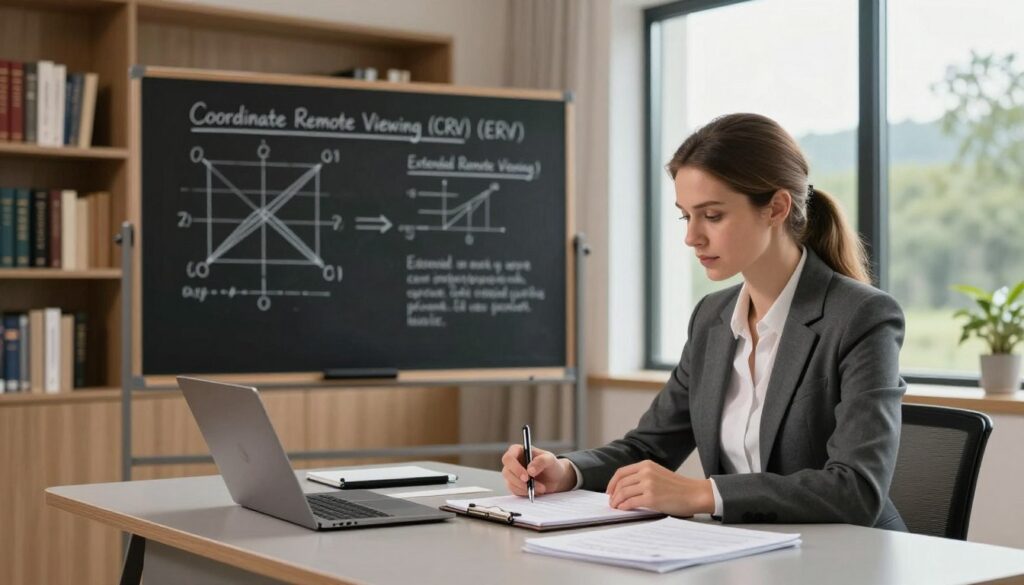
- Required reading: the CRV manual and recommended books for practice.
- Course content: stepwise exercises, handouts, and online modules.
- Support: forum access, scheduled reviews, and instructor feedback.
Managing Mental Noise and Ambiguity
Ambiguity creeps in when a viewer rushes to name what the mind only hints at.
Mental noise includes guessing, memory echoes, and speculation. These distractions make it hard to capture clear data during a session.
The CRV process helps by asking the viewer to record initial impressions on paper. Writing preserves raw information and stops the mind from turning hints into stories.

ERV-style training reduces mental noise by guiding the student into a deeper state. In that quieter field, faint signal stands out with less interference.
“Trust the small, uncertain impressions; they often point to the truest information.”
- Keep the aperture open to capture the gestalt of the target site.
- Note impressions quickly on paper, then hold analysis until feedback.
- Use consistent practice to learn when the mind is guessing and how to reset.
| Challenge | Practice | Outcome |
|---|---|---|
| Speculation | Record raw impressions on paper | Clearer review after feedback |
| Memory echoes | Use cooldown and deeper state | Reduced false matches to site |
| Rushed naming | Hold labels until session end | More accurate data and trust in process |
Scientific Perspectives on Remote Viewing
Scientific studies have tested whether human intention can affect measurable systems over years of controlled work.

Long-term projects shaped how people think about the practice. The PEAR lab at Princeton ran two decades of experiments that explored how intention might influence random number generators.
Statistician Jessica Utts reviewed the evidence and concluded that psychic functioning meets standard scientific criteria. Her assessment helped legitimize study of the topic and encouraged more rigorous tests.
Military programs invested time and resources to see if a trained viewer could report accurate details of a distant site. Labs around the world replicated results to check reliability and rule out chance.
What this means for a student: the research gives viewers a stronger basis for trust in their process. Knowing the studies exist reduces self-doubt and supports practical training.
“While no single theory fully explains how it works, the accumulated data supports the reality of the phenomenon.”
- Evidence from multiple labs strengthened results and replication.
- Understanding basic physics of consciousness can improve confidence.
- Ongoing study keeps expanding knowledge in related areas over years.
For a practical look at how intention can act at a distance, see how energy work can act at a.
Practical Applications in Modern Contexts
Practitioners have applied these trained skills to real-world tasks like searches and trend spotting.

Used areas include crime-solving, missing persons searches, and attempts to forecast financial markets. A skilled viewer can provide fresh information about a target site that other methods may miss.
That said, results remain largely anecdotal and require solid verification. Teams should treat session output as a lead, not final proof.
Best practice pairs the viewer with investigators, analysts, and field teams. The program’s process stresses careful documentation on paper, timely feedback, and follow-up to test any claims.
- Modern applications often start as exploratory support for an inquiry.
- Each session offers a chance to collect usable data and note the gestalt of a target.
- People should balance curiosity with scientific skepticism when assessing results.
For those curious how related services fit local needs, consider a local reading at tarot card reading near me as an example of practical, verified client work.
The Role of Intuition and Natural Ability
Innate sensitivity can open a door, yet disciplined practice teaches how to walk through it.
Remote viewing is a learnable skill, not just a gift. Some people arrive with strong intuition. Training helps them harness that instinct so reports are clear and repeatable.
Students are asked to leave any “gifted” identity outside the classroom. Humility matters. That attitude keeps focus on process, not ego.

Good viewers accept that no one is perfect. Teams often combine notes to form a fuller picture of a target site. Collaboration turns individual impressions into usable data.
- Practice and feedback shape raw ability into reliable skill.
- Training stresses class results over solo competition.
- Working in teams helps correlate separate signals and information.
| Factor | Why it matters | Outcome |
|---|---|---|
| Humility | Keeps attention on process | Better session results |
| Practice | Transforms intuition into method | More consistent data |
| Teamwork | Combines multiple viewers’ notes | Fuller picture of the site |
Choosing the Right Path for Your Development
Your learning path should match how much time you can commit and the skills you want to build.
The coordinate remote system gives a steady foundation; ERV-style training offers longer, fluid practice for advanced students. Pick the route that fits your goals and temperament.
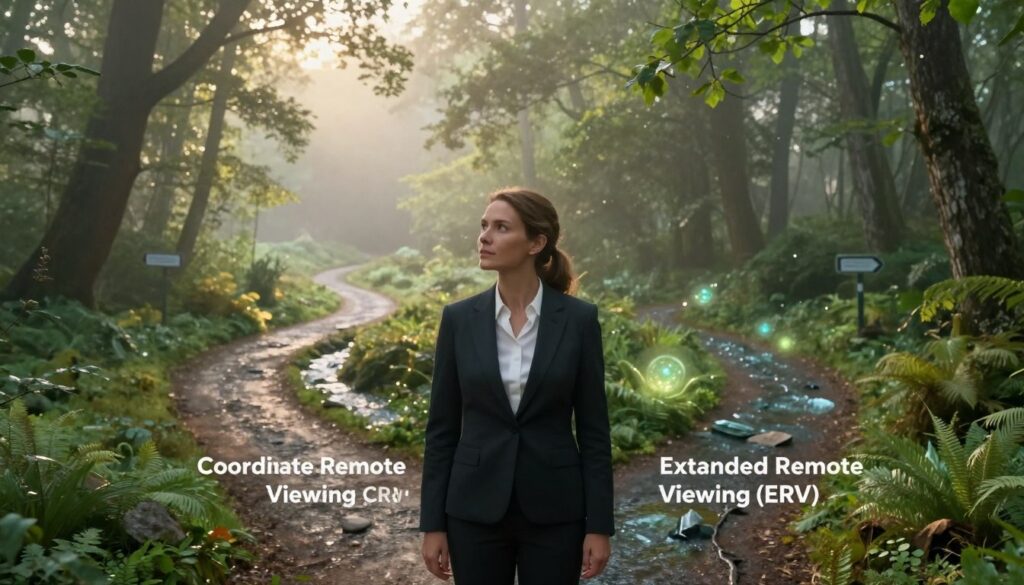
Students may retake classes at a reduced refresher rate to capture new aspects of technique and content. The DMI learning platform keeps course materials, target summaries, and past records in one place.
Use the portal to review old sessions on paper, track progress, and spot patterns in your data and signal handling.
“Every session is a chance to sharpen ability; steady practice makes small gains add up.”
- Revisit classes to refresh techniques and core training.
- Read recommended books and manuals to deepen understanding.
- Treat each session as training: collect raw information, then refine it with feedback.
Over time, consistent practice helps a viewer turn impressions into usable information at a target site. Choose a path that keeps you learning and coming back for more training.
Conclusion
Mastering method choice helps a viewer select the best approach for any target site.
Key takeaway: steady training, careful session notes, and honest review sharpen how you read subtle signal and gather useful information.
Commit to regular practice and to the feedback loop. Over time, small gains add up and raw impressions turn into reliable data.
Whether new or experienced, a dedicated path gives you tools to investigate any site with clarity and confidence. Keep learning; each session teaches something new.