
Centuries-old quatrains from Les Prophéties often resurface when modern politics feels chaotic. People scan cryptic lines for echoes of recent leaders and events. This piece asks a simple answer-seeking question without rushing to claim certainty.
The most cited verses include a “false trumpet concealing madness,” a “great shameless, audacious bawler,” and images of a “bridge broken” and a “city faint from fear.” Commentators link these words to upheaval during the era of donald trump, strained alliances, and talk of war.
Psychologist Michael Shermer calls apophenia the habit of finding patterns in ambiguity. That helps explain why people and media map vague lines onto modern events. We will outline the specific quatrains, weigh competing views, and show how metaphor can be read as literal predictions.
For more context on how prophecy is used today, see a concise resource on modern prophetic claims at psychic predictions.
Key Takeaways
- Ancient quatrains get reinterpreted in turbulent political times.
- Specific lines—like the “false trumpet” and “bridge broken”—drive much of the debate.
- Apophenia helps explain why people find patterns where none were intended.
- We will compare texts and events without overclaiming a firm answer.
- The article aims to separate pattern-seeking from plausible analysis.
Why this question matters now: context, intent, and how we’ll judge the “predictions”
When a nation faces legal change and fear, symbolic lines attract intense attention. People look for clear answers in vague words when the white house is a focus and laws shift.
We will judge claims by three simple criteria: fidelity to the original quatrains, historical plausibility, and whether modern readings stretch beyond what the text can support. This keeps analysis tied to source text, not headlines.
Translation matters. Many lines come from French and Latin with layered symbolism. An English pun like trumpet can become a modern overlay. Cultural distance can distort meaning, especially around phrases such as city faint and references to changing money or standards.
U.S. political cycles amplify interest. During White House transitions, talk of war, policy fights, or money changes makes metaphors sound specific. Editors must balance curiosity with skepticism so one striking word or pun does not carry the whole argument.
“We start with source text, then test plausibility against history and motive.”
- Check wording: Does the translation match original words?
- Check context: Could the verse plausibly mean events in the united states?
- Check specificity: Are references to bridge, city, or money unique enough to link to an administration?
| Criteria | What to ask | Example | Editorial weight |
|---|---|---|---|
| Fidelity to text | Do the words match original phrasing? | Quatrain wording vs. translation | High |
| Historical plausibility | Could this apply to past or present events? | City unrest, shifting laws | Medium |
| Specificity | Is imagery tied to a single administration? | Bridge, trumpet, money | Low–Medium |
Next, we examine the exact lines—the so-called “false trumpet,” the “bridge broken,” and the city fear imagery—to see whether those bridges to today’s politics truly hold. For context on modern prophetic claims, see a summary of modern prophetic claims.
The quatrains in question: “false trumpet,” “audacious bawler,” and the “bridge broken”
A small cluster of verses keeps resurfacing because their images map easily onto leadership, unrest, and legal change.
Quoted lines often run: “The great shameless, audacious bawler … he will be elected governor of the army … the bridge broken, the city faint from fear.” Those words blend civic and military tone. The phrase audacious bawler suggests a loud public figure. Elected governor and governor army carry a martial flavor.
Another frequently cited quatrain reads: “The false trumpet concealing madness will cause Byzantium to change its laws … changing money and standards.” That pairing — trumpet concealing and legal change — invites talk of law and currency shifts.
| Phrase | Common reading | Modern echoes |
|---|---|---|
| Audacious bawler | Boastful public speaker | Media spectacle, rallies |
| Bridge broken / city faint | Civic rupture, public fear | Protests, unrest, civic strain |
| False trumpet concealing madness | Misleading herald, chaos | Legal shock, changing money standards |
Note peripheral lines like egypt forth man or edict withdrawn that appear in some translations. Pairing these few words with modern leaders — including a single mention of donald trump in commentary — depends heavily on translation choices and puns like trumpet/Trump.
Did Nostradamus predict Trump? Parsing the claim against the historical text
Careful comparison reveals where metaphor aligns with facts and where it simply reflects broad human fears. This section tests whether phrases such as elected governor army or city faint truly map onto the modern scene or stretch the old quatrains beyond reason.
Metaphor versus match
The phrase elected governor or governor army can read like executive control of forces. Commentators link this to the trump presidency and to donald trump by analogy.
But language from 16th-century French is typically broad. City faint fear reads as civic anxiety, not a unique forecast. Many eras show similar unrest.
Laws, money, and policy turbulence
Lines about Byzantium change laws and changing money standards invite readings about legal and economic shifts. That link is plausible as metaphor, yet tying those lines to specific U.S. rule changes or money policy is speculative.
Where parallels strain
Selective quotation, anachronism, and puns (for example trumpet/trumpet-as-name) inflate precision. References like false trumpet and madness add drama but do not equal proof.
| Claim | Textual fit | Assessment |
|---|---|---|
| elected governor army | Literal military rule | Weak — metaphorical |
| bridge broken / city faint | Civic rupture | Moderate — common image |
| Byzantium change laws / money | Legal/economic change | Possible metaphor, not specific |
“The quatrains pull toward dramatic reading, but the method matters more than the impulse.”
Answer: the parallels have intuitive appeal, but textual gaps, translation choices, and selective reading keep the claim unproven.
Opinion: What the Trump era makes us see in Nostradamus
Old lines act like mirrors. In a polarized country, readers often project current fights onto centuries-old text. That makes images such as bridge and bridge broken stand for fractured bipartisan ties.
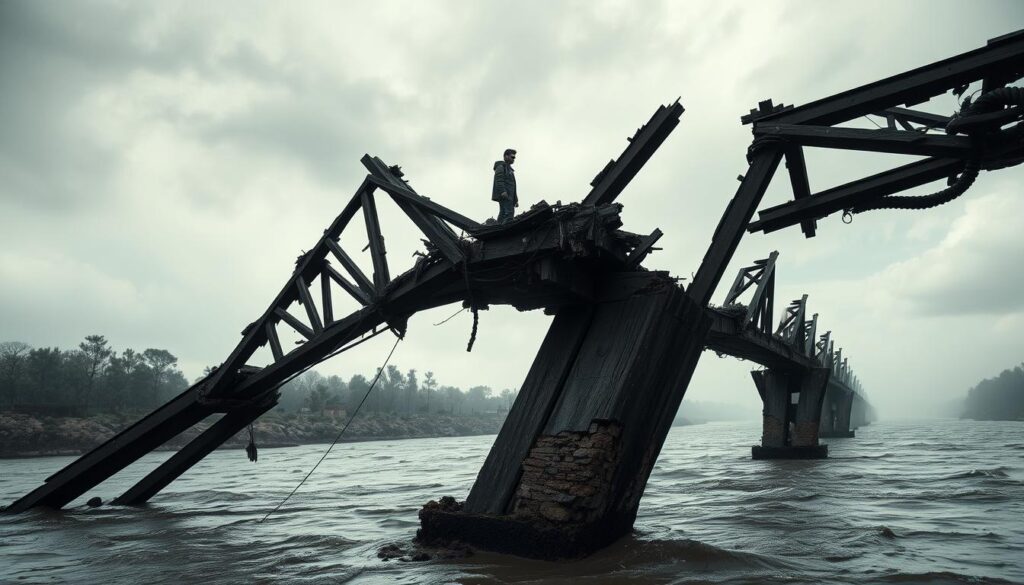
Boldness and contention: broken bridges and faint city fear
Bold public style, labeled audacious bawler or great shameless, reshapes what people see. Urban unrest becomes city faint or city faint fear in commentary.
Those phrases map easily onto protests and televised anxiety. The phrase elected governor army or governor army reads as a leader’s command posture, even when the textual link is loose.
Spectacle and the “false trumpet”: media volume and the White House megaphone
The false trumpet or simple trumpet works as a metaphor for high-volume stagecraft. White House amplification can make metaphor feel literal.
“The text often reflects the viewer’s state of mind more than it foretells events.”
Our view: the trump presidency and the rise of boldness contention pushed many to revisit old verses. Those readings tell us as much about contemporary views and the people who hold them as they do about the verses themselves.
Pattern-seeking and prophecy: why vague quatrains feel specific in chaotic times
Human minds map vague fragments onto current events, especially under stress. Michael Shermer’s concept of apophenia explains why people spot a pattern in loose words and assume a clear answer.
Quatrains act like psychological Rorschach tests. Short, ambiguous words let different views settle on the same line. In tense time, talk of war or legal change makes phrases about change laws or byzantium change laws feel especially pointed.
Media volume magnifies this. When headlines pulse with fear, mentions of madness or a trumpet seem to confirm a hidden message. People then cite phrases such as elected governor army, governor army, or elected governor because they fit a tidy narrative in hindsight.
Apophenia and the urge to connect dots
Boldness contention, the audacious bawler, and the great shameless are archetypes. They appear in many eras, so matching them to a single leader weakens claims of uniqueness.
“Ambiguous verses tell us more about those reading them than about what the verse foretells.”
Enjoy the poetry, but resist overconfident inferences. For more on related psychic claims and perception, see what are PK abilities.

Modern prophecy culture: from Nostradamus to Jiang Xueqin and forecasts under a Trump return
Viral forecasts and scholarly lectures now sit beside centuries-old quatrains in the public imagination.
In May 2024 Beijing-based historian Jiang Xueqin presented a scenario called “Operation Iranian Freedom.” His talk proposed a coalition including the united states, Israel, Saudi Arabia and other allies. The lecture went viral, gaining over 100,000 subscribers in days.
Predictive narratives in geopolitics: “Operation Iranian Freedom” and a second Trump presidency
Jiang argued that a second administration could face strong pressure toward war with Iran. He estimated 3–4 million troops would be needed to occupy Iran, a number most experts call untenable.
Why this matters: the scale and logistics he described make an invasion strategically prohibitive. Money, manufacturing ties, and recruitment shortfalls would strain any sustained operation.
War, armies, and public fear: echoes of “governor of the army” amid Iran-Israel-U.S. tensions
Jiang warned U.S. forces could become “hostages, not soldiers” in difficult terrain. That image fuels public fear and makes analogies like governor army or elected governor army sound familiar.
White House rhetoric and allied politics amplify this effect. When leaders speak loudly, people map those words onto stark scenarios of war and overextended army forces.
“Viral scenarios can feel prophetic because they simplify complex limits into a vivid story.”
| Element | Jiang’s claim | Strategic reality |
|---|---|---|
| Coalition | U.S., Israel, Saudi Arabia, UK, UAE | Possible politically; logistically complex |
| Troop estimates | 3–4 million required | Beyond realistic U.S. capacity |
| Logistics | Occupation would be prolonged | Money, manufacturing, recruitment constrain action |
| Political effect | Heightened public fear | Prophecy-like narratives gain traction |
Connecting Jiang’s viral forecast to old prophetic habits shows how the same psychological levers persist. Bold scenarios meet public anxiety, and a polarizing leader such as president donald trump becomes a focal point for dramatic forecasts. For background on related cultural threads, see ancient prophecy and modern myth.
When predictions miss: the 2025 hype cycle and why Nostradamus gets recycled
In 2025, a small set of vivid images drove a large wave of predictions. Headlines spun asteroids, a trio of eastern fires, and an “aquatic empire” into urgent forecasts. Most claims drew attention but few matched reality.
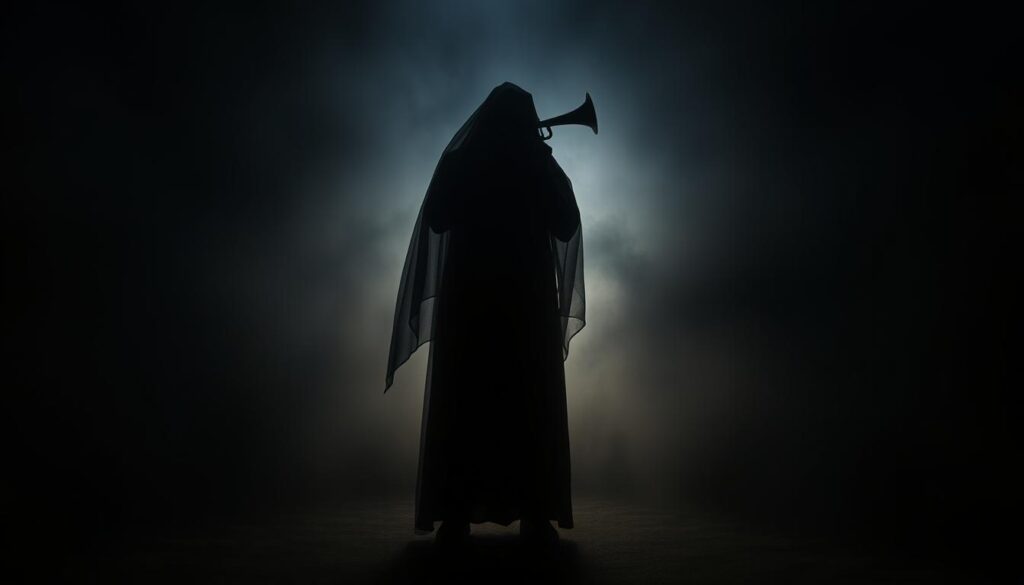
Asteroids, “three fires,” and an “aquatic empire”: dramatic claims and inconsistent outcomes
Sites linked cosmic threats to the same sparse lines, using false trumpet concealing and trumpet concealing as click magnets. A promised Amazon disaster and a looming New World Order failed to appear. The result was pattern inflation: big claims, small follow-through.
“Dramatic images sell; missing outcomes fade but leave a memory of fear.”
What hit-or-miss records teach us about reading quatrains in the United States today
When war talk peaks, predictions about change laws, changing money standards, or an edict withdrawn get recycled. Simple images like city faint or city faint fear map onto almost any tense urban moment. That creates illusion of precision.
| Headline type | Typical claim | Actual outcome |
|---|---|---|
| Cosmic threats | Asteroid or fireball hits | No major event; media correction slow |
| Regional catastrophes | Amazon or coastal collapse | Predicted disaster did not occur |
| Empire shifts | Aquatic empire rising or falling | Metaphor reused; no clear match |
The pattern is clear: bold language like false trumpet, madness, or trumpet sells attention. Outlets often underplay corrections. Readers should enjoy the poetry, but also check evidence and avoid assuming metaphor equals a forecast about specific leaders such as donald trump.
For a concise guide to related symbolic readings, see this short note on modern interpretations of tarot-like themes: ten of wands.
Conclusion
Centuries-old lines can feel timely, but that resonance is not proof. Accepting their poetic pull helps explain why readers form strong views and why certain words surface in a short time.
The best answer is cautious. We find that while some verses map onto modern figures, the evidence stays interpretive. Consider how a bridge or a bridge broken can symbolize civic strain without naming a leader.
Legal themes like laws, byzantium change laws, cause byzantium change, and byzantium change signal turbulence but resist literal mapping. Cultural archetypes mean president donald trump or president donald will invite many readings and trump would draw intense scrutiny.
Our final answer: weigh the poetry, question bold predictions, and keep your views open to evidence.