
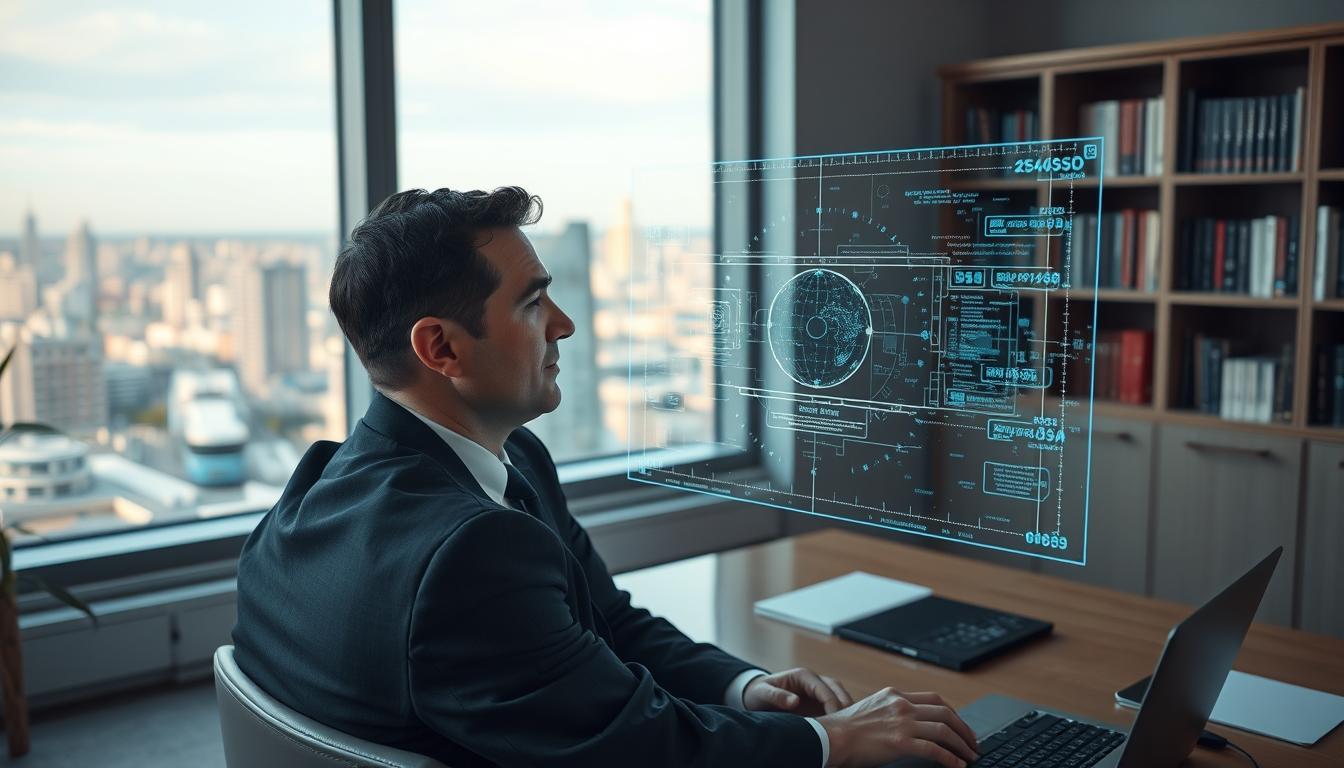
This page introduces a clear method for accessing information about distant targets using the mind.
CRV began at the Stanford Research Institute and later reached the public when the CIA declassified the program in 1995. Many people are surprised to learn that remote viewing is not a rare gift but a skill that can be trained over time.
The guide that follows outlines a step-by-step methodology for a viewer to gather impressions during a session. With practice, a person learns to read subconscious data and to shape those impressions into useful descriptions of a target.
By studying basic steps and consistent practice, you can improve your ability to report accurate information and build confidence in your own psychic abilities. Visit a primer on related skills at psychic superpowers for more context.
Key Takeaways
- The CRV method gives a structured way to access impressions about distant targets.
- Remote viewing can be learned; it is a trainable ability, not only a talent.
- Sessions rely on the subconscious mind as the primary source of data.
- Practice and consistent methodology improve accuracy over time.
- Historical declassification in 1995 opened training materials to the public.
Understanding the Controlled Remote Viewing Protocol Explained
Learning this method asks you to rethink how your own mind and sense of time work together. The US military’s research found that nearly everyone has some level of innate psychic abilities. This idea reframes how people view their inner senses.
Remote viewing relies on tapping the subconscious to describe sensory details of a distant or hidden subject. A clear and steady approach helps impressions surface without being judged by the conscious mind.
A practiced viewer trains to quiet inner chatter. When mental noise drops, simple images, textures, or sounds appear. Those impressions are the raw data a trained person refines into useful details.
Many researchers noted that the potential for this kind of perception is more common than most expect. By dedicating regular time to study the steps, your ability to access distant information can rise steadily.
- Shift how you perceive your mental limits.
- Quiet the conscious mind and let subtle impressions surface.
- Practice the controlled remote viewing method with discipline.

Origins and Development at Stanford Research Institute
Researchers at the Stanford Research Institute turned informal reports into repeatable experiments. Their goal was to find a clear way to teach people how to gather impressions about a distant target. This effort produced the first systematic steps for training a person to become a reliable viewer.
The Role of Ingo Swann
Ingo Swann played a pivotal role in shaping the method. Working with Dr. Hal Puthoff, Swann helped test techniques that sharpened raw impressions into usable information.
The pair refined exercises so a learner could improve skill with practice. Their work made it possible for a person without an unusual gift to develop into a trained remote viewer.

Military Intelligence and Star Gate
By the late 1970s and early 1980s, the research institute’s results drew military interest. Leaders saw a practical way to broaden intelligence collection and funded a formal program called Star Gate.
The Star Gate initiative invested roughly $20 million to train remote viewers and shorten the learning curve. General Albert Stubblebine and other officers pushed to apply the methodology in real intelligence work.
- The program expanded who could be trained as a viewer.
- Training focused on consistent steps to produce repeatable results.
- Many experiments suggested that most people can learn the basic abilities.
The Six Stages of the CRV Methodology
The six-stage framework guides a person from quick sensory hints to full, structured reports on a distant target. Each stage builds on the last so a viewer can move from basic impressions toward richer, conceptual data.
Initial Sensory Impressions
Stage one asks the viewer to notice simple senses: colors, textures, smells, and sounds that arise first in a session. These raw impressions form the foundation of later detail.
Dimensionality and Sketching
By stage three the focus shifts to space and shape. The viewer senses how the target occupies space and begins to sketch layout and structure.
Sketching is encouraged even for people who say they cannot draw; simple lines capture useful form and orientation.
Advanced Conceptual Data
Later stages gather broader themes, function, and context. A skilled remote viewer can move from textures and sketches to words that describe purpose or environment — for example, recognizing an urban monument versus a natural site.
The system draws on methods first refined by Ingo Swann and the coordinate remote viewing idea, which uses minimal cues like geographic markers to sharpen focus. Split-brain insights also help reduce mental noise so data is clearer over time.

For more on related perceptual skills see clairvoyant abilities.
Preparing for Your First Remote Viewing Session
Before you begin, set aside a short, quiet block of time and prepare a simple workspace.
Ask a friend to pick 5–10 images and seal each in a manila envelope. Jennifer McVey recommends sealing targets to prevent sensory leakage before the session starts.
Have a pen and paper ready. Record quick sensory notes first: smells, temperatures, textures, or simple shapes. Trust those initial impressions; they are often the most accurate.

Quiet your mind and let go of distractions. The way you set the space—lighting, seating, and silence—affects your ability to perceive details from the sealed envelope.
Start small. Practice with simple targets and build a regular training schedule. A focused viewer improves with time and consistent work.
For related practice drills and foundational exercises see practice exercises that help steady attention and sharpen perception.
Practical Steps to Perform a Session
Start each session with a short ritual to help the mind shift into focused attention. Sit quietly, breathe twice, and set a clear intention for what you want to perceive.
During the session, sketch quick shapes and note immediate impressions on paper. Try a bird’s-eye view to understand the target’s space and structure. Keep lines simple; detail follows with practice.

Analyzing Your Results
After you finish your sketch, open the envelope and compare your notes to the image. Mark which sensory details matched and which did not.
- Record the time and date for each session to track progress.
- Use words to describe feelings and sensations tied to the target.
- Refine how you interpret subconscious data by comparing notes to the envelope.
- Repeat with different targets to set a performance baseline and guide training.
Every session offers data about your unique way of perceiving. For more guidance on practice and skill development, see psychic intuitive readings and guidance.
Scientific Perspectives and Skepticism
Careful analysis of past experiments shows how easy it was for subtle cues to shape results. That point sits at the heart of scientific skepticism about remote viewing. Critics argue that early studies lacked the controls needed to rule out sensory leakage or guesswork.

The Role of Sensory Cues
Researchers like David Marks pointed out that experimenters sometimes left hints that a viewer could pick up. Those cues may include wording, timing, or even the setup of a session.
When cues exist, impressions can reflect what the mind infers, not hidden data. This makes repeatability hard to achieve in experiments.
Evaluating Intelligence Utility
The CIA closed the Stargate program in 1995 after evaluators found the information too vague for intelligence work. Many reviewers concluded the program did not yield actionable data.
- Lack of repeatability remains a major concern.
- Vague descriptions invite confirmation bias when analysts match impressions to targets.
- Rigorous, blind protocols are essential to test any claimed ability.
| Claim | Criticisms | Implication |
|---|---|---|
| Accurate descriptions of a target | Possible sensory leakage; vague phrasing | Results may be unreliable for intelligence |
| Repeatable impressions in sessions | Low reproducibility across labs | Scientific acceptance remains low |
| Useful operational data | Information often too general | Program use limited and costly |
| Claims of psychic abilities | Confirmation bias and chance | Mainstream science remains skeptical |
For a balanced look at claims versus critique, see a discussion on clairvoyant abilities — real or fake.
Conclusion
To conclude, the CRV framework on this page gives a practical path to test your perception and track progress over time.
Remote viewing techniques here show how the mind can gather sensory hints and turn them into usable data. Try short practice sessions and note what matches the targets you select.
Be aware the scientific community debates the program, yet the methodology still attracts curious learners. Consistent practice improves your ability to report clearer information.
For related services and guidance, consider a professional reading like tarot card reading services to compare approaches and refine skills.