

This introduction outlines the original protocols and the intent behind a formalized methodology. It covers how Ingo Swann and Dr. Harold E. Puthoff created a structured approach in the early 1980s to standardize how participants perceived distant targets.
We present clear, factual context on the evolution from the initial coordinate remote viewing label to the later controlled remote viewing term. This shift helped highlight the method’s structured and repeatable nature.
Readers will find concise background and guidance on training phases, the role of archived documents, and how each stage builds accuracy over time. The article aims to separate documented protocol from speculation and to show how the program functioned as a rigorous system for gathering nonlocal information.
Key Takeaways
- The method began with Swann and Puthoff to standardize perception of distant targets.
- Terminology shifted to emphasize structure: coordinate to controlled.
- Archived documents define core training and the sequence of stages.
- Each training step builds on prior skills to improve accuracy over time.
- For practical context on practice and focus, see a related guide on energy techniques: how to send healing energy.
Understanding the Origins of Remote Viewing
A focused partnership in the early 1970s turned experimental reports into testable protocols.
The research program began at Stanford Research International in 1972, where two researchers set out to test whether the human mind could gather information about distant targets. Their work led to defined training routines and a method known later as CRV.
That early collaboration produced laboratory controls and detailed document archives. Those files show how viewers were taught to work in a set order so data stayed reliable under scrutiny.

The Role of Ingo Swann
One founder contributed techniques that shaped the method and guided how trainees described sensory impressions. Many people credit this input as central to the program’s early success.
Collaboration with Hal Puthoff
Puthoff and colleagues framed experiments for intelligence use. Over the years, the intelligence community funded mission work and called on trained psychic spies for targeted tasks.
“The program explored consciousness and non-local perception under controlled conditions.”
- Project start: 1972 at Stanford Research International
- Operational interest: led to Project Stargate, active until 1995
- Outcome: declassified documents expanded the research body
| Year | Lead | Purpose | Result |
|---|---|---|---|
| 1972 | Swann & Puthoff | Establish testing protocols | Formal training and CRV method |
| 1980s | Researchers | Operational trials for intelligence | Use by trained viewers |
| 1995 | Government | Review and declassification | Public document release |
Ingo Swann Coordinate Remote Viewing Stages Explained
The original CRV methodology relied on a strict, sequential curriculum of six discrete phases. Each phase trains a remote viewer to capture specific types of information about a target.
The program required trainees to prove competence in one phase before advancing. This order helped separate personal guessing from verifiable data.

Swann noted that mastery of one level often predicts the next. That idea made the method testable and useful to the intelligence community over the years.
“The methodology was designed to produce repeatable, verifiable information for operational use.”
- Six sequential phases form the backbone of the training program.
- Each phase focuses the remote viewer on a different data type.
- The August 4, 1983 document remains a primary source for the CRV protocol.
For background on related skill training and focus techniques, see a short guide to practical practice at psychic superpowers.
The Core Six Stages of the Methodology
A clear, numbered sequence guides the viewer from raw sensation to precise, three‑dimensional descriptions of a target.
The curriculum moves from simple ideograms to complex spatial modeling. Early steps teach basic marks and sensory impressions. Later steps train the ability to build a full model of the site.
Stage six culminates in three‑dimensional modeling of the unknown target. That final work lets a trained viewer report shape, scale, and relative position with detail useful to analysts.
“The set order reduced guessing and increased the reliability of reported data.”
- The six core parts let consciousness access layered information about a target.
- Each step was designed to be mastered before advancing.
- Documents from the program show training required years and careful instruction.

| Stage Number | Focus | Outcome |
|---|---|---|
| 1 | Ideograms and raw impressions | Quick, unbiased signals |
| 3 | Sensory detail and textures | Concrete descriptors for analysts |
| 6 | Three‑dimensional modeling | Spatial, operationally useful results |
Researchers and intelligence teams found that this ordered method often produced verifiable results. The use of a controlled remote protocol, archived document guidance, and careful training helped viewers provide usable information.
Exploring the Role of Phonetics in Stage Seven
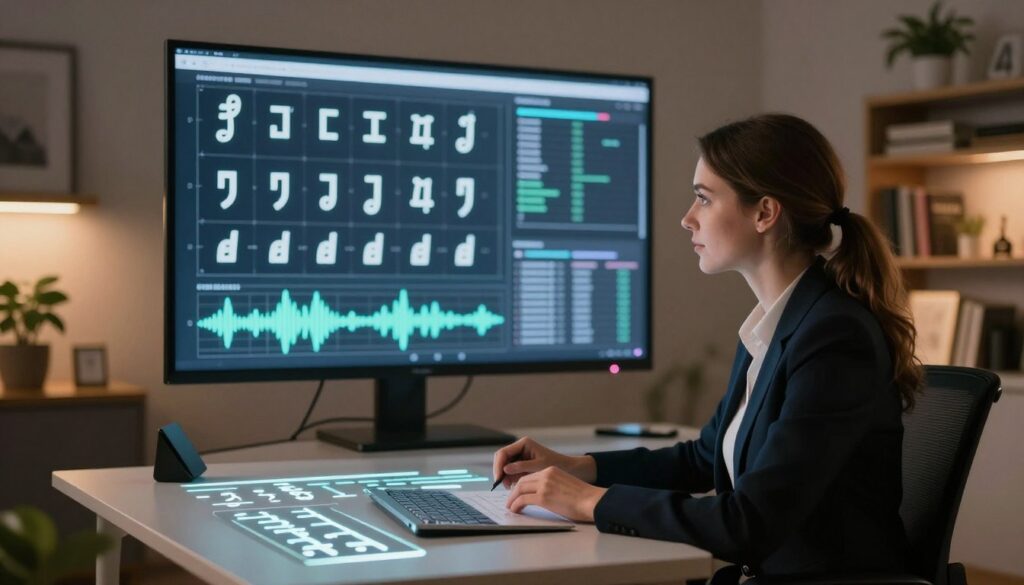
Stage seven surfaces as a phonetic layer that often appears without prior instruction during advanced sessions. This phenomenon showed up while trainees worked on the later parts of the system and before formal lessons existed for it.
Spontaneous Signal Emergence
Researchers noticed a distinct shift: alongside sensory impressions, short phonetic cues would arrive as words or syllables. Those cues helped identify targets by name when handled correctly.
Key points about this development:
- Stage seven represents phonetic signals that appear naturally during later training.
- Ingo Swann documented these phonetic cues before formal instruction for the stage was created.
- The remote viewer learns gentle methods to interpret phonetics without forcing data.
- Archives and document notes show training was minimal because the signals are spontaneous.
“Allow the phonetic impressions to arise; do not manufacture them.”
| Feature | Typical Timing | Trainer Role |
|---|---|---|
| Phonetic emergence | After advanced spatial modeling | Guide interpretation, discourage forcing |
| Formal training | Minimal early instruction | Developed later from document notes |
| Operational value | Identifying target names | Increases precise information from sessions |
For practical skill-building related to perception and focus, see a short guide to related practice at psychic skills.
The Mystery of Analytics and Potential Future Stages
Between 1984 and 1988, research targeted a way to formalize analytical insight as a distinct level of practice.
That effort became known as “analytics” and aimed to turn thought-based analysis into a teachable step. The developer spent years trying to shape it into a reliable Stage 8 for CRV.
After extensive work, he concluded the idea had not matured. He warned that analytical impressions often arrive spontaneously and must not be mistaken for core data from the taught sequence.

Other researchers and enthusiasts speculated about future extensions of the methodology. But archive documents show the program retained the established seven phases.
“The distinction between spontaneous analytical data and a formal training stage is a critical concept for any serious student.”
- The mid‑1980s push to create analytics consumed several years of research.
- Despite effort, formalizing analytics into a stage proved elusive.
- Documents and trainers remained cautious; viewers must guard against mixing analysis with raw perception.
Analyzing the Historical Stages Document
A lesser-known archival note lists a dozen ordered parts that expand the classic curriculum and suggest later refinements.
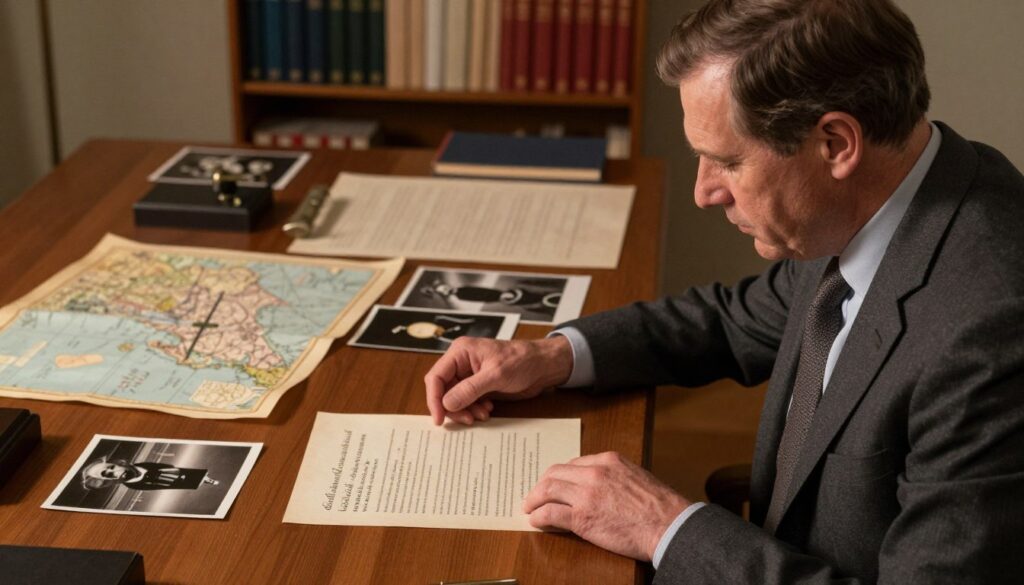
The Stages Document in the archive presents 12 numbered entries tied to the original CRV methodology. Researchers believe the note dates from after 2007 and captures later thoughts about teaching and practice.
Its value lies less in formal adoption and more in insight. The file shows an attempt to organize material viewers had reported over years into a single, logical order.
That ordering helped the intelligence community and researchers see how raw data and trained interpretation might fit together. The document uses the term CRV repeatedly and links older protocols to possible extensions.
“The list serves as a personal lab notebook, not an institute syllabus.”
- The list of twelve maps experience into parts.
- It reflects later-era thinking rather than classroom rollout.
- Viewers gain perspective on how the method evolved over time.
For a related primer on clairvoyant practice and perception, see a short guide to clairvoyant abilities.
| Item | Nature | Research Value |
|---|---|---|
| 1–4 | Foundational marks and signals | Confirms early training roots |
| 5–8 | Sensory layering and phonetics | Shows natural emergence in practice |
| 9–12 | Analytic notes and advanced techniques | Offers hypotheses for further research |
The Influence of the Military Training Manual
A compact handbook turned classroom practice into an operational program. The manual made the method teachable for service members who could not train directly with its originators.
Documenting the Methodology
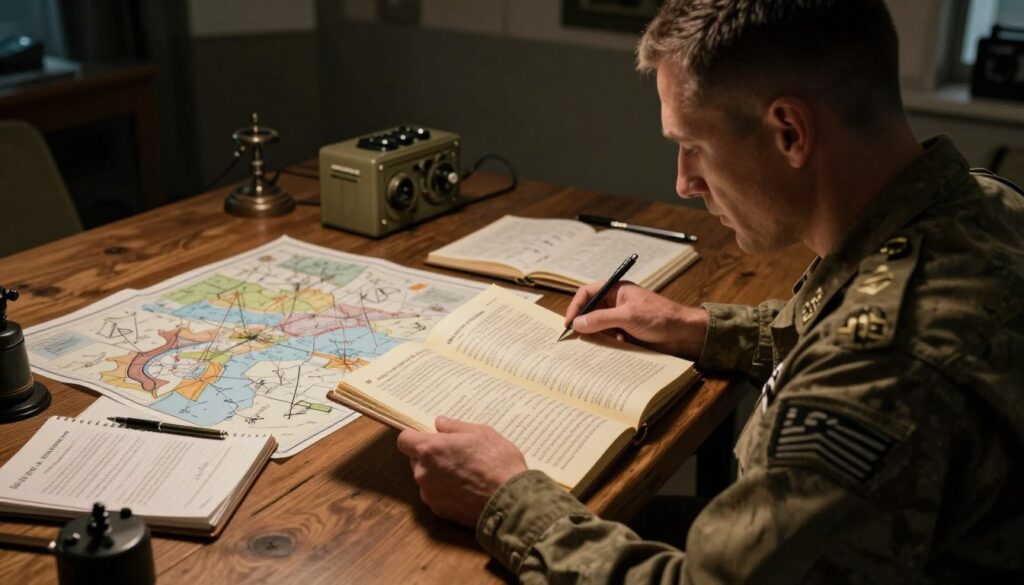
The 1985 CRV Manual, compiled by Tom McNear, captured the ordered set of instructions used in field work. It was classified SECRET until declassification in 1995.
This document preserved the method’s sequence and practical cues. Trainers used it to keep consistency across different teams and years of service.
The Role of Tom McNear
McNear was the first military member trained through all stages 1–6 by the original teacher. His write-up became the core document for the remote viewing program.
- Key effects: the manual sustained training quality across Project Stargate.
- It gave viewers a clear order to follow when performing operational work.
- Hal Puthoff and others backed the effort to ensure the method lasted into the future.
“The manual remains a primary source for understanding the CRV process.”
Separating Fact from Fantasy in Advanced Research
When examining later work, it’s vital to test assertions against the archival record rather than repeat dramatic anecdotes.
Many people have amplified claims about extra stage counts and sudden breakthroughs. The primary document evidence tells a different story. Careful review shows the program relied on a clear, taught sequence and steady training.
Ingo Swann publicly criticized those who used doom and gloom to gain attention. He insisted that the method and its document trail define credibility, not sensational words.

For a responsible student or remote viewer, trusting archived files and the CRV manual prevents confusion. Honest results came from structure, practice, and disciplined work.
“The true value of this work lies in proven methodology and dedicated practitioners.”
- Check original document sources before accepting bold claims.
- Favor method and training over dramatic words from others.
- Respect the legacy by reporting accurate results to the community.
For a concise primer on verified practice, see the detailed guide to remote viewing.
Conclusion
The taught sequence remains the benchmark for training and reliable data collection in this field. The article shows how a formal methodology turned experiment into an operational program used by intelligence teams and researchers.
Practitioners who honor the documented method see better results. Follow the order, guard against forcing impressions, and treat analytic ideas with caution.
The history here underscores rigorous research into consciousness and esp. It also reminds the community that integrity matters more than bold claims.
For further practical guidance on focus and perception, see this intuition development guide.