

In the 1970s, the U.S. government funded studies to test psychic methods for intelligence work. Researchers at Stanford Research Institute, including Russell Targ and Harold Puthoff, led many of those efforts.
They proposed a model where a continuous train of impressions connects a viewer to distant targets. This theoretical thread allowed trained operators to pick up data that seemed to come from a shared matrix.
A skilled viewer learns to sort true data from mental noise. Training focused on protocols that reduced bias and raised repeatable results.
Understanding that thread proved key for students who wanted to master methods developed during the long Stargate Project. Clear filters helped improve accuracy and confidence during sessions.
Key Takeaways
- 1970s studies tested psychic methods for intelligence gathering.
- Targ and Puthoff shaped early research at Stanford.
- The model describes a continuous train of impressions linking a viewer to targets.
- Training teaches separation of valid data from mental noise.
- Mastering protocols used in Stargate helped improve consistency.
Understanding the Signal Line in Controlled Remote Viewing
Defining a guiding current
A hypothesized train of pulses originates in the Matrix and carries information toward a viewer. This train functions like a carrier wave that becomes inductively modulated when it interacts with target data at a site. Aperture controls how broad or focused that radiating band appears to the percipient.

Defining the carrier
A typical session begins when a viewer records coordinates on paper. Each coordinate acts as a gateway that connects a point in space with a nonmaterial medium. From there, the carrier may present large gestalts early on, then narrow as time proceeds.
Practical steps
- Write coordinates clearly on paper to open the channel.
- Relax and let broad impressions arrive through the aperture.
- Record sensations and sketches to capture raw information.
| Feature | Role | Effect on Viewer | Training Focus |
|---|---|---|---|
| Carrier wave | Transports data | Modulates perception | Recognize modulation |
| Aperture | Controls dispersion | Broad vs. focused gestalts | Manage breadth |
| Coordinates | Gateway to space | Triggers access | Clear notation |
| Matrix medium | Source of patterns | Multiple frequencies | Sensory filtering |
For related energy practices and stepwise guidance, see how to send healing energy.
The Concept of the Matrix

Imagine a vast, nonmaterial grid that holds records for every person, place, and thing across time.
The Matrix functions as a primary medium for psychic data. It’s a structured, mentally accessible framework that holds information about both physical and non-physical reality.
Each geographic site in the physical world has a mapped segment inside this framework. That correspondence reflects the nature of the site and its history.
Like a universal archive, the Matrix resembles ideas such as the Cosmic Unconsciousness. It assigns a node to every living and nonliving element, creating links across space.
- Vast, non-material structure housing data about every person, place, and thing.
- Acts as the medium where encoded data originates and travels toward a percipient.
- Interconnected nodes let trained operators access data from many points across the world.
| Aspect | Role | How it Helps | Training Focus |
|---|---|---|---|
| Structure | Organizes information | Predictable access patterns | Learn mapping cues |
| Nodes | Represent places and things | Site-specific impressions | Differentiate local traits |
| Connectivity | Links related data | Cross-reference ability | Practice associative retrieval |
| Medium | Source of encoded data | Foundation for perception | Refine sensory filters |
How the Signal Line Functions
A trained percipient often senses a sudden rush of patterned energy that carries broad impressions of a target site.
Inductive modulation occurs when that carrier interacts with information at a coordinate. This process changes wave shape and yields gestalts during Stage I of CRV.
During a session, a viewer writes coordinates on paper to evoke and anchor contact. Simple marks help the mind act as a medium and translate raw signals into usable data.

Inductive Modulation of Information
The system depends on the viewer’s skill to separate useful signals from noise. A manmade object, like a bridge, first appears as texture, weight, and angle before the mind names it.
- Carrier function: radiates across frequencies the viewer learns to tune.
- Decoding: separate noise, then convert points into coherent information.
- Matrix mapping: each data point fits a larger geometric pattern tied to space and place.
The Role of the Remote Viewer
A trained operator acts as a conduit, translating distant impressions into usable notes during a session.
The viewer must stay calm and focused while impressions arrive. The monitor and viewer typically sit at opposite ends of a table to reduce cues and keep protocol strict.
During a session, the viewer interacts with the signal and decodes raw sensations into workable information. This requires discipline and a steady routine.

“The act of translating subtle cues into concrete data is a skilled task that improves with practice.”
Common experiences include a sudden feeling of uncertainty. Paradoxically, that doubt often marks accurate impressions rather than errors.
- Focus: Maintain attention to prevent noise from swamping incoming cues.
- Objectivity: Let impressions arrive without naming them too soon.
- Practice: Regular sessions refine decoding ability and build consistency.
| Role | Key Duty | Outcome |
|---|---|---|
| Remote viewer | Perceive and decode | Actionable information |
| Monitor | Guide protocol | Reduced bias |
| Session | Controlled time block | Repeatable results |
By learning to decode the signal, a remote viewer becomes an essential part of the overall process. For further reading on related abilities see clairvoyant abilities.
Historical Origins of the Stargate Project
Cold War urgency pushed intelligence agencies to explore unusual methods for gathering unseen information.
Stanford Research Institute Experiments
In the 1970s the CIA funded work at Stanford Research Institute to test remote viewing for intelligence use. Researchers Russell Targ and Harold Puthoff led formal trials with people such as Ingo Swann.
Over years of testing, teams tracked performance across sessions, refined training, and standardized use of coordinates to focus attention on a target site.

Government Espionage Interests
The Stargate program ran for about two decades and cost roughly $20 million. Military interest rose because some viewers produced useful information about objects and locations.
Notable figures included Joe McMoneagle, who served as Remote Viewer No. 1 and later received a Legion of Merit for service. The project was declassified in 1995, revealing research methods and results.
Legacy: The program attempted to apply scientific rigor to anomalous cognition and left a structured system used by later teams.
The Importance of Aperture in Perception
A focused aperture acts like a camera iris, deciding which impressions the viewer receives first.
Aperture controls the width and dispersion pattern of the radiating wave. A narrow aperture limits input so a viewer senses large gestalts of a site before detail arrives.
As a session continues, the aperture may widen. This allows more information about space and textures to enter consciousness.
- Gatekeeping: Aperture regulates how much energy the medium transfers to the viewer.
- Progression: Start narrow for broad forms, then widen to gather finer detail.
- Filtering: Proper control reduces noise and keeps signals usable.
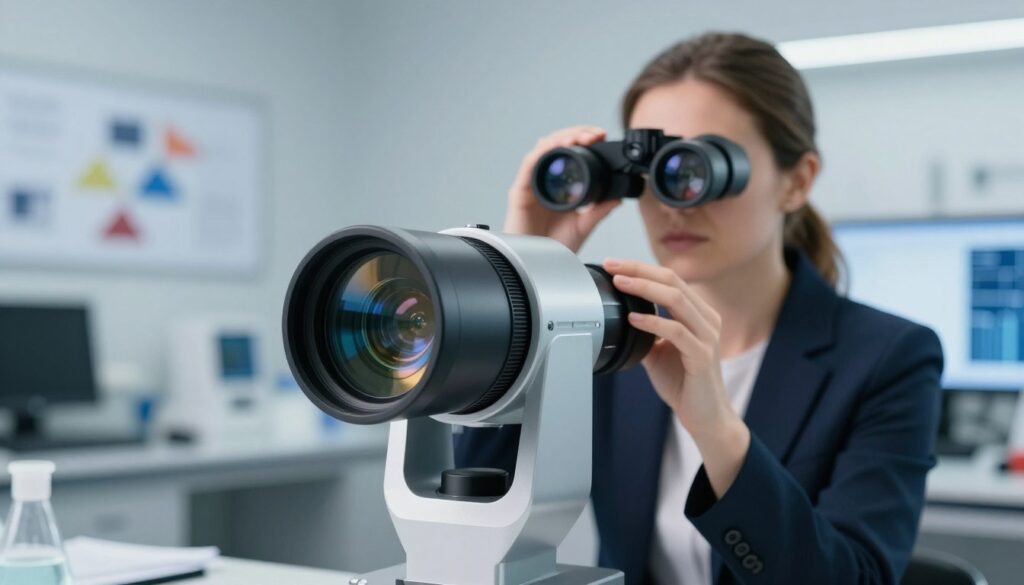
Learning aperture control is a practical skill. A trained viewer can maintain focus on a target site, manage incoming energy, and separate useful impressions from mental clutter.
| Aspect | Role | Practical Tip |
|---|---|---|
| Aperture width | Controls dispersion | Begin narrow, expand gradually |
| Energy gating | Regulates flow | Monitor sensations; adjust breath |
| Perception focus | Guides attention | Anchor to simple attributes first |
| Noise reduction | Improves accuracy | Pause when overloaded |
For related training resources and skill-building, see psychic superpowers.
Decoding Information from the Signal Line
Effective decoding depends on a framework that converts fleeting feelings into structured observations a viewer can trust.
Start by recording impressions on paper. Notes, sketches, and simple coordinates anchor perception and make vague data concrete.
The system asks the viewer to label basic attributes first: texture, scale, and motion. These small points build toward a fuller understanding of a site or place.
Manage aperture to focus on a limited area. Narrow focus reduces noise and makes signals easier to interpret during a session.

Trust initial perceptions, even when they seem unclear. That first feeling often contains valid information that later detail will confirm.
- Record raw impressions on paper immediately.
- Use coordinates and simple labels to objectify data.
- Expand from gestalt to detail as the system allows.
“Decoding is a learned process; regular practice and honest feedback refine accuracy.”
Over time, the viewer links each point to objects, areas, and moments. This builds a reliable map of information about a site and improves overall awareness.
The Impact of Analytic Overlay
Analytic overlay refers to the conscious mind interpreting incoming data too soon. A viewer can feel a rush to name sensations, and that urge often creates distortion.

The problem shows when the brain forces a familiar, manmade form onto an ambiguous impression of a site. That habit turns raw perception into layered commentary and adds noise to a session.
The Problem of Conscious Interpretation
Training stresses spotting those quick judgments and setting them aside. When a viewer pauses, the system can deliver cleaner information over time.
- Recognize: Note analytical words as separate from direct feeling.
- Label: Use sensory terms first — texture, scale, motion — not names.
- Maintain aperture: Keep perception open to reduce brain-driven assumptions.
- Practice: Repeat structured protocols to lower analytic overlay during a session.
“Pause, note, and return to raw data; that discipline protects accuracy.”
Levels of Human Consciousness
Human awareness layers act like filters that let some impressions surface while others stay hidden.
The subconscious sits just below waking thought and receives early impressions from a passing medium. Those impressions often hit autonomic centers first, creating reflexive responses a viewer notices as small bodily cues.
During a session, the mind must bridge that gap so raw information moves from inner sense to marks on paper. Practice and training help this bridge become steady and reliable.

Understanding levels of awareness helps manage how signals flow. Often, a feeling arrives before conscious naming. Learning to trust that quick cue improves accuracy when mapping a site or object.
“Accessing subtle layers offers clearer data when analytic habit yields to simple sensing.”
| Level | Role | Practical Tip |
|---|---|---|
| Subconscious | Initial reception of impressions | Note early bodily cues |
| Autonomic | Converts cues to reflex | Watch hand movements |
| Conscious | Labels and records | Write simple descriptors on paper |
- Each session offers time to explore inner space and refine awareness.
- A steady system links feeling to usable information about a site or area.
Learning Theory and Skill Acquisition
Skill gains in this practice come from short, steady sessions that end while progress still feels strong. Quitting on a high point helps the brain store correct patterns and reduces confusion on later attempts.
Avoid overtraining. Pushing past capacity can saturate the system and cause collapse. Rest preserves the pathways the viewer builds during a good run.
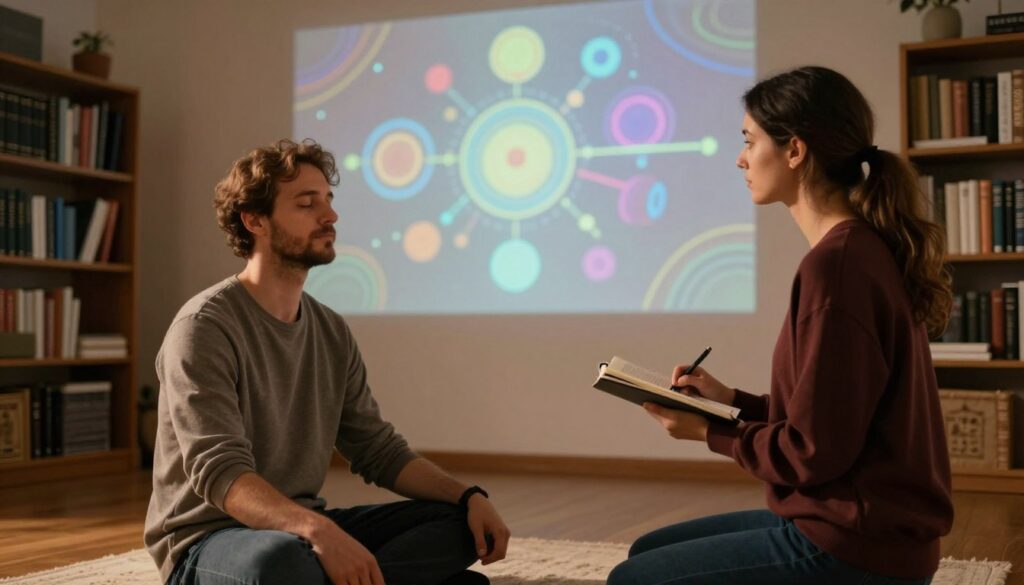
Treat each session as a single point of learning. Over time, repeated practice reinforces cognitrons in the brain so accessing the signal becomes easier.
- Keep training consistent but short.
- Stop after a clear success to reinforce proper pathways.
- Balance practice with rest to avoid system failure.
| Focus | Action | Benefit |
|---|---|---|
| Process | Repeat short sessions | Steady skill growth |
| Management | Pause on high point | Stronger memory of correct impressions |
| Risk | Avoid overtraining | Prevent collapse of function |
| Practice | Refine technique each time | Improved accuracy at a site |
For guided lessons that reinforce healthy habits, consider a psychic development course to support long-term growth.
The First Time Effect in Training
A rookie session can produce surprisingly clear impressions before habits set in. This early burst, often called the First Time effect, shows up when a beginner hits high-grade success on an initial attempt.
Why it happens: Some researchers hypothesize an initial excitation of dormant, hereditary psi-conducting neuronal channels in the brain. That sudden activation can bypass analytic guardrails and yield strong raw data about a site.

What follows: After that opening hit, a viewer often sees a drop as analytic systems try to manage new pathways. That creates extra noise and reduces clear impressions during later practice.
- The First Time effect often yields a high-grade performance during an initial session.
- Success may fall off as the brain attempts to control awakened channels.
- Record perceptions on paper to track progress and spot patterns over time.
“Treat the first success as a guide, not a guarantee.”
Training tip: Expect this effect, manage noise, and treat each session as a point of growth. Consistent practice helps the system stabilize and builds reliable viewing skill.
Managing Noise During Sessions
Noise often arrives as quick judgments, stray memories, or imagined details that mask true impressions. A trained viewer learns to note those intrusions and move on.
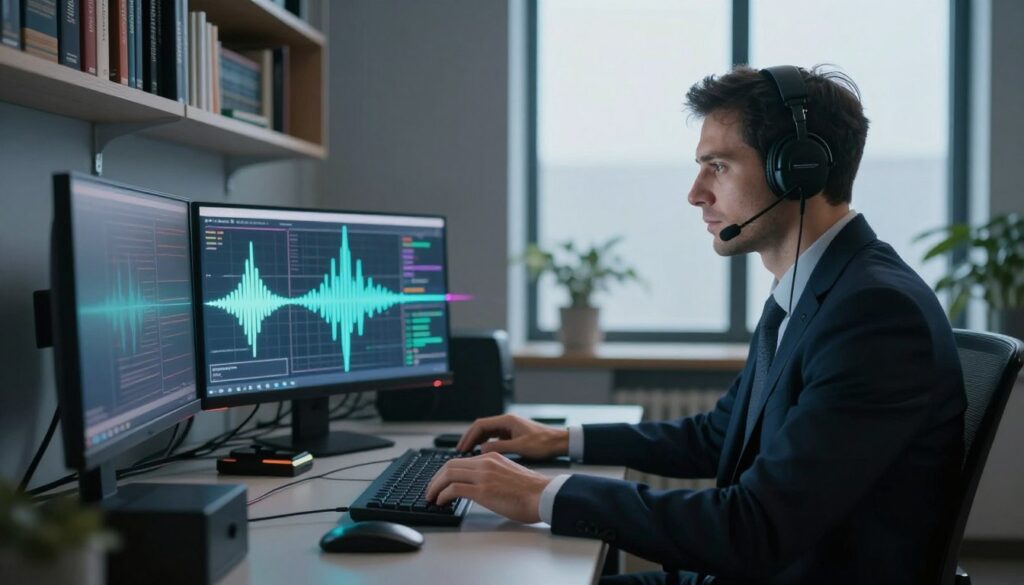
Stay structured. During a session, keep to protocol and record raw marks on paper. That habit turns fleeting feelings into concrete notes you can check later.
Use simple checks to separate mind chatter from useful signals. Pause when analytic words appear. Label sensory data first: texture, scale, motion. This process protects information from bias.
- Keep routine: short practice and steady training reduce noise over days.
- Trust doubt: a feeling of uncertainty often means you are navigating through clutter toward the point.
- Anchor to a site: focus awareness on location traits, not imagined stories.
For related methods on working with subtle impressions, see how energy healing works remotely.
Scientific Perspectives on Psychic Functioning
Laboratory studies over many years have tested claims that human perception can access distant sites without ordinary senses.
Major programs, such as the PEAR lab at Princeton, ran long-term experiments across two decades. Those efforts collected sessions and produced repeatable data that invited statistical review.
Notable analysts include Jessica Utts, who concluded that psychic functioning meets modern scientific standards. Dean Radin’s meta-analyses show a weak but consistent effect across many studies.
Researchers emphasize careful protocol and honest reporting. By applying rigor, teams have reduced methodological flaws and strengthened results from labs around the world.

- Distributed ability: studies suggest many people can produce above-chance data, though effects are small.
- Ongoing questions: how the brain and energy processes carry information remains open.
- Value of sessions: each trial adds to a growing, testable body of knowledge.
| Study | Finding | Years |
|---|---|---|
| PEAR Lab | Measurable departures from chance | ~20 |
| Jessica Utts | Scientific support for effect | Review era |
| Dean Radin | Weak but consistent effect | Meta-analyses |
“Applying scientific methods helped move debate from opinion toward testable results.”
Practical Applications of Remote Viewing
Practitioners report that sessions have been used to support real-world searches and investigations. Remote viewing has been applied to missing-person searches, crime-related leads, and even market speculation.

Use cases remain largely anecdotal. Some program reports claim useful tips for locating objects or describing a site. Independent verification often falls short, so findings should be treated as provisional.
A trained viewer can describe manmade structures, natural locations, or objects that were unknown to investigators. Each session yields raw information that may guide field teams or suggest new lines of inquiry.
- Applied areas: crime-solving, missing persons, financial leads.
- Limitations: results often lack independent confirmation.
- Value: sessions can point to specific features of a site or thing.
| Application | Claimed Benefit | Evidence Level |
|---|---|---|
| Search & Rescue | Suggests search zones | Anecdotal |
| Investigations | Highlights manmade markers | Mixed verification |
| Financial | Signals market ideas | Unproven |
Over time, improving training helps viewers refine accuracy. Every successful session shows potential, but cautious use and corroboration remain essential.
“Treat information from sessions as subjective input, not conclusive proof.”
Tips for Aspiring Remote Viewers
Spend a few minutes centering before you write coordinates; this sharpens focus and reduces guesswork.

Start small: learn basic meditation to steady breath and attention. Short daily drills help a viewer notice subtle feeling and cut mental clutter.
Keep a simple journal. Note dates, time, brief impressions, and any surprising matches to a site. Over years this log becomes a training map that shows growth and common errors.
- Practice short sessions and stop while clarity holds.
- Use CRV structure to anchor impressions before naming objects.
- Focus on signal and ignore obvious noise when possible.
- Be curious yet skeptical; test results against facts.
Consistent practice produces an effect: people become better at separating valid information from projections. For related readings, check a short guide to predictions at clairvoyant predictions.
“Patience, routine, and honest notes form the core of steady progress.”
Conclusion
,Consistent practice turns early impressions into reliable notes a viewer can trust. This guide tied history, method, and scientific study to everyday training. Use each short session to capture simple data and build clear patterns of information.
Stay disciplined and keep a brief journal. A steady routine helps any viewer learn to manage noise and work with the signal. Over time, training makes decoding more natural and useful for real tasks.
Remote viewing remains an area of active interest. Keep an open mind, test findings, and let honest feedback shape progress. Thank you for reading and good luck on your journey.