
Remote viewing is a structured practice that helps a person access information about distant objects or events beyond the reach of the five senses. It trains the mind and perception to note impressions, details, and subtle cues that a viewer can record during a session.
Famous experiments at the Stanford Research Institute proved the concept. Ingo Swann described Jupiter’s rings before NASA confirmed them, and physicists Harold Puthoff and Russell Targ published lab work that showed measurable detail from hidden targets.
Today, a website or app can guide you through a step-by-step practice. Beginners and remote viewers use sessions with photo or object prompts, collect feedback, and log results. Over years of trials, tracking impressions and quality of detail helps you refine techniques and grow abilities.
Key Takeaways
- Remote viewing trains perception to gather information about distant objects.
- SRI experiments with Ingo Swann led to verified descriptions of Jupiter’s rings.
- Lab work by Puthoff and Targ showed measurable detail from hidden targets.
- Modern websites and apps provide structured sessions, photos, and feedback.
- Consistent practice and tracking over years improve results and skill quality.
Understanding the Fundamentals of Remote Viewing
Remote viewing is a trainable method that helps a person collect impressions and report information about places or objects that are not present. The practice focuses on clear, repeatable steps so a viewer can separate perception from imagination.

What is Remote Viewing
Remote viewing refers to a documented process where a participant records sensory impressions about a distant target during a controlled session.
Practitioners use simple protocols and a step-by-step routine to note shapes, textures, and emotional tones. Over time, that routine improves accuracy.
The History of Scientific Research
The Stanford Research Institute ran decades of experiments during the Cold War to test whether a person could describe a hidden target without senses.
One famous example involved Ingo Swann, who described a moth inside a sealed box. Over the years, researchers refined methods to ensure data came from perception and not guesswork.
- Trainable practice: viewers learn to follow steps and log results.
- Controlled tests: experiments at SRI offered measurable detail.
- Progress over years: repeated sessions help refine skill and improve information quality.
Exploring Free Online Coordinate Remote Viewing Target Generators
Many platforms now supply blind numbered targets designed for serious practice and repeatable trials. The phrase free online coordinate remote viewing target generators points to tools that hand you a sealed number so you can focus on impressions.
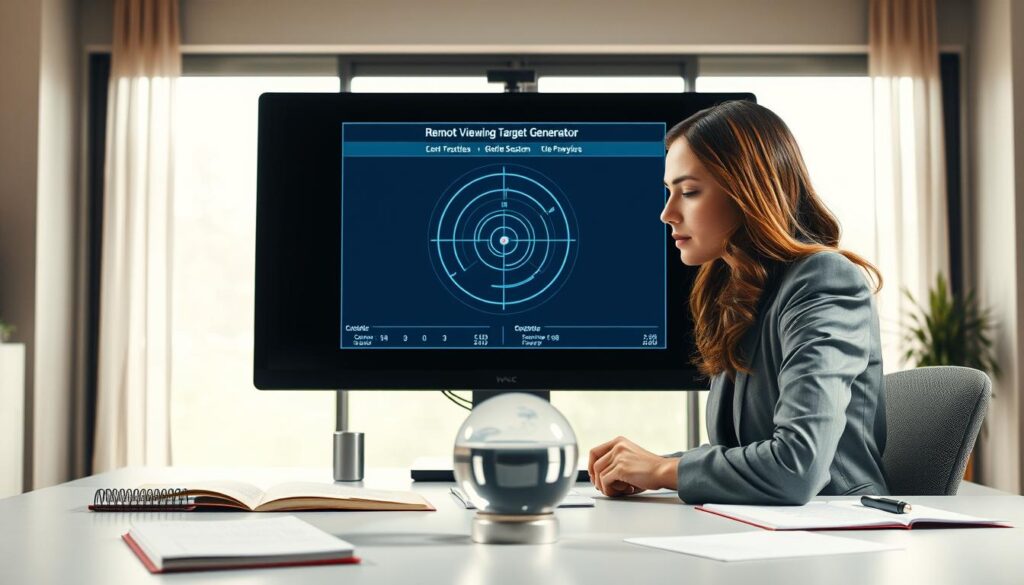
The benefit is clear: human-verified pools cut down on accidental cues. Verevio, for example, offers over 5,900 manually verified targets for practice. The app also includes 22 specialized trainers to help viewers log impressions and track long-term results.
- Verified targets keep each session blind and unbiased.
- ARV Studio supplies a database of 1,000 photo targets tailored for trials.
- Numbered banks let a viewer compare quality and improve over time.
Choose a site that records session data and preserves the blind process. That way you spend time refining perception, not guessing outcomes. Over repeated sessions, the quality of your results becomes easier to measure and improve.
The Evolution of Remote Viewing Methodologies
From strict scripts to loose, intuitive approaches, methodologies have evolved to suit different aims. Over time, these methods shaped how a practitioner trains the mind to gather impressions and report information.

Controlled Protocols and Technical Systems
Controlled Remote Viewing (CRV), developed by Ingo Swann in the 1980s, set a clear step-by-step process that helps a viewer describe a target with consistent results.
Major Ed Dames later expanded protocols with Technical Remote Viewing, which adds stages for deeper analysis and more detailed impressions.
Extended and Associative Approaches
Skip Atwater created Extended Remote Viewing to guide practitioners into a hypnagogic state. That shift in consciousness often improves the quality of sensory detail reported during a session.
Associative Remote Viewing (ARV), by Stephan A. Schwartz, pairs images with real-life events to make predictive work possible. In practice, ARV links a chosen image to a future event so viewers can score outcomes more objectively.
Intuitive Freestyle Methods
Not all practitioners follow rigid scripts. Intuitive methods let viewers work without formal steps and favor spontaneous perception.
Whether you prefer structured protocols or freestyle techniques, the common goal remains: train perception over years to improve the accuracy of impressions about unseen targets and events.
Why Human-Verified Targets Outperform Random Generators
Targets made by humans tend to carry context and nuance that improve the quality of impressions. A human creator can add sensory cues—light, texture, and emotional weight—that enrich the viewing process and help a viewer lock on to useful signals.
Verevio and similar services focus on human-checked targets to keep mystery and high entropy. That care reduces hints and raises genuine uncertainty, which often yields better results for remote viewing practice.
When a person builds a target, they can include GPS, temperature, or historical notes that a machine lacks. Those specifics boost the usefulness of feedback after a session and sharpen a viewer’s perception over time.
- Human design: richer sensory detail for stronger impressions.
- High entropy: more uncertainty leads to clearer signals.
- Concrete data: GPS, lighting, and texture make feedback more precise.
Essential Equipment for Your Remote Viewing Practice
Choosing the right digital tools saves time and improves the quality of impressions. A few reliable items can make your practice remote viewing sessions consistent and measurable.
Mobile apps and digital tools let a viewer practice anywhere. Verevio is available for both Android and iOS, offering guided tutorials and step-by-step prompts to shape each session.
Mobile Apps and Digital Tools
If you prefer a computer, ARV Studio is a standalone Windows program that manages sessions and stores data. It helps a viewer keep logs, compare results, and refine techniques over time.
Always pick a website or app that enforces structure. A clear step-by-step routine reduces guesswork and improves the feedback loop.
- Verevio on Android and iOS for guided tutorials and on-the-go practice.
- ARV Studio for Windows users who want detailed session management.
- Tools that store impressions and session feedback to track progress.
Having the right equipment—whether a mobile app or dedicated software—is a vital step for any serious viewer. It helps you collect reliable information and grow skillful practice over time.
How to Properly Structure Your Remote Viewing Session
Effective sessions begin with simple logistics: time, silence, and a clear question to guide impressions.
Spend 5–10 minutes preparing your space. Turn off distractions and set a comfortable timer. This brief routine helps a viewer steady attention and improves accuracy.
Frontload only neutral facts that reveal whether the target is a location or an object. Neutral frontloading keeps verification honest and reduces bias when you later compare impressions to the actual target.

- Set the session length and note the verification method.
- Follow a consistent step-by-step process to record shape, color, density, and other detail.
- Save all notes before checking the real target so feedback is unbiased.
Proper tasking is the most critical part of the process. It lets you confirm results and refine how you describe target elements in future practice remote viewing sessions.
| Time | Action | Purpose |
|---|---|---|
| 5–10 min | Prepare space and calm mind | Reduce distractions, focus |
| 20–40 min | Follow step protocol and record impressions | Gather usable information and detail |
| 5 min | Seal notes; plan verification | Keep results blind until checking |
For complementary energy work and focused techniques, see learn focused energy techniques.
Analyzing Your Results and Tracking Progress
Analyzing outcomes helps a viewer separate useful data from noise. After each session, set aside time to compare your impressions with the official feedback for the number you worked on. Honest comparison is the fastest way to learn.

Understanding Hit and Miss Ratios
Use the hit/miss ratio to measure accuracy. Count clear hits, partial hits, and misses for each description of a target.
Record specifics: note which detail you described well and which elements were vague or wrong.
Using Session Analytics
Modern session analytics show Accuracy, Hit/Miss Ratio, and Strength of Evidence. Review visual summaries to spot trends over many trials.
- Save results locally on your device so you can review them later.
- Look for repeating patterns in what types of information you gather well.
- Use charts to check whether your accuracy improves with more practice.
| Metric | What it Shows | Action |
|---|---|---|
| Accuracy | Percent of correct details | Focus on the step that needs improvement |
| Hit/Miss Ratio | Balance of clear hits vs misses | Adjust protocol or prep time |
| Strength of Evidence | Confidence level for each impression | Track which impressions meet threshold |
Example: if a viewer consistently scores high on texture but low on color, change your warm-up or focus questions to target color detail. Over time, this process improves the overall quality of your practice remote viewing results.
The Role of Feedback in Developing Psychic Abilities
Reliable feedback turns guesses into measurable skill and keeps practice honest. When a viewer finishes a session, spending a few minutes to compare notes with the actual target protects against illusion and self-deception.
Good feedback gives clear information about hits and misses. That information lets a viewer score each session and isolate what worked. Over time, scores reveal patterns in accuracy and help refine techniques.
Always end a session with a review: check your impressions against reality, record the results, and note which step produced reliable data. This simple routine proves whether your abilities are developing or if habits are creating false confidence.
- Feedback is the most critical component of the remote viewing process; it validates your work.
- Consistent reviews prevent viewers from mistaking guesses for real impressions.
- Regular engagement with targets and feedback builds lasting skill over time.
For related methods that strengthen accuracy, see develop your psychic superpowers.
Safety Considerations for Aspiring Remote Viewers
A calm, safety-first approach protects your mental health when practicing extrasensory methods. Before each session, check in with yourself. If you feel anxious, tired, or emotionally raw, postpone practice.
Mental Health and Boundaries
Set clear limits. Aspiring viewers should decide how long a session will run and what types of targets they will accept. Boundaries reduce risk and keep the process grounded.
People with a history of mental health issues should avoid this work. You must assume responsibility for your own well-being when choosing a site or a target.
“If you feel overwhelmed, stop immediately and seek support.”
| Concern | Action | Why it Matters |
|---|---|---|
| Triggers or phobias | Avoid images that might cause panic | Prevents lasting distress and protects mood |
| Mental health history | Consult a professional before practice | Reduces risk of exacerbating conditions |
| Session length | Limit to a set time and take breaks | Maintains clarity and quality of impressions |
Practical rules: prepare your space, use a calm mind, and keep a trusted person informed of your practice. Choose a reputable website or computer app and prefer sites that emphasize safety and quality.
For structured learning and responsible practice, consider a guided psychic development course that covers health and technique.
Debunking Common Myths About Remote Viewing
A common myth says this practice is pure imagination, but decades of structured tests and archives suggest more nuance.
Wikipedia often reflects skepticism, yet the Star Gate Archives and work by Edwin May provide a balanced, documented view. Those files show procedures, blind tasking, and scored results that go beyond casual anecdote.

Remote viewing differs from general clairvoyance because it uses strict, blind protocols. That discipline helps a viewer separate guesswork from verifiable impressions.
- Many experiments produced repeatable information about objects and events beyond the five senses.
- Research by May and Sonali Marwaha supports measurable outcomes under controlled conditions.
- Quality of impressions often matches the actual photo or object used for verification.
“The process is designed to reduce bias and test perception under strict terms.”
For a deeper look at related study and context, see this short piece on Pleiadian research that explores program archives and methodology.
Conclusion
Treat every practice session as a data point that shows what works and what needs work. Keep notes in clear order and set aside time to review each set of impressions.
Use high-quality targets and give yourself honest feedback after every session. That information helps you spot patterns and make steady gains.
Be patient. Track your impressions across many sessions and learn from discrepancies. With consistent practice, good tools, and careful review, your results will improve over time.
For further guidance and curated materials, see our psychic insights.