

This short guide explains what it means to direct your vital force in plain language. Think of it as a skill you practice for calm, balance, and better rest—not a guaranteed cure.
We’ll move from clear basics to simple, beginner-friendly steps and then point toward commonly studied methods like acupuncture and Reiki. Research shows those two have stronger evidence than many other modalities, and more high-quality studies are still needed.
People relate to the idea of life force in different ways—spiritual, psychological, or mind-body. You can still benefit by focusing on breath, presence, and nervous system cues. This guide stays safety-forward: these approaches are typically low risk but work best alongside medical care. For persistent or severe symptoms, speak with a healthcare provider.
Expect practical outcomes like better sleep, less stress, a deeper sense of peace, and a stronger connection with self. If you’re curious but skeptical, that’s normal—explore what resonates and consider seeking a practitioner or reading this psychic healing guide for more context.
Key Takeaways
- Definition: Directing inner force is a skill for relaxation and balance.
- Scope: This is an introductory, step-by-step, beginner-friendly guide.
- Mind and body: Attention, intention, and nervous system state matter.
- Safety: Low risk, best used alongside conventional medical care.
- Practical gains: Improved sleep, reduced stress, and greater calm.
- Evidence note: Acupuncture and Reiki have stronger research support.
What “Healing Energy” Means for Your Mind and Body
A simple way to view vital force is as a model linking breath, attention, and bodily signals. This idea maps how the nervous system, emotions, and focus shape felt experience in the body.
Intention (what you aim for) and attention (what you notice) steer breathing, muscle tone, and stress responses. Shifting focus can ease tension or invite calm within minutes.
Common signs that things feel off in a day include a scattered head, heaviness in the body, low motivation, quick reactivity, or an emotionally flat heart. These are normal signals worth noticing.
- Where do I feel tightness in the body?
- What thoughts or mood live in my head right now?
- What do I need in this moment for rest or safety?
Realistic goals for this work are small and useful: better sleep, calmer stress levels, more ease, and improved quality of life. Some people also use these methods alongside care for chronic pain or stress, but serious symptoms need medical advice.
| Support | What it may help | When to see a clinician |
|---|---|---|
| Daily calm | Lowered reactivity, clearer thoughts | Persistent panic, severe mood changes |
| Sleep and rest | Improved routines and depth of sleep | Chronic insomnia or daytime impairment |
| Pain and stress | Support for symptom coping and relaxation | New injury, unexplained increasing pain |

When you can name what feels off, you gain a clearer way to pick the right practice next. For more practical methods, see energy healing techniques.
How to Channel Your Healing Energy Safely and Effectively
Begin with the room. Pick a quiet chair or cushion, lower noise, and silence your phone. A calm space supports steadier focus and a smoother flow of attention.
Clear the area. Use intention, a clap, or a singing bowl. If available, smoke like incense or sage can help, but simple intention works well on its own.
Ground and center. Feel your feet on the floor. Lengthen the exhale and imagine a root into the earth. This keeps sessions stable rather than airy or scattered.

Create a clear intention
State a simple aim: for the highest good. This ethical boundary keeps the practice supportive and reduces fear or mental overreach.
Protection and discernment
“Invite only what feels safe and supportive.”
Visualize a golden-white light around you. If anything feels scary, harmful, or off, pause, end the session, re-ground, and return to what feels stabilizing.
- Start short: 5–10 minutes.
- Repeat at a similar time of day to build trust.
- Track your experience gently and seek professional help if distress increases.
Want guided practice options? See a recommended resource for beginners: psychic development workshops for beginners.
Core Techniques to Channel Healing Energy in the Moment
Simple, moment-focused techniques help you move from tension into rest.
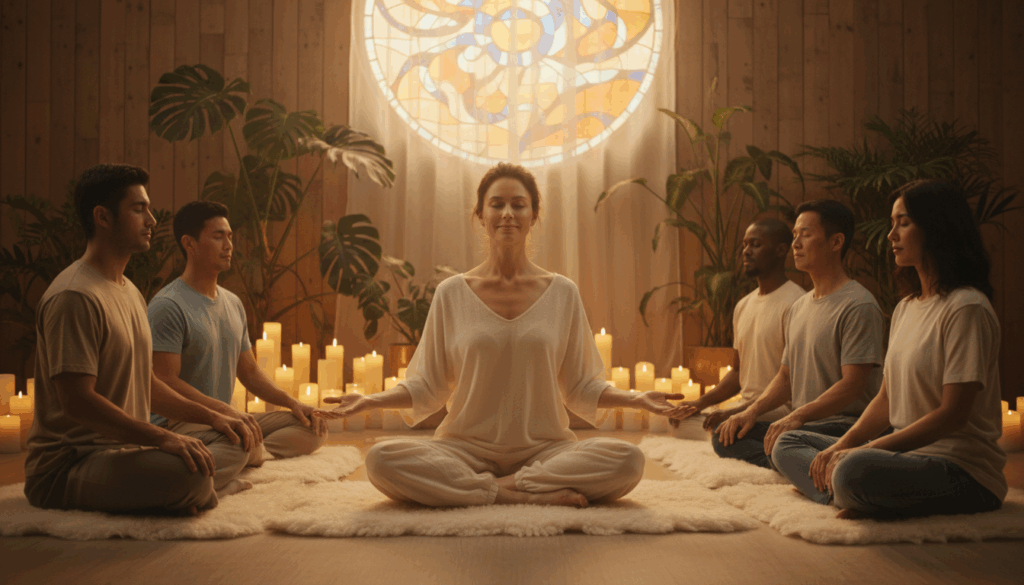
Hands-on or hands-off work. For a Reiki-inspired self-session, place light hands on the forehead, heart, or low belly, or hover them an inch above the skin. Soften your gaze, relax the jaw and shoulders, and keep attention steady rather than forcing results.

Breath reset
Try square breathing: inhale 4, hold 4, exhale 4, hold 4. Repeat for one to three minutes as an in-the-moment reset at work or before sleep.
Meditation for calm
Focus on breath or body sensations. Notice thoughts without chasing them. Use short sits to strengthen inner guidance and quiet the mind.
EFT tapping
Tapping on standard acupressure points while naming a stressor and saying a gentle phrase can quickly lower tension. Keep rounds brief and simple.
Yoga as moving meditation
Choose gentle or restorative styles. Move with breath to open the chest, calm the nervous system, and clear the channel between body and mind.
Pick one tool that meets your current need—calm, grounding, or release—and stop if you feel dizzy, panicked, or uncomfortable.
Energy Healing Modalities to Explore Beyond Self-Practice
When self-practice feels limited, seeking guided methods can add structure and support. Exploring professional options makes sense for pain that persists or for people wanting more guidance and clear steps.
Acupuncture and acupressure
Acupuncture uses very thin steel needles at specific points on the head, neck, face, and back. The goal is better balance and improved flow. Research often favors acupuncture over many other modalities for certain types of pain.
Sound tools
Singing bowls and tuning forks work through resonance. A commonly cited frequency is 128 Hz, used for calm and balance. Sound sessions focus on listening and vibration rather than touch.
Non-touch options
Therapeutic Touch and pranic healing use scanning and clearing of the field. Practitioners describe recharging blocked areas without hands, which suits people who prefer no contact.
Movement and hands-on paths
Qigong blends breath and slow movement, with reports of help for sleep, blood pressure, and pain. Reflexology applies pressure on hands, feet, and ears via mapped pathways to support relaxation.
Polarity and Quantum Touch
Both blend gentle contact, breath, and focused attention. They aim at restoring balance, pairing short sessions with lifestyle suggestions.
Choose a practitioner with clear training, respectful boundaries, good communication, and willingness to work alongside medical care.
Learn more about related practice and resources at psychic energy.
How to Know You’re Channeling: Sensations, Signals, and Simple Ways to Practice
A session can feel like adjusting a radio dial: small clicks clear static and reveal quieter signals. Notice gentle shifts rather than dramatic signs.
Common sensations: warmth or tingling in the body, a heaviness lifting, softening in the heart area, or clearer thought in the head.
Signals vary by person. Sometimes the clearest sign is simply feeling more settled afterward. Track small changes over time—breath length, jaw release, shoulders dropping.

Journaling and automatic writing
Start with a short sit or brief meditation, then write freely for a set time. Note feelings, images, or phrases without editing.
“Write what appears; later review for calm, grounded themes.”
- After writing, answer kindly as your wisest self.
- If messages feel fearful or shaming, stop, re-ground, and use breath or movement.
- Keep a notebook by the bed for dreams and repeating symbols.
Build consistency: small daily practice, even five minutes, strengthens trust and helps recognize meaningful synchronicities over time.
For practical guidance and structured tips, see development tips: psychic development tips.
Conclusion
A few clear practices can make daily stress easier to carry and sleep more restorative.
In short: attention, gentle intention, and steady practice support calm, balance, and better rest.
Safety first: clear the space, ground and center, set an aim for the highest good, and stop if anything feels off.
Small steps matter. Five minutes of breath work, brief meditation, gentle yoga, or hands-on self-Reiki-style support often shifts state in useful ways.
If you want more structure, explore modalities like acupuncture, sound work, qigong, or reflexology. See a helpful intro on psychic superpowers for related paths.
Remember: results usually look like deeper sleep, less reactivity, and a steadier sense of inner power. For medical concerns, consult a licensed clinician.