

Are you wondering whether your feline offers more than company? Some people mean comfort, others mean physical relief or spiritual presence. This piece starts by naming that big question and will explore it with a warm, grounded tone.
We’ll look at what research says about stress and heart health, what scientists note about purr vibration and frequency, and what cultural traditions claim about feline powers.
Expect evidence-based findings where available, plus a fair look at personal stories and spiritual views. We will not suggest pets replace medical care.
Many owners report a cat seeming to sense when something is wrong. Those life moments and shared stories help explain why this topic keeps coming up.
Key themes will guide the article: companionship, purring, measurable health outcomes, history and culture, and simple meditative practices you can try with a calm companion.
Key Takeaways
- We’ll separate scientific research from cultural beliefs.
- Purring is linked to vibration frequencies that may affect stress.
- Owner reports matter, but they don’t replace clinical care.
- The article covers history, science, and everyday stories.
- Practical tips will help you explore calm moments with a pet.
What People Mean by “Healing Energy” in Cats
Most people mean emotional comfort first. A quiet companion can steady the mind during stress. Simple presence, a warm lap, or the rhythm of breathing can make someone feel less alone.
Companionship works as practical care: regular feeding and play create routines that give days structure. Gentle touch, grooming, and shared quiet time often lower tension and help the body relax.

It helps to separate two ideas. Physical effects are measurable changes like lower blood pressure or calmer breathing. Spiritual beliefs point to a literal aura, subtle vibration, or intuition.
“A cat curling up beside a person grieving can feel like love in action.”
Some people use the word “energy” metaphorically to mean mood, calm, or connection. Others mean it in a spiritual sense — practices such as Reiki and vibration are part of that view. For a clear overview of spiritual techniques and language, see psychic energy healing techniques.
Across years and many cultures, felines appear in folklore and everyday stories. Small, repeatable moments — checking on a sick friend, sitting near someone at night — keep the question alive. Next, we’ll look at purring, a real sound and vibration that often anchors these claims.
Do Cats Have Healing Energy Through Their Purr?
Purring mixes subtle vibration and sound, which is why it often earns credit for soothing effects. The noise is easy to hear, and the low-frequency hum is something people can feel when a feline settles on their lap.
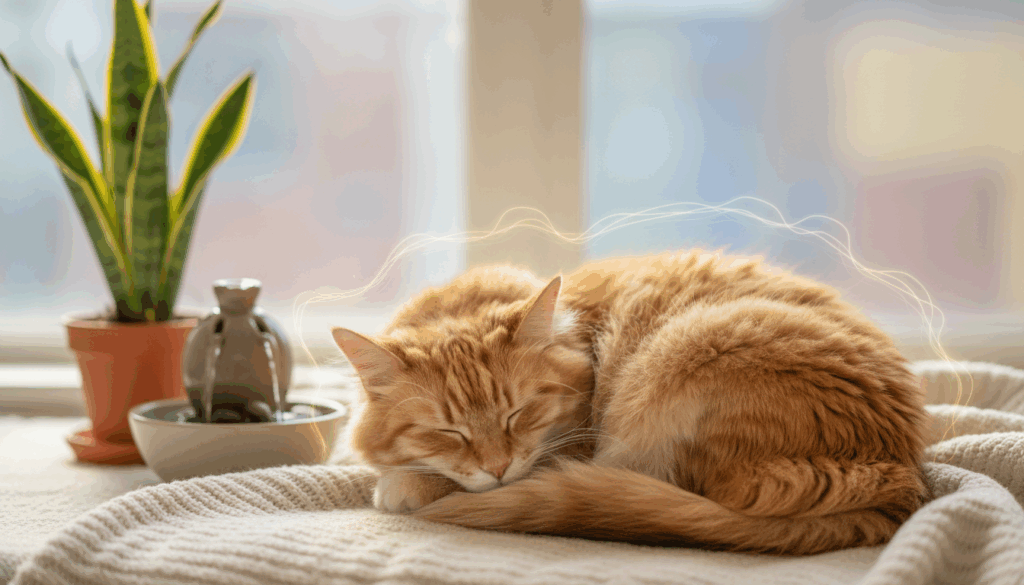
Cat purr frequencies and why 25–140 Hz gets attention
A 2006 report noted purr frequencies between 25 and 140 Hz. That range overlaps with frequencies discussed in vibration therapy and recovery contexts. This overlap has made researchers curious and spurred follow-up studies.
How purring may support the body
Some observers link these frequencies to possible benefits like improved bone growth or repair and reduced pain. Common claims include that purring can help heal bones, support tendons, and ease swelling.
Important: most human-focused evidence is indirect. Lab and animal findings are not the same as proven therapy for people.
Self-soothing and the purr’s role
Felines purr in both calm and stressful moments—during naps and at the vet. That suggests purring helps regulate their nervous system.
The “purr effect” at home
Many owners report a cat choosing to lie near a sore spot or an area of illness. The steady purr often feels comforting and can lower tension for the person nearby.
Practical note: warmth, pressure, rhythm, and focused attention all add up. These real factors explain much of why people feel relief, even when clinical proof is limited.
- Research raises questions but stops short of clinical cures.
- For serious illness like cancer, presence and calm matter more than claims of repair.
- For more context on related spiritual practices, see psychic healing.
The Science-Backed Ways Cats Can Support Human Health
Research and everyday experience together suggest clear health benefits from gentle interaction with a pet. Scientists study both short-term calming effects and longer-term associations with heart outcomes. Below we summarize what is most defensible.

Stress reduction from petting a cat: blood pressure and calming the mind
Many studies report that petting a cat lowers perceived stress and promotes relaxation. Gentle touch can slow breathing and ease anxiety in a quiet home setting.
How this shows up in the body: calmer breathing, lower muscle tension, and small drops in blood pressure for some people after brief sessions of petting or brushing.
Heart health findings: the University of Minnesota study and reduced risk of heart attack
A widely cited 2008 University of Minnesota report noted a roughly 40% reduced risk of heart attacks among owners in secondary summaries.
Important context: correlation is not causation. The link may reflect lifestyle, social factors, or stress reduction rather than a direct protective mechanism.
- What is defensible: touch, routine, and calm companionship can reduce stress over time.
- Practical tip: try short daily “cat breaks”—5–10 minutes of petting, brushing, or calm play after work or before bed.
- Who benefits most: people living alone, remote workers, those in grief, and high-stress families often report the strongest effects.
Credibility note: treat pet companionship as supportive wellness. It can reduce stress and help heart health indirectly, but it is not a substitute for medical care or therapy.
While research addresses measurable outcomes, cultural and spiritual history explains why cats often appear in roles tied to comfort and care. For guided learning about related practices, see psychic mentors.
Spiritual and Cultural Views of Cats as Healers
Across long histories, felines appear in myths as guardians and comforters of households. These beliefs shape how many families still interpret a pet’s presence today.

Ancient Egypt and Bastet’s protection
Ancient Egyptians viewed feline companions as linked to divine care. Candilee Jackson notes they believed felines carried “divine energy” and that Bastet guarded homes from misfortune and disease.
Cats in the home were seen as protectors. Owners treated them with reverence and tied their purr to luck and restorative powers of nature.
Folklore: nature, luck, and clearing negative energy
Across many old stories, felines connect to the moon, intuition, and clearing negative energy from a room. These are cultural lenses, not lab measures.
Why it matters: symbolic roles help people feel safe, calm, and loved during stressful times.
From revered to feared in later centuries
As Christianity spread in medieval Europe, attitudes shifted. Cats became linked in some places with darkness and black magic.
This change shaped modern myths about black cats and survival of superstition into modern life.
| Period | Belief | Everyday effect |
|---|---|---|
| Ancient Egypt | Divine protector (Bastet), restorative powers | Household reverence, animals kept indoors, symbol of safety |
| Folklore | Linked to nature, luck, clearing negative energy | Comforting presence, rituals, simple mood shifts |
| Medieval Europe | Demonized in some regions, associated with witchcraft | Superstitions about black cats, fear in households |
Balanced note: spiritual views of powers and healers are meaningful for many, but they differ from clinical claims. For those curious about modern spiritual practices with animals, see related guidance.
Animal Reiki and Meditation With Feline Friends
A simple seated meditation can open the space for mutual calm before any Reiki practice. Animal Reiki blends Japanese roots — rei (spirit) and ki (life force) — with quiet meditation. Many people use it as a wellness ritual, not a medical treatment.

What Animal Reiki means
Animal Reiki is a gentle way to offer presence through breath and intention. Practitioners invite animals to join but never force contact.
Let animals lead
Consent matters: an animal walking away is clear communication. Respecting that choice keeps sessions safe and calm.
The Six Pillars in practice
- Remember to breathe.
- Touch hearts, not just hands—seek consent.
- Healing can occur amid illness as comfort and calm.
- Be present in simple meditation.
- Set clear intention without being pushy.
- Recognize mutual calming for family and pets.
Try a short breath-focused meditation: inhale light into the belly, exhale outward to create a quiet space your feline friends may enter. Soft humming or gentle sound can mirror purring and deepen relaxation.
For guided spiritual readings and related practice resources, see clairvoyant spiritual readings.
Conclusion
When we weigh claims and data, the real benefit often shows up as quiet relief and steady presence.
Feline power is not a clinical cure, but comfort, companionship, and the low-frequency sound of purring can ease tension. The vibration angle is intriguing and worth more research, while much of the relief people feel also comes from relaxation and emotional regulation.
Research-backed points: brief contact often lowers stress markers and some long-term studies show notable heart-health correlations for owners. These findings support well-being without promising magic.
Respectful spiritual practices, like gentle Reiki or quiet meditation, can matter for those who resonate. Always follow consent and keep sessions calm and safe for your pet.
Try this simple next step: notice how your body changes when a friend sits near you or when you listen to purring. Track mood, breathing, and tension across a few days.
In short: whether you call it power, calm, or shared company, a quiet companion can offer steady comfort—one soft moment at a time. For related spiritual services, see tarot and spiritual resources.