

This short guide explains core ideas behind ritual work aimed at strengthening an emotional connection between two people. It covers timing, tools, and the role of clear intention when people use candles, threads, and oils to focus energy.
Traditional methods often carved names into wax or used small figures. Modern practice favors carving a name upward toward the wick, anointing with scented oil, and knotting thread with meaningful words to represent heart, mind, and body.
Ethics matter. Consent and healthy boundaries make rituals respectful. Reversals usually unwind counterclockwise and include release words to dissolve the tie.
Use this guide to learn how ritual supports real-life effort. Ritual acts can align intention with behavior, yet steady care and honest communication remain the foundation of any strong bond.
Key Takeaways
- Rituals often use candles, oils, and thread to anchor intention.
- Friday and a waxing moon are common times for growth-focused work.
- Respecting consent and boundaries keeps practice ethical.
- Reversal steps undo the connection through counterclockwise work.
- Ritual supports, but daily actions build lasting connection.
What Is a Love Binding Spell? Defining the ritual, purpose, and boundaries
A binding ritual aims to deepen an existing partnership by focusing intention through candles, thread, herbs, or written words. This work seeks to strengthen commitment and deepen connection between two consenting people rather than create new attraction or control someone’s thoughts.

How binding differs from attraction, obsession, and reconciliation
Attraction workings raise your personal charisma and invite interest from others. By contrast, a binding focuses on consolidating an existing relationship or a clearly consensual bond.
Obsession practices attempt to influence a person’s mind and attention. These are controversial and often cross ethical lines that white magic traditions reject.
Reconciliation rituals aim to heal trust and reopen dialogue after conflict. Binding comes later, once harmony and mutual consent are present.
Consent, free will, and the ethical line in love magic
Intent matters. Responsible practice centers respect, mutual benefit, and autonomy. If a method reduces freedom or creates dependency, it steps into manipulative territory.
Ask reflective questions: Is there real communication, care, and mutual interest? If not, consider attraction or reconciliation work first.
For careful readers seeking guidance, consider consulting professional resources like psychic readings and guidance to clarify intent and next steps.
Historical roots and cultural context of binding spells
Across classical and medieval records, rituals tied symbolic tokens to real bonds. Greco-Roman writers and folk chronicles mention dolls, cords, and written charms used to mark devotion.
Medieval Europe saw this work develop under church scrutiny. Fear and persecution shaped which rites went public and which stayed private.

From ancient tokens to modern U.S. practice
Early techniques used wax or clay poppets, cords, and inscriptions. These sympathetic correspondences represented a target and a tie.
From the 16th century, European occult ideas crossed oceans and met African and indigenous traditions. The exchange broadened methods and meanings.
- Enduring tools: incantations, oils, herbs, and icons appear across years.
- Evolution: many people now favor candle-centered rites with crystals and spoken lines.
- Ethics matter: modern practice stresses consent and clear communication.
History offers context, not strict rules. Learning past uses helps readers choose responsible methods in present-day ritual practice. For related reading on focused energy work, see ritual practice.
How love binding spells work: intention, energy, and symbolism
When intention is steady, small ritual acts amplify personal alignment and focus. Effective work depends less on dramatic gestures and more on directed attention that moves energy toward a clear goal.

The role of incantations, visualization, and focused intention
Incantations act like short affirmations. They repeat a concise line that helps the mind hold a frame during the ritual.
Visualization paints the desired connection in vivid detail. Paired with breath and calm focus, it guides the practitioner’s energy instead of scattering it.
“Concentrated thought, spoken and seen, channels effort with consistent clarity.”
Why candles, crystals, herbs, and photos matter
Candles represent change and commitment; color choices tune the tone. Rose quartz and similar crystals support healing feelings. Lavender and jasmine bring calm and harmony.
Photos serve as precise focal points. They help the mind link symbolic action to the real relationship.
- Core engine: focused intention that directs energy.
- Tools: incantations, meditation, candles, crystals, herbs, photos.
- Outcome: symbol and action align with everyday care for lasting results.
Ethical clarity strengthens any working. Mixed motives can weaken results, so pair ritual practice with honest listening, kindness, and realistic aims.
Types of love magic and where binding fits
Across traditions, love-focused practices sit on a spectrum from helper rituals to more forceful outcomes.
White magic approaches stress consent, harmony, and mutual uplift. Practitioners favor gentle workings that support healthy relationship growth and personal responsibility.

Contrast with darker approaches and community traditions
Black-magic methods aim at manipulation and carry high risk. They can create imbalance, backfire, and harm real people. For ethical readers, these effects make coercive routes inadvisable.
Voodoo traditions honor spirits through offerings and ritual items. Witchcraft typically uses pagan correspondences, herbs, and communal lore. Both systems rely on cultural context and experienced practitioners.
When alternatives suit better
Consider reconciliation work when repair and communication are needed. These spells focus on healing rifts rather than enforcing attachment.
- Marriage blessings: reinforce commitment for couples already aligned.
- Twin flame rituals: encourage growth and deep compatibility rather than forced union.
- Binding fits: only when affection is mutual, stable, and intended to nurture a bond.
“Choose methods that honor free will and reflect personal and cultural values.”
When goals are complex, an experienced caster can help match intent to the right practice. Above all, prioritize consent, clarity, and honest dialogue outside ritual work.
Tools, timing, and setup for a binding ritual
Choosing simple, meaningful tools and a quiet hour reduces distraction and sharpens intent.
Pick items that resonate. Select candles in a color tied to affection, a reliable candle for steady burn, a love oil for anointing, sturdy blue thread for wrapping, and any crystal or photo that matters to both people.

Choosing candles, oils, thread, crystals, and photos
Anoint the candle from its center upward toward the wick to encourage growth, then from center downward to ground the aim. Carve names upward toward the flame if you include that step.
Place photos back-to-back or side-by-side to symbolize union. Use a needle and thread to bind with clear knots tied for heart, mind, and body if the working calls for it.
Best times: Fridays, waxing moons, and distraction-free spaces
Timing matters. Friday evenings and a waxing moon align with themes of attraction and growth. Choose a quiet room, tidy the area, and gather all materials before lighting any flame.
- Cleansing: smoke-cleansing, simple meditation, or soft music calms the mind and settles energy.
- Safety: set candles on a heat-safe surface and never leave flames unattended.
- Preparation: journal intentions ahead to keep focus steady during the ritual.
- Simplicity: fewer tools often work better than cluttered setups for clear results.
“Assemble everything before you begin to avoid breaks in focus and keep the space respectful.”
| Item | Purpose | Suggested Color | Notes |
|---|---|---|---|
| Candle | Focus and transformation | Red or pink | Anoint center up and down; carve names toward wick |
| Thread | Physical tying and knots | Blue | Use sturdy thread and meaningful knots |
| Photos / Crystals | Focal anchors | N/A | Place photos side-by-side; cleanse crystals first |
| Oil / Needle | Anointing and precise work | Rose or jasmine oil | Anoint middle-to-wick and middle-to-base; needle for threading |
Step-by-step: a beginner pink candle binding spell
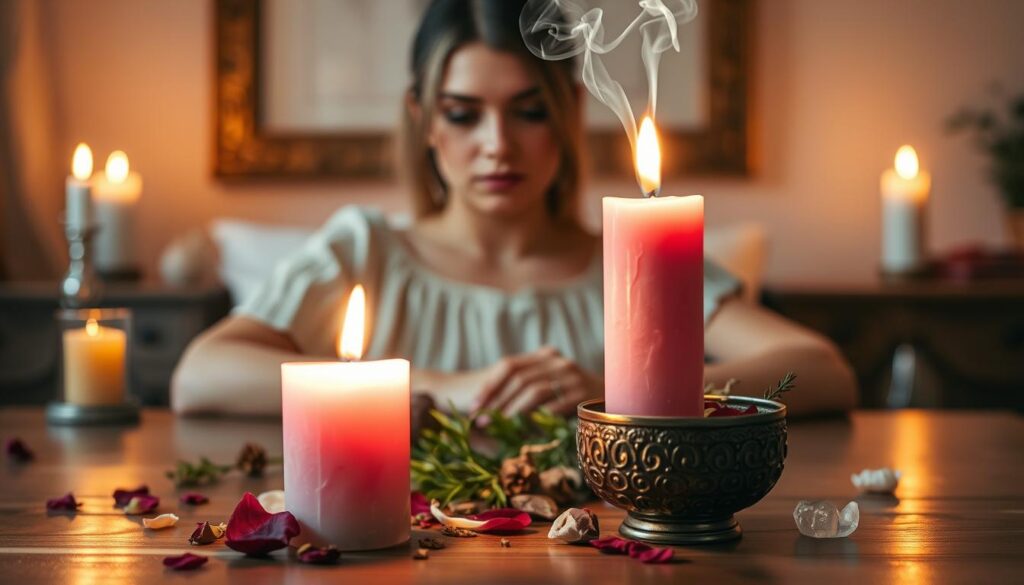
A simple setup can create a focused container for ritual work and honest feeling. This short guide shows one easy step to help center intention and nurture partnership.
Preparation checklist and space cleansing
Friendly checklist: pink candle, paper, pen, quiet space, and a few minutes to center your breath.
Cleansing: clear the area, tidy the surface, and take slow breaths to calm mind and body before you light the flame.
Names, circle symbolism, and the closing incantation
Write both full names on the blank sheet. Draw a circle around them to symbolize unity and gentle boundaries.
Visualize kind moments, mutual support, and calm connection. Keep images simple and warm so your mind aligns with compassion.
“We are one soul. We are one body and heart, united by love.”
Repeat that line three times as the closing incantation to seal focus and intent.
What to do if the candle extinguishes early
Let the candle burn out on its own. Use a heat-safe holder and never leave flames unattended.
If the flame goes out before it finishes, try the same step the next day. Keep mood calm and steps consistent so spells work more reliably.
| Item | Purpose | Quick note |
|---|---|---|
| Pink candle | Focus and gentle growth | Use steady burn; attend safely |
| Paper & pen | Name focalization | Write full names and circle them |
| Quiet space | Reduce distraction | Center breath before lighting |
Simple does not mean weak. Sincerity and patience often support better results than ornate setups. Take time, journal feelings after the work, and ground yourself with a few deep breaths or a small snack.
For additional guidance on focused energy and personal work, consider consulting psychic guidance.
Step-by-step: a candle-and-thread binding love spell
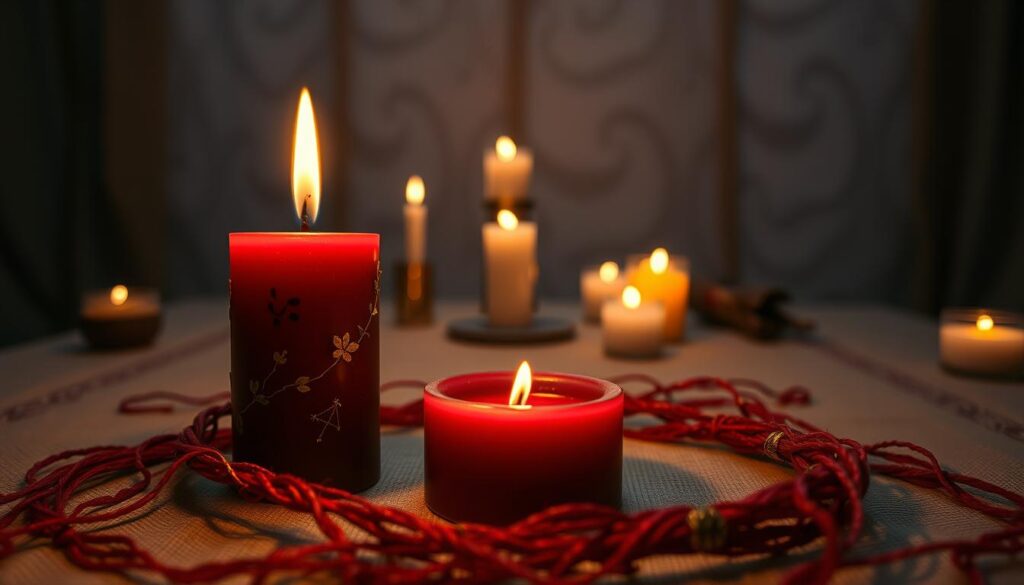
Begin calmly. Choose a red human-figure or pillar candle and set it on a heat-safe dish. Keep tools close: blue thread, needle, and a small bottle of rose or jasmine oil.
Carving names, anointing, and threading the heart
Carve the other person’s name upward from base to wick. Carve your name over it in the same direction. This moves energy from foundation toward fulfillment.
Anoint the candle from the middle up to the wick, then from the middle down to the base. This aligns devotion with stability.
Knot intentions: in heart, in mind, in body
Thread the needle with blue thread and pierce the candle at the heart area. Speak clearly: “Just as this candle burns, so shall the heart of [Name]…”
- Wrap the thread three times around the candle.
- Tie a firm knot and say, In Heart.
- Second knot: In Mind.
- Third knot: In Body.
Lighting, focus, and closing the working
Light the candle and keep steady breath. Maintain soft focus on mutual care and consent. Place the candle on a protected surface and stay present until you close the session.
Keep language simple and true. End with a short gratitude moment and reflect on how ritual supports honest daily acts of care.
| Action | Purpose | Note |
|---|---|---|
| Carve names upward | Symbolize growth | Target’s name first, yours over it |
| Anoint center up/down | Align devotion and grounding | Use rose or jasmine oil |
| Pierce at heart & knot | Focus affection and commitment | Blue thread; three knots with phrases |
| Light candle | Seal the working | Stay present; practice safety |
For guidance on focused energy exercises related to this work, consider a short reading at focused energy techniques. If the rite feels complex, consult an experienced caster.
Binding spells with pictures: strengthening the connection
Photos can act like mirrors that reflect the warm moments you both share, making memory into focus. Use images to anchor calm visualization and to bring shared history into the ritual space.

Selecting and cleansing images
Choose photos that show both faces clearly and gentle smiles. Pick shots that feel honest and warm; these better support trust and mutual care.
Cleanse images by passing them through incense smoke or holding them briefly under running water while thinking positive thoughts. This clears any leftover energy and readies the photos for use.
Joining photos and focusing energy
Hold the photos to your heart, breathe slowly, and picture the bond strengthening. Visualize trust, closeness, and steady support as you speak your intention aloud.
- Affix the images back-to-back or side-by-side to symbolize unity.
- Place the joined photos near the candle or on an altar as a steady focal point.
- Thank the memory gently at the close to end on gratitude.
Notes: This method can help a partner feel present in the work by using shared memory as an anchor. Store the photos respectfully afterward to keep the symbolic thread intact.
Remember that photos are tools to focus energy; kindness, patience, and honest communication sustain any true connection. For related guidance, see this short reading on angel guidance: angel number insights.
Ethics and safety: responsible spellcasting that honors free will
Ethics should guide every action so that no person feels coerced or unsafe. Consent, clarity, and kindness form the baseline for any ritual that involves other people.

Self-protection, grounding, and shielding visualizations
Cleanse the space with sage or incense, then visualize a bright protective barrier around you.
Ground through slow breaths or by holding hematite or obsidian. These steps help steady energy and keep each person emotionally safe.
Handling negative energy and unintended consequences
If doubt, fear, or odd effects appear, pause and reset. Do not push through a session that feels wrong.
Journal your motive to check for control-driven aims. White magic approaches favor mutual benefit; coercion risks imbalance and harm.
Practical safety and aftercare
Keep basic fire safety in mind when using candles and oils. After any working, hydrate, get fresh air, and rest quietly to integrate feelings.
“The healthiest magic amplifies what you already practice daily: kindness, respect, and honest care.”
How long do binding spells take to work, and what results to expect
Noticeable change usually follows when intention meets steady action outside the ritual circle. Timeframes vary widely because emotional readiness and clear intent matter most.

Managing expectations: energy, alignment, and long view
Set realistic timelines. Small candle rites can be repeated on successive Fridays until the candle burns fully. Those repeatings help keep focus without forcing outcomes.
Watch for early indicators. Subtle shifts—warmer conversations, fewer misunderstandings, calmer responses—often show before larger changes arrive.
- Changes often emerge slowly as energy, behavior, and intention align.
- Outcomes rely on mutual willingness and steady supportive actions outside ritual time.
- Repeat a simple spell on Fridays to maintain focus rather than push results.
- Journal progress to spot week-to-week shifts and to measure small successes.
- Not every intention will manifest; sometimes clarity about health for both people is the result.
Remember: spells work best as complements to honest dialogue. Patience and self-care help the process take time and improve the chance of stable results.
“Ethical, grounded expectations cultivate more reliable outcomes.”
Troubleshooting and reversing a binding love spell
If progress feels stuck, small practical changes can restore momentum.

Common reasons a spell may underperform: unclear intention, ethical misalignment, inconsistent focus, or strained communication outside ritual.
Quick fixes to try
- Simplify steps and repeat on a quiet evening to sharpen focus.
- Cleanse the space, improve timing, and reaffirm consent-centered aims.
- Address real-world issues: listen, apologize when needed, set healthy boundaries.
Reversal steps you can follow
- Use a new image candle and carve the target’s name.
- Pierce the heart point from the opposite direction.
- Wrap thread counterclockwise without tying knots.
- Speak clear release words: “As this candle burns, I release [Name]… In heart, in mind, in body.”
- Discard remaining wax and thread to mark closure.
“Counterclockwise movement unwinds the tie; leaving out knots avoids re-securing it.”
| Issue | Fix | Why it helps |
|---|---|---|
| Unclear intent | Sit and journal before work | Sharpens focus and aligns motive |
| Timing or distraction | Choose quiet, waxing days | Improves concentration |
| Emotional strain | Address real-life conflicts first | Creates stable ground for ritual |
Aftercare: journal feelings during reversal, ground yourself with breathing, and honor lessons learned with compassion. If emotions run high, seek experienced guidance for support.
When to seek a professional spell caster
Complex requests benefit from professional help. A qualified spell caster can assess risk, timing, and whether the work fits your situation.

Assessing complexity, risk, and years of experience
A seasoned caster first evaluates ethics and emotional safety. They ask clear questions about consent, possible harm, and real-world effects.
Years experience matter: practitioners with long practice tend to time rituals better, pick safer tools, and phrase intentions with care.
Working with a reputable practitioner for lasting results
Look for transparent talk about limits and realistic results. Trustworthy spell caster professionals avoid promises of absolute success and emphasize shared responsibility.
- Check references and community reputation before committing.
- Ask about follow-up plans to track results and adjust if needed.
- Choose someone who respects free will and discourages coercive requests.
- Prioritize emotional safety, clear communication, and steady boundaries.
“Investing in qualified help is about care and wisdom, not shortcuts.”
Collaboration matters. A good caster helps you clarify intentions and supports healthy steps you can take in the relationship. This approach improves chances for steady, meaningful results.
Conclusion
A short, respectful rite can help anchor intention while daily actions build trust.
Think of a love binding as a symbolic act meant to nurture an existing bond when consent and care are present. Candles, thread, and photos act as respectful tools to focus intention and deepen connection, but they work best alongside steady, kind behavior in everyday life.
Ethics matter: choose methods that honor free will and mutual benefit. If another approach—attraction, reconciliation, or marriage blessings—fits better, pick that path instead.
Timelines often move slowly. Troubleshooting and reversal steps exist if circumstances change, and seasoned guidance can help with complex cases. For extra insight, consider brief angel guidance like this angel number reading.
Remember: the most lasting magic is lived—listening, empathy, and shared growth make the strongest bond.