

Nostradamus wrote Les Prophéties in 1555, and his quatrains still spark debate. He was a 16th century astrologer and famed seer whose verses invite many interpretations.
Readers link his lines to wars, plagues, and world events. Some credit these quatrains with later predictions like the Great Fire of London, the rise of Hitler, 9/11, and pandemics.
His book is set by numbered century groups and non‑specific dates. That structure nudges people to map each stanza across long spans of time.
Why this matters: interest persists because every new era offers fresh events that some readers feel fit old lines. By tracing structure and modern links, we test whether his reach ends in one era or stretches across many.
Key Takeaways
- Nostradamus published Les Prophéties in the 16th century and used quatrains grouped by centuries.
- His style invites broad reading, so people often map verses onto later world events.
- Because there are no explicit dates, perceived reach depends on reader interpretation.
- The century-based format encourages thinking across long time spans rather than single years.
- Modern examples keep interest alive and extend the perceived predictive horizon.
How far in the future did Nostradamus predict? Tracing the seer’s timeline from the 16th century to 2025 and beyond
Many interpret his verses as a living script that readers reapply to new crises across centuries.
Les Prophéties appeared in 1555 and holds about 942 four-line quatrains. These are grouped into named centuries, each a rough chapter near one hundred verses.
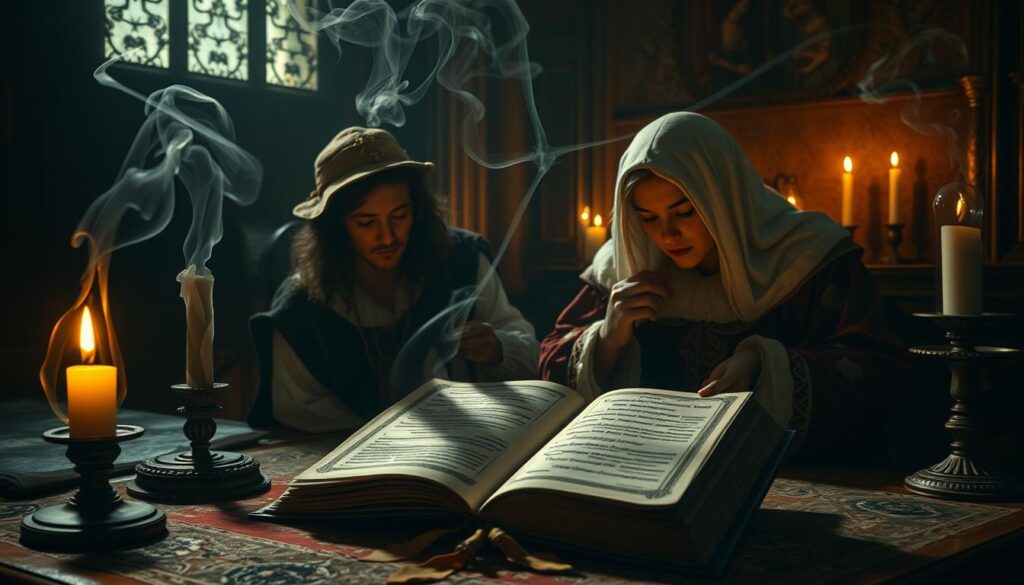
Verses rarely give exact years. Instead, imagery and echoes let later readers assign timing. That flexibility lets a single stanza serve as a fresh lens for modern world events.
Measuring reach across eras
- The century layout suggests a rolling timeline rather than a fixed calendar.
- As an astrologer and physician, he mixed cosmic symbols with earthly detail.
- Enthusiasts map many lines to later events, extending perceived prediction horizons.
| Feature | What it signals | Impact |
|---|---|---|
| Centuries | Loose chapter divisions | Allows multi-century reading |
| Quatrains | Short, symbolic verses | Easy reapplication to new eras |
| No dates | Absence of exact years | Creates interpretive elasticity |
For more on modern readings and claim checks, see a concise roundup at psychic predictions.
2025 in focus: trend analysis of Nostradamus predictions shaping the near future
Some quatrains act like trend flags when global stressors spike. Analysts and enthusiasts tie imagery to modern signals, using 2025 as a focal year for commentary and risk assessment.

“Through long war all the army exhausted”: resource strain and a potential end to the Ukraine conflict
“Through long war all the army exhausted, so that they do not find money for the soldiers; instead of gold or silver, they will come to coin leather, Gallic brass, and the crescent sign of the Moon.”
Some see economic strain and diplomatic roles for France or Turkey as signs a prolonged war could shift toward negotiation. This reading frames war fatigue as a trigger for new deals.
“Cruel wars” in England and an “ancient plague”
Verses mentioning cruel wars and an ancient plague are read as warnings about unrest or a major health crisis. In 2025, watchers treat these lines as prompts to monitor public health and political friction.
“World’s garden” under threat
The “world’s garden” stanza links to Amazon fires, floods, or sulfur contamination. Environmental advocates use that image to spotlight climate risks, including floods and biodiversity loss.
Fireball from the sky
A cosmic fireball fuels both asteroid anxiety and fears of human-made catastrophe. Scientists often calm collision fears, but the verse remains a dual lens on existential threats.
Rise of an “Aquatic Empire”
Flood imagery and sea-level rise feed the Aquatic Empire motif. Interpreters use this as a metaphor for coastal collapse and shifting geopolitical power driven by climate events.
| Theme | Quatrain signal | Modern reading | 2025 watch |
|---|---|---|---|
| War exhaustion | Coin leather; Gallic brass; crescent | Economic strain; diplomatic shifts | Negotiations, resource shortfalls |
| Public unrest & health | Cruel wars; ancient plague | Internal strife or major disease | Political tensions, health alerts |
| Environment | World’s garden; poisoned waters | Amazon fires, floods, contamination | Climate impacts, floods |
| Sky omen | Fireball | Asteroid or human-made blast | Near-Earth object monitoring, security |
As part of broader reading on modern lines and starseed lore, readers also explore related themes at Sirian starseed insights. These interpretations act less like precise forecasts and more like risk flags tied to real events, from wars to climate shocks.
Hits, misses, and maybes: evaluating prophecies across wars, disasters, and global events
Interest peaks whenever a dramatic event seems to echo an old stanza. Enthusiasts point to episodes like the great fire of London, the world wars, 9/11, and pandemics as examples that fit certain verses.

At the same time, many readings rely on vague lines and flexible timing. That lets a single quatrain serve multiple modern scenes.
Claims of accuracy
- Advocates link major shocks to poetic images and call them successful predictions.
- High‑profile tragedies are easy to match after the fact, so people often see patterns.
- Recent 2024 events, like a 7.5 magnitude New Year’s earthquake in Japan, were quickly tied to lines about drought and floods.
When things don’t land
“Neither imminent nor unavoidable.”
Some high‑profile 2024 claims—King Charles abdicating, an immediate war with China—did not occur. That highlights how retrofitting can create apparent success.
| Result | Example | Takeaway |
|---|---|---|
| Perceived hit | Great Fire, 9/11 | Symbolic match, broad fit |
| Miss | King Charles abdication | Specific detail failed |
| Maybe | 2024 Japan quake | Single event anchors a verse |
For a concise modern roundup of related readings, see a short guide to psychic dreams and predictions at modern reading roundup.
How interpretations work: reading quatrains, parsing symbolism, and spotting real-world signals
To read a quatrain, begin by treating each vivid image as a clue, not a calendar entry.
Les Prophéties is heavy on dramatic imagery—“blood rain,” floods, wars, assassinations, and sky omens—so modern writers recast those motifs as risk categories. That makes poetic lines useful as trend signals rather than fixed schedules.

From poetic prophecy to trend report
Start with symbols. Sky omens can mean celestial threats or human-made dangers. Floods may point to literal inundation or broader climate stress.
Next, group images into event categories: extreme weather, conflict escalation, and rare but high-impact sky threats like asteroids or weapons. This helps convert metaphor into watchlists for possible events.
“A single image—storms, fire, or blood rain—can map onto many scenarios that change over time.”
Remember the human part: man-made systems amplify natural hazards, so a sky omen might signal satellite loss, missile risk, or an asteroid near-miss. Analysts compare motifs to independent data—climate indicators, conflict reports, disaster stats—before drawing links.
- Ask whether language implies frequency, severity, or direction of change.
- Test timeless symbols against long-term patterns, not a single news cycle.
- Keep art and literalism separate: treat verses as alerts, not calendars.
For a related look at motifs and characteral archetypes in modern readings, see a note on the Knight of Cups.
Conclusion
Centuries of readers have kept turning quatrains into lenses for present risks. Les Prophéties, written in the 16th century, offers images that people map onto today’s events—from a possible war winding down to climate-driven floods and a debated asteroid or atomic “fireball.”
Practical takeaway: treat nostradamus predictions as trend signals, not a fixed schedule. Watch climate indicators, conflict flashpoints, and low-probability sky threats while keeping skepticism.
End with readiness, not panic. Use motifs as prompts for preparedness and critical thought. For readers who want guided context or a personal reading, see psychic readings.