

Michel de Nostredame was born in December 1503 in Saint-Rémy-de-Provence and died in July 1566 in Salon-de-Provence. He served as an apothecary, physician, author and translator, and gained fame for Les Prophéties (1555).
His family had converted from Judaism to Catholicism a generation earlier, a fact that shaped his place in French society. He worked on plague relief and published almanacs from 1550, then joined the royal circle under Catherine de’ Medici and King Charles IX.
This short biography answers the core question and outlines key milestones: childhood in Provence, medical training, plague work, and the rise of his prophetic writings. You will see why dates vary slightly in sources and how cities like Marseille and Aix influenced his career.
Why it matters: the timeline from 1503 to 1566 links his age, family background, and public role to broader cultural and political shifts in Renaissance France.
Key Takeaways
- Born in December 1503 in Saint-Rémy-de-Provence; died in July 1566 in Salon-de-Provence.
- Worked as an apothecary and physician during plague outbreaks.
- Published Les Prophéties in 1555 and wrote influential almanacs.
- Family conversion and Provence cities shaped his identity and reputation.
- Served the French court and left a lasting cultural footprint with his prophecies.
When Was Nostradamus Alive
Records place his birth in December 1503 in the city of Saint-Rémy-de-Provence, but surviving entries show two candidate days: 14 or 21. That single discrepancy reflects how parish books were kept at the time.
Early life centered in Provence, and one clear inflection came when the University of Avignon closed for a plague. That closure forced him to change plans and learn his trade in other Provençal places.
Birth and early years
Historians agree on the month and year, yet one archival gap explains the twin dates. Simple copying errors and lost registers leave both days in circulation.
Death and age
Death occurred in early July 1566 at Salon-de-Provence, with sources listing 1 or 2 as the final day. Calculating his age gives an age of about 62 based on those recorded dates.
“Records from small towns often leave one or two plausible dates; historians weigh context to choose the best fit.”
| Date range | Place | Notes |
|---|---|---|
| 14 or 21 Dec 1503 | Saint-Rémy-de-Provence | Duplicate parish entries; birth day uncertain |
| Early July 1566 (1 or 2) | Salon-de-Provence | Final illness: gout advancing to edema; recorded death day varies |
| 1500s (student years) | Avignon and Provence | University closed by plague, altering studies |
| 1550s | Multiple Provençal cities | Published almanacs and treated people during outbreaks |

Why these dates matter: they anchor his timeline and link the one life to wider events — medical work, almanacs, and a move into court service. This short summary gives a quick, authoritative view of his span and the place-based context readers seek.
Birth, Family Background, and Name
The story of his name begins with an ancestor who chose a Christian identity in the late 1400s.
Roots and conversion
His paternal line came from a Jewish background. Around 1459–60, his grandfather Guy Gassonet converted and took the Christian name Pierre. At that time the family adopted the surname Nostredame, a clear translation that means “Our Lady.”
Parents and place
His father, Jaume (Jacques) de Nostredame, worked as a notary and grain dealer. His mother, Reynière de Saint-Rémy, anchored the household in Saint-Rémy-de-Provence. The household included many siblings, and that wider family network shaped his early life.
Name as identity
Adopting a Christian surname eased civic and church ties, a crucial matter for people living in that era. Later, in print from 1550, he Latinized the family name to a learned form used by scholars and authors.

A portrait by his son César and other records show how family and place tied into his public image. For more on reputation and readings, see psychic readings.
Childhood and Early Learning
A family tradition links his earliest lessons to a learned elder in Saint-Rémy, though surviving records grow thin after 1504. That gap makes it hard to confirm exact tutors, but the story persists in regional accounts.
Claims of tutoring:
Claims of tutelage by Jean de St. Rémy
Some accounts name Jean de St. Rémy as a maternal great-grandfather figure who taught basics. Documentary traces, however, fade within a short span, so this remains a plausible but partly undocumented claim.
Languages and early studies
Education at that place typically began with the trivium: grammar, rhetoric, and logic. Early exposure to Latin gave him the knowledge to read classical texts and to paraphrase later in life.
Religious instruction and civic norms also shaped young scholars. These local networks of learning prepared one student for formal study at Avignon and later Montpellier.

“Family accounts, including a portrait by his son César, colored public views of his youth.”
For readers curious about how reputation and claimed early talents affect later fame, see this note on psychic superpowers.
Education: Avignon to the University of Montpellier
A brief spell at Avignon marked the start of a long period of herbal travel and hands-on practice.
He entered the University of Avignon around age 14 but left after just over a year when the city closed for plague. That interruption sent him into the field from about 1521, studying plants and remedies across Provence.
In 1529 he enrolled at the university montpellier to pursue a medical doctorate. Records show he was expelled because prior apothecary work violated statutes protecting scholars from manual trades.
| Year | City | Event |
|---|---|---|
| c.1517–1521 | Avignon | Early enrolment; university closure due to plague |
| 1521–1528 | Provence (various) | Travel and herbal research; practical medical work |
| 1529 | Montpellier | Entry and expulsion (Register S 2 folio 87) |
Why it matters: the clash between practical work and academic rules is well documented. The expulsion note in Register S 2 folio 87 confirms this was not mere rumor.
Later, some professional astrologers criticized parts of his horoscopic technique. Still, the hands-on skills from these years shaped his practical care during later plague outbreaks and informed his writing for broader people.
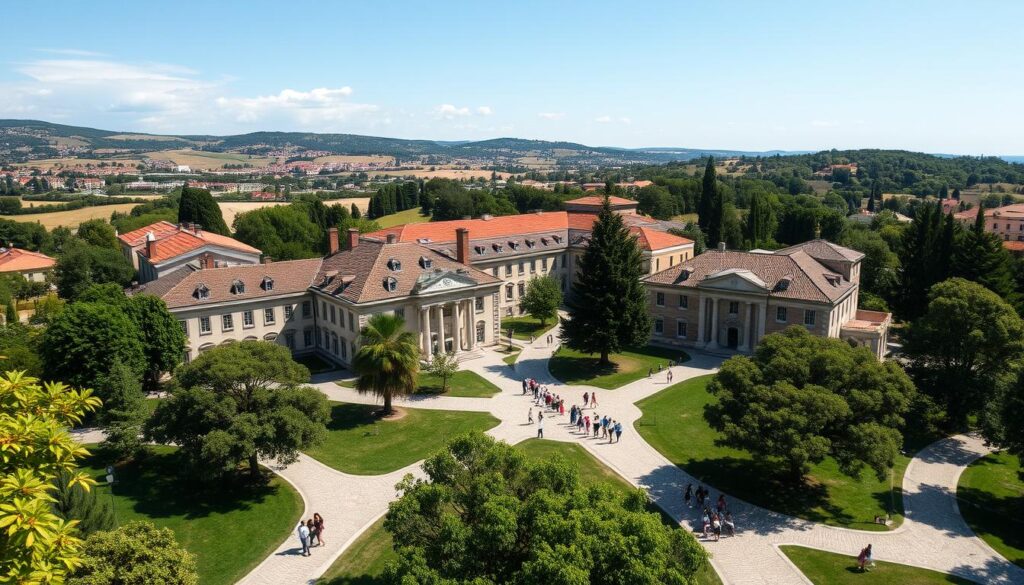
Plague Years: Physician, Apothecary, and Healer
Faced with overloaded hospitals, his attention turned to simple measures that reduced contact with contagion. He broke with common practice by urging cleanliness, airing rooms, and removing corpses to limit spread.
Practical methods
Hygiene over bloodletting: He discouraged routine bloodletting and promoted washing bedding, clearing wastes, and keeping patients outside when possible.
The “rose pill” was an herbal lozenge made from rosehips and other botanicals. It likely supplied vitamin C and soothed mild symptoms for one group of patients.
City work and impact
He served in Marseille, Aix, and Salon, moving across each city to offer hands-on care. That steady work during grim years built trust among people and boosted his local standing.
- Hygiene and corpse removal reduced exposure and secondary infection.
- Children and vulnerable people benefited when sanitation improved.
- Although no cure existed, these steps saved lives and shaped his public identity.
“Practical measures and courage on the front lines defined his response in a crisis.”
These intense years of care informed his later writings and advisory roles, and they explain why one physician’s practical life drew patrons and readers. For policy details, see our privacy policy.
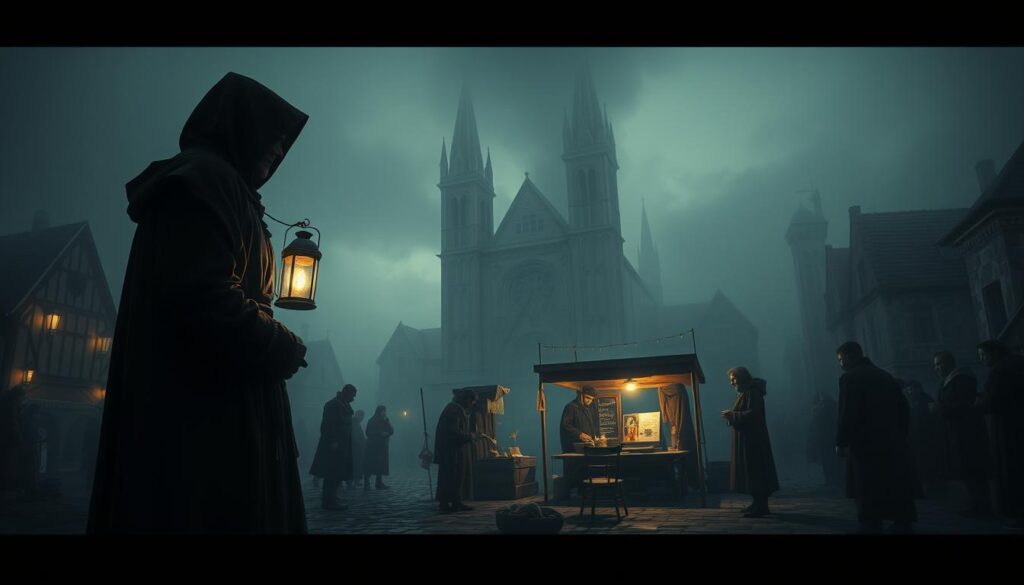
Marriage, Children, and Personal Loss
A short-lived first household in Agen ended in heartbreak and shaped later choices. He married around 1531 in that place and soon had two children.
Tragedy struck in 1534. His first wife and those two children died, likely from a local plague outbreak. The grief and the death of a young household left a lasting mark on his life.

Remarriage and a larger family
After years of travel and medical work, he settled in Salon-de-Provence and married Anne Ponsarde. Together they raised six children: three daughters and three sons.
Family stability in Salon gave him one steady base for writing, investing, and serving patrons. Caring for a growing household changed how he balanced practice with public life.
- 1531 — marriage in Agen; birth of two children.
- 1534 — plague takes wife and two children; profound personal loss.
- Later years — marriage to Anne Ponsarde in Salon; six children follow.
“That early sorrow informed a calmer, more compassionate bedside manner,”
The memory of the first tragedy stayed with him and shaped how people later described his character. This blend of family duty and past loss helped shift his focus from pure practice toward broader advisory and literary work.
From Medicine to Prophecy: The Shift in His Life’s Work
In the year 1550 a printed almanac changed his public role. That first issue moved him from hands-on medical practice into a growing field of printed guidance and predictions.
Almanacs and rising demand
Almanacs proved popular, reaching people far beyond Provence. Nobles and urban readers read calendars and prognostications and began requesting personal horoscopes and advice.
Why patrons sought him
Clients wanted help with the future and practical timing: weddings, journeys, and planting. His accessible style and broad themes made his predictions appealing to one wide audience.
- Latinized the name to project a learned identity.
- Often asked clients to supply birth charts; sometimes his own calculations erred using public tables.
- Interest grew at court, drawing attention from the queen and the king’s circle.
“Printed counsel let him extend influence without leaving home.”

After years in crisis medicine, the move to printed work offered a different kind of influence. Time, reputation, and a clear name helped carry his writing toward the national stage and set the scene for Les Prophéties. For more on his published forecasts see psychic predictions.
Les Prophéties: Writing Style, Languages, and Structure
The printed quatrains read like riddles, built to invite close reading rather than give simple answers.
Les Prophéties organizes hundreds of four-line poems in books called Centuries. Each quatrain is mainly French, yet Greek, Italian, Latin, and Provençal slip into the lines.

Form and coded language
The structure favors compact images and odd grammar. That “Virgilianized” syntax obscures direct meaning on purpose.
Edition problems and gaps
Typesetting errors, dictation, and varying printings changed spelling and punctuation across editions. For technical reasons the final 58 quatrains of Century VII do not survive in extant books.
- How it reads: quatrains grouped into centuries, not tied to exact dates.
- Why terms shift: spelling and punctuation vary, so code-breaking from a single edition misleads.
- Translation and meaning: translation issues and variant texts complicate modern readings.
“The text invites readers to argue, debate, and search for links across time.”
The cumulative effect of one volume after another shaped public interest. His son helped keep the memory alive, and the style made many people eager to interpret the works.
At Court: Queen Catherine de’ Medici and the Royal Family
A summons from the royal household turned a provincial physician into a fixture at the Paris court. After his 1555 almanacs reached court readers, Queen Catherine invited him to explain risks printed in those pages.
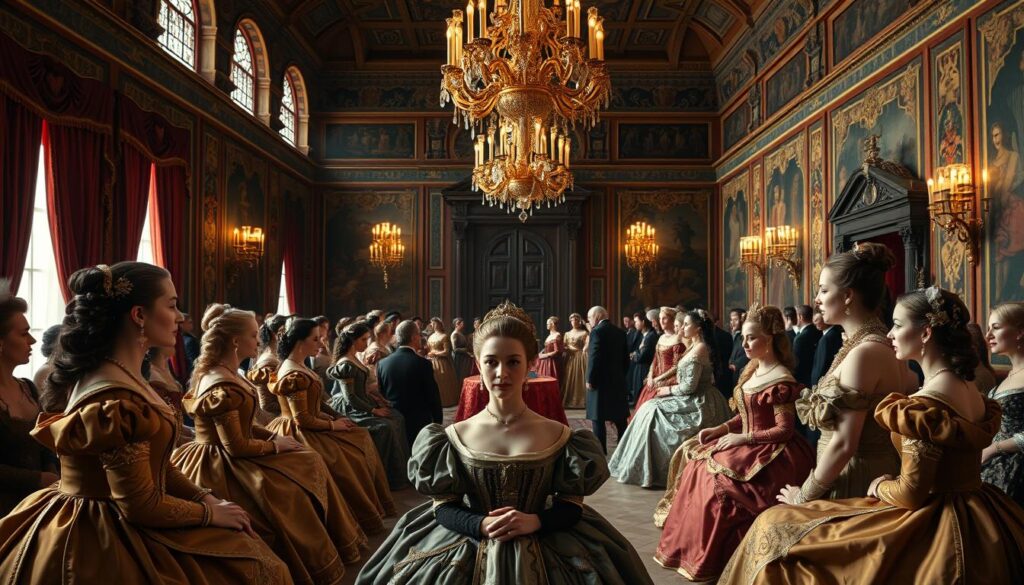
Summoned to Paris; horoscopes for royal children
In Paris he cast horoscopes for royal children and advised on timing for journeys and births. His sessions drew nobles and one growing audience within palace circles.
Court titles and service to King Charles IX
By the final years he held the title Counselor and Physician-in-Ordinary to King Charles IX. Daily duties mixed private consultation with public presence.
“Royal patrons sought practical counsel during political and religious uncertainty.”
| Role | Who | City |
|---|---|---|
| Court physician | King Charles IX | Paris |
| Counselor | Queen Catherine | Paris |
| Adviser for heirs | Royal son | Paris / Provence |
This court period cemented his national reputation and linked later publications to royal concerns up to his day of death.
Sources and Methods Behind the Prophecies
Behind the verses lies a toolbox of judicial astrology, borrowed chronicles, and a practice known as bibliomancy. This mix shaped how quatrains read and how readers later chose meanings.
Judicial astrology and comparative horoscopy
Judicial astrology meant using birth charts and planetary rules to predict events. Comparative horoscopy compared charts to spot patterns one astrologer believed linked to public crises.
Critiques and professional reactions
Contemporary astrologers, including Laurens Videl, criticized calculation errors and loose technique. Such critiques questioned professional rigor and reliability of the planetary logic.
Sources, paraphrase, and bibliomancy
Research finds a clear range of borrowed material: the Mirabilis Liber (1522), Livy, Suetonius, Plutarch, and medieval chronicles supplied motifs and scenarios.
Bibliomancy and selective translation turned older passages into fresh imagery. Reworking classical narratives matched common scholarly practice in the century, but it complicates claims of prophecy.
- Knowing these sources helps separate literary borrowing from claimed supernatural insight.
- One core challenge is distinguishing period terms and symbolic language from literal forecasts.
- Over time, editions and edits added layers that change how one reads the works.
“Understanding method and sources is essential to judging originality and relevance.”

Interpretations, Misinterpretations, and the Media
A mix of vague language and eager readers helps short poems seem prophetic after the fact.
Why quatrains feel accurate: symbolic wording, flexible imagery, and our habit of finding patterns make one verse appear to match many events. Memory and selection bias push readers to highlight hits and ignore misses.
Media amplification: Early pamphlets and modern outlets, even in New York, repackage vague lines as dramatic predictions. Reporters and social feeds often favor striking links over careful context.
Retrofitting: case studies
Examples include the Great Fire of London and Adolf Hitler. Scholars note these matches are applied after events. That retrofitting turns broad images into specific claims.
“Absent specific, verifiable predictions in advance, claimed matches do not meet evidence standards.”
- Translations and selective quoting change meaning.
- One line can suit many crises because themes of death and war recur across the world.
- Check facts, context, and original wording before sharing sensational claims.
For a closer look at claimed powers and method, see supernatural abilities.

Works Beyond Prophecy: Almanacs, Medical Texts, and Translation
Beyond his famous quatrains, he kept a steady output of practical guides and annual almanacs that readers relied on across the provinces. These shorter pieces played a clear part in keeping his name in print and in conversation from one year to the next.

Almanachs, Prognostications, and Presages
Starting in 1550 he issued yearly almanacs, Prognostications, and Presages. Each edition mixed calendars, weather notes, and brief forecasts aimed at ordinary people. They differ from the long-range prophetic volumes in tone and format.
Medical writings, paraphrases, and Orus Apollo
He also wrote practical medical material. A paraphrase of Galen’s Protreptic and the Traité des fardemens collected recipes for cosmetics and simple plague remedies. These texts offered household advice and direct treatments for local care.
A manuscript called Orus Apollo survives in a Lyon municipal library. That work shows the period’s appetite for translation and recovered classical lore. Lyon, as a publishing city, helped preserve these varied genres.
“Steady almanac publication kept one figure active in many cities and with many readers.”
- Different genres: literary quatrains, medical compilations, and learned paraphrase.
- Practical impact: plague advice and household health served people directly.
- Legacy: year-by-year output reinforced reputation beyond the single prophetic book.
Engineering and Everyday Life: The Canal de Craponne
A new canal project linked technical skill and civic ambition to long-term recovery. Between 1556 and 1567, the Canal de Craponne carried water from the Durance to Salon-de-Provence and the Crau, transforming fields and towns.

Investment and regional impact on Provence
The canal was a practical work that improved irrigation around the city. Adam de Craponne led construction, and civic partners funded the effort.
He and his wife bought a one-thirteenth part share in the project. That investment showed confidence in the place and its future growth.
Reliable water supply changed everyday life over the following years. Farmers shifted from fragile plots to steady crops. Tradespeople gained more stable markets.
- Economic stability: one large project helped local economies recover after repeated hardships.
- Practical legacy: the canal turned scarce water into a shared resource for families and workshops.
- Civic collaboration: leadership by Adam de Craponne shows how cities pooled skill and capital.
“A single engineering project can reshape a region’s agriculture and daily routines.”
Historians include this investment when assessing broader legacy because it proves he took part in tangible improvements, not only writing. The canal set the scene for his final years, where legal and personal affairs soon took center stage.
Final Years, Death, and Tomb
His final months show a steady physical decline marked by intense pain and limited movement. Severe gout turned into swelling and edema, leaving him largely confined to a bed and often unable to walk.
Health, will, and a somber night
In late June 1566 he drew up a detailed will. The document left property and 3,444 crowns to his wife in trust for their sons and daughters. Contemporaries recorded these days carefully.
“You will not find me alive at sunrise,”
he reportedly told his secretary on the evening of July 1. The next morning the body lay on the floor beside his bed and a nearby bench.
Burial, reinterment, and later legends
He received immediate burial in a Franciscan chapel in Salon-de-Provence. During the French Revolution his remains were moved to the Collégiale Saint-Laurent for safekeeping and civic reorganization of church sites.
Stories about the coffin grew over time, turning one grave into a focus of myth and public fascination. Such narratives fed the aura around his writings and made the facts of his life feel more mysterious.
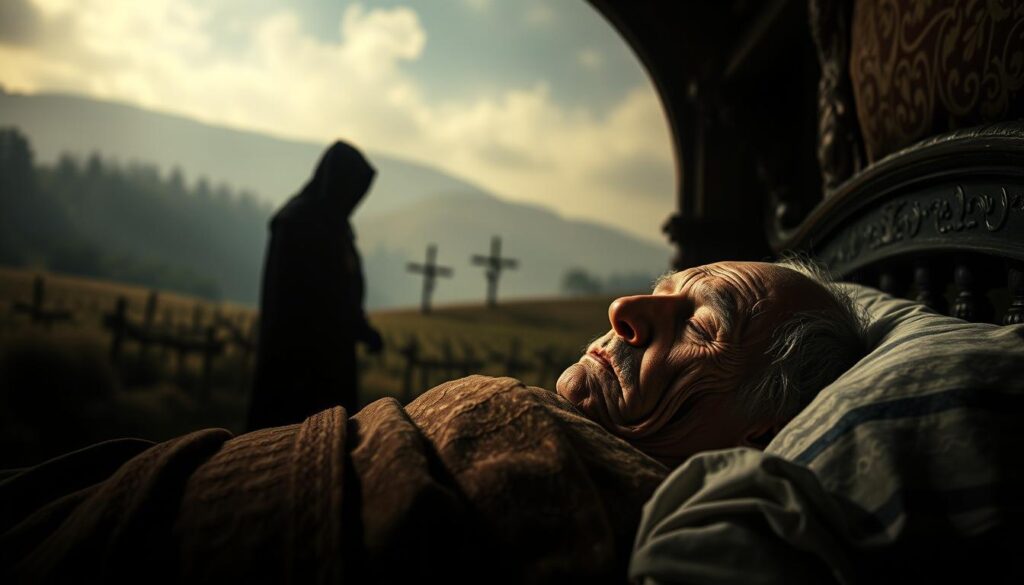
Age at death: about 62. Those final days and that somber night — the bed, the body, the one quiet discovery — make the end vivid and human. His writings, however, continued to shape centuries of debate.
Nostradamus’s Legacy Across Centuries
Publishers, translators, and eager readers turned short prophecies into a lasting public conversation. Over many centuries, editions and commentaries reshaped how people read those quatrains.

Centuries of editions and cultural influence
The printed record runs across multiple centuries. More than two hundred editions and thousands of commentaries track shifting tastes.
Editors and translators chose lines, added notes, and made some quatrains more famous than others. That editorial work set a clear range of popular readings.
Academics, skeptics, and public fascination
Scholars stress literary sources, vague wording, and retrofitting after events. Skeptics point to mistranslation and selective matching.
“Vagueness invites match-making; debate fuels attention.”
- Copies in the 17th, 18th, and 19th century shaped local reputations.
- In the modern world, press in capitals like New York revives interest during crises.
- Years later, readers return to the verses for comfort or to make sense of uncertainty.
- Service to a king and patronage from Queen Catherine kept one name visible long past death.
The result: a lasting cultural footprint that blends history, literature, and media. This prepares readers for a final synthesis of life, texts, and ongoing influence.
Conclusion
The timeline from 1503 to 1566 frames a life that moved across city and place, marked by clear year and day anchors that help readers track age and events.
He appears as son and father, husband and public figure. His wife and children, plus the memory of his father’s line, shaped private duty alongside public work.
The way he shifted from hands-on medical work to printed works and prophecies shows a practical path into public life.
The prophecies are literary pieces built from known sources and techniques, not simple forecasts. That distinction matters for interpreting predictions and terms in context.
Beyond verses, practical things stand out: plague hygiene, an investment in the canal, and court ties to a king and his circle kept his name active across years.
Readers in the modern world should enjoy the texts, test claims with reputable histories, and explore primary editions — or a recommended best book on angel numbers for related study of symbols and future-facing ideas.
One lasting insight: across time people seek meaning. His story shows both the power and the limits of that search.