

Nostradamus left 942 quatrains in his 1555 collection Les Prophéties, and many readers equate that total with the number of forecasts he offered.
He was a 16th-century French astrologer and physician who turned to verse and became an author whose lines invite endless reading. His quatrains are compact and cryptic, which lets interpreters map events across years and time.
The poetic form shaped public views of these prophecies. Some treat each quatrain as a single entry. Others split images and references into several claims.
This introduction clears the main point: the widely cited 942 comes from the book’s quatrains, and counting them as forecasts is debated in history and today. For related modern interpretations, see a concise guide to psychic readings at psychic predictions.
Key Takeaways
- The 942 quatrains are the source of the commonly quoted total.
- His background as an astrologer and physician shaped the style.
- Quatrains are cryptic, encouraging varied readings over time.
- Scholars debate whether each quatrain equals one forecast.
- People revisit the verses in moments of global uncertainty.
Who Was Nostradamus and How Did He Write His Prophecies?
Michel de Nostredame started his career treating patients and charting stars before turning to verse. Born in 1503, this Renaissance man trained as a physician and gained notice as an astrologer, serving patrons who sought counsel in uncertain years.
In 1555 he published Les Prophéties, a book that grouped short four-line poems into labeled centuries. The compact structure made the writings easy to share and hard to pin down.

The lines use vague, symbolic words. That openness lets readers map events onto a single quatrain. A single verse can seem to contain several possible predictions, so counts vary with each reader’s approach.
“The form he chose turns brief imagery into long debate.”
His reputation rose quickly in his own century, and later generations amplified the reach of his prophecies. For modern context on related practices and contemporary readings, see a guide to psychic readings.
- From physician to author: a life that shaped his voice.
- Quatrains: short verses that encourage many interpretations.
- Counting: one quatrain can yield several perceived predictions.
How many predictions did Nostradamus make?
The printed collection lists 942 compact quatrains, grouped into labeled Centuries. That classic figure gives a clear, page-based tally.
Yet counting these verses as distinct predictions is not simple. Some readers treat each quatrain as one forecast. Others find multiple imagined references inside a single verse and extract extra hits.
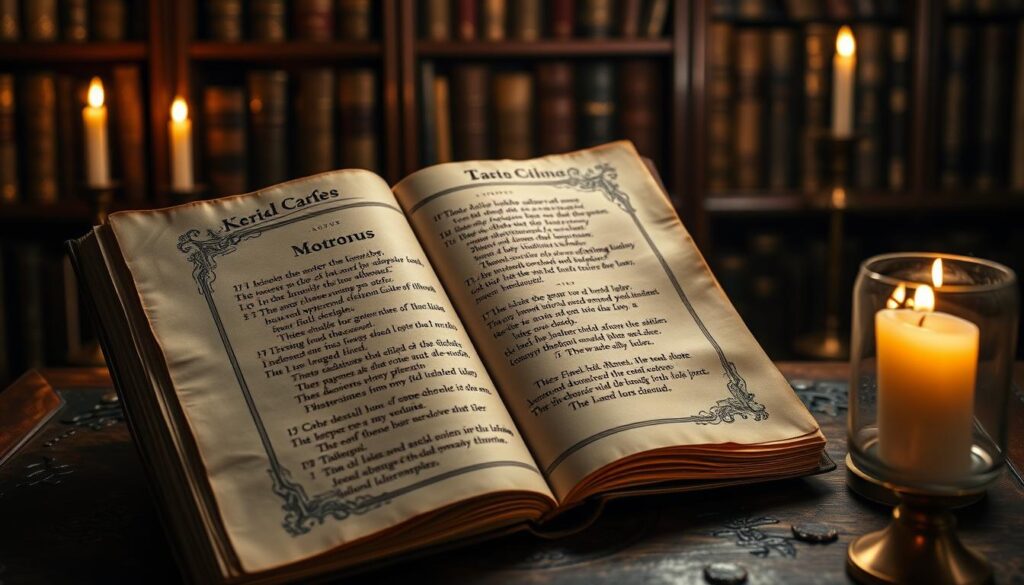
The 942 quatrains across “Centuries” and what they cover
The Centuries framework organizes the material by numbered groups. Each group mixes topics and images that span time and place rather than listing events by year.
Counting prophecies vs. interpretations: why totals vary
Language in the lines is vague. Ambiguity lets readers map the same verse to different moments in history. That flexibility explains counts that exceed 942.
“A single verse can be read as many events; the text itself does not provide a firm tally.”
- Printed total: 942 quatrains.
- Interpretive totals: expandable when readers identify multiple events in one verse.
- Centuries structure gives order but not a one-to-one match to real-world dates.
| Item | Source | Common Count | Interpretive Range |
|---|---|---|---|
| Quatrains | Les Prophéties | 942 | 942 (text) – open-ended (interpretations) |
| Grouped units | Centuries | Grouped by century | Used for thematic reading across time |
| Linked events | Readers & scholars | Varies | Single verse → multiple events |
For further reading on related symbolic systems and modern interpretation, see a recommended resource on angel numbers and symbolic guides.
From poems to “predicted” events: notable historical matches people cite
Readers often point to vivid quatrains when linking verse to major historical events. These matches show how brief images can be read as literal forecasts.
The death of Henry II and the “young lion”
A quatrain about a “young lion” overcoming an older one is often paired with Henry II’s death in 1559.
The king died after a lance splinter pierced his eye during a joust. Supporters cite the eye image; critics note the line calls it a “single battle,” which complicates a neat match.
Great Fire of London, 1666
One verse reads about blood and “twenty threes the six,” which readers tie to 1666 numerology and the London blaze.
Scholars counter that the fire started in a bakery, not lightning, and that the phrase “ancient lady” is vague. That gap shows how text and event can diverge.
“Hister” and the rise of a 20th-century leader
Lines mentioning “Hister” split opinion. Some claim it foretells the rise of Adolf Hitler; others note it’s an old name tied to the Danube river.
This example shows how a single word can steer meaning toward a war-era leader or toward geography, depending on the reader.
Hiroshima and Nagasaki: “within two cities”
Verses speaking of “within two cities” and “famine within plague” are linked to the atomic strikes in Japan. The broad language allows this mapping, but critics warn about stretching images to fit catastrophe.
JFK assassination and the “great man”
Readers point to lines like “evil will fall on the great man” and a “dead innocent” accused as matching JFK and the Oswald story.
These phrases are evocative, yet they remain general enough to invite multiple readings across history.
“A single line can seem to foretell an event only when readers supply the missing specifics.”
- Why matches persist: striking images tied to key moments keep public interest alive.
- Why critics push back: vague wording and retrospective fitting weaken direct claims.
- Overall: these cases highlight the tension between compelling narrative and solid textual evidence.
| Event | Quoted image | Common link | Critical note |
|---|---|---|---|
| Henry II (1559) | “young lion” / eye pierced | Jousting injury | Verse mentions “single battle” — not a joust |
| Great Fire (1666) | “twenty threes the six” / lightning | Numerology → 1666 | Fire began in a bakery; lightning claim disputed |
| Rise of Hitler | “Hister” | Name similarity | Also an old Danube name; ambiguous |
| Hiroshima & Nagasaki | “within two cities” / “famine within plague” | Atomic bombings | Broad imagery fits many disasters |
| JFK assassination | “evil will fall on the great man” / “dead innocent” | Assassination and accused perpetrator | Vague phrasing allows multiple interpretations |
For readers curious about modern spiritual labels tied to star origins, see a short Sirian starseed overview that explores related themes.
Future-facing readings today: wars, plagues, and a cosmic “fireball”
Modern readers often reframe old quatrains as commentary on current conflicts and crises. Interpreters point to a verse about a long war that will exhaust armies and funds. Mentions of “Gallic brass” and a “crescent sign of the Moon” lead some to link the lines to France and Turkey or to the Ukraine conflict.
War and exhaustion of armies
Those readings anchor the text to present war fatigue and rising costs. Critics warn this stretches poetic imagery to fit geopolitics. The verse can support several meanings, not a single, dated claim.
“Ancient plague” and turmoil in England
Lines that pair “cruel wars” with “the ancient plague” fuel debate about disease versus political strife. Many people assign plague readings when public health worries rise. Others stress that the verse remains open to both interpretations.
“World’s garden” and Brazil
A passage about the “garden of the world” and sulfurous waters draws readers toward Brazil and Amazon disasters. The connection echoes concerns about floods, fires, and environmental collapse, yet it is interpretive rather than direct.
From asteroid to atom bomb: the debated “fireball”
The phrase “a fireball will rise” prompts end world scenarios. Scientists track near-Earth objects, and NASA reports no credible impact risk for the near future, a practical counterpoint to fearful readings.
Papal succession and Rome’s seven hills
Claims linking a papal change to Rome’s “seven hills” circulate online. Scholars caution that the text offers no precise dating, so assigning this to a specific year is speculative.
“Open-ended lines bend easily to current fears; readers often seek peace amid uncertainty.”
- Takeaway: these readings reflect present anxieties about war, plague, and disaster.
- Balance: interpretive appeal is strong, but textual certainty is weak.
- Contextual link: For complementary cultural angles, see ancient alien interpretations.
Conclusion
Textual evidence anchors the total at 942 quatrains, yet readers across the centuries have drawn extra meaning from the same lines. That practice turns the book into a living part of cultural conversation rather than a closed ledger of events.
The quatrains have been tied to famous moments — from a king’s death and the London fire to modern claims about wars, plagues, Amazon losses, a debated “fireball,” and papal shifts. Scholars stress ambiguity, lack of clear dating, and no scientific proof for an asteroid impact in 2025.
Study the history, respect the mystery, and treat bold claims with caution. For a related spiritual angle, see this concise angel number 2323 guide that explores symbolic readings in modern time.