
Curious readers often ask about a linked year and old verses. This intro clears the air with a fact-first approach. The original texts do not explicitly date that year.
In this news-style explainer, we outline which prophecies get cited, how interpreters stretch meanings, and why a rare total solar eclipse across parts of Europe drew fresh attention.
One short quatrain about a “seven months, great war” resurfaces during tense European moments. Scholars warn that Middle French ambiguities and multiple manuscript versions let readers retrofit events.
Our goal is friendly clarity. You’ll get a balanced guide to spot hype, trace the most-cited predictions, and judge claims with historical context.
Key Takeaways
- There is no explicit mention of that year in the original quatrains.
- The upcoming eclipse became a modern hook for linking celestial imagery to timelines.
- One terse verse is often highlighted during European political strain.
- Scholars point to translation gaps and variant manuscripts as key limits.
- Use a skeptical lens: trending stories often bend vague lines into bold claims.
- For private readings and broader context, consider reputable sources like psychic readings.
Breaking context: Why Nostradamus 2026 predictions are trending in the United States right now
A surge of algorithm-friendly posts in America has reframed vague lines as urgent warnings about future conflict and tech takeover. Short clips on social platforms stitched dramatic audio to images of war and AI, creating a fast-moving cycle of alarm.
What’s going viral: World War III, AI takeover, and “cosmic fireball” clips
Creators on TikTok, Twitter, and YouTube splice footage to suggest a looming global crisis. Viral edits promote World War III scenarios and an unstoppable AI. A repeated visual — the “cosmic fireball” — works as a shorthand for nuclear or celestial danger.
Quick facts fueling the buzz
Short, shareable tidbits help the trend spread. People trade the oft-cited number of 946 prophecies and note the absence of specific dates. Those facts feel tidy next to dramatic claims and give the clips a veneer of authority.
- The mix of entertainment accounts and headline-driven media amplifies reach.
- Experts counter with measured context, warning about vague texts and loose translations.
- For related readings, see psychic predictions.
What did Nostradamus predict for 2026: separating headlines from the historical texts
Careful study of the verses finds symbolic imagery, not calendar entries. Scholars and historians stress that the written record contains no line that literally names this modern year.
The record shows no explicit year in the original texts
Quatrains read like poetic snapshots. They use repeated celestial and political images. That style invites multiple layers of interpretation, not single-date forecasts.
The “seven months, great war” quatrain and why it resurfaces during tensions
The passage referencing Rouen and Évreux lacks dates and modern context. During times of European tensions, commentators spotlight this quatrain as proof of imminent conflict. Yet close reading suggests recurring motifs across the body of quatrains, not literal previewing of events.
The eclipse temptation
The 2026 total solar eclipse across parts of Europe makes celestial lines tempting to tie to a fixed date. However, Renaissance astrology and varied manuscripts make such links speculative. Numerology linking verse numbers to the year is neat but has no textual basis.

- Key point: The corpus emphasizes imagery over dating.
- Manuscript variants and Middle French add ambiguity to any strict reading.
- For related perspectives on modern readings, see Pleiadian overview.
War and AI in the quatrains: how interpretations connect prophecies to current global threats
Recent media threads tie old sea imagery to modern naval standoffs and tech fears. Commentators often map poetic sea battles onto present-day flashpoints, feeding a narrative of looming world war and growing threats.
World War theories: from European fronts to US-China naval confrontation narratives
Popular takes point to lines about a trembling ocean or a fearful “Red adversary” and then name modern rivals. This leap stretches metaphor into claims about US-China naval tension and wider war scenarios.
Interpretive gaps matter: the original verses do not list states or dates. Readers should note how symbolic language gets recast as geopolitical script.
AI dominance claims: the “Living Nostradamus” and predictions of machine control by mid-years
Another thread links prophecy to machine learning milestones. An astrologer dubbed the “Living Nostradamus” has been cited in outlets claiming AI will reach a point of no return in the mid-2020s.
These nostradamus predictions in media mixes often pair technical timelines with poetic lines. That pairing raises urgency but remains speculative without direct textual support.
“The leap from suggestive poetry to concrete threats is rarely acknowledged.”
- Creators map sea metaphors onto modern naval flashpoints.
- AI stories add technological dread to long-standing anxieties.
- Coverage blends fascination and fear, making claims spread in short-form media.
| Claim | Evidence cited | Reality check |
|---|---|---|
| Naval conflict / world war | Sea imagery, “Red adversary” lines | Quatrains lack named states or dates; metaphorical reading |
| AI domination | Astrologer warnings, tech milestones | Modern timeline grafted onto vague text; high uncertainty |
| Imminent global threats | Viral clips, sensational headlines | Attention-driven framing amplifies risk perception |
For more contextual perspectives, see the Pleiadian channel discussion that some commentators reference when linking celestial themes to modern years.
What scholarship and skeptics say about the prophecies
Close readings by historians reveal that the language and spelling choices in the original manuscripts make precise dating hard to justify.
Middle French and occasional Latin create deliberate haze. Competing drafts and variant spellings mean translators often fill gaps. That process affects any modern interpretation.
Skeptics note the quatrains lack names, dates, or verifiable markers. Without those anchors, strong claims become creative readings rather than documentable forecasts.
- Manuscript variants let texts be read many ways.
- Analysts describe retrofitting: matching verses after events occur.
- Believers cite about seventy partial hits among 946 entries, but scholars call those loose analogies.
“After an event, readers often find a line that can be bent to fit.”
Even sympathetic accounts admit that any nostradamus predicted line is filtered through translation and modern frames. For balanced context in popular culture, see the ancient aliens overview.
For news consumers, treat dramatic matches as interesting literature, not proof, unless tied to clear, checkable text. That approach keeps coverage honest and useful.
From quatrains to clicks: how media and social platforms amplify Nostradamus predictions
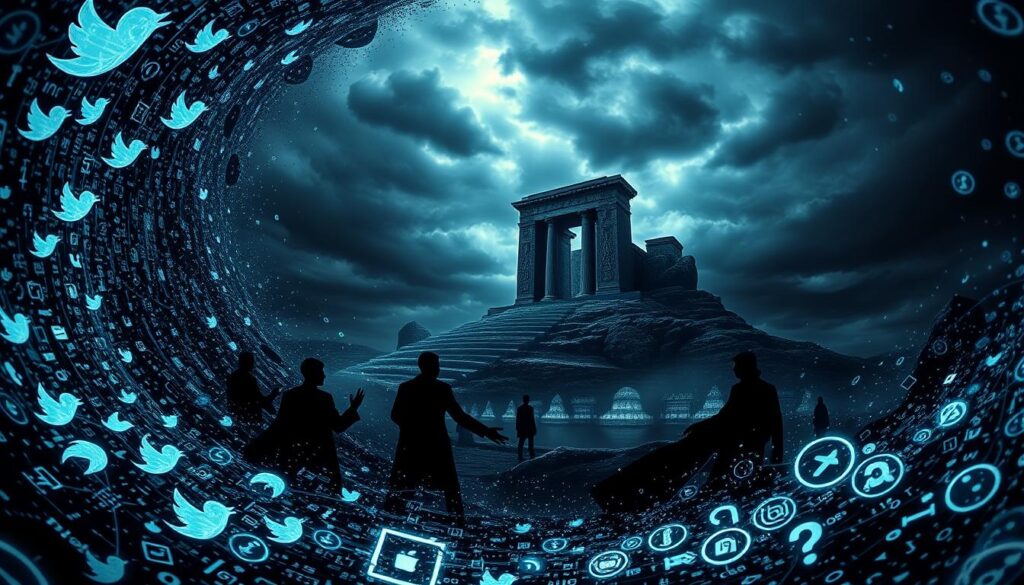
Social feeds turn obscure verses into trending clips that feel urgent. This section explains why snappy formats often outpace careful reporting.
Entertainment vs. reporting
Shows and creators frame prophecy as spectacle. Short edits, dramatic music, and bold graphics make content easy to share. That snackable style can drown out the work of historians and journalists.
Apocalyptic anxiety online
Breaking news aesthetics — urgent fonts, countdowns, and sharp cuts — make vague lines feel like immediate alerts. People under stress may treat elastic language as fixed guidance. Mental health research links repeated exposure to doomsday narratives with higher stress among young audiences.
After predictions fail
When dates pass, timelines often shift. Creators reframe events to keep engagement high. This moving-target effect sustains attention and fuels more debate about events and headlines.
“Fear travels faster than cautious context in short-form feeds.”
- Entertainment framing makes prophecy sticky; nuance gets lost.
- Apocalyptic themes fit algorithm-friendly reels and reaction videos.
- Recognizing media incentives helps readers separate engaging stories from actionable news.
| Mechanism | How it spreads | Practical tip |
|---|---|---|
| Snackable edits | Short clips on social media and shows | Seek full articles or expert commentary before sharing |
| Breaking news style | Urgent visuals and soundtracks | Check timestamps and original sources |
| Timeline shifts | Creators redate or reinterpret after events | Note how claims change after a date passes |
For readers who want further context on modern psychic interpretations, see a guide to psychic dreams and predictions.
Conclusion
Modern commentators often graft dramatic timelines onto brief, ambiguous quatrains. The clearest takeaway is simple: references to world war and sweeping upheaval are interpretive overlays, not date-stamped forecasts.
Scholars point to language quirks, variant manuscripts, and retrofitting as reasons precise prediction remains out of reach. An eclipse and a short quatrain fuel headlines, while a public-facing astrologer can add urgency to AI and security threats.
Readers can enjoy the literature and lore of the prophecies but should weigh sensational shows and viral clips against concrete history and policy analysis. For symbolic context, see a related note on angel number 777.