
Les Prophéties is a mid-16th-century book of short verses that still sparks modern debate. Published in 1555, it holds 942 quatrains across ten centuries. These lines invite many readings and wide interpretation.
Media cycles and big headlines often drive spikes in interest. Bestselling authors and viral posts can turn old quatrains into fresh news. The 1999 “King of terror” verse is a clear example of a date-specific claim that failed to appear.
This introduction sets expectations for a future-focused trend analysis. We will explore how the world asks about predictions and how confirmation bias and posticipation shape beliefs. The goal is not to endorse prophecy, but to unpack how meanings form and spread.
Key Takeaways
- Les Prophéties (1555) contains 942 quatrains that invite many meanings.
- Interest often spikes with major headlines and social stress.
- Date-specific claims have a history of failing under scrutiny.
- This piece compares current chatter with recent news and timelines.
- We focus on evidence, context, and care before sharing with family.
Why Americans Are Asking Now: The Future, the News Cycle, and Nostradamus in 2029
A crowded news calendar and looming ballots make ancient verses feel suddenly timely. People turn to prophecy when a year fills with elections, regional conflict, and climate headlines.

Search intent often blends curiosity, fear, and a wish for order. Media outlets may pull a dramatic line, link it to current events, and present a tidy narrative.
That framing can urge readers to see patterns during a crisis. Scholars note vague wording fuels confirmation bias, especially in times of war or economic stress.
- Quick lens: dramatic verses get spotlighted and shared.
- Reality check: lists and roundups can mix folklore with traceable history.
- Practical step: pause, read the original lines, and ask if a direct link to today is justified.
| Driver | How it boosts searches | Helpful reader action |
|---|---|---|
| Elections | Raises uncertainty about leadership and policy | Check source context and timing |
| Major events | News cycles highlight dramatic lines | Compare multiple translations and analyses |
| Climate and crisis | Heightens desire for patterns and meaning | Use reputable data and scientific briefs |
This section aims to give people clearer framing, not to tell them how to feel. Responsible reporting helps separate useful insight from anxiety amplifiers.
The French astrologer behind the headlines: Nostradamus’s history, book, and quatrains
Michel de Nostredame began life as a traveling apothecary and later gained notice as a french astrologer. His career unfolded in an age of religious change and new printing technology.
The work that made his name was a single book, published 1555, containing 942 quatrains organized into ten “centuries.” That compact format favors ambiguity and invites readers to map lines onto many times and events.
From apothecary to court legend
Stories link him to Catherine de Médici and a verse tied to Henry II’s fatal joust. Scholars note that the relevant verse likely entered print after the event, which fuels debate on accuracy.
Words, meaning, and posticipation
The history of his words shows archaic phrasing and deliberate gaps. Those features let meanings shift with each new age.
“Vagueness lets later readers see foresight where there may be retrofitting.”
- Check publication timing and translation differences.
- Compare versions to spot added lines or later printings.
- Remember how family lore and public culture keep short verses alive.
| Aspect | Why it matters | Reader action |
|---|---|---|
| Publication date | Signals whether a verse predated events | Verify first print sources |
| Language and words | Archaic phrasing creates multiple readings | Compare translations and note omissions |
| Biographical context | Life as apothecary and court ties shape reception | Review biography and contemporary reports |
| Posticipation | Retroactive fitting makes prophecy seem accurate | Ask if interpretation arose before or after events |
Understanding the author’s life and the text’s publication history helps explain why these short verses still surface in family conversations and news cycles. For more on interpretation trends, see a related resource on psychic predictions and analysis.
Track record in the media: from Adolf Hitler to Princess of Wales and Queen Elizabeth
When a major event lands, editors hunt for verses that can be framed as predictions. The press often ties short lines from old quatrains to high-profile moments in modern history.
How big events get retrofitted:
- The rise of adolf hitler is frequently matched to vague lines that mention leaders or conflict.
- Deaths and scandals, like those involving the princess wales, prompt roundups that collect apparent “hits.”
- Key royal moments, including the passing of queen elizabeth, drove new lists and renewed interest.
How the bestseller effect works
After the Queen’s death, authors such as Mario Reading saw sales spike. Viral posts and boxed lists amplified interpretation claims about a possible abdication, a son or even talk of a wife influencing succession.
Selective quoting and translation choices can make a broad verse seem precise.
Compare dates, editions, and whether an interpretation existed before the event. That check helps readers spot retrofitting, not proof.
For more on how prediction claims spread, review the site privacy policy and information practices used by many outlets.
what does nostradamus say about 2029
Readers and sites often import a specific year into quatrains that never name one. Scholarly catalogs show no widely accepted, original line that explicitly lists this year. Most modern claims rest on broad words and loose links rather than a clear text.
Is there a date-specific verse? What we do and don’t find in the quatrains
Short answer: an explicit date is missing. Unlike the 1999 “King of terror” quatrain, which used a clear date and later failed to mark the end, the present chatter draws on vague imagery.
Lessons from the missed 1999 “King of terror” prediction versus today’s interpretations
That 1999 verse is a cautionary tale. It showed how a single date-specific claim can create alarm and then prove false.
“Check the original French and compare translations before accepting a dramatic match.”
- Ask what the original words say and how translations align.
- Note how family groups and social feeds can repeat a claim for days.
- Recognize that modern links to space or war often rely on current events, not a direct verse — give chance its due.
| Claim | Evidence in text | Reader action |
|---|---|---|
| Explicit date | None found in original quatrains | Verify source and edition |
| 1999 “King of terror” | Date-specific line that failed | Use as cautionary example |
| Modern links (space/war) | Built from current risk lists, not verse | Separate book content from added interpretation |
For a deeper look at related interpretation trends, see an example resource on angel number 1919. A habit of source-checking and a little skepticism helps protect against overconfident prediction claims.
War and “seven months”: parsing Great War claims, WW3 dates, and real-world context
A short quatrain about a “Great War” has become a magnet for modern conflict headlines. Some sites tied the line — “Seven months the Great War, people dead of evil-doing. / Rouen, Evreux shall not fall to the King.”— to recent European tensions even though the verse names no year.
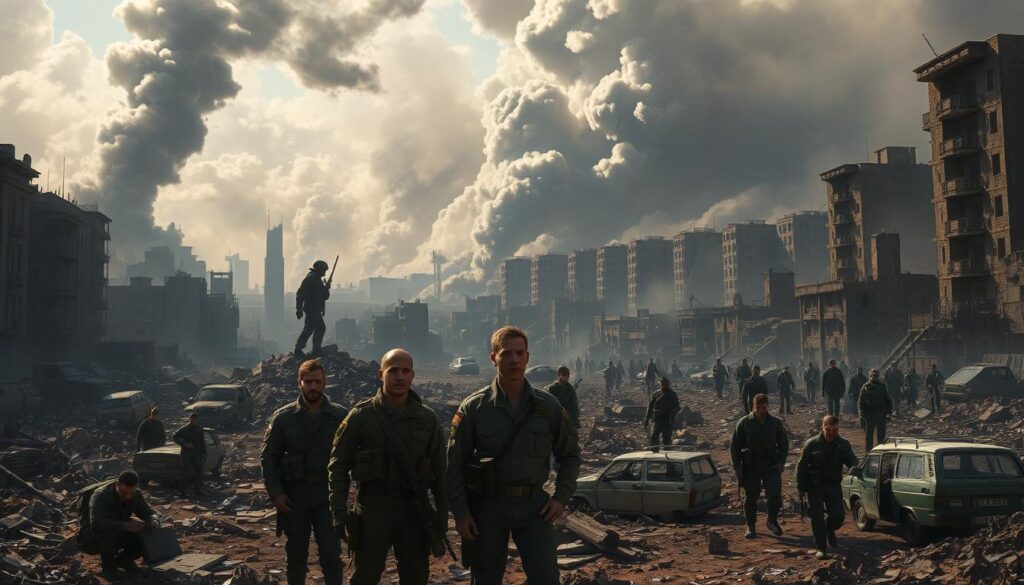
The “seven months” line as a hook
Outlets used the phrase as a hook, turning vague wording into a timeline. This leap skips the quatrain’s lack of date or clear place and treats poetry like a calendar.
How media timelines form and why they fail
Media and list posts can map a few lines into day-by-day narratives. Those timelines often fade when events don’t match the predicted days.
- Separate claims: astrologers offered fixed trigger dates in June, but such forecasts rarely hold.
- Check timing: ask if a date claim was posted before events and whether follow-up accountability exists.
- Small things blow up: phrases, maps, and rumors can snowball into alarming stories without solid sourcing.
“Treat a single verse as a prompt for research, not as a forecast for months of geopolitics.”
The friendly takeaway: compare multiple sources, favor expert conflict reporting, and use verified data over poetic reinterpretation. For a related angle on symbolic numbers and modern readings, see this brief on angel number 777.
Space, sky, and the future: asteroids, Apophis 2029, and 2024 YR4 headlines
Astronomy updates often turn dramatic odds into clear lessons about how science handles risk.

Apophis and risk refinement
Apophis once carried a 2.7% estimated chance to hit Earth in 2029. That early number grabbed attention.
Subsequent tracking and refined models ruled out an impact. This case shows how improved data changes the picture.
2024 YR4 and evolving probabilities
Current estimates list a 3.1% impact probability for Dec 22, 2032. The corridor spans the eastern Pacific to South Asia.
ESA experts call it a rare, local threat — a possible “city killer,” not a world-ending body. The Planetary Society reminds us probabilities can rise then fall as observations improve.
Why James Webb and repeated observations matter
NASA plans JWST and other follow-ups to pin down trajectory, size, and composition. Dim objects need careful study before firm claims appear.
Retired astronaut Chris Hadfield and historical comparisons (Tunguska-style airbursts) help explain potential effects without panic.
“Early odds are a prompt for more observation, not a final prediction.”
- Recap: Apophis taught scientists how to refine risk with more data.
- Reasonable caution: 2024 YR4’s chance reflects limited data and will likely change.
- Family guidance: look for named sources, clear numbers, and timeline updates before sharing with a son or other relatives.
| Asteroid | Early chance | Current view | Practical note |
|---|---|---|---|
| Apophis | 2.7% (early 2000s) | Impact ruled out for 2029 | Model refinement removed risk |
| 2024 YR4 | 3.1% (current) | Impact corridor: E. Pacific → S. Asia | Probability may change with JWST and radar |
| General small body | Varies | Often local damage risk | “City killer” means significant regional effects, not global |
Takeaway: Big-sounding numbers catch attention, but the most reliable prediction is the one that grows from repeated measurements and open science.
Climate crisis readings: floods, drought, and the “rainbow” verse in modern times
When rivers overflow and summers scorch, poetic images of the sky reappear in modern debate. A quoted passage — “For forty years the rainbow will not be seen. / For forty years it will be seen every day. / The dry earth will grow more parched, and there will be great floods when it is seen.” — often shows up in climate conversations.

Analysts warn that short quatrains and similar lines are broad. They can be retrofitted to many eras and many events. That loose wording fuels claims that feel convincing but lack clear timing or evidence.
- Pair poetry with data: check temperatures, precipitation records, and flood maps before linking a verse to recent years.
- Understand resonance: sky imagery and life disruptions make such lines emotionally powerful.
- Act on facts: policy, preparedness, and peer‑reviewed science should guide response more than poetic fits.
“Ambiguity is not proof; it invites better questions about what is measurable and what is metaphor.”
In short, appreciate literary echoes while relying on observed trends and expert reports to shape real‑world choices.
New voices, old patterns: the “Living Nostradamus” and today’s prediction economy
Online platforms let a single voice turn a vague verse into a headline overnight. That dynamic fuels a market where a living commentator can gain rapid attention and influence what families discuss at the kitchen table.

Athos Salomé and the 2032 transformation
Athos Salomé, called a “Living Nostradamus” by some, speaks of a worldwide transformation in the year 2032. He also suggested 2024 YR4 might be deflected or weaken — a hopeful spin on uncertain science.
Contrast: NASA and ESA mark 2024 YR4 with a 3.1% probability now. That number can change with more data.
Kushal Kumar’s confident war dates
Kushal Kumar used Vedic astrology to name June 2024 trigger dates for a major conflict. Those exact timelines sound decisive and gain clicks when anxiety is high.
- Such claims rise because they offer clear drama amid complex events.
- Mentions of a public figure’s death or a nation’s fate drive traffic but need verification.
- Bold forecasts surge; corrections rarely get equal attention.
“Bookmark the original claim, set a reminder for the date, and check the outcome later.”
Family tip: Ask together: who made the prediction, what evidence supports it, and was the call made before the event? Use that check to turn predictions into learning, not fear.
How to read prophecies like a trend analyst: evidence, context, and language
Treat prophecies like market signals: separate raw text from later commentary before drawing conclusions.
Check the original words, translations, and timing
Begin with the book and the earliest printing. Track whether a verse appeared before the event or was added later.
Compare translations and note missing lines. A short difference can change meaning and the claimed reference.
Follow the data: briefings, reporting, and statistical risk
Use experts and named institutions for probability and chance estimates. For example, Apophis’s early risk was removed after better observations, while 2024 YR4 holds a current 3.1% estimate that may shift.

“Treat a single verse as a prompt for research, not as a final forecast.”
- Save the link and note the original reference; calendar a follow-up at a reasonable future date.
- Weigh people’s confidence against verifiable sources and datasets.
- Build a home routine: archive the claim, check reputable briefings, and review outcomes with your son or family.
See this related reference for an example of careful sourcing and explanation.
Conclusion
B
Centuries-old lines travel the world because their gaps let each generation read its own fears into them. A single French astrologer wrote compact verses, published 1555, that invite many readings rather than firm timelines.
Across years of headlines, claims that nostradamus predicted this or that often arrive after events. The rise of living commentators and fast news makes retrofitting easy, especially when people face death, floods, or sudden war alarms.
Keep a simple home routine: note the source, save the day, compare later, and teach a son or daughter to check facts. For calm guidance or a friendly reading, see psychic readings.