
Welcome. This friendly, step-by-step guide gives you a clear starting point so you can learn with confidence. You will get a simple map of the 78 cards: 22 Major Arcana and 56 Minor Arcana, and why that split matters for readings.
Think of the deck as a storybook and the Major Arcana as the Fool’s Journey through life stages. The Minor Arcana shows daily details and short-term influences.
Expect practical help, not rigid prediction. We focus on self-reflection and useful insight. You’ll learn how meaning forms from imagery, symbols, and card positions so first readings feel approachable.
This page is built to bookmark and revisit like a handy book. You’ll also find tips on choosing a deck you vibe with, basic shuffling, and a quick reading structure to build confidence.
Later sections will cover keywords, real-life examples, and spreads like those at tarot spreads.
Key Takeaways
- The 78-card deck splits into Major (22) and Minor (56) Arcana.
- Major Arcana traces growth; Minor Arcana shows daily life.
- Readings support reflection, not fixed predictions.
- Meanings come from imagery, symbols, and card positions.
- Start with a simple reading and a deck you like to build confidence.
Welcome to Your Ultimate Tarot Guide for the Present
Consider this series like a pocket book that brings clarity and calm for everyday readings. It’s a friendly, practical way to build understanding and trust in your intuition right now.

- Clear steps you can use today to do a quick one-card draw and focus your day.
- Simple tips to make space for intuition and calm, so your inner voice shows up.
- Ways to blend classic meanings with personal insight, so each reading feels true to you.
- A repeatable flow to practice regularly without taking too much time.
This book-like resource works as a reference page you can return to. Use sections in order or jump to what you need—spreads, card meanings, or daily prompts. The aim is gentle guidance: small steps that help you choose the next best way forward in the present moment.
What Is Tarot? Cards, Meanings, and How They Work
A reading deck is a compact system that uses pictures and symbols to mirror what’s stirring inside you.
In plain English: it’s a 78-card system that blends imagery, archetypes, and narrative to reflect your inner world. The system splits into 22 Major Arcana for broad, karmic lessons and 56 Minor Arcana for day-to-day details.

The 78-card deck at a glance
Major Arcana shows big-picture milestones and spiritual lessons. Minor Arcana highlights everyday situations and temporary influences.
Shuffle, draw, and pause to notice what the pictures prompt for you. Meanings come from both traditional themes and the context of your question or spread.
Tarot as a mirror for life, guidance, and intuition
Cards act like visual prompts that nudge intuitive understanding. They don’t predict fixed outcomes. Instead, they help name feelings, reveal patterns, and point to next steps.
“Tarot is a tool for reflection—use it to clarify choices, not to foretell fate.”
- Use one card for daily focus.
- Use a three-card pull for situation, challenge, advice.
- Keep interpretations grounded: match card meaning to your lived details.
The Anatomy of a Tarot Deck: Major and Minor Arcana Explained
Every deck balances sweeping life lessons with practical, moment-to-moment messages to guide interpretation. This split helps you decide whether a reading points to a major shift or a simple next step.
Major Arcana: Life’s karmic lessons and the big picture
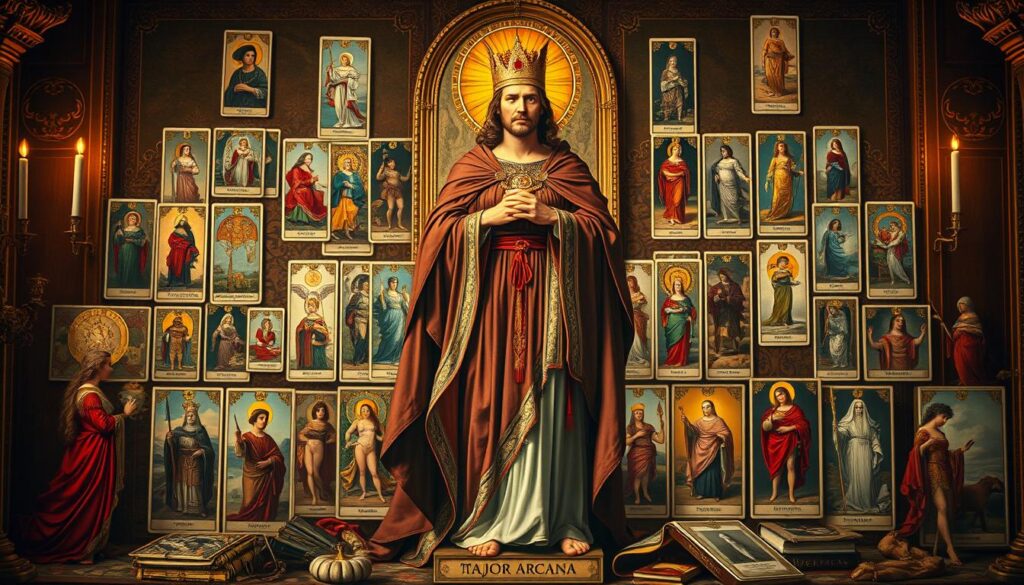
The Major Arcana has 22 cards that map the Fool’s journey from innocence to completion. Each card signals a key lesson or turning point in a person’s life.
Use Major cards when a reading focuses on long-term themes, personal growth, or major cycles. When many Major cards appear, the spread leans toward deep, lasting change.
Minor Arcana: Day-to-day situations and temporary influences
The Minor Arcana includes 56 cards: four suits (Cups, Pentacles, Swords, Wands), 40 numbered cards, and 16 Court Cards. These cover practical matters and everyday choices.
Numbered cards show progression and timing. Court Cards often represent people, roles, or parts of self. Each suit links to an element to help with quick interpretation.
- Major = big-picture meaning and life lessons.
- Minor = daily details, timing, and personalities.
- Context matters: a single card’s meaning shifts if surrounded by mostly Major or mostly Minor influences.
For faster learning, memorize the structure like a small book: 22 Major, 56 Minor, four suits, and 16 courts. Use practice readings and a compact reference to build intuitive understanding.
For more on spreads and practice, see this tarot resource for deeper examples and exercises.
The Major Arcana and the Fool’s Journey
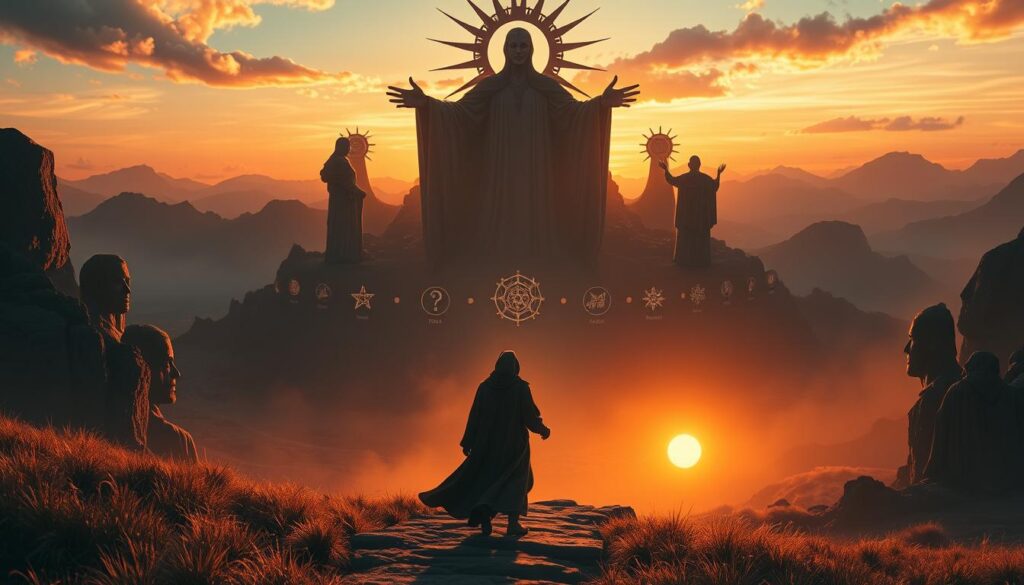
Each Major card marks a chapter in a long, symbolic journey toward self-integration. The sequence runs from a naive beginning to a sense of completion, offering a simple map to track inner shifts over time.
Use the sequence to spot where you are in life—early experiments, tests of will, losses that free you, and stages of mastery. A single Major can name the central theme of a reading.
From The Fool to The World: stages, lessons, and growth
The arc highlights signature moments: The Fool’s fresh start, The Magician’s skill, Strength’s resilience, Death’s transformation, and The World’s completion. Each card has upright and reversed tones that shift meaning.
- Upright vs Reversed: Upright often signals action or blessing; reversed can warn of blockages or inner work.
- Connect to life: Match card themes to your current chapter without forcing prophecy.
- Practice: Journal the Fool’s Journey in your own words to deepen understanding.
When to read with only the Major Arcana
Major-only readings are useful during big transitions, milestones, or when you want core clarity about long-term patterns. Multiple Majors together often indicate a pivotal period rather than day-to-day details.
Try a spread using only Majors when asking about vocation, spiritual timing, or a turning point. One Major in a key position can spotlight the primary lesson to focus on now.
| Card | Upright Meaning | Reversed Meaning |
|---|---|---|
| The Fool | Innocence, new beginnings | Recklessness, hesitation |
| The Magician | Willpower, resourcefulness | Trickery, scattered focus |
| Strength | Inner courage, patience | Self-doubt, fatigue |
| Death | Change, transformation | Resistance, fear of change |
| The World | Completion, integration | No closure, delay |
For a quick deep-dive on the first step, read more about The Fool. Honor your pace—growth is a journey, and the Major cards help illuminate the road.
Minor Arcana Suits and Elements: Wands, Cups, Swords, Pentacles
Each Minor suit brings a distinct vibe that helps you read everyday moments with clarity.
Elemental energies: Fire, Water, Air, Earth
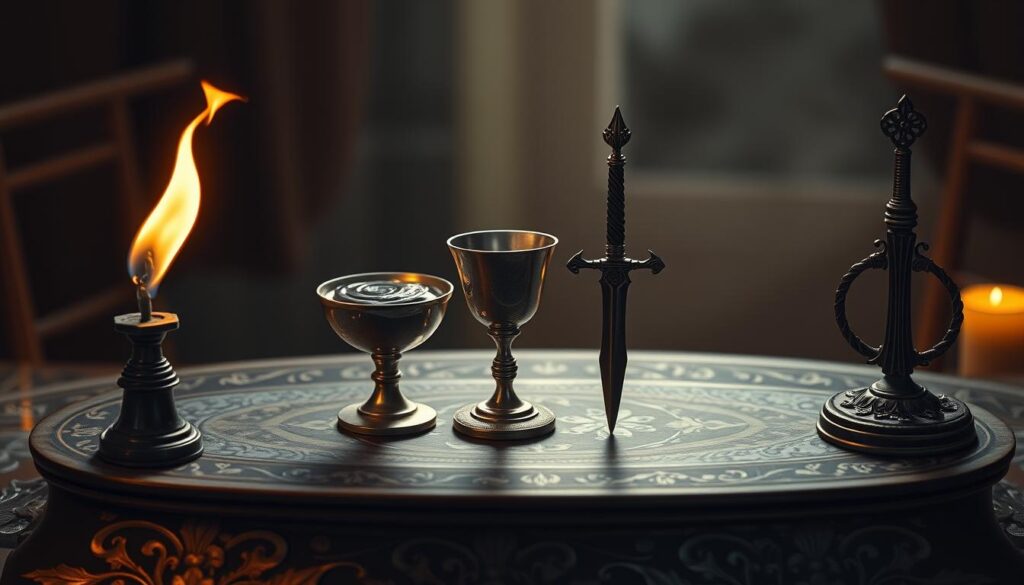
Wands — Fire: action, creativity, and willpower. These cards push projects forward.
Cups — Water: emotions, bonds, and intuition. They show relationship currents.
Swords — Air: thought, conflict, and communication. Expect mental tests and decisions.
Pentacles — Earth: resources, work, and stability. They ground practical matters.
Numbered cards and the stories they tell
Numbered cards map a mini-arc in each suit. Aces are seeds and beginnings. Fives bring challenges. Tens signal completion.
Read numbered sequences as a short story: start, growth, test, and outcome. That pattern gives quick meaning in a spread.
- Mixing elements shows tone: Fire + Water = heated feelings; Air + Earth = planned resources.
- Too much of one element hints at imbalance and where action is needed.
| Suit | Element | Everyday focus |
|---|---|---|
| Wands | Fire | Projects & drive |
| Cups | Water | Feelings & relationships |
| Swords | Air | Ideas & conflict |
| Pentacles | Earth | Money & body |
Tip: Note which suit appears most in your pulls to gain ongoing understanding of the deck’s mood and the things to address next.
Suit of Wands: Energy, Willpower, and Creative Drive
Wands capture the raw push of ambition and creativity that fuels honest, hands-on work. This suit is Fire: momentum, spark, and the urge to act now.
Quick snapshot: Wands show where your energy flows, what you’re willing to start, and where leadership can emerge. In readings, a Wand card often urges movement—start, pitch, or lead.
At times Wands warn of overdrive. That shows as impatience, scattered choices, or reckless action. Read a single Wand card to see what’s fueling you and where to add focus or rest.

Use Wands practically at work and in creative projects. Set small milestones, honor breaks, and let heat become steady progress. If you feel stuck, treat the card as a spark: plan one brave step today.
“When Wands speak, they ask you to move from idea to action with confidence.”
| Wand Tone | Upright Meaning | Reversed Meaning | Practical Action |
|---|---|---|---|
| Ace of Wands | New energy, creative seed | Delay or blocked start | Draft a 7-day plan to test the idea |
| Three of Wands | Expansion, early leadership | Impatience, stalled growth | Map next milestone and delegate one task |
| Knight of Wands | Bold action, charisma | Reckless speed, scattered focus | Channel sprint energy into focused bursts |
| Ten of Wands | Ambition near completion | Burnout, too much responsibility | Offload tasks and schedule rest |
Journal prompts: note when your energy peaks, what tasks light you up, and when you felt spread too thin. Track patterns so you can plan aligned action and avoid burnout.
For leadership sparks and timing, see how Wands line up with decisive cards like The Chariot at The Chariot overview. Use that context to step forward with confidence.
Suit of Cups: Emotions, Relationships, and Intuition
Cups reflect the inner tides—how feelings rise, settle, and shape your choices.

Water energy in these cards highlights emotion, relationship dynamics, and creative flow. Cups point to what you feel before you think. That makes them useful for reading day-to-day situations and deeper bonds.
Read emotional nuance by noting tone: gentle support, vulnerability, or the need for healthy boundaries. Reversed Cups often flag overwhelm, avoidance, or a disconnection from your inner voice. Pause, journal, and practice grounding steps to return to center.
When Cups dominate a spread, try practical moves: slow your breath, name the feeling, and use compassionate communication. Notice Swords nearby to balance heart and head—words can clarify what feeling cannot.
- Use Cups to explore repair, reconciliation, or graceful closure in relationships.
- Turn feelings into action with creative prompts: write a short scene, hum a theme, or paint a color that matches your mood.
- For people-focused insights, see the Knight of Cups as a messenger of emotional openness via this short overview: Knight of Cups.
“Honoring your intuition is a daily practice that deepens with attention.”
| Focus | Upright meaning | Reversed meaning |
|---|---|---|
| Ace of Cups | New emotional opening, fresh empathy | Blocked feeling, numbness |
| Three of Cups | Joy, support, celebration | Overindulgence, strained friendships |
| Five of Cups | Loss, grief, needed mourning | Stuck in regret, unable to move forward |
| Queen of Cups | Compassionate presence, strong intuition | Boundary blur, over-identifying with others |
Suit of Swords: Ideas, Logic, and Communication
Swords bring the clear, cool force of Air—where thought, speech, and decisive logic live. This suit shows how ideas and words shape what follows.

Core view: Swords represent thoughts, honest analysis, and direct talk. They can cut through confusion or wound when delivered without care.
- You’ll see Swords as Air: mental clarity, strategy, and tough decisions.
- They point to debates, deadlines, negotiations, and the mental work needed to solve problems at work.
- Reversed Swords often flag overthinking, harsh self-talk, or avoidance—and invite kinder inner language.
- Watch body language and tone in readings; words plus delivery shape meaning and outcomes.
- Balance Swords with Cups for empathy and Pentacles for practical follow-through.
“Precise words are powerful—use them to heal, not harm.”
| Focus | Upright | Reversed |
|---|---|---|
| Decision | Clear plan | Indecision, doubt |
| Communication | Direct truth | Harshness or silence |
| Mental tone | Sharp clarity | Overthinking |
Suit of Pentacles: Body, Nature, and the Material World
When Pentacles appear, they ask you to notice what supports your body, home, and long-term plans.
Pentacles correspond to the Earth element and point to money, health, skills, and the routines that build real security.

Practical meaning: these cards speak about steady effort, values, and the resources you manage each day.
“Slow, steady steps compound into meaningful results.”
Reversed Pentacles often warn of overspending, exhaustion, or neglecting self-care. Read them as prompts to pause and rebalance.
- Connect Pentacles to budgeting, career planning, and health routines.
- Use nature practices—walks or gardening—to restore grounded energy.
- Pair Pentacles with Wands to turn bold starts into sustainable progress.
- Note when Pentacles combine with Major cards: they can mark anchors like home, vocation, or long-term health.
Try this: treat one Pentacle card as a small action plan—track one budget line, schedule a health check, or plant a simple routine for seven days.
The Court Cards: Pages, Knights, Queens, Kings as People and Parts of Self
Court cards act like different voices in a play—each one shows a role you or someone else might step into.
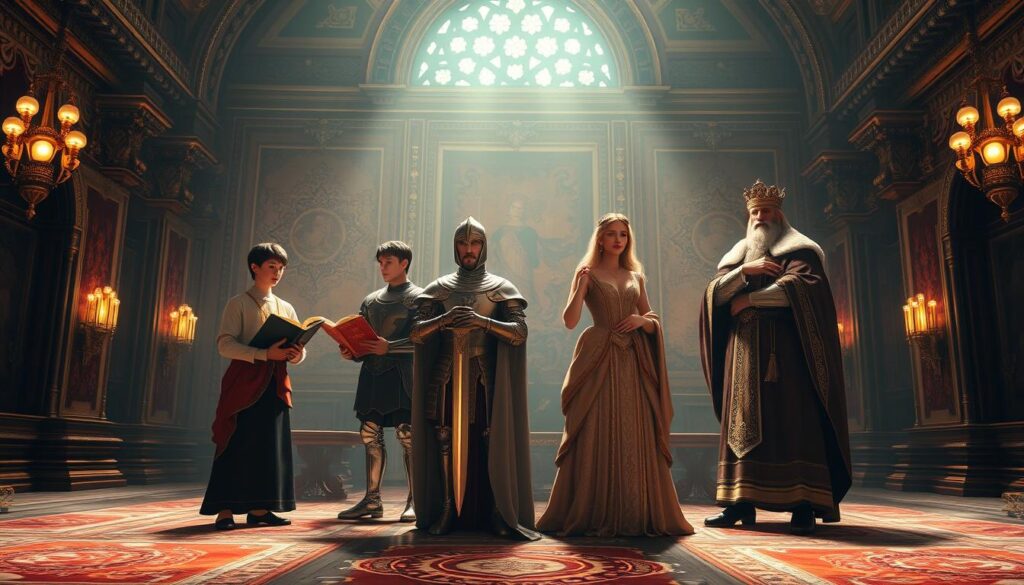
Quick framework: read a court as a person, a social role, or a part of your own psyche depending on the question. That keeps interpretations flexible and kind.
- Pages = students or messengers—new learning and curiosity.
- Knights = action-takers—movement, pursuit, or challenge.
- Queens = nurturers—emotional mastery or inner work.
- Kings = leaders—outer authority and practical control.
Suit energy (Fire, Water, Air, Earth) colors each court’s behavior. Use context clues to decide if a court is you, someone else, or a role you’re being asked to try.
Spot developmental arcs: Pages grow into Knights, then Queens or Kings, showing timing and maturity. Multiple courts together can reveal family roles, team dynamics, or inner parts work.
“Page = learn, Knight = do, Queen = feel, King = lead.”
Keep interpretations specific and compassionate. For an example of a Queen in practice, see Queen of Pentacles.
How to Read Tarot: A Beginner-Friendly Process
Make a quiet corner that feels safe; the act of preparing shifts your focus and opens insight. This short flow helps you move from setup to a clear, compassionate interpretation without overwhelm.
Prepare your space, deck, and energy
Clear a small area, choose the deck you like, and take three slow breaths to center attention. A tidy page or notebook nearby becomes your practice book.
Form clear questions and set intentions
Ask open questions that invite nuance—avoid yes/no traps. Note the question on a page so your reading stays focused and kind.
Shuffle, draw, and observe imagery and symbols
Shuffle with the question in mind and draw a card. Scan colors, gestures, and symbols. Let first impressions mix with traditional meaning.

Synthesize card meanings into a cohesive reading
Link impressions, suit energy, and whether the Major or Minor tone feels big or daily. Write a brief takeaway in your book and pick one next step to try. Close with a short breath or gratitude to complete the reading.
Essential Beginner Spreads: One-Card, Three-Card, and More
Simple layouts help you turn a moment of curiosity into clear, useful insight. Choose a spread size that matches your question: short for quick clarity, longer for deeper context.
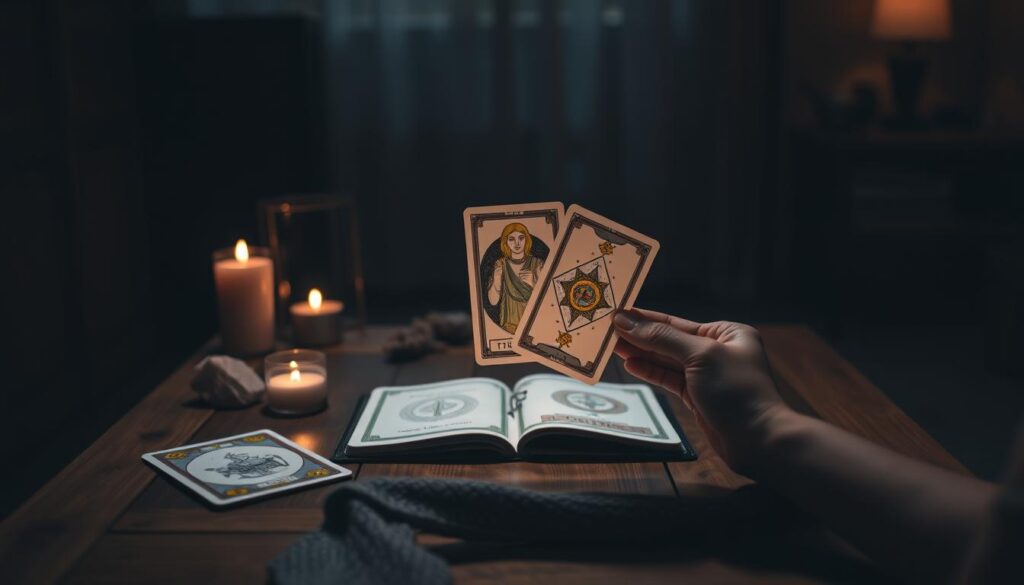
Daily one-card draw for focus and insight
Pull one tarot card each morning to set the tone for the day. Use the image and a short keyword to center attention.
Classic three-card: past, present, future
Use three-card readings for practical readings: past–present–future or situation–challenge–advice. Read the anchor card first, then weave the others into a small story.
Five-card spread for deeper guidance
Five cards add layers: root cause, current energy, obstacle, advice, likely outcome. Match spread depth to how complex the question is.
- When to pull a clarifier: if one card seems confusing, add a single clarifying card.
- Journal tip: record each spread in your book to track patterns over time.
| Spread | Positions | Best use |
|---|---|---|
| One-card | Focus | Daily check, quick decisions |
| Three-card | Past / Present / Future | Short problem-solving readings |
| Five-card | Root / Energy / Obstacle / Advice / Outcome | Deeper context for choices |
“Start small, record often, and let meaning grow.”
Card Meanings in Practice: Upright, Reversed, and Context
Orientation and position work together to turn a basic card meaning into a useful message.
Upright energies usually show the card’s supportive side: clear gifts, momentum, or helpful timing. Reversed cards highlight blocks, delays, or shadow work that needs attention.
Upright energies versus reversed shadows
Look at The Sun as an example: upright signals joy and clarity; reversed can suggest temporary sadness or a dimmed outlook.
The Devil upright points to material fixation; reversed often reads as release or breaking a chain. The Tower upright marks upheaval; reversed can mean disaster was avoided or internal change slowed.
Letting position and surrounding cards guide interpretation
The same tarot card can read very differently by position. In a past slot it explains a root cause. In advice it names an action to try now.
Neighbors matter: a Major Arcana among Minors can pull the whole spread toward big-picture meaning. Repeated cards often show the heart of a situation and deserve extra attention.
Simple process to follow:
- Pick a short keyword from your book of notes.
- Scan image details for fresh insight.
- Note card position and nearby cards.
- Synthesize into one clear, practical interpretation for the reading.

“Focus on keyword, image, position, and neighbors—then trust a concise outcome.”
| Focus | Upright | Reversed |
|---|---|---|
| The Sun | Joy, clarity | Low energy, temporary doubt |
| The Devil | Materialism, attachment | Release, breaking patterns |
| The Tower | Sudden change, awakening | Discrete crisis avoided, slow shift |
Compassion script for sensitive reversals: “This card shows a challenge to work on, not a fixed fate. We can use this as a focus for one small next step.”
Track each interpretation in your book. Over time, that recorded knowledge makes interpretations feel less like memorization and more like fluent practice.
Intuition Meets Knowledge: Balancing Book Meanings and Inner Voice
Blend study and inner listening so each card reads like a conversation with yourself. Start by scanning the image and noting the first feelings, body cues, or words that surface.
Next, consult a brief book meaning to confirm or refine what you noticed. This two-step see-then-check method keeps readings lively and grounded.
Try short exercises: pause to feel breath, name an emotion, then free-write two sentences about the card. Do this for three pulls to build trust with your inner voice.
When intuition and the book differ: note both answers without judgment. Journal the outcome and track which interpretation proves useful over time.
- Create a personal mini-guide of keywords that match your life experience.
- Alternate study sessions with flow readings—one day learn, the next day listen.
- Stay humble and curious; let each card teach you.
“You don’t need to know everything to offer a meaningful reading.”
Ethics, Timing, and Scope: Reading Responsibly
Responsible readings prioritize a person’s agency and clear boundaries. Before any session, set expectations about what a reading can and cannot do. This creates a safe space and makes the outcome more useful for everyday life.

Empowerment over prediction
Frame a reading as empowerment: focus on options, choices, and next steps rather than fixed outcomes. Use language that headlines agency—words like “options,” “next step,” and “possible path.”
When Major cards show up, note larger lessons. When Minor cards appear, keep the emphasis on near-term, practical meaning and time scope.
Handling sensitive topics and boundaries
Set ethical lines: decline medical, legal, or financial diagnostics and refer clients to licensed professionals when needed. Be clear and compassionate when you do so.
- Ask for consent before discussing third parties and avoid reading about someone who hasn’t agreed.
- Offer supportive language for tough cards: name constructive options, resources, and one small action the sitter can take.
- Close each session by summarizing the core meaning and a realistic next step the querent can try this week.
Self-care for readers matters. Ground before you begin, note limits in your personal code, and clear energy after a session so you stay present and helpful.
For professional readings or to book a session, consider trusted services like psychic readings when you need more time or specialized support.
Build a Daily Tarot Practice: Journaling, Prompts, and Patterns
A short, consistent ritual turns small observations into useful insight. Spend a few minutes each morning to pull one card, note the first impression, and write two quick lines on the page.
Track insights, themes, and lessons over time
Simple daily ritual: pull one card, jot first words, and add one action you can try that day. This keeps practice light and practical.
Use prompts that tie card meanings to real life: “What does this ask me to try today?” or “Where did this show up in my interactions?”

Mark patterns: note repeating suits, numbers, or Majors. Over a week, you’ll see a thread—a mini story of your journey that helps refine meaning.
- Review weekly like a personal book of notes—highlight recurring cards and next-step ideas.
- Link morning draws with an evening reflection to test interpretations and build calibration.
- Playful anchors: sketch a symbol, pick a theme song, or pick one keyword to remember the card.
Quick template for your page: Date • Card • First impression (1–3 words) • Action to try • Evening note.
“Small daily habits compound into clearer reading and growing confidence.”
Keep it curious. Celebrate micro-wins when a card’s prompt helps you act. Over time, brief daily practice makes card meanings feel natural and guides your ongoing journey.
Common Beginner Mistakes and How to Avoid Them
Many new readers lean on memory instead of images, which limits real insight. Learn to scan color, gesture, and symbol first, then check a book meaning. That practice keeps readings fresh and grounded in the card’s moment.
Avoid leaning on one suit’s way of thinking. Too much Swords-style analysis makes readings harsh. Too many Cups can flood you with feeling. Wands-only readings risk recklessness. Pentacles overloads create rigid, stuck advice. Balance suit energy by asking, “What element is missing here?”
Keep questions specific and open. Vague prompts give vague readings. Start small—one or three cards—until you feel steady. If fear shows up about a “scary” card, reframe it as a prompt for awareness and next steps.
Journal brief notes after each session. Even one line—date, card, one action—builds practical knowledge fast and reduces bias. On off days, pause, reset with a breath, and return with curiosity.

- Start small and read deeply rather than spreading too many cards at once.
- Check assumptions against visual details to avoid biased interpretation.
- Use a short pre-reading checklist to stay grounded.
| Common Mistake | What it Causes | Quick Fix | Practice Tip |
|---|---|---|---|
| Memorizing meanings | Mechanical readings | Scan image first, then consult a book | Describe the picture in one sentence |
| Suit over-reliance | One-sided advice | Look for balancing suits or add one clarifier | Ask which element is missing |
| Vague questions | Vague outcomes | Make questions specific and open | Use “What can I do…” or “How to…” prompts |
| Skipping journaling | Slow skill growth | Write one line after each reading | Review weekly for patterns |
Pre-reading checklist: clear space, set intention, form a focused question, scan the card first, note one small action. Use this quick routine before every reading to stay steady and gain confident knowledge over time.
Conclusion
Here we fold the main ideas into a short, usable plan for practicing with purpose.
Keep this page as a living book: revisit the structure, the Major Arcana lessons, and the suits when you need anchors. Use one- and three-card pulls on busy days and scan for Major cards in larger cycles.
Blend image-based noticing with concise card meanings and pick one small action after each reading. Track draws in a short journal to build steady knowledge and confidence over time.
Read compassionately, honor ethics, and enjoy the process. This guide and these tarot cards are tools that meet you where you are and help you choose a clear next step.