

Welcome, new casters. This short guide explains how simple flame-based magic works today, from flare cantrips to higher-level rituals that demand training and resource care.
You’ll learn the difference between single-target projectiles and broader area effects, how damage and fire damage scale with level, and when a saving throw like Reflex will cut effects in half.
We also cover defensive options such as shields that absorb elemental harm, practical cooldown and energy tips, and basic positioning for cones, lines, and spheres. Expect clear examples so you can match the right spell to the right target and sustain consistent output without overtaxing your caster.
Key Takeaways
- Start with low-level cantrips and build toward area tools as you gain level and control.
- Single-target options scale with caster level; area effects shape fights and deal steady damage.
- Many effects allow a saving throw to halve damage; know when Reflex, Fortitude, or Will applies.
- Defensive buffs protect against elements and can reflect minor hits back to attackers.
- Manage cooldowns, exhaustion, and energy to stay effective and keep allies safe.
- Use smoke and light utilities for control, vision, and tactical advantage.
What Are Fire Spells? A Friendly Primer for New Casters
Elemental flame effects let new casters shape combat with simple, predictable outcomes.
Basics: These magic effects channel elemental heat to deal direct damage and control space. Most write-ups list dice per level and a cap so you can see how output scales with caster levels.
Commonly the damage type is heat-based; many area attacks allow a Reflex save to halve damage. Some entries use Fortitude or Will when the secondary effect shifts to bodily strain or mental disruption.
Utility versions also exist. Small spells light dark areas, reveal hidden foes, or spawn smoke to block vision and alter the air.
- Starter examples: cone bursts that allow Reflex saves, single-target bolts that scale by level, and persistent walls that control zones.
- Remember: many foes resist or negate this damage. Plan around likely saves and positioning to protect allies.
| Type | Common Save | Typical Use |
|---|---|---|
| Cone / Burst | Reflex | Area damage and crowd control |
| Single Target | None or Fortitude | Reliable damage and debuffs |
| Persistent Zone | Varies | Space denial and environmental effects |
Fire Magic Fundamentals: Damage Types, Saves, and Spell Levels
Understanding how elemental heat scales and how opponents resist it helps you pick the right attack for each encounter.
Damage type basics: Heat-based effects excel at raw damage and wide coverage but often meet resistance. Many entries list dice per caster level with caps — for example, a common ball-style attack deals 1d6+3 per level up to 10d6+30 at level 10, while delayed variants can reach 20d6+140 by level 20. Know each spell’s cap so you compare outputs fairly.
Saving throws: Area attacks usually allow a Reflex saving throw to halve incoming damage. Other components may call for Fortitude (physical strain) or Will (mental effects) to avoid secondary harms. A successful save often reduces damage, but good positioning can still make area casts worth it.
Levels and trade-offs: Star-ranked tiers (★ to ★★★★★) raise output and training needs. Higher tiers also increase cooldowns, energy cost, and self-risk — some high-level effects can hurt allies or even the caster if misused. Use defensive options like Fire Shield (Hot) to turn elemental interactions into advantages; it halves incoming cold damage and returns minor heat to attackers.
- Compare dice caps (10d6 vs 20d6) before choosing a cast.
- Match area forms (cone, line, sphere) to cover targets with minimal friendlies exposed.
- Balance level choice with cooldown and energy limits to sustain output.
| Aspect | Typical Save | Effect on Play |
|---|---|---|
| Small AoE (cone/burst) | Reflex | Crowd control; halves damage on success |
| Single Target | Fortitude or none | Reliable damage, often debuffs |
| High-tier delayed | Varies | Huge cap but long cooldown and energy cost |
For more on psychic and elemental power profiles that complement offensive tactics, see psychic superpowers.
Safety, Ethics, and Risk Management When Working with Flames
Before you cast, make a quick scan for flammable objects, civilians, and escape routes.
Protect people and property. Confirm your area and line of sight. Walls, cones, and explosions can reach beyond the intended target and ignite flammable objects or harm nearby allies.
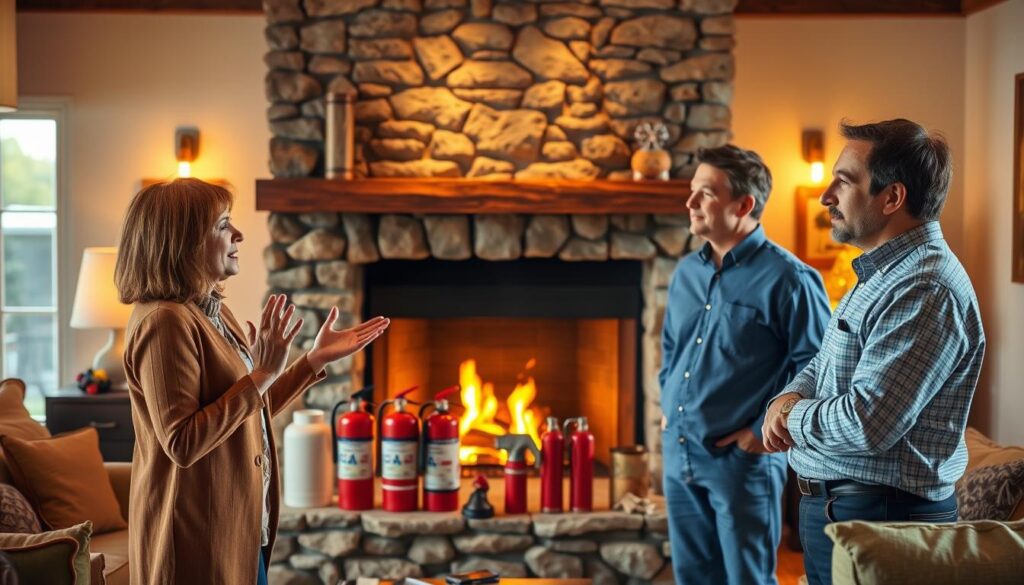
Preventing harm to allies, bystanders, and flammable objects
Use spotters and shared signals so moving teammates do not walk into an area effect. Swap to single-target lines when a crowd or fragile property is present.
Cooldowns, heat exhaustion, and reducing damage to yourself
Track time-based drawbacks: heavy casts like Heatwave slow energy recovery and raise exhaustion risk. Some area effects such as Magma can injure the caster and allies. The movement ability Catch grants speed but prevents casting for ten minutes afterward.
- Use Fire Shield (Hot) to reduce incoming cold and clear entangling webs.
- Reserve Smoke Zone for fights where allies tolerate smoke, or brief safe lanes first.
- Rest between heavy bursts, hydrate, and rotate into low-strain options to avoid burning out.
| Risk | Typical drawback | Mitigation |
|---|---|---|
| Magma-style area | Self and ally damage | Angle casts, create distance, use spotters |
| Heatwave | Slower energy recovery | Stagger casts; schedule recovery time |
| Smoke Zone | Vision and breathing impaired | Mark safe lanes; limit duration |
fire spells
Here’s a concise glossary of core flame techniques for beginners and early intermediates.
Quick reference: Burning Hands is a short cone with a Reflex save to halve damage. Fireball makes a capped explosion that scales by caster level. Wall of Fire creates a persistent area and often deals extra damage to undead.

Single-target picks like Flaming Bolt teach precision and scaling per level. Line options such as Scorch let targets attempt Reflex saves to halve incoming damage. For sustained presence, Incendiary Cloud damages over time and can blind foes who fail their Reflex.
- Use cones and spheres for grouped foes; lines and bolts for single targets.
- Walls control space and inflict steady harm while shaping movement.
- Defensive tools — Fire Shield (Hot), Resist Energy, Protection from Elements — reduce incoming elemental pressure and keep you casting longer.
Tip: Match damage type and area to the encounter to conserve resources. For complementary approaches, consider learning about psychic options like those linked at psychic readings.
Beginner Single-Target Fire Spells to Practice First
Simple targeted techniques help new casters learn how to land consistent hits under pressure.
Flaming Bolt and Scorch are your go-to starters. Flaming Bolt deals 1d6+2 fire damage per caster level (max 10d6+20). Scorch fires a quick jet with the same scaling; a successful Reflex halves its damage.

Scorching Ray and Produce Flame cover burst and sustain. Scorching Ray launches rays that each deal 4d3+12 fire and gains up to three rays by caster level 11. Produce Flame scales smoothly to 15d6+15, making it ideal for steady output over time.
Vial of Flame and Melt Armor add utility. Vial of Flame deals 1d6+2 per caster level (max 10d6+20); Reflex halves. Melt Armor deals 1d6+4 per level (max 10d6+40) and reduces AC and Physical Resistance by 4 for 15 seconds plus 2 seconds per caster level.
- Practice Flaming Bolt and Scorch to build aim and timing.
- Use Scorching Ray for focused burst; add rays as you level up.
- Cast Melt Armor first, then unload rays or bolts to amplify impact and extra fire damage.
- Watch for the saving throw habits of foes—if Reflex is common, prefer consistent output spells.
| Spell | Damage per Level | Max | Save |
|---|---|---|---|
| Flaming Bolt | 1d6+2 | 10d6+20 | None |
| Scorch | 1d6+2 | 10d6+20 | Reflex (halves) |
| Scorching Ray | 4d3+12 per ray | up to 3 rays | None |
| Produce Flame | 1d6+1 | 15d6+15 | None |
| Melt Armor | 1d6+4 | 10d6+40 | Reflex (halves) |
Beginner Area Fire Spells for Multiple Targets
Area casting gives you tools to damage several targets, block advances, and support allies at once.
Burning Hands is a short cone that hits nearby enemies. It deals 1d6+1 per caster level (max 5d6+5) and a successful save (Reflex) halves the damage. Flammable materials can ignite on contact.
Fireball creates a ranged explosion that catches multiple targets. It deals 1d6+3 per caster level (max 10d6+30) with a Reflex to halve. Use it when foes cluster at range.
Walls and Control
Wall of Fire deals 2d6 +1 per caster level (cap at caster level 15) to creatures inside, and adds 2d6 extra vs undead.
Firewall can be shaped straight or curved for choke points. It costs extra energy to form shapes but needs minimal training to use effectively.
Smoke, Blind, and Damage over Time
Cindersmoke opens with a blast that deals 1d6+4 per caster level (max 20d6+80) and can Blind for 12 seconds; a Reflex halves damage and negates Blind.
Incendiary Cloud pulses 2d4 +1 per caster level every 2 seconds (max 2d4+25 at level 25). Creatures entering risk a Reflex or suffer Blind for 4d6 seconds.
- Choose cones for nearby enemies and explosions for distant clusters.
- Expect successful saves on evasive foes and plan follow-up control.
- Shape walls to funnel enemies, then clean up stragglers with single-target pressure.
Defensive and Buff Fire Magic for Reducing Damage and Adding Power
Layering defensive enchantments gives casters both staying power and tactical openings.
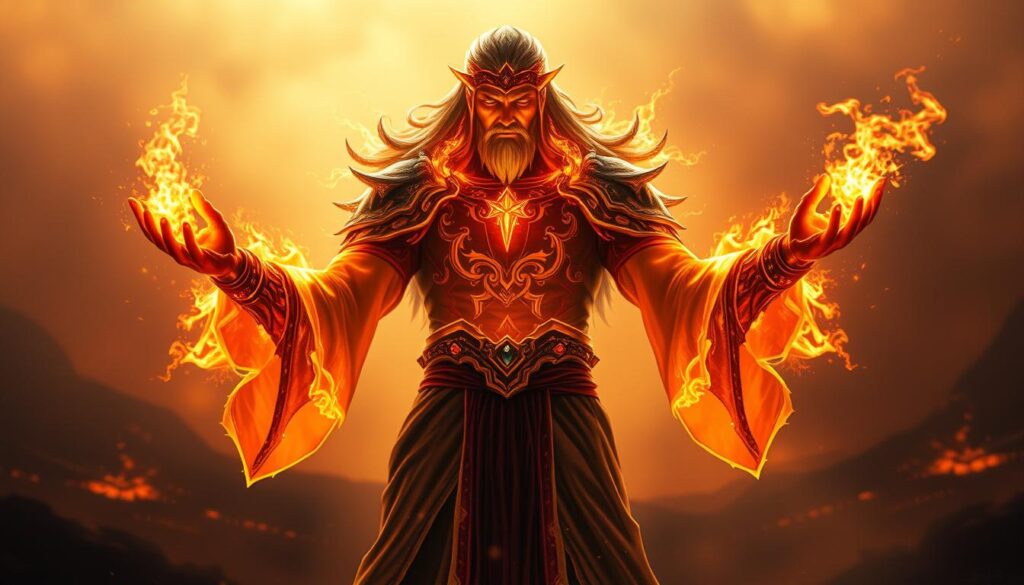
Fire Shield (Hot) halves incoming cold damage and punishes anyone who hits you with a touch of returning heat.
It deals 1d3+3 plus 1 per caster level (to level 15) and clears entangling webs so mobility stays strong.
Resist Energy & Protection Options
Resist Energy cuts chosen elemental energy by 10, then 20 at caster level 7, and 30 at level 11. It efficiently reduces damage and stretches healer resources.
Protection from Elements creates a temporary immunity pool: 1 minute per caster level or until a set absorption total is used (up to 120 at level 10). Use the Mass version to cover the whole team and buy critical time.
Offensive Buffs That Add Fire
Fires of Purity enchants weapons for +2d4 extra fire damage and adds 10% vulnerability on hit. Only one temporary enchantment can apply at a time.
Flame Arrow generates a cache of missiles; each adds 1d6 fire damage, ideal for ranged allies in long fights.
- Tip: Stack a wall and Resist Energy in tight corridors to hold ground while dealing steady damage.
- Refresh key buffs before boss phases with mixed damage types to avoid sudden drops in protection.
- These wards both reduce damage and create openings to convert defense into power.
For related protection tactics, see psychic protection.
Status, Control, and Utility: Heat, Smoke, and Light on the Battlefield
Manipulating air and illumination gives casters outsized tactical value.
Smoke Zone fills the field with ash and haze, choking vision and breathing. It spares fire and poison mages but hinders many allies, so call your team before you drop it.
Incendiary Cloud ticks for periodic damage and can blind targets who fail a Reflex saving throw. Use it to punish clustered foes or force movement into prepared kill zones.
“Use vents, doors, and airflow to shape visibility—small changes in air can turn a cloud into a trap.”
Reveals and Flares
Faerie-style reveals strip stealth, apply minor penalties, and make slippery targets easy to focus. Combine a reveal with a coordinated burst to maximize impact.
- Smoke controls sightlines and forces repositioning of ranged attackers.
- Layer light with haze to create silhouettes for easier targeting.
- If ally protection vs. smoke is weak, keep fields short or pick narrow lanes.
| Effect | Primary Impact | Use Case |
|---|---|---|
| Smoke Zone | Vision loss, breathing strain | Disrupt ranged foes; shape enemy movement |
| Incendiary Cloud | Periodic damage, possible Blind | Damage-over-time in chokepoints |
| Faerie Reveal | Expose hidden targets | Enable focused burst on elusive foes |
For more on nearby control and non-elemental options, see the guide on move things with your mind.
Targeting, Area, and Positioning: Getting More from Every Cast
Aim your cast with intent: decide first whether you want a precise strike or to pressure nearby enemies. That choice shapes your movement, angle, and timing.
Shapes and when to use them. Lines like Scorch reward straight sightlines and spacing. Cones such as Burning Hands work best when foes crowd close. Spheres like Fireball shine at mid-range clusters and usually allow a Reflex saving throw to halve damage.

Use a wall to split packs or protect a backline. Wall of Fire makes a barrier that also adds effects vs undead. Persistent effects such as Cindersmoke or Incendiary Cloud add blind and periodic ticks that force repositioning.
“Pick the shape that fits the room; a small corridor favors cones and walls, open fields favor spheres.”
- Before casting, pick single target or area; a lone foe calls for rays and bolts.
- Step to adjust speed and angle: sidestep for a cleaner line, back up to widen a cone.
- Stack area effects with team control so even partial ticks of fire damage add up.
- Watch cover and collision—pillars can block spheres but let you catch peeking targets with a cone.
| Form | Best Use | Typical Check |
|---|---|---|
| Line (Scorch) | Single-file foes, corridors | Clear sight |
| Cone (Burning Hands) | Close clusters | Reflex saves often halve damage |
| Sphere (Fireball) | Mid-range groups | Timing and lead on moving targets |
Managing Resources: Cooldowns, Duration, and Damage Over Time
Good timing and tight rotations turn steady burns into consistent fight-winning output.
Track windows carefully. Many area effects tick every 2 seconds. Flame Concentration pulses every 2 seconds for 16 seconds and can stack up to three times. Plan so ticks do not clip one another and you get full damage per cast.
Cooldown planning and stacking
Incendiary Cloud has no initial tick, so cast it just before foes arrive to start landing pulses. Avoid reapplying Flame Concentration early; the third stack usually gives the best sustained return.
Long lockouts like Catch can stop a caster from using flame magic for 10 minutes. Use timers so you never go into a critical phase without the right tools or energy.
- Alternate burst and DoT to minimize the impact of a successful saving throw on front-loaded damage.
- Refresh Resist Energy and Protection from Elements proactively; duration scales with caster level.
- Measure damage per spell slot and weave single-target rays between AoE rotations for steady output.
| Ability | Tick / Cooldown | Best Use |
|---|---|---|
| Flame Concentration | Every 2s for 16s; stacks x3 | Long fights; stack for max DPS |
| Incendiary Cloud | Every 2s; no initial tick | Cast ahead of arrivals for full pulses |
| Catch (lockout) | 10 min post-cast | Reserve for non-critical windows |
| Resist Energy / Protection | Duration scales by level | Refresh before AoE phases |
damage per cast planning saves resources and ensures your energy curve stays smooth across every encounter.
Leveling Path for New Fire Casters: From Minimal Training to Advanced Power
A clear progression helps new casters learn timing, placement, and when to swap single-target attacks for area control.
Early levels (★–★★): Start with low-risk tools. At ★, use Flare and Ignition to practice aim, speed, and basic fire damage without long cooldowns. At ★★ add Phoenix Breath and Flame Rod to widen cones and blend magic into melee. Birds Cry gives unique targeting but needs discipline so it does not hit allies.

When to add AoE, walls, and explosions
Introduce area options like Firewall once you can place effects safely. Firewall controls lanes with flexible shapes and minimal drawbacks. Graduate to Fireball when you can judge distances and saving throws reliably.
Rising tiers and risk management
From ★★★ onward, try Burst Wheel and Sunshine for sustained or larger bursts. At ★★★★, Magma and Heatwave increase damage and strain; manage positioning and friendly-fire risk. Reserve ★★★★★ mobility like Catch for clutch plays—its 10-minute downtime is costly.
- Mix rays/lines for elites with area for packs.
- Revisit early picks; many scale and stay useful at higher levels.
| Tier | Key Picks | When to Use |
|---|---|---|
| ★ | Flare, Ignition | Learn rhythm |
| ★★ | Phoenix Breath, Flame Rod, Birds Cry | Wider cones, mixed attacks |
| ★★★–★★★★ | Burst Wheel, Sunshine, Magma, Heatwave | Higher damage, practice placement |
| ★★★★★ | Catch | High mobility; long downtime |
Pop Culture Sparks: From Fantasy Schools to Elemental Epics
From classroom duels to grand battlefield set pieces, fiction loves to show off elemental power with bright flares and sweeping effects.
Iconic imagery—radiant flares, roaring flames, and staged explosions—turn casting into a visual shorthand for drama. Many shows borrow real mechanics like cones, lines, and spheres to help viewers read the scene and understand where the air is shaped by power.

Heroes and villains often have signature spells or a single defining spell that marks their style. This reinforces the idea that a disciplined caster’s toolkit builds identity as much as power.
Stories also nod to limits: overuse causes fatigue or mishaps, which mirrors in-game resource costs and reduced damage when you push too far. Ethical themes appear too—protecting bystanders and allies is a common plot and tactical lesson.
“Visual cues teach players when to move, when to hide, and when a big show is coming.”
- Use pop depictions as inspiration, not rulebooks.
- Verify ranges, saves, and durations before copying tactics.
- Enjoy the spectacle, then apply safe, consistent execution at the table.
| Pop Element | What It Teaches | Player Takeaway |
|---|---|---|
| Sweeping flames | Area control visuals | Read telegraphs; position allies |
| Signature spell | Character identity | Build a focused toolkit |
| Big explosion | High impact, high cost | Reserve for crucial moments |
Conclusion
This wrap-up pulls your core tactics together so you leave confident in aim, timing, and safe placement.
Start small: learn single-target options like Flaming Bolt and Scorch to track damage per cast and caster level caps. Add area choices — Burning Hands and Fireball — only after you can read saves and position to protect allies.
Use walls and DoTs such as Flame Concentration and Incendiary Cloud to lock space and add steady pressure. Debuffs like Melt Armor boost overall fire damage, and defensive tools — Fire Shield (Hot), Resist Energy, Protection from Elements — meaningfully reduce damage and keep you casting longer.
Plan around cooldowns, durations, and ticks. With disciplined placement and steady practice, your fire magic will become a reliable, ethical force in every encounter.