

Welcome. This short guide shows how simple flame work can align intention with action. It helps beginners learn a friendly, low-barrier way to focus energy.
Across cultures, people have used candles for light and ritual. Hindu, Buddhist, Pagan, and Christian traditions all blend fire, scent, and color to mark a goal. Even birthday candles reflect the same core steps: choose a goal, visualize the result, and focus will to manifest it.
In this guide you’ll learn three pillars: set a clear goal, charge the candle with oil and purpose, and perform a brief ritual that centers heart and mind. The practice can be simple or ornate—what matters most is intention and clear words to guide your work.
Safety matters. Fire is literal, so prepare your space and stay aware. This approach respects different beliefs and meets people where they are, offering starter spells for love, money, and protection plus ways to read results without overthinking.
Key Takeaways
- Flame work is accessible and beginner-friendly.
- Intent matters more than complexity.
- Charge tools with oil, words, and focused energy.
- Practice safety and respect for fire.
- Different colors and scents meet a variety of needs.
- Find practical steps and simple rituals to begin today.
- For related guidance, see a short guide to focused ritual work: Five of Wands.
Beginner’s Guide to Candle Magic: How Candle Spells Work Today
A short, focused ritual can turn a clear aim into an actionable plan. This beginner approach treats flame work as a practical way to align thought and action. Decide a single goal, choose one fresh candle, and shape a few precise words that match your intent.
What this practice is and why intent matters
At its core, candle magic is a focused practice where your intent directs the process. You pick a clear goal, visualize the outcome, and use words and breath to steady the mind.
Fire, color, scent, and botanicals: bridging energy and outcome
The element of fire accelerates focus and signals change. Color and scent add meaning and help anchor your energy to the goal.
Botanicals like rose for love or basil for prosperity act as symbolic allies. They keep emotion and attention aligned with the desired outcome.
Keeping it simple: new candles, clear goals, and ethical focus
Start with a brand-new, small unscented candle; used candles may carry prior vibrations. Keep one intention per ritual and write concise words that reflect that aim.
- Beginner format: a calm setup, a clean space, one new candle, a single statement of intent, and a few minutes of visualization.
- Ethics: aim for conditions and opportunities, not control over other people.
- Consistency: repeating a simple practice often beats a single elaborate one.

Quick checklist: one new candle, one clear goal, a few aligned words, and a few minutes of focused breathing. For related focused ritual techniques, see a short practical guide.
Choosing Your Tools: Candles, Colors, Oils, and Herbs
Your results improve when you match materials to a clear intention. Start with natural waxes like soy or beeswax and a cotton wick for a steady, low-smoke flame. Avoid paraffin and synthetic blends to reduce irritants and distractions during focus time.

Size and shape matter. Short tapers, votives, or a 4-inch unscented white candle are practical for one sitting. Keep a small variety on hand—white, green or gold for prosperity, pink or red for love, black for protection, and purple for extra power or intuition.
Prepare oils by blending essential drops into a carrier such as fractionated coconut, jojoba, or sweet almond. A 30 ml bottle with 10–20 drops essential oil is a safe, versatile ritual oil for anointing.
Grind herbs like rose, basil, cinnamon, ginger, and lavender finely so they cling to wax and don’t flare. Trim the wick slightly before lighting to reduce smoke and ensure an even burn.
- Safety tips: use a fireproof dish for herbs and falling wax, never leave a flame unattended, and choose a quiet time with minimal interruptions.
- For related focused practice and mental clarity, see psychic superpowers.
Core Method: From Intention to Flame in Candle Spells
Begin with a focused statement of purpose, then mark your tools so they reflect that goal. Write a single line that names the outcome, then scribe the wax with key words, initials, or simple symbols. Seeing the marks keeps your focus steady during the ritual.
Dress the wick by applying a thin layer of oil first so your energy bonds to the wax. Roll the piece gently in finely ground herbs so they cling without creating flare-ups. Trim the wick slightly for a steady, clean flame.
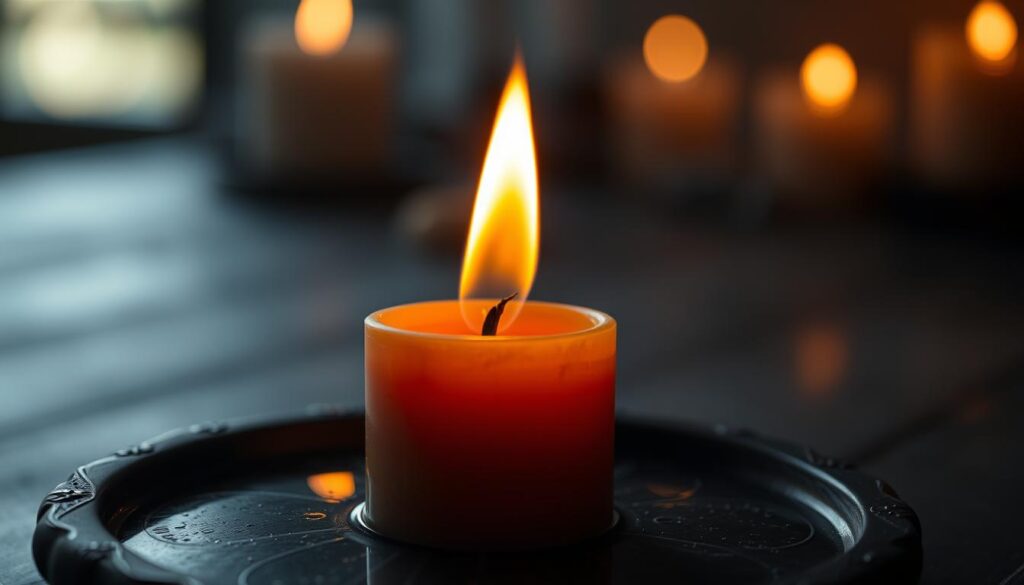
Light with wooden matches when possible and relight at the same time of day if you repeat the ritual. If you pause, use a snuffer or smother the light—avoid blowing it out to preserve the intent you built.
Cleanse tools before use: wipe the wax, clear the space, and take grounding breaths. Charge the setup with a short, spoken phrase you repeat each time you relight. This focused way of working helps keep the ritual simple and effective.
For related focused ritual techniques, see focused ritual techniques.
Starter Rituals: Love, Prosperity, and Protection
Begin with small, clear rituals that match your goal—love, prosperity, or safety. These starter steps use color, simple oils, and a few herbs so you can practice with confidence.

Love attraction (pink or red)
Choose pink for tender connection or red for passionate attraction. Scribe your name and a brief phrase like “I welcome loving connection.”
Anoint lightly with rose-centered oil and add a pinch of rose or hyacinth herbs. Speak words that honor self-worth and mutual respect.
Money drawing (green or gold)
Select green for steady income or gold for luck and wealth. Dress the wick with a basil–cinnamon oil blend and write a short petition on matching paper.
Fold the note toward you and touch one corner to the flame in a fire-safe dish to activate the goal. Visualize practical steps, like new clients or raises.
Protection and cleansing (black or white)
Use black for strong protection or a white candle as a substitute. Circle the base with salt and a sprinkle of lavender for calm and cleansing.
Affirm clear boundaries, and for added calm or inner power, add a small purple or blue accent candle.
Reading the burn and wax
Notice flame height, flicker, and wax shapes, but avoid overinterpreting signs. Drafts, wick length, and herbs can change the candle burn.
If you repeat work across days, extinguish with a snuffer and relight around the same time. Keep a short log of results and thank your inner guidance or support.
“Intent matters more than ingredients.”
For related symbolism and timing, see this note on angel guidance: angel number 8282.
Conclusion
Wrap up your practice with clear habits that keep intention practical and safe. , Use new tools, match colors to your aim, and keep a fireproof holder nearby.
Keep it simple: dress the wick with a little oil and herbs, write a brief petition, and repeat the same short ritual when you can. This steady approach helps candle magic and magick feel usable in daily life.
Prioritize safety: trim the wick, use a snuffer to end a session, and never leave the flame unattended. Treat leftover wax with respect and avoid reusing it for a different spell.
At the end, trust your intent, celebrate small wins, and let consistency build real power. These tips make the work repeatable, grounded, and kind to your mind and space.