

Choosing your first deck is about fit, not folklore. You can buy your first deck; the modern community mostly rejects the idea that a deck must be gifted. What matters is how the imagery and guidebook help your readings feel natural from day one.
We lean on the Rider-Waite-Smith tradition, published in 1909 and illustrated by Pamela Colman Smith, because its storytelling scenes form the backbone of many modern designs.
This roundup evaluates ease of use, artwork, inclusivity, cardstock, box quality, and the strength of the guidebook. You’ll see beginner-friendly sets like RWS, Morgan Greer, and True Heart, plus inclusive and art-forward options such as Modern Witch, This Might Hurt, Prisma Visions, Fountain Tarot, and Tarot of the Divine.
Practical notes matter: good cardstock and a sturdy box improve shuffle feel and longevity. Clear meanings and useful spreads speed learning, whether you want quick daily readings or deep, study sessions. Trust your wisdom—pick the deck you’ll actually use in everyday life.
Key Takeaways
- Buy a deck that resonates—gifting is optional.
- Rider-Waite-Smith is the common learning foundation.
- Look for clear imagery, inclusive representation, and a solid guidebook.
- Cardstock, finish, and box quality affect shuffle and durability.
- We compare decks by goals: daily draws, deep spreads, and audience.
Choosing the right tarot deck today: systems, art, and your reading style
Decide how you like to read before you buy. If you prefer stories and clear scenes, a Rider-Waite-Smith–style set makes meanings click faster. If you love layered symbolism, Thoth-style options reward deep study. Marseille-style pip minors lean on numerology and suits, which suits analytical readers.

Inclusivity and imagery matter. Modern decks reframe classic scenes with diverse ages, bodies, and cultures so readers feel seen. Reimagined suits (like Vials/Candles/Bells/Tomes) freshen perspective but take a little bit of getting used to.
Look for supportive guidebooks and clear keywords. A compact guide speeds learning tarot and moves you from memorizing meanings to confident interpretation.
- Sample many images before you buy—art and color should draw your eye.
- Balance beauty with usability: choose a deck you’ll use daily.
- If you want examples and listings, check a large resource like world tarot guides.
“There is no single right system—choose what fits your life and questions.”
Best tarot card decks for beginners
A clear, illustrated deck helps beginners turn symbols into practical language.
Rider‑Waite‑Smith remains the training wheels for many readers. Its scene-based minor arcana show actions and relationships, so meanings land faster. Start here if you want a reliable learning tarot foundation.
Morgan Greer modernizes that template with bold, borderless art. Close-up faces and a vivid palette reduce visual clutter. Beginners find emotion and story easier to read when characters are large and expressive.
True Heart Intuitive Tarot pairs approachable imagery with a detailed guidebook by Rachel True. The anecdotes and practical tips bridge basic keywords and personal insight, helping new readers build confidence.

- Consider cardstock feel and shuffle-ability—practice matters.
- Use a simple daily draw routine and keep the deck guidebook nearby.
- Review sample images of courts and pips; clarity speeds learning.
| Deck | Style | Strength for beginners | Notes |
|---|---|---|---|
| Rider‑Waite‑Smith | Classic, scene-based | Clear minors; easy meanings | Great foundation for learning tarot |
| Morgan Greer | Borderless, 70s palette | Emotion-focused images | Good for readers who prefer bold visuals |
| True Heart Intuitive | Diverse, approachable | Supportive guidebook | Bridges basics to personal reading style |
| Next step | Modern Witch options | Contemporary update | Natural follow-up after core fluency |
Quick tip:keep a small notebook of your own keywords. Jotting impressions after each practice pull helps meanings feel personal and memorable.
Best modern tarot decks
Today’s reinterpretations place real people and familiar settings at the heart of each spread. Modern releases keep the classic structure while swapping in inclusive characters, contemporary clothing, and clear scene-based art.
This Might Hurt Tarot
This Might Hurt re-illustrates RWS scenes with diverse, modern people. City-street realism and varied body types help many readers map meanings to real life quickly.
Modern Witch Tarot
Modern Witch updates classic imagery with contemporary wardrobe and inclusive casting. It reads instantly for beginners and seasoned readers alike.
The Cook’s Tarot
The Cook’s set brings kitchen life into readings. Sturdy cardstock, a full-color guide with note space, and a solid box make it a practical, grounded choice.
Vanessa & Housewives
Vanessa Tarot offers modern archetypes for fast pulls. Housewives Tarot uses retro kitsch and a recipe-box style package for witty, accessible readings.
Book of Shadows Vol. 2 & Bright Idea Deck
Book of Shadows Vol. 2 anchors meanings in everyday scenes for instant comprehension. Bright Idea reframes the 78-card structure as a creative, business-friendly tool.
| Set | Primary strength | Guidebook | Build |
|---|---|---|---|
| This Might Hurt | Inclusive everyday scenes | Clear keywords | Standard cardstock |
| Modern Witch | Faithful RWS update | Compact guide | Durable feel |
| The Cook’s Tarot | Grounded, home symbolism | Full-color book | Sturdy box & cards |
| Bright Idea / BOS v2 | Work-focused & practical | Actionable prompts | Travel-friendly box |
Tip: sample several images from a set before you buy. Choose art that sparks you at a glance and confirm courts and minors read clearly for daily use.
Inclusive and diverse decks readers love
Seeing yourself in the artwork helps readings land sooner. An inclusive tarot deck can lower the barrier to practice by presenting relatable scenes, bodies, and roles. That familiarity often leads to clearer meanings and more confident pulls.

Numinous Tarot
Numinous reimagines the minor arcana as Vials, Candles, Bells, and Tomes and centers gender-neutral characters. The suit shift keeps intuitive symbolism while offering fresh language for students and pros alike.
Gay Tarot
Gay Tarot frames everyday life with cars, offices, and computers so meanings feel practical and grounded. Its modern scenes help readers map relationships and work questions onto real contexts.
- Note: scan multiple sample cards to confirm minors and courts read clearly for you.
- Supportive guidebook keywords matter most when suit names or court roles change.
- Inclusive casting affects relational dynamics—new court roles can unlock different interpretations.
“Readers report better engagement when they see themselves reflected in the imagery.”
These decks are for everyone; beginners who want inclusive art will benefit from sets that still follow RWS structure. If you want to read full product notes, check sample images and the included guidebook before you buy.
Storytelling and art-forward tarot decks
Art-forward sets are those where composition and color convey as much meaning as keywords. These releases reward intuitive, story-based readings and invite journaling after a pull.

Prisma Visions
Prisma Visions stitches its minor arcana into panoramic scenes. Lay minors side-by-side to trace timelines, arcs, and cause-and-effect. The sturdy cardstock also holds up to repeated use.
Tarot of the Divine
This set pairs each card with global myths and a compassionate guidebook. The stories—from Greece to Māori—connect to traditional meanings and make cultural context easy to learn.
Fountain Tarot
Fountain reproduces Jonathan Saiz’s oil paintings on durable stock with silver edges. The guidebook feels refined yet readable, and many readers note long-term durability for frequent practice.
Tip: compare guidebook tone before you buy and, when possible, lay minor arcana cards side-by-side to follow narratives and capture insights in a journal.
“Strong imagery helps you spot links between cards faster during in-depth readings.”
Themed and novelty decks that still read beautifully
Themed releases can pair playful visuals with surprisingly clear symbolism for serious readings. A focused motif helps the mind link images to meaning fast.

Zombie Tarot
Zombie Tarot blends 1950s suburbia with retro-horror charm. It’s witty and atmospheric, great for shadow work or seasonal readings with a darker mood.
Production is thoughtful: solid print, sturdy stock, and packaging that keeps the set usable year after year.
Wild Unknown
Wild Unknown uses animals and minimal lines to invite intuition. Its pared-back system rewards pattern recognition over scene cues.
Many readers find this deck resonates despite diverging from RWS scenes. Keep a small cheat sheet for suit meanings if you switch between systems.
Practical tips:
- Skim minors and courts to confirm the symbolism speaks to you.
- Try a themed deck with friends—humor or a familiar setting breaks the ice.
- Pair a novelty deck with a classic RWS set to cross-check complex readings.
“A bit of kitsch can make daily draws fun and encourage regular practice.”
| Deck | Primary vibe | Use cases |
|---|---|---|
| Zombie Tarot | Retro-horror, playful | Shadow work, seasonal spreads, group fun |
| Wild Unknown | Minimal, animal-symbolic | Intuitive pulls, pattern-focused readings |
| Pairing tip | RWS companion | Cross-check meanings, ease system shifts |
Thoth-based option for the symbol-lover
If you crave layered symbolism and ceremonial correspondences, a Thoth-inspired set rewards patient study.

Wayward Dark Tarot mirrors Thoth imagery with a chthonic, afterlife aesthetic. Its dark, ornate scenes offer macabre beauty and dense allegory.
Wayward Dark Tarot: rich occult symbolism with a handy reference guide
This deck serves as a compelling doorway into Thoth-style reading. It pairs fine-line artwork with an accessible guidebook (or online reference) to decode titles, elemental dignities, and correspondences.
If this is also one first for Thoth-curious readers, pace study with light daily pulls. Set small weekly goals—three cards a week—so learning stays enjoyable.
- Take methodical notes and compare several cards in a spread to track patterns.
- Preview a handful of majors and courts to confirm you connect with the iconography.
- Mix a Thoth-based set with an RWS reader to cross-reference meanings while you learn.
Production matters: choose a print with strong contrast and a smooth finish so fine symbols remain clear. The symbolic richness in this tarot card deck shines in big-picture readings—career, creativity, and deep change.
“A guided study and steady practice turn dense symbolism into usable insight.”
When you want to read full notes on correspondences, compare sources in the wider world to deepen context.
Quick comparison: which deck fits your goal?
Match your intent to a deck’s strengths so your practice feels useful from the first pull. Some sets teach structure well, others read fast for daily life, and a few invite slow, narrative study.
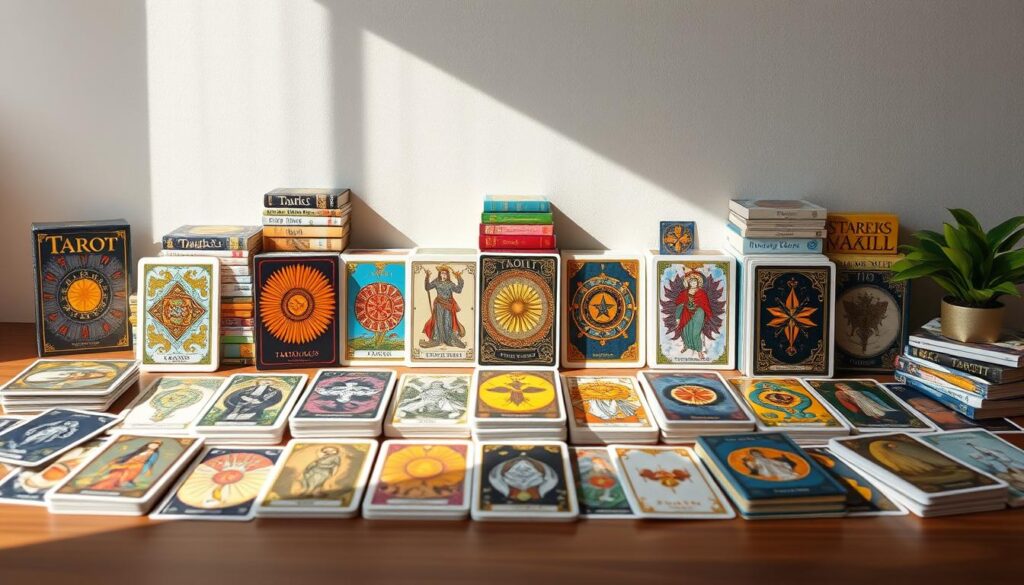
Learning tarot vs. fast daily pulls vs. in-depth readings
Learning: choose RWS-rooted sets like RWS, Morgan Greer, and True Heart for clear scenes and supportive guidebooks. These help beginners form reliable meaning quickly.
Daily pulls: Modern Witch and This Might Hurt mirror modern life. They read at a glance and speed daily practice, especially when you want concise answers to small questions.
In-depth: Prisma Visions and Fountain shine for narrative spreads. Their art connects cards into stories, which helps when you study patterns over longer readings.
Solo introspection, love questions, or reading for friends
For social, playful reads pick Vanessa or Housewives for witty, accessible imagery that works well with friends. For reflective love work, Gay Tarot and Tarot of the Divine give relatable scenes and mythic context that deepen personal questions.
- Tip: use one deck for fast pulls and a second for layered sessions.
- Inclusive casting and modern clothing reduce interpretive friction in practical readings.
- Prioritize a strong guidebook when you’re new, then branch to art-forward or system-shifting sets.
“Rotate two or three favorites to keep practice fresh and match your mood.”
Want sample layouts to test a deck’s fit? Try a few spreads from our sample spreads to see how each set answers your most common questions.
Understanding minor arcana cards and suits across decks
Learning how suits and numbers work gives your readings practical direction.

Minor arcana supply the nuance in a spread. Suits and pip numbers frame everyday themes like timing, mood, and action. Read them as the daily grammar of a reading.
Classic RWS suits map simply: Cups = emotions, Wands = drive and creativity, Swords = thought and conflict, Pentacles = money and material life.
Some modern sets rename suits—Numinous uses Vials, Candles, Bells, and Tomes—while keeping the same elemental ideas. That shift changes tone, not core meaning.
Marseille-style pip minors drop scenes and lean on numerology. If you prefer clear images, pip-style may slow learning. Prisma Visions, by contrast, links minors into panoramic stories so suits read like chapters.
- Beginners: make a short keyword list for each suit to speed recall.
- Compare two decks’ minors side by side to see how imagery alters tone.
- Journal recurring minor patterns—these often mirror real-life cycles.
“A steady minor vocabulary makes switching between a new deck and a familiar one much smoother.”
| Style | How minors behave | Learning tip |
|---|---|---|
| RWS-style | Scene-based, literal cues | Use imagery for fast meaning |
| Numinous-style | Renamed suits, same elements | Map new names to classic roles |
| Marseille/pip | Number & suit focus, less scene | Study numerology and progressions |
| Prisma Visions | Connected minors, narrative flow | Trace suit arcs across spreads |
Cardstock, finishes, and box quality: what matters in a deck
Stock weight and surface finish shape how a tarot deck shuffles, fans, and lasts. Heavier stock feels solid but can be stiff. Lighter stock flexes easily but may wear faster.

Matte, linen, and satin finishes each change slip and durability. Matte reduces glare for long spreads and helps minor arcana legibility. Linen adds texture and grip. Satin lies between—slick enough to riffle yet clear under varied lighting.
The Cook’s Tarot balances heft with shuffle-ability and a sturdy box and insert that protect edges in transit. Fountain Tarot’s durable stock and silver-gilded edges keep looking sharp after years of use, though gilding may show wear faster if you riffle heavily.
- High-contrast printing preserves clarity in dim light.
- Choose a box with secure closure to keep cards flat and travel-ready.
- Store a set flat to avoid bowing and use bridge or overhand shuffles for thicker cards.
Practical point: match finish to your climate—humid areas favor matte or textured finishes to cut sticking. Prioritize the stock and box you’ll enjoy handling every day to protect your collection and keep readings pleasant.
Guidebooks that help you grow from beginner to confident reader
A well-structured guidebook speeds your path from beginner pulls to confident readings. A concise layout with clear keywords, upright/reversed meanings, and sample spreads builds fluency fast.
Look for practical examples. True Heart Intuitive Tarot pairs Rachel True’s anecdotes with definitions that ground meanings in real life. Tarot of the Divine links myths to classic symbolism so cultural stories illuminate the majors and the minor arcana.
Check guide length and tone before you buy a tarot deck. Some readers want short prompts; others prefer deep essays. Match the deck guidebook to how you learn.

Use the guide early. Run a weekly spread from the book to reduce decision fatigue. Mark pages, add sticky notes for tricky courts and minors, and build a quick-reference glossary that follows your language.
- Compare glossaries so keywords stay consistent across a second deck.
- Pair study with journaling to capture personal meanings over time.
- Lean on the book less as your intuition grows; keep it as a trusted reference.
“A thoughtful deck guidebook can turn a pretty set into a long-term learning partner.”
For targeted practice on assertive energy and stance, try a focused spread and read more at Seven of Wands guidance.
Where to buy decks and what to look for in listings
A clear product page can tell you whether a tarot deck will last and how it handles in your hands.
Buy from reputable retailers or the creator’s site to ensure authentic print runs, accurate packaging, and fair pricing. Scan sample images of majors, courts, and minors to check color, clarity, and symbolism.
Reading samples, specs, and reviews
Check the listing for these essentials:
- Number of cards (typically 78) and stated tradition (Rider‑Waite, Thoth, Marseille).
- Cardstock weight and finish, and whether a guidebook is included for beginners.
- Box details—magnetic closures, inserts, and measurements for small hands or travel.
- Q&A and reviews for shuffle feel, misprints, and color shifts.
- Return policy and shipping protection, especially for indie or premium runs.
| Item | What to look for | Why it matters |
|---|---|---|
| Sample images | Majors, courts, minors shown close-up | Confirms clarity and tone for readings |
| Specs | Number of cards, tradition, finish, guidebook | Matches usage and learning needs |
| Packaging | Box durability, closures, insert | Protects cards in storage and travel |
| Reviews | Shuffle feel, color accuracy, durability notes | Real-world feedback on long‑term use |
Gift or love tarot questions? Make sure imagery and tone fit the recipient. For beginners, favor bundles with a substantive guidebook so the first unboxing leads straight into practice.
Gifting a tarot deck vs. buying your first deck yourself
It’s perfectly okay to buy your own deck; the old rule that it must be gifted is a myth.
Personal resonance matters more than tradition. For many beginners, choosing a set that speaks to you—art, size, and guidebook—beats following superstition. Buying your own deck can feel empowering and help you commit to regular practice and wisdom growth.
Gifts are lovely, and a thoughtful present can jump‑start a new practice. If you’re buying for someone else, favor practical choices: a sturdy box, an approachable guide, and inclusive imagery make a first experience welcoming.
Keep returns in mind. A gift receipt or flexible retailer helps when aesthetics miss the mark—people respond differently to mood, tone, and theme. Offer a simple quick‑start spread or a single reference card with the gift to make that first reading feel easy.

| Choice | Why it helps a beginner | Practical tips |
|---|---|---|
| Buy your own | Aligns with personal taste and learning pace | Pick art you connect with; include a guidebook |
| Receive as a gift | Feels special and supportive | Ask for a gift receipt; choose sturdy box and guide |
| Gift kit | Supports new readers with tools | Include a pouch, quick spread, and journaling prompt |
“Frequent practice beats perfect tradition.”
- Some prefer to choose also one first set themselves—encourage open chat about style.
- Games or journaling prompts can turn a present into a gentle starter kit.
- Mind the recipient’s comfort with theme—gentle art is safer than horror for beginners.
Care, storage, and building your collection over time
With a little bit of routine, your tarot deck will stay crisp and ready for readings. Store sets flat in a sturdy box or padded pouch to protect corners and keep dust out.

For thicker stock, use overhand or side shuffles to preserve edges; save riffles for flexible finishes. Keep all hands dry and avoid direct sunlight or humidity to protect color and board integrity.
Rotate a small, curated collection you read often. Sell or donate those you’ve outgrown so shelves stay useful, not cluttered.
- Label boxes or add divider cards for quick selection before readings.
- Protect sets in travel with padded bags—sleeves are uncommon for these items.
- Gently cleanse by airing out, mindful handling, or a bit of journaling; no elaborate rituals required.
Periodically revisit guidebooks and highlighted keywords for fresh guidance. Photograph favorite spreads to build a visual reference across your collection. For spread-specific notes and practical tips see practical spread guidance.
“Handle your tools kindly; they reward careful use with clearer readings.”
Conclusion
Select a deck that fits your hands, your eye, and the types of questions you ask most. Match your goals—quick daily clarity, deep narrative spreads, or inclusive imagery—and you’ll read with more confidence.
Start with an RWS-rooted favorite, then add a modern witch or art-forward choice as you grow. Keep the deck guidebook close at first and trust your intuition more over time. A little bit of daily practice builds fluency faster than chasing the perfect set.
Shortlist 2–3 options, compare sample images and specs, then pick the tarot deck you will actually use. Thank you for reading; return here when you want to expand your collection or read full notes on any set in this world tarot round‑up.