

Welcome. This short guide frames tarot as a practical, psychological tool that taps intuition and inner patterns rather than fixed fate.
Beginners often start with a Daily Draw and a simple journal. Those small habits help spot trends, repeat cards, and moments that feel surprisingly true.
Decks are easy to find at bookstores, occult shops, or even craft stores. Printable decks offer a budget-friendly option when access or money is tight.
What you’ll get: a friendly flow from picking a deck to your first spreads, plus clear structure on the Major Arcana and the suits so learning feels faster.
We lean on respected voices like Benebell Wen and Biddy Tarot in treating the cards as mirrors for feeling and choice.
Key Takeaways
- Use short daily practices like a Daily Draw to build confidence.
- Choose a deck that feels right—shop in person or use printable options.
- View the deck as a tool for insight, not strict prediction.
- Start with one- and two-card readings before trying larger spreads.
- Keep a simple journal to track patterns and “stalker” cards.
Start here: what tarot is (and isn’t) before your first reading
Start by clearing one simple idea: this practice is a mirror for your inner life, not an unchangeable prophecy. That frame helps people relax and get curious before a session. It also reduces the pressure of perfect technique.

Tarot as an intuitive, psychological tool—not fixed fortune-telling
Benebell Wen and Brigit Esselmont both describe this deck as a psychological tool that opens access to intuition and inner wisdom. Think of it as a gentle lens that reveals patterns, themes and likely outcomes without sealing fate.
“Tarot gives instant access to inner wisdom and invites self-reflection rather than prophecy.”
Setting expectations: insight over “yes/no” answers
Yes/no prompts flatten nuance. Open questions invite detail about what is influencing your situation, where your agency lies, and what supports change.
- The Major Arcana and minor suit images map life stages and challenges.
- A single card can speak to many layers at once; sit with the image and your reaction.
- Treat readings as a conversation: you ask, the deck offers perspective, you decide.
Choose a tarot deck you actually connect with
A deck that sparks curiosity will keep you practicing more often.
Browse in person when possible. Bookstores, metaphysical shops and even craft stores often carry multiple decks. Handling boxes helps you notice scale, paper feel and the energy of the art.
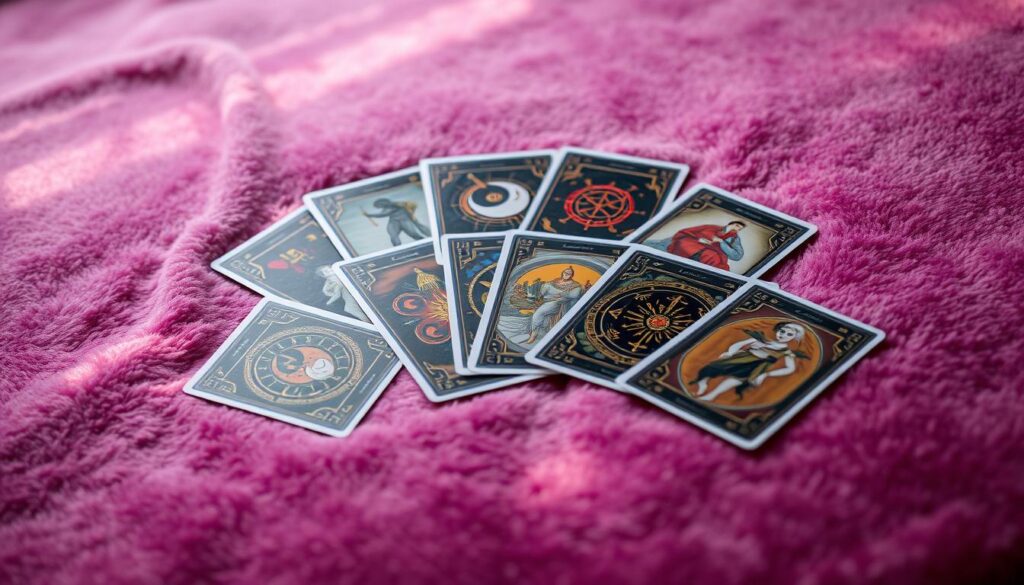
In-store and online browsing tips
If packaging is sealed, preview full-image walkthroughs and gallery posts on YouTube, Pinterest, Instagram or TikTok. Fans and reviewers show spreads and guidebook excerpts, which gives access you might not get in a shop.
Rider-Waite-Smith versus alternatives
Imagery matters because your intuition hooks into picture and symbol. Many people skip the classic Rider-Waite-Smith if the art doesn’t resonate. Pick the art and energy that feel friendly and clear for a beginner.
Free options when money or access is tight
Printable decks and community-shared PDFs let you start now and upgrade later. For more resources and guides, check a trusted tarot resource.
- Consider card stock, size and shuffling comfort.
- Search by theme (gold foil, animals, dark art) to find your vibe.
- Make a shortlist, then choose the deck that makes you want to return.
Get to know your tarot deck the friendly, low-pressure way
Treat your deck like a new friend: spend a few minutes together each day and notice what stands out.
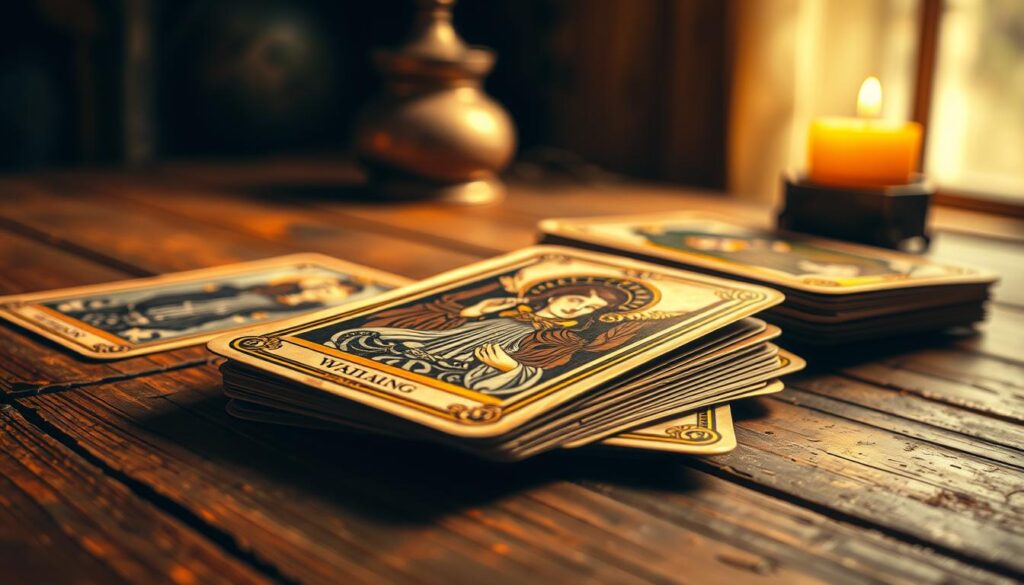
Start small. Use the booklet that came with your deck for core keywords and basic meaning. That quick reference gives a reliable base for interpretation.
Using the guidebook and trusted resources
Companion books expand artist notes and deeper symbolism. Trusted sites such as tarot.com and experienced authors offer varied viewpoints; sample voices until one clicks with your learning style.
Bonding with artwork, symbolism, and energy
Journal your first impressions before looking at definitions. Comparing gut responses with established meanings trains your interpretation muscles and builds lasting understanding.
- Mix formats: short podcasts, long videos, and printed guides for richer learning.
- Focus on one card at a time or a couple per week to avoid burnout.
- Keep rituals simple—shuffle slowly, light a candle, or play soft music.
“Even readers with years of practice check a guide now and then to refine nuance.”
How to read tarot cards: your first step-by-step flow
Begin each session by quieting your mind and setting a single clear intention. Take a few slow breaths so your energy feels steady and focused. This small pause helps your attention land in the present.
Set your intention and ground your energy
Name one question or a short aim and hold it while you shuffle. Keep sessions short at first—five to ten minutes—so you stay fresh and curious.
Shuffling methods and pulling with confidence
Use any shuffling style that feels right: riffle, overhand, or a loose mix. You can spread the deck and pick visually, accept jumpers, or draw from the top when a quiet nudge appears. There is no single correct way—choose what builds your trust.
Start small: one- and two-card readings
Begin with a single draw or a two-card pairing. These compact readings help people learn how a single image speaks before placement layers add complexity. When you’re ready, try a simple three-card spread such as past-present-future.
Reflect, then verify
Describe what you notice first—colors, gestures, symbols—and say aloud what the card suggests for your question. Only after this check a guidebook or a trusted site. Comparing gut impressions with established meanings refines your skill.
- Journal date, question, cards drawn, and key takeaways.
- Keep sessions short and repeat daily draws for pattern spotting.
- Ask open questions like, “What do I need know about my next steps?” to keep agency clear.
| Step | Action | Why it helps |
|---|---|---|
| Ground | Breathe, set one intention | Focuses attention and calms nerves |
| Shuffle | Riffle, overhand, or loose mix | Finds a comfortable, confident rhythm |
| Pull | One or two cards; journal | Builds fluency before larger spreads |

For simple spread options and examples, visit basic spread guide for clear layouts and notes.
Understand the tarot structure: Major Arcana, suits, and numbers
The structure of the deck helps you spot themes, cycles, and small signals fast.
Major Arcana reflect milestone energies and life lessons. When one appears, give it extra weight; it often signals a turning point or a broad theme in your story.
Major Arcana themes and life lessons
Think big. These cards point to chapters—growth, crisis, choice, or change. Treat them as context that colors neighboring cards.
Minor Arcana suits: Cups, Wands, Swords, Pentacles
The minor suit cards cover daily dynamics across four areas: Cups for feelings and relationships, Wands for creative drive and action, Swords for thought and communication, and Pentacles for work, health, and resources.

Number patterns from Ace to Ten for faster interpretation
Learn ace-through-ten patterns for quick clarity. Aces often signal new beginnings; fives show friction; tens suggest completion.
- Pair suit plus number for fast meaning: an ace of Wands can show a fresh creative spark; a ten of Cups may point to emotional fulfillment.
- Notice context shifts: the same Swords card can mean clear thinking or mental tension depending on neighbors.
- Practice with one pull: ask, “Where is this energy showing up today?” and name the suit and number.
“Use suit, number, and theme as your core anchors; they make interpretation faster and more confident.”
For a closer look at a specific suit example, see the Ten of Wands meaning.
Ask better questions to get clearer readings
The right prompt turns a spread into a practical snapshot of choices. Good phrasing keeps the focus on present insight and personal agency. That makes the session useful and gentle rather than fatalistic.
Transform yes/no into open-ended, empowering prompts
Shift from “Will this happen?” toward “What do I need know to move this forward in a healthy way?” Open prompts let the deck show dynamics, timing, and options.
Career, relationships, and self-care: question examples that work
- Career: “What strengths can I leverage in my next role?” and “What obstacles might affect this job?”
- Relationships: “What patterns shape our communication?” and “What energy supports a healthy partnership right now?”
- Self-care: “What does my body need this week?” and “How can I create more emotional balance day by day?”
Use the cards to explore scenarios: “If I choose A vs. B, what develops?” That way you compare paths and feel which option fits your life.
“Tarot is a tool for clarity, not a judge; compassionate questions bring kinder, truer answers.”
Daily practice that builds intuition over time
A single one-card moment each day turns curiosity into habit and grows skill over time. Short, steady practice trains attention, sharpens interpretation, and helps link images with events in real life.
The Daily Draw: a quick ritual for steady progress
Make it brief. Pull one card, name your first impression, and set a simple energy you want to carry or release for the day.
Keep each session under five minutes so the habit survives busy weeks and years of learning.
Keep a journal: track spreads, stalker cards, and trends
Note date, question, card name, first feeling, and one-line “I will” action. Short entries add up fast.
- Revisit notes weekly to spot stalker cards and repeated themes.
- Mix in occasional two-card pulls like “energy to embody” vs. “energy to release.”
- If you juggle multiple decks or prefer playing cards, rotate and compare notes; different art often sparks distinct insight.
When you want guidance beyond habit building, consider resources that help develop psychic practice like develop psychic abilities.
Beginner-friendly spreads to try when you’re ready
Try a compact spread that checks your body, mind, spirit, and an anchor card for context.
The Four-Card Check-In is a tidy layout for a quick personal pulse. Pull one Major Arcana as a signifier for who or where you are, then draw three Minor Arcana for physical, mental/emotional, and spiritual notes.
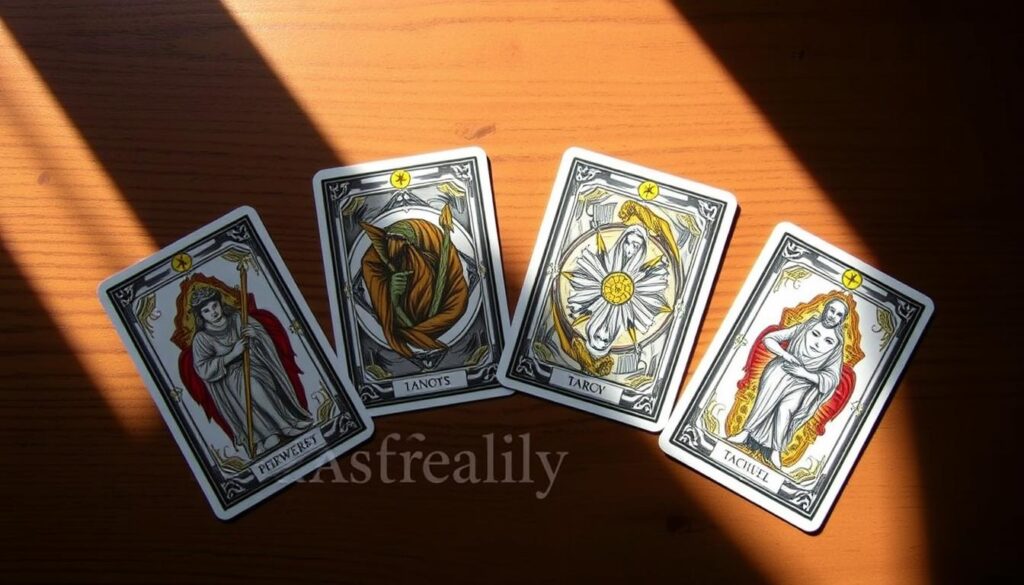
The flow and a few practical tips
Shuffle however you prefer—overhand, riffle, or a gentle mix—and lay the cards in a clear line. Start with the signifier; it gives a lens for the rest of the reading.
- Read suit and number first. For example, a Wands card in the physical spot may nudge movement or creative action.
- Watch trends: many Pentacles can flag material focus; multiple reversals may show doubt or instability.
- If one position feels fuzzy, pull a single clarifier card rather than expanding the whole spread.
- Try this spread weekly to track shifts and make small plans from one clear takeaway per session.
| Position | Focus | Quick meaning |
|---|---|---|
| Signifier (Major) | Who/where you are | Context and headline theme |
| Card 1 (Minor) | Physical | Movement, routines, energy levels |
| Card 2 (Minor) | Mental / Emotional | Thought patterns and feelings |
| Card 3 (Minor) | Spiritual / Inspiration | Inner guidance and longer view |
One practical example: a signifier of The Magician can frame the spread as a time of agency; for a deeper note on that energy, see The Magician meaning.
Keep notes short: one insight per card and a single action step for the week. This makes the spread useful, not overwhelming, for any beginner learning with a new deck.
No tarot deck? Use playing cards as a tarot stand-in
A standard pack of playing cards can stand in smoothly for a formal deck, keeping your habit alive. This approach is practical, discreet, and familiar for many people.
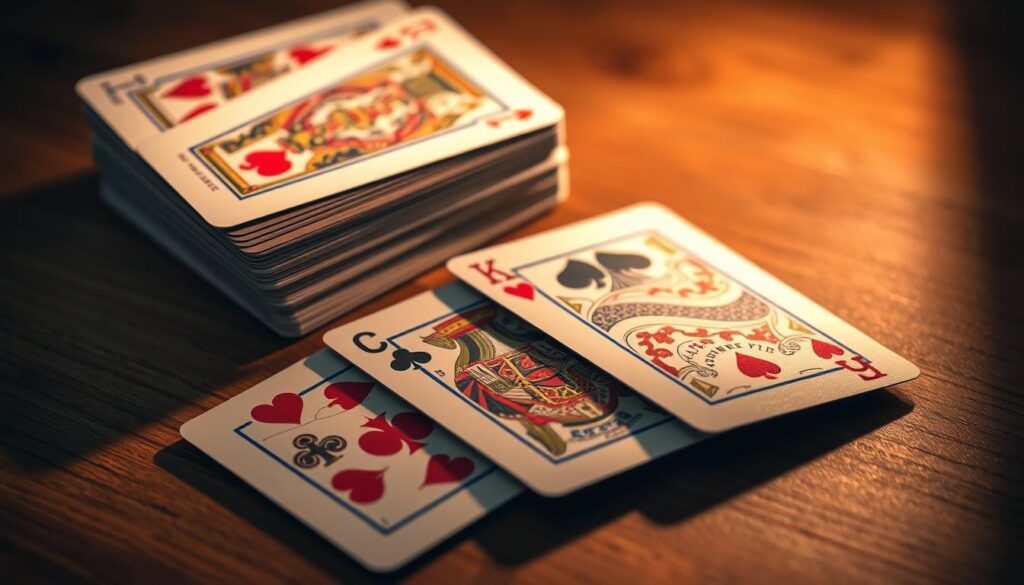
Suit mappings: map Hearts → Cups, Spades → Swords, Diamonds → Pentacles, Clubs → Wands. This keeps suit meanings consistent and makes interpretation simpler.
Suit and court correspondences
Court notes: Kings and Queens align with their tarot counterparts. The Jack works as a Page/Knight blend, depending on the situation and context.
Working without the Majors
Miss the Major Arcana? Use the Joker for the Fool or try a number-sum overlay. Add numeric values across pulls and compare totals to a Major (for example, 13 ≈ Death) as an optional layer of meaning.
Pros and cons of playing cards for divination
| Feature | Benefit | Limitation |
|---|---|---|
| Accessibility | Easy to find worldwide | Lacks specific Major Arcana imagery |
| Shuffle & feel | Familiar handling; good for practice | Less symbolic art for visual cues |
| Discretion | Private and low-stigma | Requires comfort with suit meanings |
- Try a three-card line (past/present/future or situation/advice/outcome) and journal one insight per pull.
- Use the same questions you’d ask with a tarot deck; thoughtful prompts matter most.
- For an example of suit-focused meaning, see the Five of Cups meaning.
Conclusion
,Small, steady habits turn mystery into practical insight over time.
Choose a deck you enjoy and commit to short daily pulls, journaling, and one simple spread each week. These steps build confidence and sharpen pattern awareness in daily life.
Use the flow—intention, shuffle, pull, reflect, verify—as your steady method. Lean on suits, numbers, and the occasional Major Arcana for quick anchors; your intuition adds the nuance.
If access is limited, playing cards work fine and your skills translate across decks. Revisit notes often; time shows progress and brings clarity for money, relationships, creative wands-energy moments, and any situation.
Final idea: stay curious, keep sessions short, and trust that each reading grows a kinder, more useful practice.