

Start a gentle, practical practice that helps you reflect and decide. Experts like Lori Dyan and Rachel Howe frame this work as self-coaching and self-care, not a fortune machine. That view makes it safe and useful when you start reading.
Choose a clear, picture-rich deck first. Many pros recommend the Rider-Waite-Smith set because its imagery tells stories. That helps new readers interpret pulls without memorizing every symbol.
Begin with simple steps: try a Daily Draw, use tiny spreads, and keep a journal. Those habits build intuition fast. Writing notes about each pull reveals trends and shows how cards repeat or shift meaning over time.
Set calm intentions and ask open questions like, “What do I need to know right now?” Use your own words. This keeps the practice personal and practical as you learn.
Key Takeaways
- Approach this as self-reflection, not fortune-telling.
- Pick the Rider-Waite-Smith deck to speed learning.
- Start with a Daily Draw and simple spreads: one-, two-, and three-pulls.
- Journal every session to track patterns and growth.
- Ask open-ended questions and use your own language.
- Practice small and steady rather than trying to memorize everything.
- Find beginner-friendly spreads at beginner-friendly spreads.
Start here: why learn tarot now and what you’ll get from this guide
If you want clearer thinking and small habits that help decision-making, start here. This short guide shows how a few minutes of focused practice can calm mental noise and bring a practical sense of direction to daily life.

Practical benefits: expect clearer choices, a calmer mind, and a steady way to check in when life feels busy. Experts describe this method as a mirror for the subconscious that guides self-understanding rather than predicting fate.
- Choose a deck and learn card structure.
- Try one- and two-card pulls, then expand to small spreads.
- Build short, regular sessions that fit into your day.
| Goal | Time Needed | Early Practice |
|---|---|---|
| Clarity for everyday choices | 3–5 minutes daily | One-card draw |
| Build self-trust | 5–10 minutes, 3x week | Two-card comparison |
| Learn structure and spreads | 15–20 minutes once a week | Three-card spread |
| Keep a simple journal | 2–3 minutes post-session | Notes & patterns |
Tip: gather a few personal questions that matter to your life. Ask open-ended prompts to get more useful insight than yes/no replies.
Need quick starter tools? See starter resources to pick decks and sample spreads aimed at new readers.
What this practice is (and isn’t): a friendly foundation
At its best, this practice acts like a trusted counselor that reflects your inner patterns and helps you coach yourself through choices and change. Lori Dyan calls it “a trusted counselor that reflects you back to yourself,” and Rachel Howe reminds us that anyone can learn with steady practice.
Psychological tool and self-coaching
This method supports reflection, not fate‑telling. Use pulls to spot habits, weigh options, and plan small next steps. Read the image first, then add tradition and intuition to shape meaning.

The 78-card deck at a glance
Standard decks contain 78 cards: 22 Major Arcana that show big archetypal themes and 56 Minor Arcana that map daily life. The Minor split into four suits—Wands (fire), Cups (water), Swords (air), Pentacles (earth)—gives quick cues about action, feelings, thought, and material matters.
- Use elemental balance as a shortcut: many Swords may signal overthinking; many Cups suggest emotional focus.
- Remember: two readers can find different nuances and both be valid—context matters.
- Curious about specific archetypes? See a concise note on The Chariot overview at The Chariot overview.
The goal is clear: get insight you can act on. A useful session points to kinder, wiser next steps you can actually try.
Choosing your first tarot deck and getting comfortable with your cards
Pick a deck that makes images and stories easy to read at a glance. Most teachers suggest the Rider‑Waite‑Smith because its scenes are descriptive and intuitive. That visual clarity speeds learning and helps you form meanings without heavy memorization.
You don’t need to wait to be gifted a deck. Buying a deck you love is fine. The key is regular use: the more you handle and shuffle, the more natural your work with it will feel.
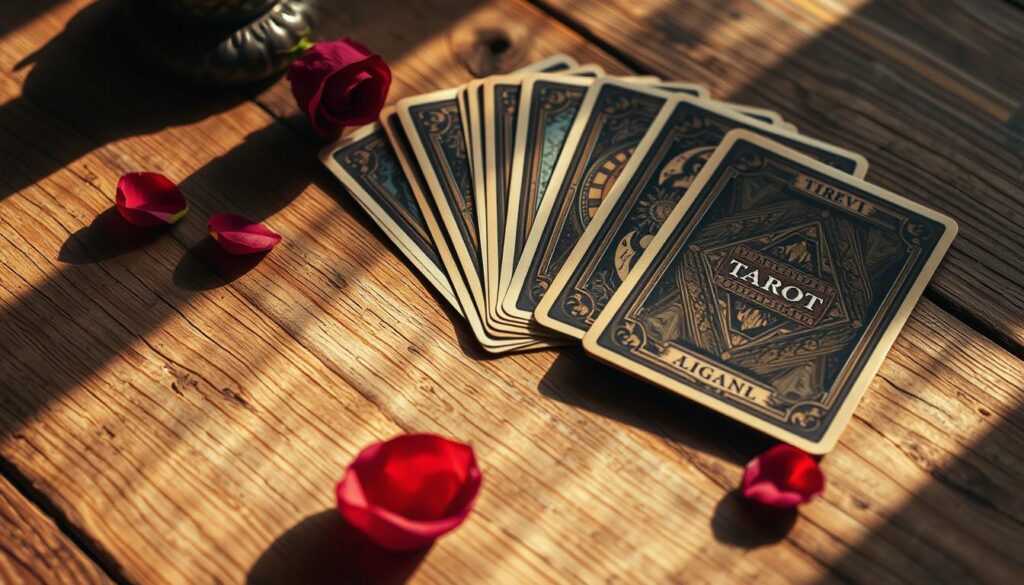
Simple ways to bond with a new deck
Try small rituals: a short cleansing with breath, sound, or a clear intention. Gentle shuffling and daily handling build familiarity fast.
If connection feels off, do a quick reset—sound, intention, or a brief cleanse usually restores alignment. Some people sleep with the deck under a pillow or do a one‑card pull each morning.
- Starter pick: Rider‑Waite‑Smith for readability.
- Myth busting: it’s okay to buy your own deck.
- Bonding: breath or sound cleansing, daily handling, short intentions.
- Shuffle methods: cycle the top card daily or reshuffle to spot repeats and “stalker” cards.
- Storage: keep the deck where you will use it—bedside or desk—to save time and reduce friction.
| Practice | How it helps | Try this |
|---|---|---|
| Daily one‑card pull | Fast familiarity; builds vocabulary | Draw each morning; note a word or two |
| Top‑card cycle | Ensures full deck rotation | Cut to top card each day, set aside, cycle through |
| Full reshuffle | Allows repeats; highlights patterns | Shuffle before each session and record repeats |
| Periodic cleansing | Restores clarity when sessions feel muddled | Short breath cleanse, sound, or clear intention |
Note: start with readability and simple handling; explore different cardstock and finishes later. Tools support your practice, but the best deck is the one you will use consistently. For a related archetype overview, see the Knight of Cups overview.
Set your intention and shuffle: creating the right energy for readings
A short, honest intention makes shuffling more than a habit—it shapes the energy of the moment. Begin by clearing a small space, lighting a candle if that helps, and taking three slow breaths to settle your mind.

Prep your space: light, scent, and minimizing distractions
Keep it simple. Silence notifications, clear the surface, and choose soft light or a gentle scent only if it calms you. Too many tools can create pressure; intent matters more than ritual.
Ask open-ended questions to guide better readings
Ask to learn, not to predict. Use prompts like “What am I not seeing?” or “How can I support myself in this situation right now?” These questions invite nuance and reduce yes/no traps.
When to read: day, time, and tuning in to the moment
Timing is flexible. Short morning or evening sessions both work if you can be present. A quick pre-reading meditation helps you arrive and lowers mental noise so the picture and your sense of meaning come through more clearly.
- Quick reset: silence devices, clear the table, take three breaths.
- Shuffle with attention on your question; cut and handle the deck in a natural way.
- Start with small spreads to keep messages clear and actionable.
- Keep a journal beside you to capture insights without breaking focus.
- Close with a breath or a moment of gratitude to mark the end of the session.
| Focus | Why it helps | Try this |
|---|---|---|
| Intention | Shapes the energy and filters attention | Say one sentence: “I am open to helpful insight.” |
| Ambiance | Supports calm and reduces distractions | Soft light, candle, or no scent—choose what soothes you |
| Shuffle routine | Signals focus and builds consistency | Shuffle briefly, cut once, then lay out your spread |
| Timing | Fits practice into real life | 3–10 minute morning or evening check-ins |
When you want a little extra guidance on interpreting a specific pull, see a focused overview such as the Page of Pentacles overview. The best way to learn is steady practice and small, repeatable steps that help you stay grounded.
Daily Draw: your one-card practice to build skill and intuition
A single daily draw can become a small habit that grows real skill over weeks. Do this in the morning to notice patterns and sharpen your sense of meaning as the day unfolds.

How to do a card of the day
Two simple methods: pull the top card each morning to cycle the whole deck, or reshuffle so certain lessons repeat until they land. Both reveal useful trends, including “stalker” cards that return with a message.
Fast routine: draw one card, write the date and your gut impressions, then go about your day. At night, add a traditional meaning and note what matched. If time is tight, write a single sentence—consistency beats perfect notes.
Turn a one-card pull into a mini meditation
Spend one minute breathing with the image and a short phrase you choose. Place the card on your desk or snap a quick photo to check in later. Evening reflection closes the loop and makes each short session teachable.
- Read the picture first—colors, posture, symbols—before using a guide.
- Repeated draws highlight themes worth attention.
- Be compassionate: confusing pulls often make sense in hindsight.
Beginner-friendly tarot spreads you can use today
Short, practical layouts help you move from confusion to action in a single session.

One-card spread: Ask, “What do I need to know today?” Pull one card and note a single word or phrase. Use one clarifier only when the message feels unclear.
Two-card options for decisions and momentum
Decision spread: Card A = Option A, Card B = Option B. Compare suits and majors; court cards often show style (logic vs. feeling) and majors name big themes.
Business momentum: Card 1 = “Work on this,” Card 2 = “Promote this.” For example, Judgment can mean awakening or refining, while The World signals completion and sharing the finished offer.
Three-card narrative: past, present, future
Lay left = past, center = present, right = future. Track suit clusters (many Pentacles = material focus) to spot where energy gathers.
Four-card check-in
Pull one Major Arcana as a signifier, then three Minor cards for physical, mental, and spiritual arenas. Keep each position concise so every card has a clear job.
- Photograph spreads and label positions in your journal to track outcomes.
- Limit sessions to one–three cards while you build fluency.
- Add one extra clarifier only when a position feels ambiguous.
Want a quick reference on specific meanings? See a focused note like the Three of Swords overview to compare how a single pull can shift by context.
Tarot card reading for beginners: interpreting images, suits, and energy
Let the artwork speak first; the scene often holds the clearest clue. In Rider‑Waite‑Smith decks, start by naming what you see: characters, motion, landscape, and dominant colors. This simple step anchors meaning before you add tradition or labels.

Read the picture first: story, symbolism, and intuitive hits
Describe, then translate. Say out loud the visual story—who, what, where—then note your immediate feeling. That first impression often points to the most useful insight.
Use elements and numbers: earth, water, fire, air and 1-10 for depth
Layer in elements: Wands/fire = action; Cups/water = feeling; Swords/air = thought; Pentacles/earth = resources.
- Numbers add arc: Aces = new starts, Threes = growth, Fives = tests, Tens = completion.
- Combine suit + number for quick meaning—e.g., Five of Cups suggests an emotional test that invites reframing.
- Watch directionality: where figures look or move often shows where life energy wants to go.
Reframing “scary” cards as transformation
Challenging images often name a needed shift, not a literal danger. Read Death as transformation, The Tower as a sudden truth or release, and The Devil as patterns you can change.
Practical tip: Turn each pull into one small, compassionate action that moves your life forward. Track repeats and suit clusters to see themes over weeks.
For a focused note on workload and pressure, see this short guide to the Ten of Wands.
Practice that sticks: journaling, tracking spreads, and learning over time
Make journaling a short habit that turns instincts into clear patterns. A practical log helps you link pulls to real outcomes and builds the reader’s confidence over weeks.

Build a journal system
Keep entries minimal but consistent. Note the date, spread name or positions, the cards drawn, and your quick impressions.
Add a brief follow-up after a few days to record what actually happened and how your initial thought landed.
Spot trends and “stalker” cards
Review weekly to spot repeats, suit clusters, and element trends that mirror what’s happening in work or life.
When a card returns at different times, note context and what changed. That habit turns repetition into meaning.
- Template: date, question, spread positions, cards pulled, impressions, follow-up.
- Tag entries (work, relationships, health) to compare patterns across areas of life.
- Sketch or print simple spread diagrams so notes are easy to decode later.
- End each entry with one small action to try before your next session and one open question to explore.
Keep it brief. Short, regular notes beat exhaustive logs. Over time, this practice makes your interpretations clearer and your readings more useful.
Conclusion
End by committing to tiny, regular actions that let insight build into habit.
Pick a readable deck, set a clear intention, and start with a one- or two-card spread to gain confidence quickly.
Make a Daily Draw and a two-line journal entry each morning. Short notes plus a two-minute evening check help trends surface fast.
Ask open questions that invite nuance. Use imagery, elements, and numbers to turn each pull into one kind, doable next step.
Return to the four core spreads as your toolkit. Reframe scary pulls as transformation and let your response shape outcomes.
Challenge: for seven days, pull one card each morning, write one sentence, and reflect two minutes each night. There is no perfect way—just a friendly practice that grows with you.