

Welcome. This listicle gathers striking clairvoyant abilities stories and arranges them so people can find real-life moments that feel larger than life.
We offer a friendly, grounded guide that mixes firsthand accounts and book examples. The piece is organized by theme: everyday hits, family and grief, sibling bonds, school settings, and fiction that echoes reality.
Each account is presented without sensationalizing. Instead, we focus on the human story behind each moment and the way intuition surfaces in clear, documentable ways.
Expect to see how an oddly specific prediction can land, how a room can feel full of presence, and why some events arrive just at the right time. For readers who want to explore technique, follow this curated path to develop practical insight via a helpful resource on training and practice: develop psychic skills.
Key Takeaways
- Organized themes help you find the type of story you want.
- Accounts balance personal detail with neutral context.
- Examples include both lived life moments and book references.
- Focus is on patterns, language, and repeatable signs.
- Readers are encouraged to remain curious and cautious.
Introduction: Why We’re Drawn to Real-Life Clairvoyant Moments
Real-life moments of sudden knowing feel familiar because they reflect the small, steady work of the mind. When a line of thought binds together loose details, the result can seem like foresight.
A writer with immigrant-family trauma called herself “a little psychic,” and a friend framed being psychic as a survival skill. That person stayed hyper-attuned to others to predict danger and steer clear.
People return to these accounts because they show a range: subtle hunches, clear flashes, and behaviors that look like a gift but function as protection. At night or in silence, ideas arrive before understanding.
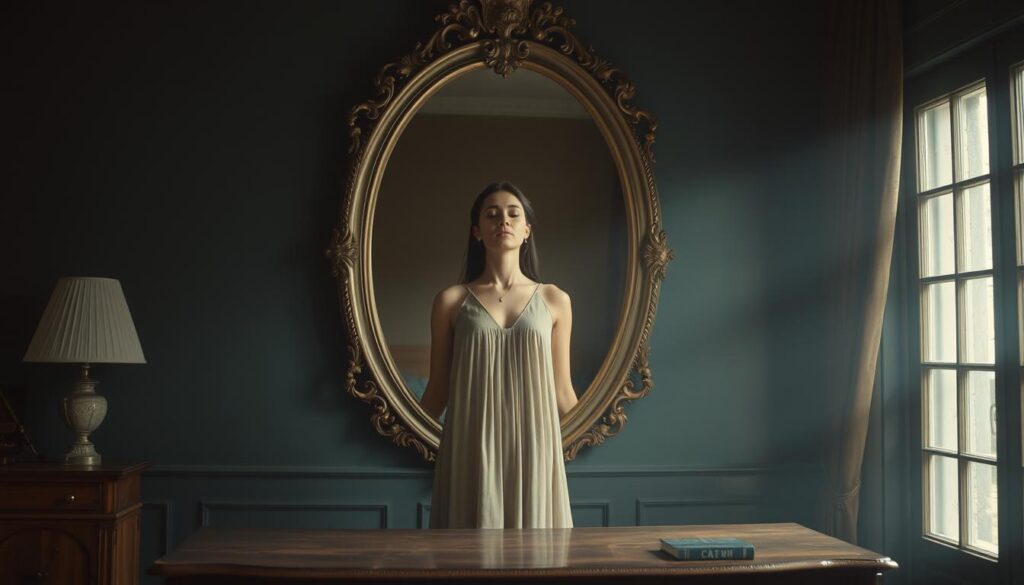
- Many people feel pulled to tales where a person “just knows” because it mirrors pattern-spotting.
- Books offer a safe space to test what intuition means and how it guides a life.
- We treat these accounts with curiosity and respect, holding space for skepticism and wonder.
| Type | Typical Trigger | Common Setting |
|---|---|---|
| Hunch | Small pattern cues | Daily life |
| Vivid flash | Strong emotion or stress | Night or quiet rooms |
| Learned signal | Experience from trauma | Relationships |
These accounts remind us that intuition sits on a spectrum. Some people use it to glimpse the future, others to notice shifts at their side. If you want more context on practice or readings, see psychic readings.
Clairvoyant abilities stories from everyday people
A surprising number of ordinary accounts begin with a single image, date, or time that refuses to fade. These reports come from a person who remembers the detail clearly and watches events unfold.
“Halloween boy” and “December 5 at 2:17 a.m.”
One coworker announced a pregnancy. Doctors estimated a late September due date and a sonogram suggested a girl. Yet the initial mental image was of a boy on Halloween. The baby arrived on Halloween morning, and the miscalculated due date explained the discrepancy.
Another hit came as a quiet conviction: a girl “when it was still dark.” She was born at 2:17 a.m. on December 5. The level of specificity — date and exact minutes — made the moment notable and hard to stage like a show.

When a feeling won’t let go: the sudden “knowing” that later proves true
These accounts point to one idea: a persistent gut feeling can outlast conflicting data. People report that minutes of focus can imprint a date, time, or image so it stays with them.
- Everyday accounts often hinge on one or two striking details: dates, times, or a vivid image.
- One story centers on a friend whose initial knowing beat medical estimates and a sonogram.
- Another precise hit recorded a birth at 2:17 a.m. on a set day, which surprised everyone present.
- Writers and readers are encouraged to note the first detail in a book or notes app to track what holds true later.
“The first detail you notice often matters most.”
These moments do not prove anything definitive. They simply describe what happened and invite reflection on similar things in your own life. For context on how children report early impressions, see psychic children.
Family, life, and death: the other side felt close
Long hours beside a hospital bed sharpen attention to tiny shifts in the air and the room. Time stretches, and ordinary objects can seem full of meaning.
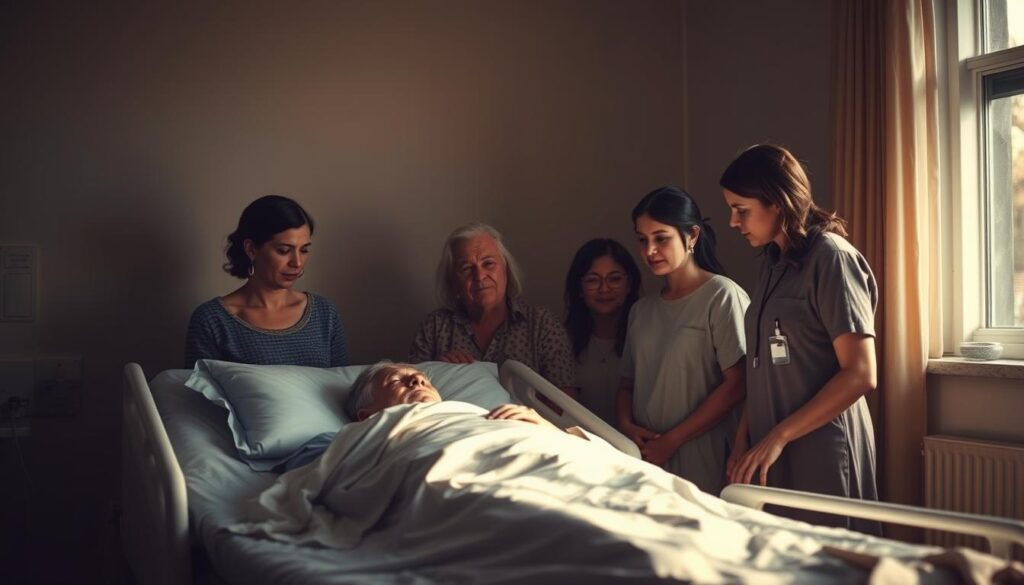
Hours at a hospital and a grandfather’s final memoirs
A writer in Boston recorded her grandfather as he dictated the last pages of his life. His eyes flitted around the room, as if he noticed more than those present could see.
“Something about his socks” — a phrase that landed
After the death, an online mediumship class described contact from an older man who mentioned, “something about his socks.” The writer had just fixed his hospital socks, and the phrase hit close to home.
How grief sharpens attunement
Multiple attendees also felt that the line could fit their own grandfather. This overlap shows how grief makes a person scan for signals.
“A small object can become a sign when people are looking for connection.”
| Context | Detail | Meaning |
|---|---|---|
| Vigil | Hours of listening | Heightened focus |
| Aftercare | Odd phrase: socks | Comfort and ambiguity |
| Reflection | Recorded memoirs | Lasting memory |
Sister, brother, and the bonds that amplify the gift
Sibling bonds can turn small impressions into overwhelming signals that change a person’s life.
Dragged into the night
A novel follows a narrator tied to a sister’s wild, drug-fueled nights. After the sister vanishes, a Moldovan Jewish psychic named Sasha reframes inherited trauma.
The book includes a raw bathtub sex scene that mixes intimacy with revelation. That moment shows how vulnerability and insight can arrive together.

After a brother’s injury
In memoir and essays, a brother’s head injury seems to unlock new perception. Family members report flickering lights and green orbs during visits to Lily Dale, NY.
Jeff Swanson describes the scene as frightening and oddly healing. The sudden change forced the family to name this new ability and make sense of it.
“Close relatives often act as triggers, turning quiet signs into loud events.”
| Relationship | Trigger | Common effect |
|---|---|---|
| Sister | Chaos, disappearance | Reframing trauma, intimacy |
| Brother | Head injury | Lights, green orbs, healing |
| Both | Shared history | Perceptions amplified a lot |
From classroom to channeling: school, teachers, and the training of psychics
Training spaces give a person routines that turn scattered impressions into teachable skills.

Psychic meditation and mediumship classes: breathing, harmonium, and the shapeless mind
Many classes start with breathwork and a simple anchor. A teacher might play a harmonium while guiding students into quiet, shapeless places in the mind.
These tools help a person notice impressions without panic. Journaling right after practice makes small hits easier to track over time.
At an elite school for psychics: toxic friendships, psychic attacks, and blurred sanity
Fiction and memoir both show risks. A popular book set at an elite program follows characters who face manipulation, psychic attacks, and fraught mother-daughter ties.
Such accounts warn that group dynamics can complicate growth. Strong teachers demystify practice; weak ones may exploit trust.
“Structure helps, but boundaries matter more.”
- Use breathwork and sound as anchors.
- Debrief with a trusted peer after practice.
- Keep a short journal to test impressions.
- Watch for signs of pressure or manipulation in groups.
| Setting | Core Practice | Risks |
|---|---|---|
| Weekend class | Breathwork, harmonium | Overconfidence |
| Elite program | Channeling, long sessions | Toxic ties, blurred sanity |
| Solo study | Journaling, debriefs | Isolation, lack of feedback |
For a practical primer on training and safeguards, see a helpful guide to practice and limits: psychic superpowers.
Books that read like rooms with spirits: fiction threaded with real-life truths
Many novels build rooms where the past sits like an extra person, waiting for a reader to notice.

A medium channels an ancestor across time — art, family, and the weight of history
Mother Doll stages a medium who channels a Russian revolutionary for her great-granddaughter. The scene links art, lineage, and how a single person carries family memory.
Orphans, a grifter, and the show that might be real: motherhood and the dead intertwined
Another novel follows Ruth and Nat as they join a grifter. The plot questions whether performances are staged or real, and it ties motherhood to the work of mediumship.
Two women talk into the night: a family curse, a kisaeng’s voice, and the way trauma travels
A book alternates voices as two women share an intense night of confessions. A shaman channels a kisaeng, and the narrative tracks how a family curse moves across generations.
London suburbs turn dark: a psychic and her assistant face what the dead really want
In a suburban tale, Alison and Colette settle into routine before contacts with the dead grow harder. The plot shows how market pressures meet true risk and why a small town can feel suddenly dangerous.
“These novels let readers test doubt and belief in the same page.”
| Title | Core focus | Key figure |
|---|---|---|
| Mother Doll | Art and lineage | Medium → ancestor |
| Orphans & Grifter | Performance vs. truth | Mother themes |
| Kisaeng Night | Curse and voice | Two women |
| London Suburbs | Dark contacts | Assistant and psychic |
Further reading: popular books with main characters who have psychic powers
For readers hungry for more, this short reading list points to books where main characters face extrasensory powers head-on.
Goodreads Listopia collects reader-voted picks that highlight varied forms of perception. Below are classics and cult favorites that show different faces of intuition.

Classics and cult favorites
- Matilda — Roald Dahl blends wit and wonder to show how a person’s strange talent can be used for good over time.
- Mind of My Mind — Octavia E. Butler explores telepathic networks and power in a compact, intense way.
- The Diviners — Libba Bray places paranormal investigation in a roaring-day setting with large, vivid characters.
- The Bone Season — Samantha Shannon builds a wide world where clairvoyance and control clash across time.
- Gifts — Ursula K. Le Guin examines inherited perception and the responsibility it brings to a person and a community.
Use this mini-guide as a springboard for your next book club pick or a quiet read on a rainy day. Note which characters feel most authentic to you; that gut check will point you toward similar things you’ll enjoy.
“Mix classics and newer titles to see how portrayals of psychics evolve.”
Want to track common signs across fiction and life? See a short primer on real-world signals at psychic signs.
How people describe the ability: gift, curse, or survival strategy?
Some people raised in tense homes learn to track tiny cues as a way to stay safe. A writer and a close friend, both from immigrant family backgrounds, said their sensitivity began as hyper-attunement. They read faces, tone, and small moves to avoid harm and guide daily life.

A single person in these accounts described predicting what would happen next not for show but to dodge trouble. In that view, seeing the future often means noticing patterns fast enough to change a moment.
- When someone talks about unusual perceptions, the label shifts: a gift on good days, a burden on hard ones, and a clear strategy when survival is the point.
- These skills can grow from conditions that reward watching micro-shifts in a home or crowd.
- Predicting outcomes becomes a tactic to steer away from risk — learned at a personal cost.
- People report a lot of stress around sudden hits, even when the result helps them.
“Calling it a gift can open doors; calling it a symptom can close them.”
For readers who want context from professional work with mediums and trained readers, see professional readers.
What these clairvoyant abilities stories show us now
Taken together, the narratives map common places where presence and memory meet.
Many accounts place the other side in liminal moments: the quiet room of a vigil, the pause after a difficult choice, or the hush just before sleep.
People notice similar things: exact times, odd lights, and phrases that land with clear force.

The brother who changed after an injury reported lights and green orbs. A recurring mother-child thread shows channeling that ties generations together. Fiction and memoir act like a book mirror, reframing the same motifs: contact, warning, and consolation.
Practical steps help readers test these impressions. Record details, look for patterns, and revisit notes later with a calmer head.
“If a memory or hit brings comfort after death, that outcome matters on its own.”
- These accounts do not settle the debate, but they sharpen questions.
- Relationships—brother, mother, close kin—shape meaning and timing.
- When a story prompts care in living ties, that effect can be as important as proof.
| Motif | Common Setting | What people report |
|---|---|---|
| Liminal space | Room of a vigil | Sense of presence, timing precision |
| Family threads | Mother-child ties | Channeling, inherited memory |
| Post-injury change | Visits, quiet nights | Lights, green orbs, heightened notice |
In the end, these accounts nudge us toward empathy and attention. They show why careful listening and a little skepticism both belong in how we respond.
Conclusion
This conclusion returns to the scenes that shaped our view: the grandfather at a bedside, a sister pulled into the night, and a brother’s sudden change. These moments mark life’s thin places where attention matters.
A person does not need a formal school to notice patterns, yet practice helps. Keep short notes, and treat each detail—dates, phrases, lights—as data you can test later.
Let the book list and the books we mentioned be companions. Read fiction and memoir to find language for what you felt but could not name.
Whether you call this a gift or a pattern, it can deepen ties among people. Share one small note with someone you trust, and stay curious through the night and into life.
For related resources, see a short Pleiadian channel guide.