
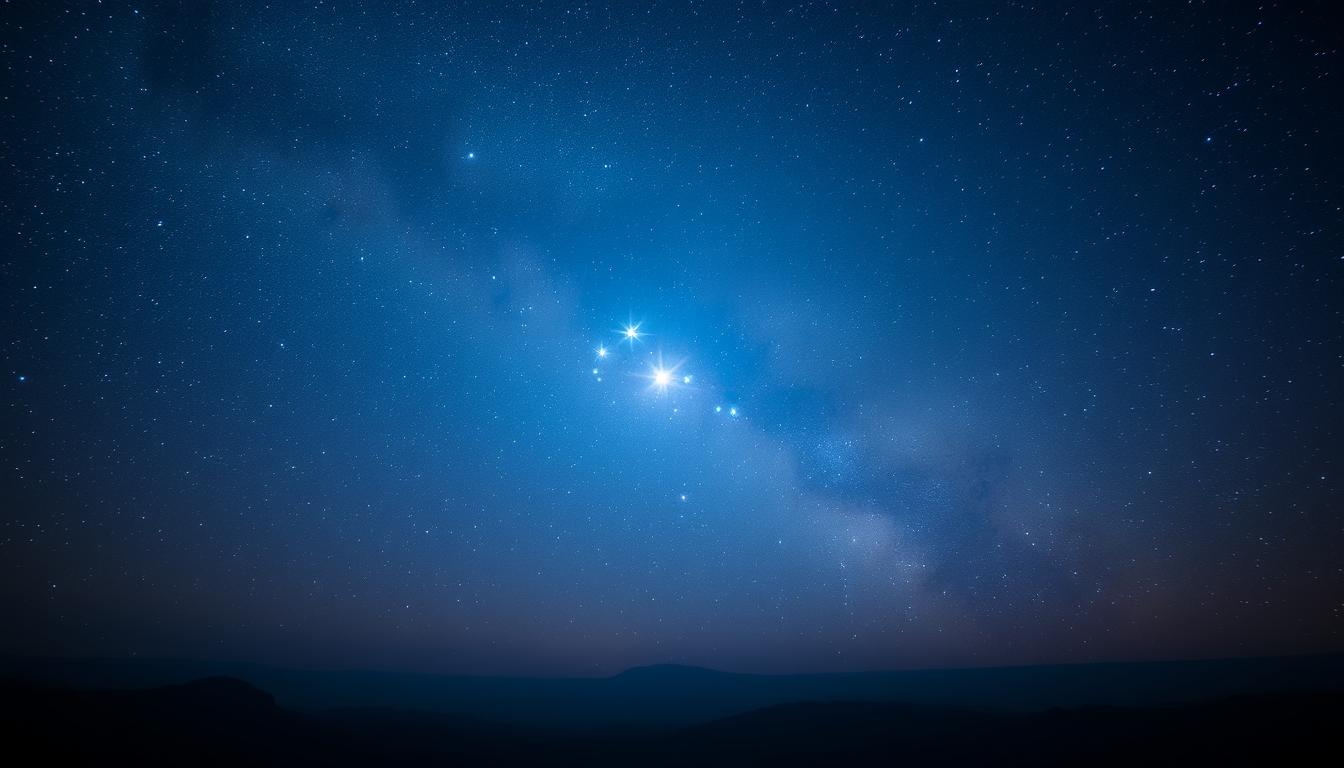
Gazing at the night sky, one star cluster stands out—the Pleiades. Known as the Seven Sisters, this group of bright blue stars has fascinated skywatchers for centuries. Easily spotted without a telescope, it shines in the Taurus constellation, about 440 light-years from Earth.
Different cultures have their own names for this cluster. In Japan, it’s called Subaru, while Greek mythology links it to seven sisters fleeing Orion. Māori traditions mark its rise as the start of their new year. Its winter visibility in the Northern Hemisphere even ties it to Halloween folklore.
With its dazzling stars and rich history, the Pleiades remains one of the most beloved clusters in our night sky. Whether you’re an amateur astronomer or just love stargazing, this celestial wonder never disappoints.
Key Takeaways
- The Pleiades is a famous star cluster visible to the naked eye.
- Also called the Seven Sisters, M45, or Subaru in Japanese culture.
- Located in Taurus, about 440 light-years from Earth.
- Holds deep cultural significance across civilizations.
- Best seen in the Northern Hemisphere from October to April.
Introduction to the Pleiades
The Pleiades, often called the Seven Sisters, hide a surprising secret behind their name. While only six or seven stars are visible to the naked eye, this cluster actually contains over 1,000 stars. Their brilliant blue hue comes from young B-type stars, burning at a scorching 18,000°F—three times hotter than our Sun.
These stars dominate the night sky from November to December, glowing brightest in the Taurus constellation. NASA’s Hubble telescope measured their distance at 136.2 parsecs, sparking debates among astronomers. Some argue it’s closer to 120 parsecs, making it a hot topic in modern astrophysics.
“The Pleiades are a celestial wonder, bridging science and legend across continents.”
From Greek myths to Māori traditions, the cluster’s cultural footprint spans 30+ global cultures. The Japanese even named their car brand Subaru after it, symbolizing unity like the cluster’s stars.
| Feature | Detail |
|---|---|
| Visible Stars | 6–7 (naked eye) |
| Total Stars | 1,000+ |
| Color | Blue (B-type stars) |
| Best Viewing | November–December |
| Distance | 136.2±1.2 parsecs (Hubble) |
Whether you’re a stargazer or a myth enthusiast, the Pleiades offer endless fascination. Their blend of science and storytelling makes them a timeless highlight of the night sky.
What Are the Pleiades?
Among the countless stars in our galaxy, the Seven Sisters shine with unmatched brilliance. This open cluster, officially named M45, is a celestial gem filled with young, hot stars. Its blue glow comes from B-type stars, some of the brightest stars visible from Earth.
Astronomical Classification
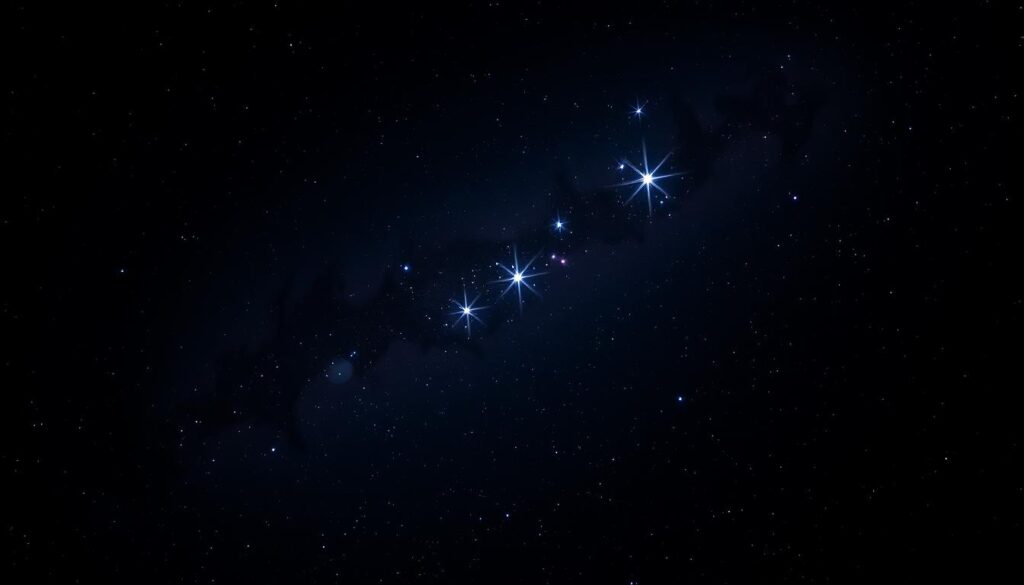
The Pleiades is classified as an open cluster, meaning its stars formed from the same molecular cloud. About 100 million years old, these stars are cosmic newborns compared to our 4.6-billion-year-old Sun. The cluster’s gravity loosely binds them as they drift through space.
Visible Stars and Composition
To the naked eye, only six or seven stars stand out. Under dark skies, sharp observers might spot up to 14. Binoculars reveal dozens more, while telescopes expose hundreds. This difference happens because human vision struggles with the faintest light from distant stars.
The cluster’s most famous members include:
- Alcyone (2.86 magnitude): The brightest, 370 light-years away.
- Atlas (3.62 magnitude): A binary star system.
- Electra (3.70 magnitude): A blue-white giant.
| Star Name | Magnitude | Distance (Light-Years) |
|---|---|---|
| Alcyone | 2.86 | 370 |
| Atlas | 3.62 | 380 |
| Electra | 3.70 | 375 |
| Maia | 3.87 | 360 |
| Merope | 4.18 | 365 |
Surrounding the stars, a dusty nebula reflects their blue light. This cloud moves at 18 km/s relative to the cluster. For professional study, Japan’s Subaru Telescope—named after the cluster—uses its 8.2-meter mirror to uncover secrets hidden from amateur tools.
Whether you’re using your eyes or advanced optics, the Pleiades offers a stunning glimpse into our dynamic universe.
The Birth and Evolution of the Pleiades
Cosmic nurseries birth dazzling star clusters, but few rival the Pleiades’ story. Born from a collapsing molecular cloud 100 million years ago, these stars began as glowing infants in a stellar nursery. Today, their blue brilliance masks a countdown to dispersal.
Formation Process
Gravity sculpted the Pleiades from a single gas cloud. Unlike our Sun, these B-type stars burn fiercely and briefly—lasting only a few hundred million years. Their shared motion confirms a common origin, like siblings fleeing a home.
The cluster’s current way points toward Orion, drifting at 18 km/s. Over 400,000 years, this path traces a celestial arc. Compare this to the older Hyades cluster (625 million years), which has already lost half its stars.
Future of the Cluster
In 250 million years, gravitational tugs from the Milky Way will tear the Pleiades apart. Stars will scatter like dandelion seeds, leaving only legends and telescopic ghosts. This fate mirrors most open clusters—only 10% survive beyond a billion years.
“Star clusters are temporary masterpieces, painting the sky before fading into darkness.”
Before dissolution, the Pleiades will align with the Golden Gate of the Ecliptic—a rare celestial crossroads. This event, predicted for 2672 AD, will frame the cluster against the Sun’s path.
| Feature | Pleiades | Hyades |
|---|---|---|
| Age | 100M years | 625M years |
| Distance | 440 light-years | 153 light-years |
| Future | Dissolves in 250M years | Already dispersing |
| Notable Alignment | Golden Gate of Ecliptic | None recorded |
For more on celestial phenomena, explore our privacy policy and stargazing guides. The Pleiades remind us: even stars must let go.
How to See the Pleiades in the Night Sky
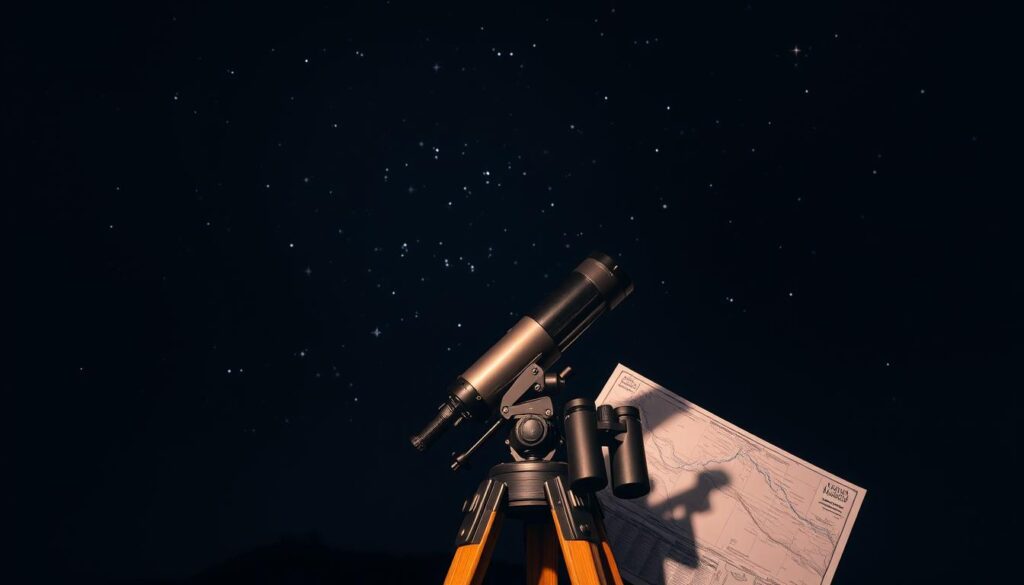
You don’t need high-tech gear to enjoy the Pleiades—just your eyes and timing. This cluster dazzles most easily from October to April in the Northern Hemisphere. Southern Hemisphere viewers catch it best around December.
Best Viewing Times
Look for the Seven Sisters near the Taurus constellation. They peak at midnight in November. Moonless nights enhance visibility—their blue glow fades under bright moonlight.
Tools for Observation
A pair of 10×50 binoculars reveals 50+ stars. For deeper views, a 6″ telescope exposes 100+. Refractors may show chromatic aberration; reflectors avoid this.
“Start with Orion’s Belt, then trace a line to Aldebaran—the Pleiades sit just beyond.” — Neil deGrasse Tyson
| Tool | Stars Visible | Best For |
|---|---|---|
| Naked Eye | 6–7 | Quick spotting |
| Binoculars | 50+ | Portable detail |
| Telescope | 100+ | Deep observation |
For astrophotography, use a DSLR with a 200mm lens. Track the cluster’s 18 km/s motion to avoid star trails. The Celestron SkyMaster 15×70 is a top pair for beginners.
The Pleiades in Mythology and Legend
For thousands of years, the Seven Sisters have woven themselves into the fabric of human cultures. From guiding farmers to inspiring car brands, this star cluster carries more than just celestial beauty—it holds our collective stories.
Greek Tales of the Seven Sisters
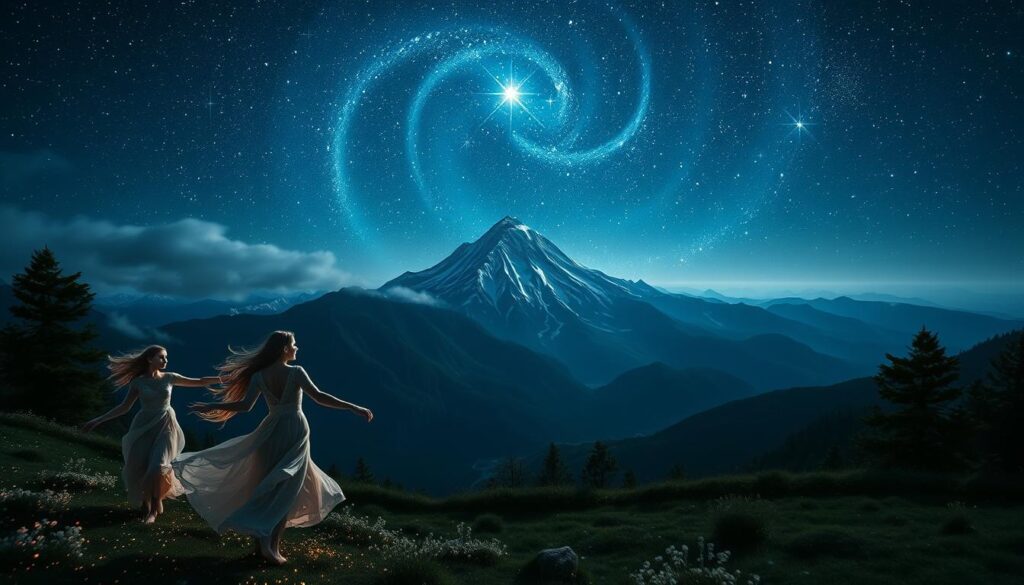
Greek mythology paints the Pleiades as seven daughters of Atlas, forever fleeing Orion. Their names—Alcyone, Maia, and Electra—still grace the cluster’s brightest stars. Ancient sailors used their appearance to mark safe days for sea travel.
“When the Pleiades rise, it’s time to sail—when they set, it’s time to plow.” — Hesiod, 8th century BCE
A Global Tapestry of Stories
Across continents, the cluster takes on new meanings:
- Māori: Matariki signals their new year, with each star representing food sources like fish and forest berries.
- Japan: Subaru (the cluster’s name) became a car brand logo, symbolizing unity among merged companies.
- Namaqua: Called “digging stars,” they mark when to unearth buried food caches in southern Africa.
The Cherokee tell of the AniTsutsa (“The Boys”) playing stickball in the sky. Even Europe’s 3,600-year-old Nebra Sky Disc depicts them beside the moon—one of humanity’s oldest star maps.
These legends show how one star group can unite humanity under the same sky. For more celestial stories, explore our about page.
The Pleiades and Modern Astronomy
Advanced astronomy has transformed our understanding of the Seven Sisters. Space telescopes and spectroscopy reveal details invisible for centuries, turning this cluster into a cosmic laboratory.
Scientific Discoveries
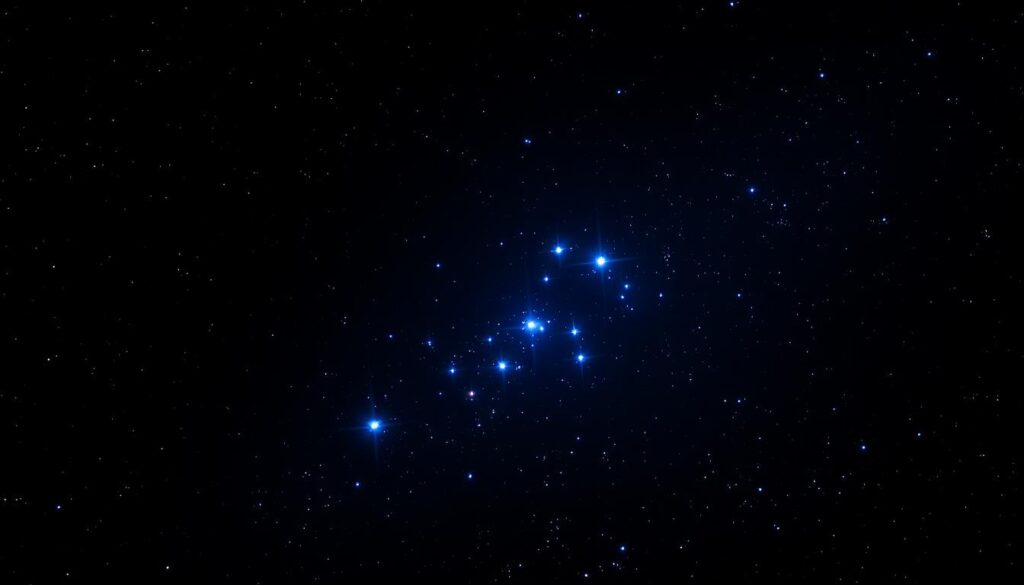
NASA’s 1994 Hubble image of the Merope Nebula stunned astronomers. The photo showed dust particles 100 times smaller than household dust, pushed by starlight. This proved radiation pressure shapes nebulae.
UV spectroscopy uncovered surprising elements in B-type stars. Beryllium and mercury anomalies suggest complex atmospheric mixing. These findings challenge old models of stellar chemistry.
“The Pleiades give us a front-row seat to stellar adolescence.” — Dr. Jane Rigby, JWST senior project scientist
Hubble’s Observations
Since 1991, Hubble tracked the cluster’s proper motion at 18 km/s. This data helped calibrate cosmic distance scales. The telescope also spotted brown dwarfs—failed stars too dim for optical detection.
Comparing Hubble and JWST images shows infrared breakthroughs. Where Hubble saw dust clouds, JWST reveals intricate filaments and protoplanetary disks. This synergy between telescopes keeps rewriting astronomy textbooks.
| Discovery | Telescope | Year |
|---|---|---|
| Merope Nebula detail | Hubble | 1994 |
| Proper motion | Hipparcos | 1997 |
| Brown dwarfs | Spitzer | 2005 |
| Infrared filaments | JWST | 2023 |
From dust dynamics to stellar atmospheres, the cluster keeps delivering breakthroughs. Each discovery peels back another layer of cosmic mystery.
Photographing the Pleiades
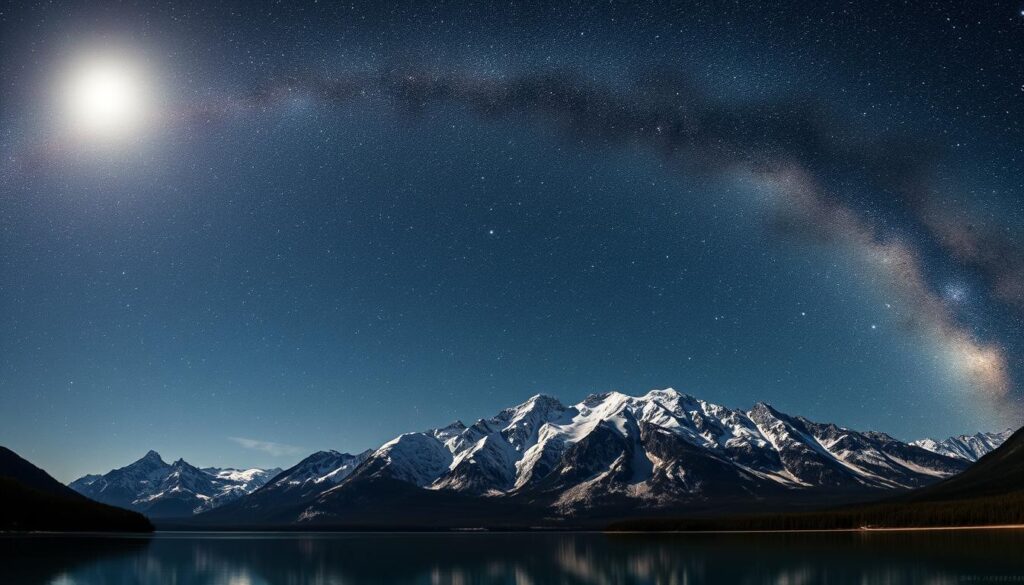
Capturing the Seven Sisters through a lens reveals cosmic artistry invisible to the naked eyes. While the cluster dazzles observers, cameras unlock its full splendor—nebula dust, star colors, and intricate patterns. Modern equipment makes astrophotography accessible to amateurs and pros alike.
Essential Tips for Stellar Shots
Start with a DSLR or mirrorless camera and sturdy tripod. Use these settings as your baseline:
- ISO: 1600–3200 (adjust for light pollution)
- Aperture: f/2.8 or wider for maximum light
- Exposure: 30–120 seconds per frame
Stack multiple exposures to reduce noise. Track the cluster’s 18 km/s movement with a star tracker or equatorial mount. This way, you’ll avoid star trails in long exposures.
“The Pleiades reward patience—their blue reflection nebulae need careful processing to reveal subtle details.” — Haocheng Li, 2023 APY winner
Award-Winning Inspirations
Recent astrophotography contests showcase stunning approaches:
- Blue Spirit Drifting in the Clouds (2023): Used narrowband filters to emphasize nebula structures
- Hello Winter Starry Sky (2018): Combined the cluster with snowy landscapes for scale
| Technique | Best For | Equipment Needed |
|---|---|---|
| RGB Imaging | Natural star colors | DSLR, light pollution filter |
| Narrowband | Nebula details | Monochrome camera, Ha/OIII filters |
| Smartphone | Casual shots | Night mode, tripod, 10s exposure |
Prime fall and winter nights offer the best season for shooting. For smartphone users, apps like NightCap can surprisingly capture 4–6 stars with proper stabilization.
The Pleiades in Popular Culture
From car logos to supercomputers, the Seven Sisters inspire modern creativity. This star cluster isn’t just a celestial wonder—it’s a cultural icon woven into technology, art, and even finance.

Literature and Art
The cluster’s name appears in sci-fi classics like Arthur C. Clarke’s Childhood’s End. Recent novels, such as The Light Years, use it as a metaphor for unity. Artists often paint its blue stars alongside mythological figures.
“The Pleiades are the original muses—bridging science and storytelling across millennia.” — Dr. Emily Levesque, astrophysicist
Modern References
Japan’s Subaru car brand adopted the cluster’s logo in 1953. The six-star emblem represents five merged companies, mirroring the visible sisters. NASA’s Pleiades supercomputer, processing 7.9 petaflops, honors the cluster’s computational power.
Anime fans recognize the stars from Sailor Moon, where Sailor Alcyone guards the galaxy. Even cryptocurrency projects like PleiadesCoin tap into its cosmic branding.
| Reference | Industry | Notable Detail |
|---|---|---|
| Subaru Logo | Automotive | Six stars = five merged companies |
| Pleiades Supercomputer | Tech | Ranked top 10 globally in 2012 |
| Sailor Moon | Anime | Sailor Alcyone’s name from the cluster |
| PleiadesCoin | Crypto | Launched 2021, $4M market cap |
Whether on a car hood or a NASA mission patch, the Seven Sisters prove that stars can shape culture as powerfully as science.
Conclusion
Few celestial sights rival the winter sky’s glittering crown—the Seven Sisters. This open star cluster, 440 light-years away, blazes with young, hot stars just 100 million years old.
From Greek myths to Japan’s Subaru emblem, its legacy spans cultures. On crisp winter nights, step outside to spot its blue glow near Taurus—no telescope needed.
Scientists still probe its dust clouds with Hubble and JWST. Yet beyond data, the night sky reminds us: some wonders transcend time. Look up, and let the cosmos spark your curiosity.