

This friendly how-to helps you use a full deck to hear your inner voice, not to predict a locked fate.
The deck has 78 cards: 22 Major Arcana and 56 Minor Arcana. The Major Arcana maps big life themes while the Minor Arcana shows everyday patterns.
We’ll cover clear, beginner-friendly methods to shuffle, cut into three piles, and pull simple spreads. You’ll learn one-card daily draws, three-card layouts, journaling tips, and optional reversals.
The Rider-Waite deck is highlighted because its imagery supports intuition and makes symbols easier to read. Keep notes from your first session to spot trends and build confidence.
Key Takeaways
- This page is a practical, beginner-focused tarot card reading guide.
- A full deck contains 78 cards split into Major and Minor Arcana.
- Start with one-card draws and simple three-card spreads.
- Rider-Waite is a good starter deck for clear imagery.
- Journal each session to track themes and improve your skill.
Start Here: A friendly tarot card reading guide for beginners and beyond
Start small: a single draw can open a clear window into your thoughts and choices. A daily one-card pull builds familiarity with images and words. Over time, this simple habit sharpens intuition and offers gentle guidance for self-reflection.

Set a calm vibe before you shuffle. Light a candle or take a few breaths. State a short intention so you tune in without fuss.
Shuffle until it feels right, then cut the deck into three piles. Pull a card for the day, or use a three-card layout to look at past, present, and likely next steps.
“Consistency beats complexity. Small, regular practices grow real confidence.”
- Anyone can learn to read tarot cards using images and intuition.
- Start with one-card draws; add a three-card spread when ready.
- Keep a short log of each session to spot patterns and improve.
Be patient: readings improve with low-pressure practice. Trust your pace and enjoy the process of learning about yourself.
What is tarot today? Intuition, reflection, and guidance (not fortune-telling)
Many now use this system as a reflective practice to bring buried thoughts into view.
It works less like a script and more like a mirror. Modern sources describe it as a psychological tool that surfaces subconscious themes. That helps people see patterns without feeling locked into one outcome.
How it acts as a mirror for your inner voice
Images and symbols prompt personal meaning. When you pause and notice first impressions, hidden feelings often rise up.

Why this supports decision-making and self-discovery
Readings suggest likely outcomes, not fixed fate. Choices still shape what happens next.
- It highlights blind spots that logic may miss.
- Open-ended questions invite deeper insight than yes/no queries.
- Different readers see different layers—this personalizes each session.
“When images spark a memory or feeling, you get new language for old worries.”
| Use | What it reveals | Practical tip |
|---|---|---|
| Self-reflection | Recurring themes and emotions | Journal first impressions after each session |
| Decision support | Blind spots and options | Ask open-ended questions (e.g., “What am I overlooking?”) |
| Learning to read for others | Varied perspectives strengthen interpretation | Start by learning to read for yourself to build trust |
To try structured layouts and see how spreads shape meaning, explore a variety of layouts at tarot spreads examples.
Inside a tarot deck: Major Arcana and Minor Arcana explained
Think of the deck as two systems: a long arc of life lessons and four suits that track everyday choices.
Major Arcana at a glance: the Fool’s Journey from The Fool to The World
The Major Arcana contains 22 arcana cards that trace the Fool’s Journey. This sequence maps themes from fresh starts to completion.
Upright vs reversed examples: The Fool can mean innocence and fresh starts (upright) or recklessness (reversed). The Magician suggests willpower and skill (upright) or manipulation (reversed). The High Priestess points to inner knowing (upright) or a lost inner voice (reversed).
Minor Arcana: suits of Cups, Wands, Swords, Pentacles and what they represent
The Minor Arcana has 56 cards split into four suits. Each suit uses an element to describe daily life.
- Cups — water: emotions, relationships, and inner life.
- Wands — fire: energy, creativity, and ambition.
- Swords — air: thought, conflict, and communication.
- Pentacles — earth: work, money, health, and stability.
Spreads often highlight major arcana to flag turning points. Minor arcana cluster work well for day-to-day dynamics. When several suits repeat, use that pattern as a signal to focus on that life area.

| Section | Count | Focus |
|---|---|---|
| Major Arcana | 22 | Life themes, turning points, the Fool’s Journey |
| Minor Arcana | 56 | Everyday events split into four suits |
| When emphasized in spreads | Varies | Majors = big shifts; Minors = practical actions |
For more context on decks and layouts, visit this page to see examples and further details on structure and divination practice.
Choosing your first tarot deck (and why Rider-Waite is a solid start)
Pick a deck that helps you connect quickly. Rider-Waite is a reliable first choice because each suit shows a clear scene that makes symbols easy to spot and learn.
Look for artwork that speaks to you. When images inspire, you practice more. That builds confidence in how you read tarot and in your everyday sessions.
Handle or preview a deck when possible. Check card size, stock, and how comfortable the pack feels on your table. These small details shape your first impressions.

- Start with Rider-Waite for pictorial clarity.
- Buy themed or minimalist decks later, after you know the structure.
- Add a cloth, pouch, or box to protect the cards and mark your space.
| What to check | Why it matters | Quick tip |
|---|---|---|
| Artwork | Makes meanings memorable | Pick imagery that resonates |
| Card stock & size | Comfort and shuffleability | Preview in store or check photos |
| Print quality & reviews | Avoid faded or unclear prints | Read product photos and buyer notes |
If you plan to buy online, check clear photos and reviews to avoid problems with print or shipping orders. A well-chosen tarot deck can also arrive as a meaningful gift to mark the start of your practice.
Prep your space: simple ways to set the vibe for clear readings
A tidy table and a few slow breaths set the tone for a focused session. Small actions make a big difference and keep your attention steady.
Cleansing, candles, crystals: many readers tap the deck, waft a little incense, or picture a quick white light to reset energy. One gentle knock on the stack works as well as a long ritual.
Keep it minimal. Choose a single candle or one crystal you love so props support, not distract. Intent matters more than equipment.
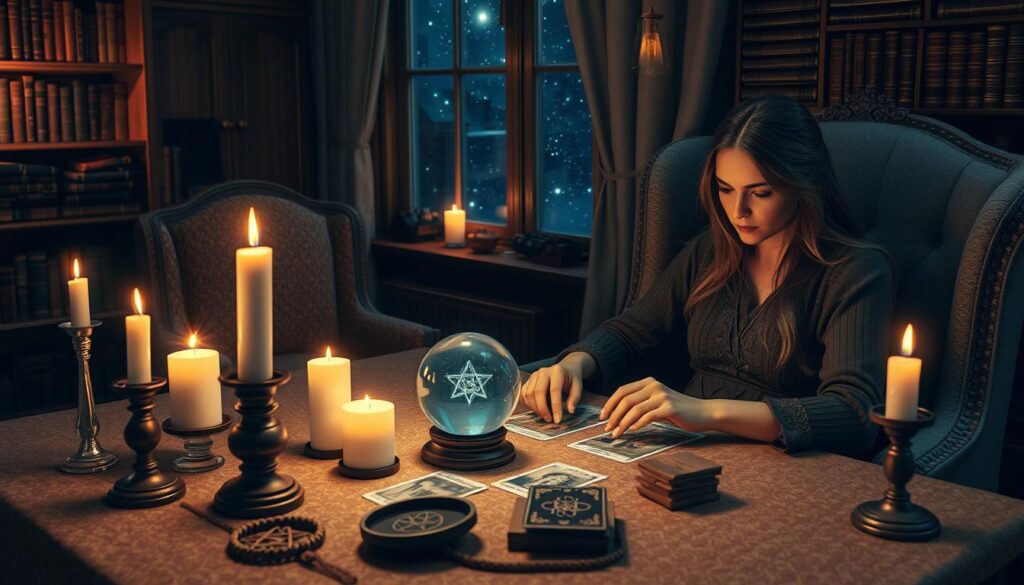
Clever, small-space tips
- Tidy the surface, silence devices, and take one slow breath before you shuffle.
- Use a clean cloth to define a reading area anywhere at home or while traveling.
- Check lighting so symbols are clear and you avoid eye strain.
- Say a brief statement of purpose aloud to align attention before you cut the deck into three piles.
“A clear space equals a clearer mind—keep what helps and release what distracts.”
Shuffle, cut, and pull: practical methods to read tarot cards
Hold the pack briefly, focus on your intent, and let your hands find a shuffle that feels natural.
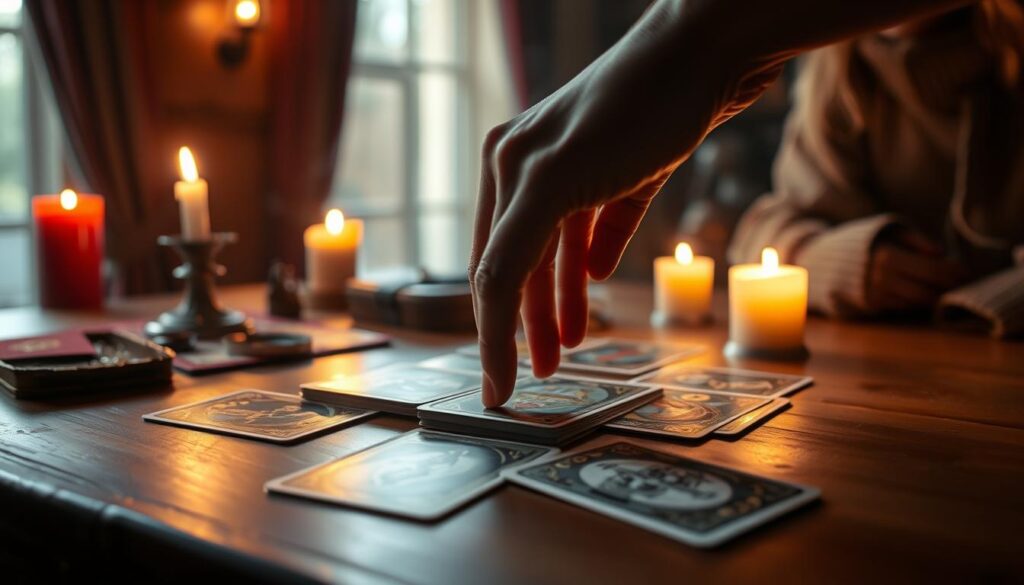
Shuffling with focus and intention
Choose a style that suits you: riffle, overhand, or hand-over-hand. Each method blends your energy into the deck.
Think of your question as you shuffle. That focus helps you read more clearly and keeps the process consistent.
How to cut the deck and why it matters
Cutting into three piles is a simple start signal. Use your dominant hand or knock three times to clear the space.
Re-stack by intuition. Let the pile order feel right—this small ritual often helps the story unfold.
Pulling cards: practical ways
- Pull from the top for a clean, fast flow.
- Fan and pick intuitively when you want choice to guide placement.
- Cut for each position when you follow a specific spread.
Decide ahead about reversals so your interpretations stay consistent.
“There is no single correct method—your intuition should lead the process.”
| Action | Why it helps | Quick tip |
|---|---|---|
| Riffle shuffle | Mixes deck quickly | Good for larger decks |
| Overhand shuffle | Gentle and respectful | Use if cards are delicate |
| Three-pile cut | Marks a start and centers intent | Restack by feel, not rules |
Pick a tarot spread: from one-card draws to Celtic Cross
Pick a spread based on whether you need a quick nudge or a deep, panoramic look. Simple choices help you build skill without overwhelm.
Daily draw: one card for guidance
A single daily pull gives a clear theme for the day and helps you read tarot more fluently. Use it as a short prompt to focus your attention.
Three-card spread: past, present, future
The classic three-card layout maps context quickly. Try alternate labels like situation / action / outcome or mind / heart / next step to match your question.
Four-Card Check-In
Choose a Major Arcana signifier to represent who you are now, then draw three Minor Arcana cards for body, mind/emotion, and spirit.
Notice suit repeats, court cards, or reversals—these patterns act as clear signposts for what needs attention.
Celtic Cross: when to go deeper
The Celtic Cross uses ten cards for a panoramic view of influences, obstacles, and likely outcomes. Reserve it for complex issues when you have more time.
“Choose the spread to fit your question and the minutes you have—flexibility keeps practice useful.”
Keep a short journal of positions and outcomes so you can compare similar spreads across different readings. For a Major Arcana example, see The Chariot.
How to read tarot for yourself step by step
Begin by tuning your intent: a clear question opens the path to honest answers. Keep the question open-ended and focused, for example, “What do I need to understand about my next step?”
Frame open-ended questions and set clear intentions
State your intention aloud or write it down. This signals the start of a session and helps you stay centered.
Shuffle and cut as you prefer. Treat the motion as part of the process, not a ritual that must be perfect.
Flip, observe, connect symbols, and note first impressions
Turn each card over slowly. Pause and jot your first impressions before consulting any references.
Describe what you see: scene, colors, gestures, and items in the image. That keeps your interpretation tied to observation, not assumption.
Consider the role of each position in the spread and how nearby cards confirm or complicate the message. If you feel stuck, glance at a trusted source briefly, then return to your impressions.
- Start with an open question that invites insight.
- Set an intention, then shuffle and cut to mark readiness.
- Write first impressions before looking up meanings.
- Describe scenes and symbols to ground your view.
- Use surrounding cards to refine your interpretation.
- Record the date, spread, and highlights in a tarot journal.

“Recordings let you check back later and see how advice played out in real life.”
| Step | Action | Why it helps |
|---|---|---|
| Questioning | Pick an open-ended prompt | Invites nuanced insight and avoids yes/no traps |
| Observation | Note first impressions before references | Keeps interpretations personal and grounded |
| Follow-up | Log details in a journal and review later | Validates insights and improves your practice |
To compare a specific card’s meaning later, check a focused resource like the Five of Cups overview and then return to your notes to weave both views together.
Reading tarot for others: ethics, boundaries, and best practices
When you read for someone else, start by asking permission and naming what they hope to explore.
Consent matters: invite the querent to frame one clear question. Open-ended questions work best because they invite nuance and avoid alarm.
Invite participation: many readers ask the person to shuffle or cut to feel involved. This helps build trust and connection while keeping the session collaborative.
Set scope early: be explicit about limits. Avoid predicting health, legal, or financial outcomes. Your role is to offer perspective, not verdicts.

- Use plain, supportive language and reflect the querent’s words back to them.
- Prioritize confidentiality and respect—interpret symbols, don’t make choices for others.
- Offer clear next steps the querent can choose from; keep suggestions non-directive.
“A respectful session helps people leave with options, not fear.”
| Practice | Why it matters | Quick action |
|---|---|---|
| Consent & questions | Empowers the querent | Ask: “What do you want to explore?” |
| Client involvement | Builds connection | Invite them to shuffle or cut |
| Scope limits | Prevents harm | State boundaries on health/legal/finance |
Close by summarizing the main insights and encourage the person to note reflections after the session. That keeps the work practical and respectful.
Interpret cards with confidence: symbols, positions, and context
Begin with observation: what stands out first in the image, color, or posture? Note that first impression before consulting definitions. This anchors your session and keeps interpretation personal.
Upright vs. reversals: view reversals as nuance, not simple good-or-bad. For example, Strength upright often shows inner courage; reversed it can point to self-doubt or an internal block. Use reversals to flag delay, imbalance, or inner processing.

Let positions and neighbors shape the story
Read each placement—challenge, advice, outcome—to see its role. A card’s meaning shifts when it sits as an obstacle versus as a guide.
Surrounding cards color interpretation. The Moon beside swords may highlight anxiety around communication. Compare, synthesize, then form a clear message.
Quick method and common pitfalls
- Observe imagery, note position, consider neighbors, then synthesize.
- Avoid forcing memorized labels; stay tied to the question.
- End with a short recap to check balance and accuracy.
| Step | Focus | Why it helps |
|---|---|---|
| Observe | Imagery & symbols | Keeps interpretation grounded |
| Position | Role in spread | Clarifies function (challenge/advice/outcome) |
| Context | Nearby cards | Shapes nuance and timing |
For a focused example of how suits change a tone, see a specific warning example like the Three of Swords overview. That can help you link image details with wider card meanings.
Major Arcana deep dive: life lessons and turning points
When major figures appear, they often signal a chapter shift rather than a passing mood. These powerful images trace a long journey from fresh starts to completion and help you spot moments that matter most.
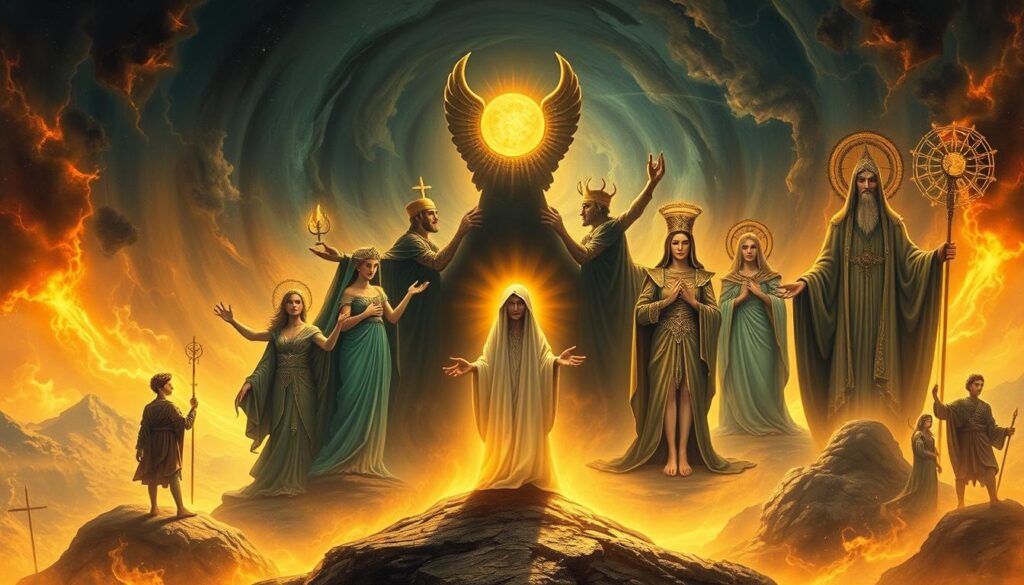
The arc: from The Fool to The World
Map the path: The Fool begins with innocence and new beginnings. Along the way, The Magician shows willpower, Justice and Temperance ask for balance, and Death marks transformation.
The World closes the loop with fulfillment and integration. Pulling one major can highlight a theme for the whole season.
Key themes and contrasts
Use upright/reversed meaning as lenses for reflection. For example, The Hanged Man points to surrender; reversed it may warn of stalled release.
The Tower flags sudden upheaval, while The Star and The Sun offer hope and clarity after shock. Judgement can bring reckoning or awakening.
Practical tips
- Multiple majors in a spread often mean deep learning or major decisions are underway.
- Try pulling a single major arcana as a theme card when you need a high‑level view.
- Journal personal associations for each major so symbols gain lived meaning over time.
“Majors teach lessons; they point to growth edges and moments of release.”
Minor Arcana mastery: suits, courts, and everyday situations
Minor suits show where daily life is most active and reveal practical patterns.
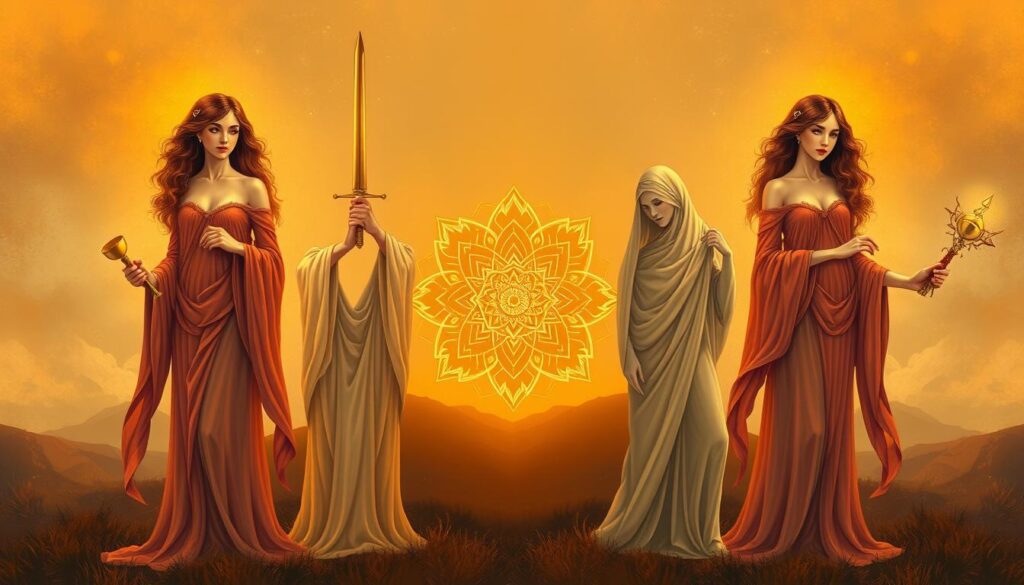
Cups: feelings and relationships
Element: water. Cups point to emotions, intimacy, and intuition.
When a spread leans Cups-heavy, focus on connections and inner needs.
Wands: energy and action
Element: fire. Wands track drive, creativity, and momentum.
Many Wands suggest projects or ambition moving forward.
Swords: thought and communication
Element: air. Swords show ideas, conflicts, and decisions.
A Swords cluster can mean mental effort or a needed conversation.
Pentacles: work and stability
Element: earth. Pentacles cover money, health, and daily routines.
Repeated Pentacles often flag practical tasks or resource shifts.
Numbered cards move a story: aces show fresh potential and tens mark completion.
Court cards often represent people or roles—pages as messengers or new learners, knights as movers, queens as nurturers, and kings as stabilizers of each suit.
Note suit pairings: Cups with Swords may signal emotional conversations; Wands with Pentacles often point to career momentum.
| Suit | Element | Focus |
|---|---|---|
| Cups | Water | Feelings, relationships, intuition |
| Wands | Fire | Energy, creativity, ambition |
| Swords | Air | Ideas, conflict, communication |
| Pentacles | Earth | Work, resources, stability |
Track repeated suits in your journal to spot trends across time. Choose a spread that highlights the domain you want to explore, for example, a relationship-focused layout when Cups dominate.
Build a practice: tarot journal, trends, and refining your readings
Keep a simple log after each session to turn impressions into long-term insight. A short note helps you track repeats and validate hunches over time.

What to record
Use a consistent template: date, question, spread name, positions, cards drawn (upright/reversed), core insights, and next steps.
Spot repeating messages
“Stalker” cards are those that recur until a lesson sticks. Search past entries to decode themes you may be avoiding or developing.
Check in later
Review weekly or monthly. Note suit prevalence, reversals, and timing to refine interpretation and grow confidence in your readings.
- Log mood and life events to see correlations.
- Tag entries by topic (work, relationships, creativity) for quick trend scans.
- Keep entries private and portable — paper or secure digital apps work.
| What to Track | Why It Helps | Quick Tip |
|---|---|---|
| Spread & positions | Clarifies role of each pull | Use shorthand names for spreads |
| Cards & orientation | Shows repeating themes and timing | Mark upright/reversed clearly |
| Context & follow-up | Validates meaning later | Note events and next steps |
For extra resources on professional sessions or to compare notes with other practitioners, consider exploring psychic readings to see how others document and interpret sessions.
“Patterns appear when you give them time and attention.”
Conclusion
Keep it simple. In closing, think of your practice as a small ritual that brings quiet clarity to everyday decisions. Over time a steady habit makes symbols feel familiar and useful.
The deck helps you notice themes: majors mark turning points while minors map daily life. A single short draw or a three‑position layout saves you time and keeps interpretation practical.
Use a notebook to track patterns and test insights. That journal becomes proof of growth and a trusted source of guidance in a busy world.
Make your space welcoming at home, treat your tools as a personal gift, and order thoughtfully if you buy online — check photos before placing shipping orders. Your path is yours to shape; the practice simply lights the next step.