

Welcome. This friendly guide helps people choose the right layout for clear, useful readings. You’ll find simple daily routines and more layered options that fit real life and relationship questions.
The list starts with a one-card daily draw to build intuition. Then it moves to two- and three-position layouts that clarify past, present, and next steps. A five-position layout adds timing and nuance without overwhelming beginners.
Practical tips explain how position meaning and question phrasing shape results. Special sections cover love and career layouts, moon-phase work by zodiac sign, and a clear walkthrough of the Celtic Cross for deeper work.
By the end, you’ll know when to keep readings simple and when a more complex layout will help you act with confidence.
Key Takeaways
- Start daily with one quick draw to build skill and insight.
- Use two- and three-position layouts for fast clarity on a question.
- Five-position designs unpack timing, obstacles, and next steps.
- Love, career, and moon-phase layouts adapt readings to life goals.
- Learn the Celtic Cross to decide when to deepen a reading.
Why Tarot Spreads Matter for Clear, Accurate Readings
A clear layout transforms scattered impressions into a focused, actionable story. A good tarot spread assigns each position a purpose so you know what every draw answers and why that matters.
Think of a spread as an outline. It keeps your mind organized and your questions focused. This is especially helpful for any beginner or reader refining their process.

Prepare with intent. Choose the spread first, then shuffle while holding your question. That tiny ritual improves coherence and accuracy in a tarot reading.
Clarity comes from seeing how cards interact as a story rather than isolated symbols. Use simple templates you find intuitive; a layout that fits you beats a complex one you avoid.
- Structure reduces guesswork: move logically from context to advice to outcome.
- Compare and track: use the same layout to check progress or time actions.
- Build a toolkit: over time you’ll collect go-to spreads that make each session smoother.
tarot card spreads
Begin small: a focused pull often gives clearer guidance than a complex layout.
This section orients you to the most-used layouts, from one-card check-ins to multi-position templates. For love, career, daily practice, moon phases, and Major Arcana themes, simple formats answer a precise question without overwhelm.
Short pulls help beginners build consistency. A one- or two-card pull centers you when time is tight. A three- to five-position spread adds context and next steps without getting confusing.
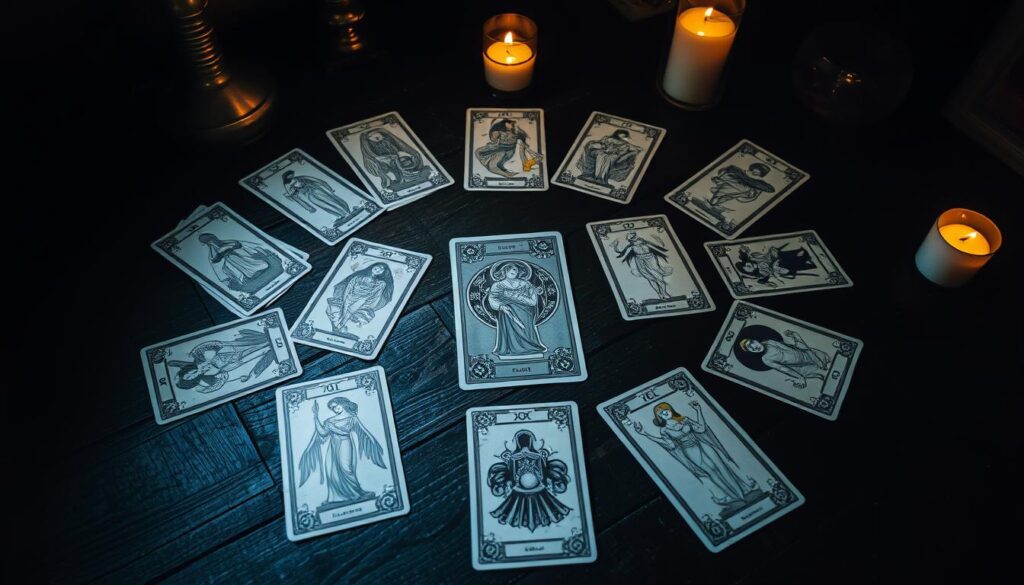
- Daily and quick-check layouts for present guidance
- Love and career lists for focused insight
- Moon-phase and major-arcana options for timing and theme
Practice both structured layouts and free-flow pulls. Track which spread and positions worked for each question to build a personal quick-reference. For a broader list of options, explore tarot spreads.
Quick Daily and One-Card Spreads to Build Intuition
Use a single daily draw as a simple habit to build familiarity with your deck and instincts. This short routine fits busy mornings and trains your inner voice without taking much time.

Daily Draw: A one-card routine for present-moment guidance
Start each morning with one pull to anchor the day. Ask a short question such as “What do I need to know today?” and note your first impression.
Do it before consulting meanings. Write down feelings, images, or words that come up. At night, reflect and compare notes to sharpen pattern recognition.
One-Card Questions and variations
Rotate prompts across the week: “Where to focus?”, “What to avoid?”, or “Hidden support today?”
“A daily check-in with one symbol can reveal repeating themes that guide action.”
Journaling and reflection to track accuracy over time
Keep a simple log: date, draw, first impression, and end-of-day reflection. Over time you’ll build a personal library of lived meanings.
- Use a dedicated tarot deck for consistency.
- Draw from the top or shuffle—both work; repeated cards can signal themes.
- Add a clarifier only when truly needed to keep the reading clean.
Essential Two- and Three-Card Tarot Spreads
Two- and three-position layouts are the quickest way to turn a question into a short, useful story. Use them when you want clear context without extra noise.

Past–Present–Future: A compact narrative
This classic three-slot layout shows how past choices shaped today and what may follow if nothing changes. Read it as a short timeline and notice repeating symbols or themes.
Tip: Ask a focused question to keep each position crisp and actionable.
Situation–Challenge–Advice for fast clarity
Use this when you need a quick diagnosis. The first card names the situation, the second reveals friction, and the third gives one practical step.
Decision-Maker: Option A vs. Option B
A two-card reading compares two paths side by side. Look for logical fit and emotional resonance to see which choice lines up with your values.
Direction Finder: Where I am, where it’s going, what to do
Map status, trajectory, and next action. This layout is great for goals that need a nudge rather than a complete overhaul.
- Keep prompts specific: vague questions produce muddled results.
- Read across the line: notice echoes or contrasts between positions to form a story.
- When unclear: reduce positions instead of adding more to get a cleaner signal for life and love choices.
“Record each spread result and note real-world outcomes to refine your interpretations.”
Powerful Five-Card Spreads for Deeper Insights
A compact five-card reading reveals deeper patterns while staying focused and user-friendly. These layouts give more context than a trio but keep the process clear for a beginner or daily practice.
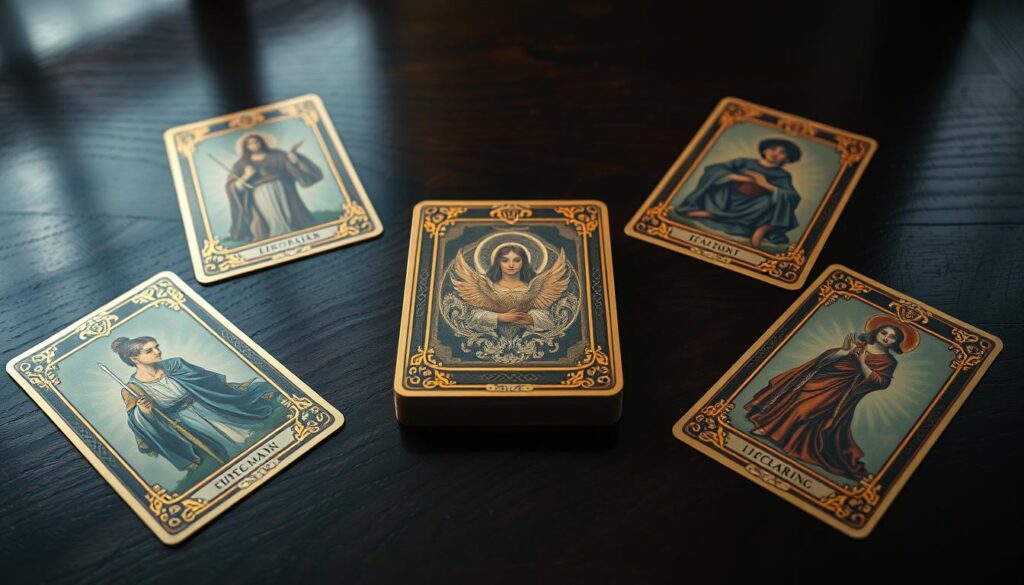
All-Purpose Cross
The All-Purpose Cross maps Center, Past, Future, Known, and Unknown. Read each position on its own, then join the dots to see how events and motives link across time.
Tip: Use the All-Purpose Cross to make a quick life plan or to spot hidden influences. For an example that highlights action and will, see an All-Purpose Cross example.
Overcoming Obstacles: Waning Moon
This five-slot layout names the block, what to stop, what to release, what to hold, and the advice from guides. It turns insight into a small ritual for letting go and regaining energy.
Mercury Retrograde Navigator
Use this to prepare: what to plan, the main theme, what to finish, how to hold your power, and how to keep clear communication. Read linearly first, then synthesize patterns across the positions.
“Read each position alone, then weave the story together to make practical timelines and tasks.”
- Why five? It balances nuance and clarity for meaningful, actionable readings.
- Use spread help prompts to turn insights into time-based tasks and to track energy shifts.
Love and Relationship Tarot Spreads
When questions about love feel heavy, a clear layout helps you act with care. Use gentle prompts and focused intent to keep readings useful and kind.

Finding New Love: Where, how, and when you’ll meet
Try a three-position setup to map where you’ll meet someone, how the encounter unfolds, and when timing aligns.
- Where: locations or social circles to prioritize.
- How: the likely vibe or first impression to expect.
- When: timing clues to guide your plans.
Relationship Pulse: Strengths, challenges, lessons, trajectory
Use a four-slot read to name strengths, pinpoint friction, surface shared lessons, and see the near trajectory.
Troubleshooting Partnerships when things go wrong
When conflict arises, a focused spread highlights communication gaps, unmet needs, and one practical step to reset expectations.
“Anchor tough talks with compassionate questions and a single micro-action.”
Practice: revisit the where/how/when layout monthly and track repeating symbols to learn who and what you attract.
Career and Business Spreads to Guide Your Work Life
A short, targeted layout can turn a messy work problem into a clear action plan. Use career-focused pulls to diagnose an office situation, set priorities, and schedule one concrete step. Keep questions specific for each position so the reading leads to an executable task.
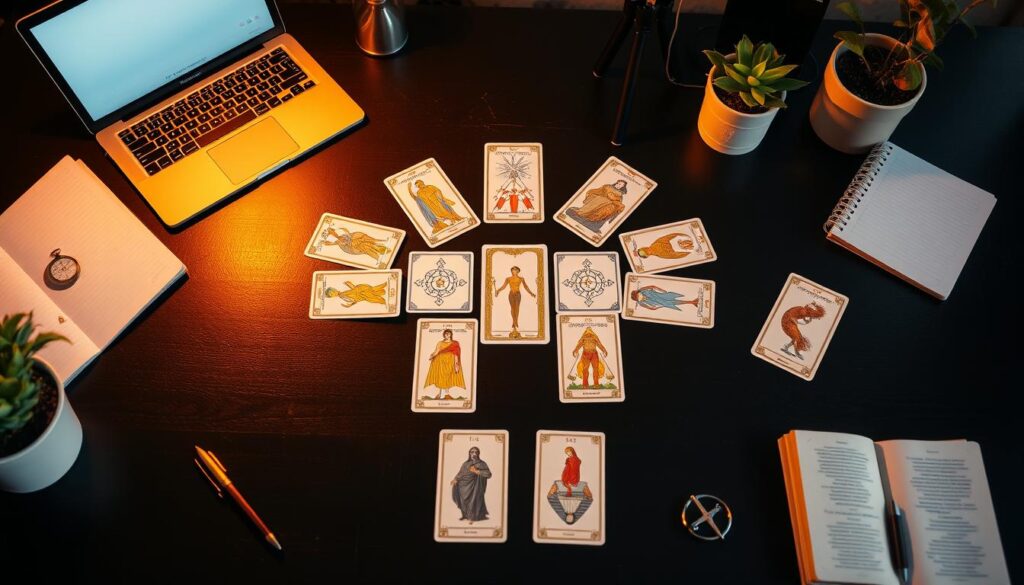
Leadership Three-Card
Communicate, Motivate, Celebrate—pull three cards to sharpen weekly team goals. Ask one pointed question per slot to reveal communication gaps, morale boosts, and small wins to acknowledge.
Queen of Pentacles Career Five-Position
Channel this practical energy to map: current state, your attitude, available support, the main obstacle, and the best action. Use the result to align resources with time-bound steps.
Job Hunt Clarifier
When searching, use a short clarifier spread to refine strategy, spotlight skills to showcase, and pick the best networking moves. Record findings in a separate work-life journal tab to track outcomes like interviews or revenue changes.
- Keep one deck for career questions to build reliable associations.
- Watch suits: Pentacles flag resources, Wands show initiative, Swords point to strategy, and Cups reveal team morale.
- Close each reading by blocking calendar time for one concrete action.
“Ask one pointed question per position to diagnose the situation cleanly—then schedule actions tied to timing and effort.”
| Layout | Positions | Best Use | Outcome |
|---|---|---|---|
| Leadership Three-Card | Communicate / Motivate / Celebrate | Weekly team focus | Clear messaging and one morale action |
| Queen of Pentacles Five | State / Attitude / Support / Obstacle / Action | Career planning | Resource alignment and next step |
| Job Hunt Clarifier | Strategy / Skills / Network / Timing | Job search refinement | Targeted applications and outreach plan |
Spiritual Growth Spreads for Self-Discovery
Explore inner work layouts that help you name patterns and invite steady growth.

Self-love layouts (for example, a six-position life-focused spread) show how you nurture yourself, what drains you, and simple practices to restore balance. Use these to deepen your personal journey and build daily habits that stick.
Decision-Making for Tough Choices
A five-slot decision-making spread weighs trade-offs, short-term results, and long-term meaning. Start with intuition, then layer traditional interpretations to keep the reading personal and practical.
Archetypes, Shadow Work, and Strength
Work with archetypes like the Devil to name limiting patterns without shame. Pair that with a Strength layout to cultivate courage and steady confidence.
“Track your growth by logging each spread and noting how your answers shift over time.”
- Set gentle boundaries for shadow sessions: short time limits and aftercare like journaling.
- Beginners: focus on one layout and log results to build self-trust.
- When ready, book a guided session to deepen the practice via book a reading.
Moon Magic: Full Moon Tarot Spreads by Zodiac Sign
Full moons invite a focused check-in that mirrors the hosting sign’s lesson. Use a short three- to five-card spread to reflect, release, and celebrate progress during the lunation.

Full Moon in Cancer: Emotional healing and nurturance
Ask: How can I create safety and tend my closest ties?
Pull a position for what to hold, what to heal, and what boundary to set. Include a major arcana card to deepen meaning.
Full Moon in Capricorn: Ambition, responsibility, material goals
Ask: Which plan needs structure and what step anchors success?
Use positions for goal, system, and one practical action. A Devil or Emperor major arcana can highlight blocks or structure.
Full Moon in Pisces: Intuition, dreams, transcendence
Ask: What should I surrender, and what dream needs tending?
Pull intuition, practice, and next signpost. Add The Moon or a major arcana card that resonates with inner vision.
How to align a spread with current lunar energy
Time your session within 48 hours of peak for vivid clarity. If a situation needs closure, add a position for what to release before the next phase.
“Keep it simple: three clear positions often beat complexity.”
| Full Moon Sign | Focus | Suggested Positions | Major Arcana Cue |
|---|---|---|---|
| Cancer | Emotional healing | Hold / Heal / Boundary | Strength |
| Capricorn | Ambition & structure | Goal / System / Action | The Devil |
| Pisces | Dreams & intuition | Surrender / Practice / Next Step | The Moon |
For a practical example tied to emotional nuance, see a Knight of Cups reading example to learn how mood and motive show up during lunar work.
New Moon Spreads for Setting Intentions
Each new moon invites a short ritual to name what you want to grow and how to begin. Pull a compact layout that clarifies what to start, what to refine, and a first action to keep momentum.

New Moon in Aries: Ignite initiative and focus
Ask: Where do I begin, which action sparks momentum, and how do I stay bold?
Tip: Pick one bold goal and a tiny first step you can complete within 24 hours.
New Moon in Virgo: Practical plans and refinement
Ask: What needs organizing, what to analyze, and which habit ensures steady progress?
Tip: Use a clear checklist and track one small habit for a week.
New Moon in Aquarius: Innovation and independent vision
Ask: Where can I think differently, which idea deserves trial, and who or what supports my uniqueness?
Tip: Reserve one hour to prototype or sketch an unconventional plan.
“Keep one position for supporting energy so you can identify resources or allies that make intentions stick.”
| Sign | Focus | Suggested Positions | Quick Action |
|---|---|---|---|
| Aries | Initiative & momentum | Intention / First Step / Support | Complete one bold micro-action |
| Virgo | Practical planning | Organize / Analyze / Habit | Make a checklist and start one habit |
| Aquarius | Innovation & independence | Idea / Challenge / Ally | Prototype an idea for one hour |
Beginners can keep it to three positions: intention, support, and first action. Revisit notes at the First Quarter and Full moon to adjust and measure progress. For a practical new moon example, try this new moon example.
The Celtic Cross: Mastering a Classic Tarot Spread
The Celtic Cross gives a 360-degree snapshot that helps you see how many threads in a situation connect.
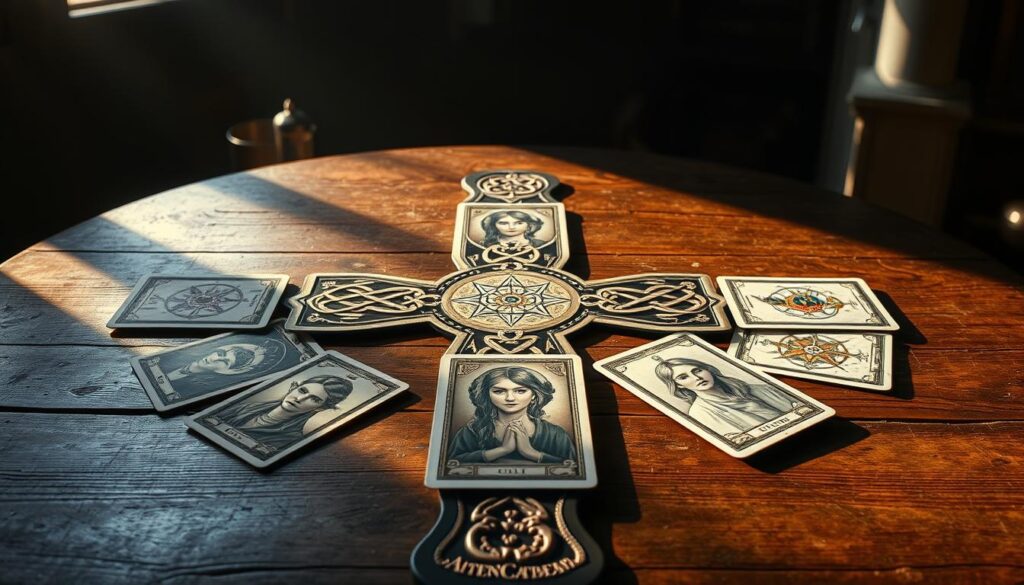
What it offers: This ten-position card spread maps present dynamics, the crossing factor, conscious and subconscious influences, past and near future, self, environment, hopes/fears, and a likely outcome.
Card positions, relationships, and reading the overarching story
Read each position on its own, then follow links between them. For example, note how the crossing card complicates the present or how subconscious drives reshape conscious aims.
Track suit balances to see whether strategy (Swords), resources (Pentacles), drive (Wands), or feelings (Cups) lead the narrative.
Weave in major arcana to spot fated themes or milestone lessons that shape the overarching story.
When to choose Celtic Cross vs. simpler layouts
Choose this cross tarot spread for complex, multi-layered questions or long-range planning. It shows interaction between moving parts and highlights where to focus work.
If you only need fast clarity, use spread with fewer positions. Save the Cross for major decisions and deeper readings.
“Keep notes by position so you can revisit and verify how the story unfolded over time.”
- Practical tip: keep position notes short—date, position name, first impression, and outcome.
- With practice, repeating position patterns speed interpretation and build confidence.
- Use this card spread to turn tangled questions into clear, usable insight.
Major Arcana-Themed Spreads to Deepen Your Practice
When a major figure repeats in readings, a themed layout turns that nudge into a clear plan. Major arcana work centers a single archetype so you can unpack its lesson and apply it to your current chapter.

The Moon Spread: Navigating confusion and intuition
Ask: What is true here, and what is misleading me?
This spread helps you separate intuition from illusion and points to what is hidden.
The Star Spread: Hope, faith, and healing
Ask: Where can I renew faith and begin healing?
Use it to locate hope, next steps, and a daily practice that restores momentum.
The Tower Spread: Sacred destruction and renewal
Ask: What must fall so I can rebuild with integrity?
It shows what to let go, what to protect, and how to reconstruct safely.
The World Spread: Completion, wholeness, and integration
Ask: What is complete, what wisdom do I carry, and where to share it next?
Tip: When Strength or the Devil repeats, design a mini spread to build courage or integrate shadow work and save notes by archetype.
Conclusion
Carry a few reliable layouts that fit your schedule, whether you need speed or depth.
You now have a simple toolkit—from one-card dailies to five-card deep dives, moon-aligned reads, major arcana themes, and the Celtic Cross—to match any question or time window.
Keep it practical: pick one spread, phrase a clear question, pull the cards, and note the meaning in a journal. Track outcomes to make intuition a steady resource for life and love decisions.
Rotate layouts with lunar energy, use spread help prompts to turn insight into action, and choose broader views like the Cross when stakes are high. Beginners grow fastest by reading often and logging results.
Above all, make the practice yours. Use these tools in a way that fits your day, supports relationships, and strengthens confidence on your journey.